

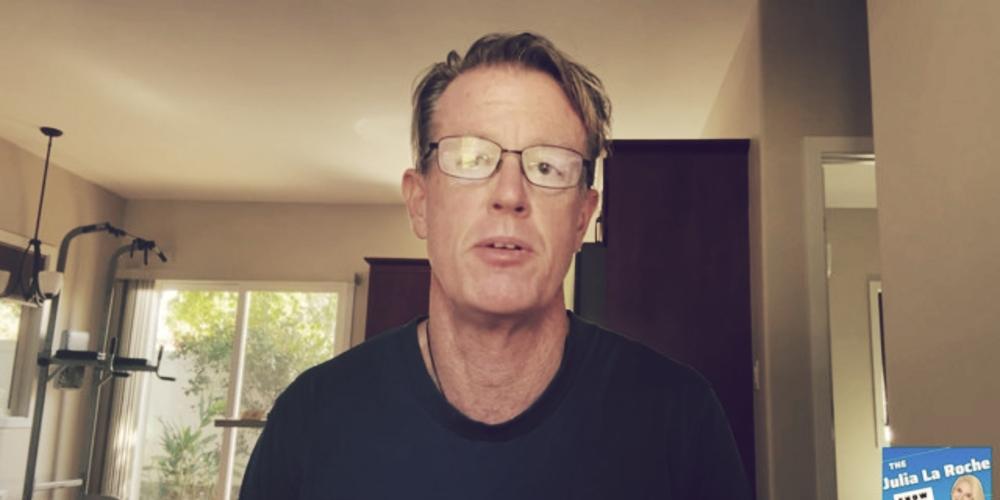
When the Bureau of Labor Statistics dropped its latest benchmark revision last week, the numbers laid bare a harsh reality that’s been simmering beneath the surface of official reports. Employers added 911,000 fewer jobs than previously estimated over the 12 months ending in March 2025, a staggering downward adjustment that points to a labor market far weaker than the headlines suggested during the prior administration. This isn’t just a minor tweak—it’s a revelation of systemic overstatement, one that financial analyst Ed Dowd has been calling out for months.
Dowd, a former Wall Street heavyweight who spotted trouble at Enron and Lucent well before their implosions, didn’t mince words after the election last fall.
“Trump inherited a turd of an economy,” he told Greg Hunter on USAWatchdog.
Fast-forward nearly a year, and that assessment has only sharpened. In a recent interview, Dowd expanded on the mess: “Trump has to deal with a turd of a disaster.” The scale of the deception in those job figures alone demands scrutiny. As Dowd put it, “You could say this is statistical fraud or bureaucratic incompetence. Let’s say it’s both. It such an egregious 7 standard deviation. 3.4 standard deviation is the chance of lightning hitting you at least once in your lifetime. It’s not likely. 7 deviation is suggestive of fraud–full stop.”
To grasp the gravity, consider what a seven-standard-deviation event means in practical terms. Statisticians describe such outliers as virtually impossible under normal distributions—events so rare they occur once every few billion tries. Yet here we are, with government data that strains credulity.
The revision aligns with a pattern Dowd identified earlier: “I have never seen such blatant manipulation of government statistics.”
During the lead-up to the election, real weekly wage growth sat at minus 2%, a detail buried under rosy unemployment narratives.
“When I was asked prior to the election who do you think will win the election, I said Trump has already won, according to the economic statistics,” Dowd recalled. Voters sensed the disconnect between Wall Street’s froth and the squeeze at the checkout line. “What really got Trump in was the economy, the real economy, not the stock market.”
That real economy, Dowd argues, was artificially buoyed by policies now unraveling. Take immigration: The Biden years saw an estimated 20 million undocumented entries, many funneled into low-wage jobs that padded employment rolls. But those numbers masked underlying fragility. As Trump moved swiftly on deportations and border security, the props started to give way.
“The real economy has been rolling over, and we are just waiting for the financial markets to figure this out,” Dowd observed months ago. Sure enough, government revisions now confirm a recession likely kicked off sometime in 2024. “Government statistics will be updated, and it will show we started a recession sometime this year.”
Nowhere is this rollover more evident than in housing, a sector that makes up 36% of the economy. Home prices ticked up just 2.9% in the second quarter of 2025, but momentum is fading fast. Inventory is building, yet sales are stalling— the typical home lingered on the market for 60 days in August, a full week longer than the year before.
Affordability remains the choke point, with mortgage rates still elevated despite signals of easing. Dowd connects the dots directly to policy shifts: “The housing market is rolling over because people can’t afford them. What was keeping a floor in the housing market were rents by the illegal aliens. That’s all going the wrong way. Trump is deporting people, and we closed down the border. Our housing report that we put out a month ago . . . all the indicators are rolling over, and we are going to have a housing recession. We are going to see inflation go lower because housing is 36% of the economy. We expect to see a sub 2% print on inflation.”
This isn’t hyperbole. With deportations ramping up, rental demand from transient populations has softened, pulling down prices in key metros. Single-family rents, which surged during the influx, are now projected to rise only modestly through year’s end—good news for would-be buyers, but a signal of broader demand weakness. A housing recession could drag the entire economy lower, amplifying deflationary pressures just as the Federal Reserve grapples with its next moves.
Speaking of the Fed, all eyes are on this week’s meeting, where a quarter-point rate cut appears locked in—a 0.25% slice from the benchmark that could be the first of several by year-end. Markets are pricing in up to 50 basis points of easing through December, with some economists eyeing 75. But Dowd sees this not as salvation, but as a frantic scramble.

“They cut rates in the Great Financial Crisis starting in 2007. Our stock market did not bottom until 2009. This is the beginning of what I think is the ‘panic rate cut cycle.’ We are going to see the Fed cutting rates all the way down into this asset deflation that we see coming in this panic rate cut cycle. Cutting into slowing growth does not cause assets to reinflate. They are behind the curve, and they are going to be cutting all the way down as we deflate.”
History backs him up. Post-2008, the Fed’s aggressive easing propped up banks but did little to halt the housing freefall until well after the cuts began. Today’s backdrop adds layers of complexity: Trump’s tariff agenda is already nudging prices higher in select sectors, complicating the inflation fight. Meanwhile, a $7 trillion “wall of cash” sits in money market funds, drawn by high yields—cash that could flood equities once rates dip, or sit idle if confidence erodes. Either way, Dowd’s “panic cycle” evokes a central bank chasing its tail, slashing rates into a vortex of slowing growth and deflating assets.
When the markets finally catch on, Dowd warns, “Trump is going to inherit a turd of a financial market crisis.” He’s forecasting a “very deep recession” on the horizon, exacerbated by cracks in China and Europe that could spill over. Trade tensions, debt piles, and demographic headwinds abroad mirror America’s woes, setting up a synchronized global downturn.
In this environment, Dowd’s advice is straightforward and time-tested: His clients are loading up on gold and land, steering clear of crypto’s volatility. These aren’t speculative bets but anchors against the storm—tangible assets that hold value when paper promises falter.
The road ahead for the Trump administration won’t be easy, but exposing the rot is step one. As Dowd sees it, the fraud-riddled foundation of the prior era is crumbling under its own weight, and honest reckoning offers the clearest path forward. With rate cuts looming and revisions rewriting the narrative, the coming months will test whether Washington can deliver the transparency and reforms needed to rebuild on solid ground.

Starting the Day With a Scripture-Inspired Roast Helps Center Your Thoughts on Eternal Truths Amid Temporal Pressures
The world can seem chaotic, especially right after we wake up. Many believers start their mornings reaching for something familiar — a hot cup of coffee — yet end up settling for mediocre brews that do little more than deliver a caffeine jolt. The daily grind of life, with its endless distractions, news cycles, and responsibilities, can leave even the most faithful feeling spiritually parched alongside their physical fatigue. What if your morning ritual could do more than wake you up? What if it could ground you in truth, nourish your body with exceptional quality, and quietly advance a kingdom purpose at the same time?
That’s the promise — and the reality — behind Promised Grounds Coffee. This Christian-founded company doesn’t just roast beans; it approaches every step as an act of worship and discipleship. By selecting only the top 10% of specialty-grade beans, ethically sourced from dedicated farmers in Central and South America, and small-batch roasting them with reverence in Austin, Texas, Promised Grounds delivers what many describe as the best coffee available — never burnt, never bland, but rich with origin stories and layered flavors that honor God’s creation.
From the vibrant Psalm 27 Roast (a light, bright medium option) to the bold yet peaceful 2 Timothy 1:7 Decaf, each bag carries a Scripture verse that turns your daily pour into a gentle reminder of faith. And through their Ounce Per Ounce Promise, every ounce of coffee you enjoy provides an equal ounce of clean water to families in need via partnership with Filter of Hope — literally brewing hope for body and soul, one cup at a time.
The challenge for today’s Christians runs deeper than finding a decent cup. In an age of convenience-driven consumerism, it’s easy to support companies that dilute values or remain silent on matters of faith. Many believers want their everyday choices — from what they drink to how they spend — to reflect discipleship rather than just convenience. Promised Grounds solves this by weaving Christian excellence into the entire process: beans nurtured with prayerful stewardship by farming families, roasted as an offering rather than a commodity, and packaged with Bible verses to encourage a mindset of gratitude and purpose from the first sip. Reviewers consistently praise the smooth, rich profiles — whether enjoyed black in a drip maker, iced on a warm day, or shared in fellowship — noting how the quality stands toe-to-toe with premium secular brands while delivering something far more meaningful.
This integration of faith and flavor addresses a real need in Christian households and ministries. Busy parents, church leaders, and remote workers alike report that starting the day with a Scripture-inspired roast helps center their thoughts on eternal truths amid temporal pressures. The coffee’s exceptional character — bright citrus notes in lighter roasts or deep chocolate undertones in bolder ones — comes from meticulous selection and careful roasting that respects the bean’s natural gifts rather than masking them. It’s the kind of coffee that elevates a simple quiet time, fuels productive workdays, or sparks meaningful conversations when shared at Bible studies or outreach events. And because it’s ethically sourced with integrity, every purchase supports sustainable livelihoods for farmers who treat their crops like family harvests.
For those leading churches or small groups, the impact multiplies. Promised Grounds offers bundles and options perfect for hospitality ministries, turning ordinary coffee service into an opportunity to point people toward the living water of Christ. Imagine greeting visitors with a warm cup whose very bag carries God’s Word — a subtle yet powerful witness that aligns with the Great Commission. The company’s Texas roots and commitment to “brewing hope” resonate especially with believers who value American enterprise paired with global compassion.
Of course, quality alone isn’t enough if the experience feels out of reach. Promised Grounds keeps it accessible with practical perks like free shipping on orders over $40, sample sets for discovering favorites, and thoughtful add-ons such as faith-themed mugs. Whether you prefer whole beans for fresh grinding, grounds for convenience, or even bulk options for larger households and ministries, the result is consistently superior coffee that makes discipleship feel integrated rather than added on.
As you consider how to align even the smallest habits with your walk with God, Promised Grounds Coffee stands out as a refreshing solution. It tackles the dual problems of subpar daily sustenance and disconnected consumption by offering a product that genuinely excels in taste while advancing a mission of clean water, farmer dignity, and scriptural encouragement. Believers who make the switch often describe it as more than a beverage upgrade — it becomes part of their rhythm of gratitude, a daily invitation to remember that every good gift comes from above.
If you’re ready to transform your mornings (and perhaps your church gatherings) with coffee that honors both exceptional craftsmanship and Christian values, I encourage you to explore what Promised Grounds has to offer. One sip at a time, you’ll be nourishing your body, refreshing your spirit, and participating in something far greater — all while enjoying what truly is among the best coffee available.
