

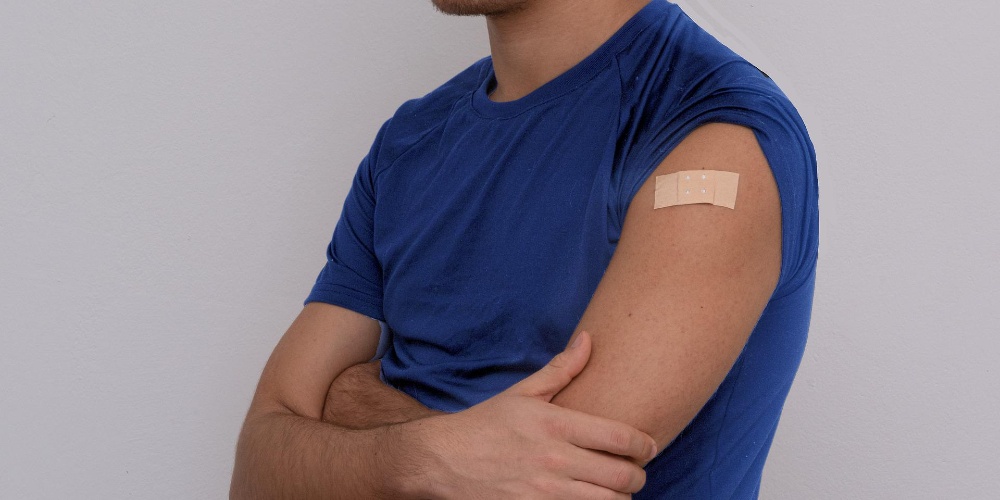
Studies have revealed that shingles can happen in young, healthy individuals after receiving a COVID-19 vaccine. The COVID vaccination has been found to reactivate highly contagious chickenpox virus, according to new studies.
Following the injections of COVID-19, physicians and researchers have noticed an increase in the varicella-zoster virus (VZV), or chickenpox virus, reactivating.
One of the eight herpes viruses that can infect people is the virus that causes chickenpox. The virus that causes chickenpox remains dormant in the nervous system for life after a person experiences it and recovers.
When the chickenpox virus reactivates, it manifests as shingles or herpes zoster (HZ).
Although studies demonstrate that persons who have received the vaccine have a greater incidence of shingles, federal health authorities maintain that there is no connection between COVID-19 vaccinations and shingles.
A case study of six women (out of 491 participants) with an autoimmune condition who experienced shingles 3 to 14 days after getting the first or second dosage of the Pfizer COVID-19 shot was originally published in Israel. 99 participants in the control group did not experience shingles. In April 2021, the report was released in the journal Rheumatology (read below).
“To our knowledge, there were no reports of varicella-like skin rash or HZ in the mRNA-based vaccines COVID-19 clinical trials and our case series is the first one to report this observation in patients within a relatively young age range: 36–61, average age 49 ± 11 years,” the authors wrote.
They hoped that publishing the case series would “raise awareness to a potential causal link between COVID-19 vaccination as a trigger of HZ reactivation in relatively young patients with stable AIIRD [autoimmune inflammatory rheumatic diseases].”

Three healthy males, aged 71, 46, and 42, were reported in a distinct case study from Taiwan to have acquired shingles two to seven days after receiving the first dose of Moderna or AstraZeneca COVID-19 injection.
“HZ does not often appear after the administration of other kinds of vaccinations,” the researchers wrote. “But we believed that there might be a link between COVID-19 vaccine and HZ emergence.”
“One of the reasons is the short delay of onset after vaccination. The other reason is that these three patients were immunocompetent,” they added.
The largest study to date, which used real-world data (pdf) from over two million patients, discovered that the incidence of shingles was higher among those who had received a COVID-19 shot within 60 days than in the unvaccinated group, who were diagnosed with shingles within 60 days of visiting a doctor’s office for any other purpose.
The probability of acquiring shingles was estimated to be 0.20 percent for the group that had received vaccinations vs 0.11 percent for those who hadn’t, and the researchers claim that this “difference was statistically highly significant.”
“Reactivation of the varicella-zoster virus appears to be a potential ADR [adverse drug reaction] to COVID-19 vaccines, at least for mRNA LNP-based formulations,” the authors wrote, adding that “vaccination against COVID-19 seems to potentially raise the risk of precipitating HZ [herpes zoster].”

In April 2022, Dr. Richard Urso, an ophthalmologist and expert in drug design and treatment, said that a significant portion of the three to five patients with long COVID or issues following the COVID-19 shot, “a huge number of them have reactivated Epstein-Barr, herpes simplex, herpes zoster, CMV.”
The U.S. Food and Drug Administration (FDA) asserts that it has not found any safety connection between the COVID-19 shots and the increase in shingles cases that followed their introduction.
“FDA has not seen a safety signal for shingles/herpes zoster following administration of the approved or authorized COVID-19 vaccines,” Abby Capobianco, FDA press officer said, adding that the agency “will continue to closely monitor the safety of these vaccines.”
The COVID-19 vaccine and the reactivation of the chickenpox virus, according to the Centers for Disease Control and Prevention (CDC), “there is no current connection.”
Any negative side effects following a COVID-19 vaccination, according to CDC spokesperson Scott Pauley, are just momentary and are an indication that the vaccine is working.
“Some people have side effects from the vaccine, which are normal signs that their body is building protection,” Pauley wrote. “These side effects may affect their ability to do daily activities, but they should go away in a few days. Some people have no side effects, and allergic reactions are rare.”

Adverse Events of Special Interest

In Pfizer’s safety dossier (pdf), which the FDA released in March 2022, shingles is named as one of the 1,291 adverse occurrences of special interest.
According to Dr. Jesse Santiano, an emergency room physician and internist, adverse events of special interest (AESI) are side effects that might be mild or severe but can result in a significant medical condition that healthcare professionals should watch out for following immunization.
“The medical conditions in the list does not mean that the Pfizer COVID-19 vaccine causes all of those,” Santiano said on May 11. “That’s because we don’t have enough data to make that conclusion, at least not yet.”
Watch the video below:
The list of ailments applies to all COVID-19 vaccinations given worldwide, not just those produced by Pfizer. Whether months or years have passed since receiving a COVID-19 injection, anyone who has done so should report any adverse events to the vaccine manufacturer or the Vaccine Adverse Events Reporting System (VAERS).
After receiving the COVID-19 shot, the unpleasant rash was first reported to VAERS in December 2020. As of June 10, 2022, there were 1.301 million total COVID-19 reports in the database, of which 13,887 cases involved shingles, according to the most recent VAERS data.
In contrast, a search for the shingles vaccination or the herpes zoster and influenza vaccines turned up a total of 1,127 cases in the last three decades and more than 18,000 cases in more than 15 years, respectively.
According to the CDC, VAERS reports do not always imply that a negative reaction to the vaccine was its direct cause.
Treatment
Small blisters or a painful, striped rash, which typically appears on one side of the body or the face, are symptoms of shingles.
The following signs and symptoms are frequently present in shingles sufferers: searing and shooting pain; blisters filled with fluid; itchy, tingly, or numb skin; and fever, chills, headache, or upset stomach.
After the blisters appear, the illness often goes away in two to four weeks. However, some people may experience problems like Ramsay Hunt Syndrome, which paralyzes the face, post-herpetic neuralgia, or visual or hearing loss.

People with shingles can transmit the virus to those without chickenpox or the chickenpox vaccination when the rash is in the blister stage.
About 1 million Americans suffer shingles each year, according to the National Foundation for Infectious Diseases, and “half of the population who lives to 85 years of age will experience shingles during their lifetime.”
The most important risk element for shingles is a weakened or compromised immune system. It is unclear what causes the chickenpox virus to reactivate. The chickenpox virus can reactivate if your immune system is not functioning adequately.
Extreme stress, advanced age, using immunosuppressive medications, as well as specific illnesses and vaccinations, can all raise your risk of developing shingles.
Studies have revealed that shingles can also happen in young, healthy individuals after receiving a COVID-19 vaccine, despite the fact that the risk of developing shingles increases for people 50 and older.
Shingles typically manifest as a secondary condition, according to internist Dr. Keith Berkowitz.
“Typically, shingles is never a primary process, it’s usually a secondary process,” Berkowitz said. “It’s something compromising the immune system leading them to develop shingles.”
According to the CDC, shingles treatment should start as soon as the rash emerges and includes one of the three FDA-approved antivirals to “shorten the length and severity of the illness” and nerve pain relievers. Calamine cream, colloidal oatmeal baths, and cold, wet compresses can all help reduce itching.

According to Berkowitz, who recommends them to his patients, shingles can also be treated with dietary supplements including lysine, quercetin, and vitamin D (if consumed early).
He claims that when it pertains to shingles, a person’s body’s lysine to arginine ratio is very crucial.
“The spreading of shingles requires the virus to multiply, and the amino acid arginine that helps the herpes virus replicate. Lysine interferes with arginine and helps prevent herpes from spreading,” Berkowitz said.
Essential amino acids like lysine and arginine are required for the body to produce proteins. Lysine, unlike arginine, cannot be produced by the body on its own and must instead be acquired from specific meals or supplements. Avoiding foods high in arginine, such as nuts and seeds, tofu, and chocolate, among other things, is advised during a shingles outbreak.
According to webmd.com, the natural pigment (flavonoid) quercetin, which is included in many fruits, vegetables, and grains, has anti-inflammatory and antioxidant properties that “might help reduce swelling, kill cancer cells, control blood sugar, and help prevent heart disease.” Quercetin “suppresses viral replication” in shingles, according to Berkowitz.
For the entire herpes zoster spectrum, vitamin D “acts as an effect-modifier for the entire herpes zoster spectrum with regard to disease susceptibility, manifestation, the efficacy of pharmacologic management, and emergent complications during treatment,” according to Berkowitz.
Studies have revealed that vitamin D is essential for controlling immune response and inflammation in addition to supporting bone health.
Berkowitz advises taking probiotics like lactobacillus in addition to lysine, quercetin, and vitamin D to perhaps strengthen your immune system.
“Probiotics such as lactobacillus may help to treat herpes by boosting your body’s immune system,” Berkowitz said. “Special peptides are found in lactobacillus and are essential in inducing a rapid immune response in your body. Once activated, the immune system can do its job of protecting your body.”
People who are experiencing shingles symptoms should speak with their doctor about the best course of treatment for them. Anyone who has shingles on their face should consult a doctor right away.
The shingles vaccination is advised by the CDC for adults 19 years of age and older “who have weakened immune systems because of disease or therapy” in order to avoid the disease.

Two Storms, One Harvest

Every food crisis in living memory has been a one-shock event. The 2008 price spike was a commodity bubble. The 2020 shortages were a logistics failure. The 2022 grain scare was a war on one exporter’s ports. Each time, the system bent, adjusted, and recovered, and each time the experts assured us afterward that global markets are simply too big and too diversified to fail.
What nobody in Washington seems eager to discuss is that 2026 is shaping up to be something the modern food system has never actually faced. Two independent shocks, one climatic and one geopolitical, are converging on the same harvest cycle at the same time. Not sequentially. Simultaneously.
Start with the weather. The Pacific Ocean is currently building toward what forecasters now openly call a record event. NOAA’s Climate Prediction Center puts the odds of at least a strong El Niño near 88 percent, with roughly two in three odds it reaches “very strong” status, the tier reserved for perhaps three or four events in the entire satellite era. Every major global model now projects a median peak in Super El Niño territory, and most of them project it exceeding the 2015-16 event, which until now held the modern record. Sea surface anomalies were already brushing the super threshold in mid-July, months before these events normally peak. The atmosphere has already shifted into El Niño mode, and the event is forecast to crest in late fall and early winter.
This is not about “climate change.” It’s about the standard cycles of weather, and the cycle we’re currently in is one that has likely devastated societies in the past. We’re better prepared as a society today, but not all Americans are equally prepared.
Serious households have started doing the quiet math on their own. Grocery bills tell part of the story, and the forecast maps tell the rest, which is why long-term food storage has moved from fringe hobby to mainstream line item in the family budget, with established suppliers like Heaven’s Harvest seeing demand from people who five years ago would have rolled their eyes at the idea. That instinct is not paranoia. It is pattern recognition, and the pattern is worth walking through carefully.
Editor’s Note: Heaven’s Harvest IS a sponsor, but the warnings of this article are real and would be written even if we didn’t have a survival food sponsor. With that said, those who take advantage of what they offer can use promo code “Patriot” for 15% off.
The Fertilizer Clock Is Already Running
While the Pacific warms, the second shock has been unfolding in the Strait of Hormuz. The conflict with Iran turned the world’s most important energy chokepoint into a contested waterway, and the consequences reach far beyond the gas pump. Roughly a third of global fertilizer trade moves through Hormuz, and the disruption sent urea prices up 86 percent year over year by March, with a 53 percent jump in a single month.
The World Bank projects energy prices rising about 24 percent in 2026 and fertilizer about 31 percent. By its own accounting, fertilizer prices ran 35 percent higher in the first five months of this year than the same period last year.
Here is the mechanism the nightly news will not explain. Fertilizer is not a grocery item. It is a time-delayed input. The nitrogen a farmer in Iowa or Punjab could not afford to apply this spring does not show up as a problem this spring. It shows up as a thinner harvest six to twelve months later.
The World Bank’s own food security brief concedes that the effects of reduced applications earlier this season “are likely to become visible only later in harvest outcomes.” Translate that from institutional language into plain English and it means this. The damage is already done, it is already in the ground, and we are simply waiting for it to arrive on the shelf.
Now check the calendar. Six to twelve months from the spring planting season lands us squarely in late 2026 and early 2027. Which is precisely when the strongest El Niño in the instrumental record is forecast to peak, bringing its signature droughts to Southeast Asia, Australia, southern Africa, northern Brazil, and South Asia, the very regions that grow the world’s rice, sugar, and oilseeds.
The World Bank warns openly that a strong El Niño “could disrupt multiple crop belts simultaneously” on top of the conflict-driven input costs. Their baseline projection assumes the Middle East disruptions ease by autumn. What in the last two years of Middle East history suggests that assumption is safe?
The System Has No Slack Left
The comfortable answer is that global markets always adjust. But adjustment requires slack, and the slack is gone. Global cereal production is expected to decline from last year’s records even before El Niño does its work. The UN World Food Programme, hardly a den of right-wing preppers, is calling this the most significant disruption to its supply chains since Covid and the invasion of Ukraine, and its supply chain director put the stakes bluntly.
Today’s supply chain challenges are tomorrow’s hunger crisis.
There is also a political dimension that markets cannot price. When food gets scarce, governments do not behave like economists. They behave like politicians. Export bans, hoarding mandates, and panic buying at the national level turned the modest rice shortfall of 2008 into a global crisis, and analysts are already warning that import-dependent nations are the first dominoes.
The 2015-16 Super El Niño, a far weaker event than what is now forecast, threw tens of millions into food stress across Africa and Asia. This one is projected to be stronger, and it arrives with fertilizer already rationed by price and shipping lanes already contested by missiles.
What Joseph Knew
Scripture does not treat preparation for lean years as faithlessness. It treats it as wisdom delivered in advance to those willing to act on it.
Behold, there come seven years of great plenty throughout all the land of Egypt: And there shall arise after them seven years of famine; and all the plenty shall be forgotten in the land of Egypt.
Joseph did not respond to that warning with a hashtag or a committee. He stored grain during the years of abundance, and when the famine came, Egypt stood while its neighbors begged. The lesson is not that famine is certain. It is that the time to prepare is precisely when preparation still looks optional.
Nobody who filled a pantry in a year of plenty has ever regretted it, and nobody standing in an empty aisle has ever been glad he waited for certainty.
None of this calls for panic, and panic is the enemy of sound judgment anyway. It calls for the same unglamorous prudence our grandparents considered ordinary. Keep some cash margin, know your local growers, and put real food in deep storage while it is cheap and available, because the entire arc of this story is that cheap and available is a closing window.
Families looking for a straightforward place to start can visit Heaven’s Harvest and use promo code Patriot for 15 percent off long-term storable food. The forecasts may yet soften, the strait may yet reopen, and we should pray they do. But hope is a fine thing to hold and a foolish thing to eat.
