

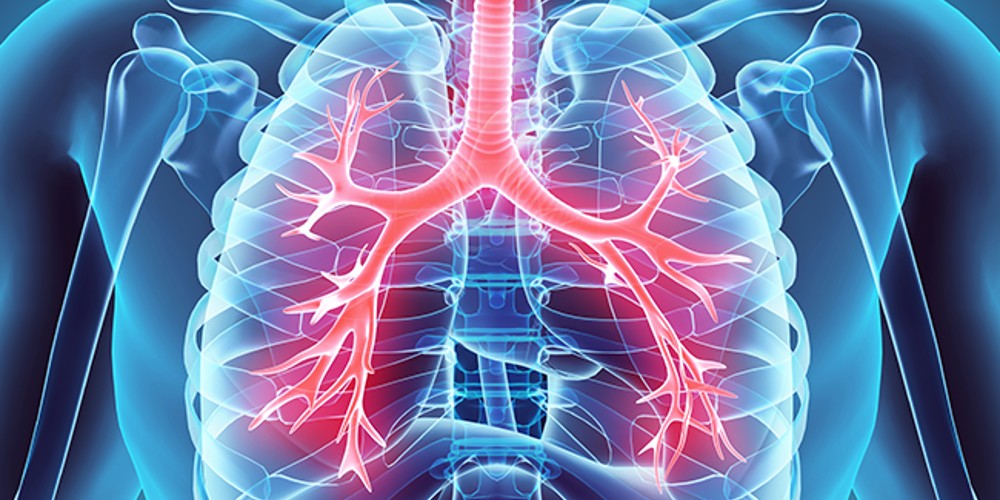
In just four months in 2021, there were 729,496 adverse events pertaining to the vaccine, of which 3,420 were thrombotic; 63 of those affected died. This raises the question regarding COVID-19 vaccine causing lung blockages.
A recent case report, which was released on August 5, 2022 in the Cureus Journal of Medical Science, has informed the medical community of the risk of artery blockage from COVID vaccination.
The case report details how their 67-year-old patient began experiencing shortness of breath two days after receiving the second dosage of the COVID-19 vaccination from Pfizer. Then, even after taking a 30-minute break, he was having trouble breathing while working in the yard. He therefore visited the emergency room.
The emergency room doctors discovered that this patient’s heart was beating rapidly and that one of his legs had begun to bulge. His blood pressure was significantly elevated. A blood test to check his troponin levels found that he had an unusually high troponin level. Troponin is a protein that is found in the cardiac muscles. Troponin is released into the bloodstream when the heart muscles are injured as a result of a heart attack or other stress on the heart.
The patient was admitted to the hospital after a cardiologist was summoned. Given the severity of his lab tests, doctors feared he would have suffered a “dismal outcome if urgent treatment had not been initiated.”
In other words, he probably would have passed away if he had not gone to the ER right away for emergency care.
Pulmonary Embolism Post Vaccination
A CT scan revealed that the individual had a pulmonary embolism, according to the physicians. A pulmonary embolism is a large blood clot that forms in a main artery running from the heart to the lungs, blocking off blood flow. The embolism had a severe impact on his kidneys as well.
Shortness of breath, an unnaturally fast heart rate (tachycardia), leg swelling (as the patient in this case study experienced), and abrupt death are all signs of a pulmonary embolism.
Another clot, a deep vein thrombosis, was discovered in this patient’s calf. This clot was the source of his leg swelling.
Catheter Surgery
The physicians responded immediately, administering blood thinners and preparing him for catheter surgery. To remove the clot, they inserted a catheter through his neck and into his heart.
The patient appeared to have totally recovered after a few days in the hospital after his surgery.
The surgical staff hypothesized vaccine-induced immune thrombotic thrombocytopenia because this 67-year-old guy had no risk factors or prior history of thrombosis and had recently received a Pfizer vaccine.
Minnesota Dentist Suffers Vaccine-Induced Pulmonary Embolism
Doug Trebtoske believed it was his duty as a healthcare professional to lead by example by receiving all the advised COVID-19 vaccinations.
Despite not requiring his staff members to get immunized, Rochester, Minnesota dentist Trebtoske said that he “blindly accepted the CDC position on vaccination.”

He was motivated to get vaccinated because a relative by marriage, also 68 years old and in good health, succumbed to COVID-19 a month before the immunizations became accessible.
Trebtoske, however, experienced a severe cough following the third Pfizer immunization, which he received in September 2021. Thirty days after receiving his third vaccination, he rushed to the emergency room due to excruciating rib pain. “The pain was unreal, like someone was sticking a knife in my chest,” he said.
In the beginning of November, he was admitted with a pulmonary embolism and two broken ribs because the physicians were unsure of what was wrong with him. Since then, he has endured two rib surgeries and been admitted to the hospital twice.
Trebtoske and his doctor both feel that the pulmonary embolism was vaccine-induced thrombocytopenia from the third dosage of the Pfizer vaccine.
Vaccine-induced Immune Thrombotic Thrombocytopenia
According to the American College of Cardiology, people with vaccine-induced immune thrombotic thrombocytopenia, also known as VITT, typically have low platelet counts in their blood as well as blood clots in an artery or vein that can cause swelling in one leg, chest pain, or total numbness.
Both thrombosis and thrombocytopenia pose a risk to life.

Since the start of the COVID-19 vaccination, Dr. Kenji Yamamoto, a cardiovascular surgeon at Okamura Memorial Hospital in Shizuoka, Japan, has seen a sharp increase in vaccine-induced immune thrombotic thrombocytopenia. Yamamoto argues that the vaccination booster campaign should be discontinued due to the risks of VITT.
“The media have so far concealed the adverse events of vaccine administration, such as vaccine-induced immune thrombotic thrombocytopenia (VITT), owing to biased propaganda,” Yamamoto wrote in a letter (read below) published in the journal Virology on June 5, 2022.
Post Vaccination Blood Disorders in Previously Healthy Individuals
According to a Blood article, shortly after the COVID-19 vaccinations were introduced in Europe, hematologists “began observing previously healthy young individuals present with severe, extensive thrombosis.” “Unlike most cases of thrombosis, there was associated thrombocytopenia, and no predisposing thrombotic risk factors.”
The AstraZeneca vaccine, that was extensively accessible in Europe but not in the United States, was assumed to be primarily responsible for these cases.
Over 70% of the youngsters who contracted VITT, whose symptoms typically appeared five to thirty days after receiving the SARS-CoV-2 vaccine, perished.
In more than a dozen other peer-reviewed scientific studies, this vaccination adverse effect has also been covered. Doctors have suggested diagnostic procedures for VITT and published case reports from Thailand, India, and several other nations.
At least 242 clotting cases and 49 vaccination deaths in younger, healthy individuals had been documented in the United Kingdom five months after the AstraZeneca vaccine was initially made accessible, according to the BBC.
The United Kingdom started advising that adults between the ages of 18 and 39 be given a different vaccine option starting in May 2021.
Then, in October 2021, a study of 220 cases of thrombosis in the United Kingdom that were determined to be vaccine-induced was published in the New England Journal of Medicine.
Similar to the Pfizer patient, these patients primarily suffered blood clots in their legs and lungs (the pulmonary arteries).
However vaccine-associated thrombosis has also been reported following immunization with the Moderna and Pfizer vaccines, although VITT had been observed most frequently after injection of the AstraZeneca and Johnson & Johnson vaccinations.
Some people experience a “prothrombotic state” after vaccination, which disrupts the blood’s levels of clotting cells and increases the risk of blood clots forming in the blood vessels.
There were additional early warning papers in the scientific literature, as the authors of the current case study note. A group of six Norwegian physicians and an Austrian medical group both wrote articles in the New England Journal of Medicine about thrombosis post COVID-19 vaccination.
A study published in the journal Vaccines in November 2021 revealed that in just four months in 2021, there were 729,496 adverse events, of which 3,420 were thrombotic; 63 of those affected died; six of those affected had received a vaccine from Moderna, 25 from Pfizer, and 32 from Oxford-AstraZeneca.
Denying the Connection
Doug Trebtoske, a dentist from Minnesota, has been assured by a number of Mayo Clinic experts that there is no link between his lung issues and the COVID-19 immunizations. He claimed that instead, they gave him the diagnosis of having a “pulmonary embolism of undetermined origin.”
He received his third Pfizer vaccine nine months ago. Trebtoske is still ill and unable to work. He lost his dentistry practice and is no longer able to dance. He is thinking about having yet another big operation to correct a rib issue brought on by the pulmonary embolism.
Furthermore, after receiving three vaccinations, he tested positive for COVID-19 twice.
He is uncertain whether he would make the same vaccines decisions if he had to do it all over again.
“I probably would have been better off not to have gotten the vaccinations, personally,” he said. “I feel my body over-reacts to the vaccine, and that’s why I got the blood clots. My family physician feels the same way.”

Two Storms, One Harvest

Every food crisis in living memory has been a one-shock event. The 2008 price spike was a commodity bubble. The 2020 shortages were a logistics failure. The 2022 grain scare was a war on one exporter’s ports. Each time, the system bent, adjusted, and recovered, and each time the experts assured us afterward that global markets are simply too big and too diversified to fail.
What nobody in Washington seems eager to discuss is that 2026 is shaping up to be something the modern food system has never actually faced. Two independent shocks, one climatic and one geopolitical, are converging on the same harvest cycle at the same time. Not sequentially. Simultaneously.
Start with the weather. The Pacific Ocean is currently building toward what forecasters now openly call a record event. NOAA’s Climate Prediction Center puts the odds of at least a strong El Niño near 88 percent, with roughly two in three odds it reaches “very strong” status, the tier reserved for perhaps three or four events in the entire satellite era. Every major global model now projects a median peak in Super El Niño territory, and most of them project it exceeding the 2015-16 event, which until now held the modern record. Sea surface anomalies were already brushing the super threshold in mid-July, months before these events normally peak. The atmosphere has already shifted into El Niño mode, and the event is forecast to crest in late fall and early winter.
This is not about “climate change.” It’s about the standard cycles of weather, and the cycle we’re currently in is one that has likely devastated societies in the past. We’re better prepared as a society today, but not all Americans are equally prepared.
Serious households have started doing the quiet math on their own. Grocery bills tell part of the story, and the forecast maps tell the rest, which is why long-term food storage has moved from fringe hobby to mainstream line item in the family budget, with established suppliers like Heaven’s Harvest seeing demand from people who five years ago would have rolled their eyes at the idea. That instinct is not paranoia. It is pattern recognition, and the pattern is worth walking through carefully.
Editor’s Note: Heaven’s Harvest IS a sponsor, but the warnings of this article are real and would be written even if we didn’t have a survival food sponsor. With that said, those who take advantage of what they offer can use promo code “Patriot” for 15% off.
The Fertilizer Clock Is Already Running
While the Pacific warms, the second shock has been unfolding in the Strait of Hormuz. The conflict with Iran turned the world’s most important energy chokepoint into a contested waterway, and the consequences reach far beyond the gas pump. Roughly a third of global fertilizer trade moves through Hormuz, and the disruption sent urea prices up 86 percent year over year by March, with a 53 percent jump in a single month.
The World Bank projects energy prices rising about 24 percent in 2026 and fertilizer about 31 percent. By its own accounting, fertilizer prices ran 35 percent higher in the first five months of this year than the same period last year.
Here is the mechanism the nightly news will not explain. Fertilizer is not a grocery item. It is a time-delayed input. The nitrogen a farmer in Iowa or Punjab could not afford to apply this spring does not show up as a problem this spring. It shows up as a thinner harvest six to twelve months later.
The World Bank’s own food security brief concedes that the effects of reduced applications earlier this season “are likely to become visible only later in harvest outcomes.” Translate that from institutional language into plain English and it means this. The damage is already done, it is already in the ground, and we are simply waiting for it to arrive on the shelf.
Now check the calendar. Six to twelve months from the spring planting season lands us squarely in late 2026 and early 2027. Which is precisely when the strongest El Niño in the instrumental record is forecast to peak, bringing its signature droughts to Southeast Asia, Australia, southern Africa, northern Brazil, and South Asia, the very regions that grow the world’s rice, sugar, and oilseeds.
The World Bank warns openly that a strong El Niño “could disrupt multiple crop belts simultaneously” on top of the conflict-driven input costs. Their baseline projection assumes the Middle East disruptions ease by autumn. What in the last two years of Middle East history suggests that assumption is safe?
The System Has No Slack Left
The comfortable answer is that global markets always adjust. But adjustment requires slack, and the slack is gone. Global cereal production is expected to decline from last year’s records even before El Niño does its work. The UN World Food Programme, hardly a den of right-wing preppers, is calling this the most significant disruption to its supply chains since Covid and the invasion of Ukraine, and its supply chain director put the stakes bluntly.
Today’s supply chain challenges are tomorrow’s hunger crisis.
There is also a political dimension that markets cannot price. When food gets scarce, governments do not behave like economists. They behave like politicians. Export bans, hoarding mandates, and panic buying at the national level turned the modest rice shortfall of 2008 into a global crisis, and analysts are already warning that import-dependent nations are the first dominoes.
The 2015-16 Super El Niño, a far weaker event than what is now forecast, threw tens of millions into food stress across Africa and Asia. This one is projected to be stronger, and it arrives with fertilizer already rationed by price and shipping lanes already contested by missiles.
What Joseph Knew
Scripture does not treat preparation for lean years as faithlessness. It treats it as wisdom delivered in advance to those willing to act on it.
Behold, there come seven years of great plenty throughout all the land of Egypt: And there shall arise after them seven years of famine; and all the plenty shall be forgotten in the land of Egypt.
Joseph did not respond to that warning with a hashtag or a committee. He stored grain during the years of abundance, and when the famine came, Egypt stood while its neighbors begged. The lesson is not that famine is certain. It is that the time to prepare is precisely when preparation still looks optional.
Nobody who filled a pantry in a year of plenty has ever regretted it, and nobody standing in an empty aisle has ever been glad he waited for certainty.
None of this calls for panic, and panic is the enemy of sound judgment anyway. It calls for the same unglamorous prudence our grandparents considered ordinary. Keep some cash margin, know your local growers, and put real food in deep storage while it is cheap and available, because the entire arc of this story is that cheap and available is a closing window.
Families looking for a straightforward place to start can visit Heaven’s Harvest and use promo code Patriot for 15 percent off long-term storable food. The forecasts may yet soften, the strait may yet reopen, and we should pray they do. But hope is a fine thing to hold and a foolish thing to eat.
