

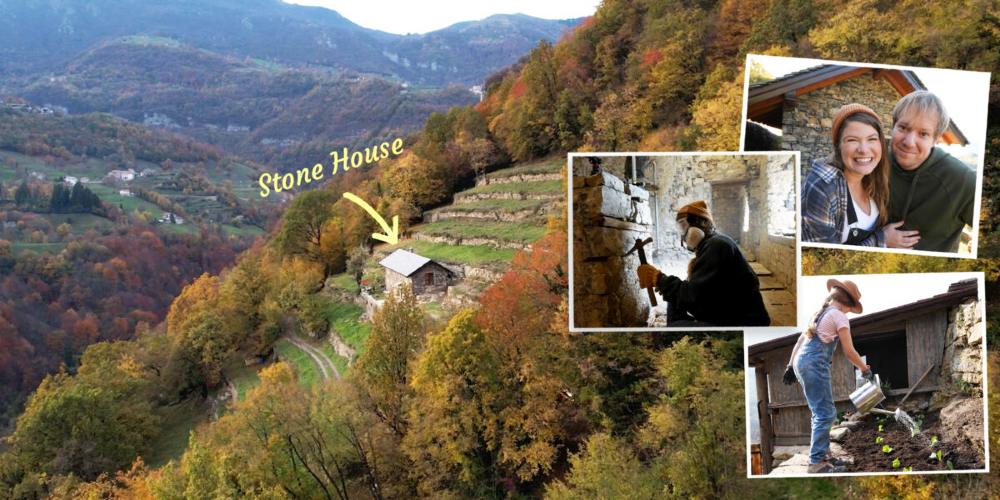
A family of four hailing from the United States was keen to live out their homesteading dream in Europe and found the perfect place after sifting through thousands of options: a 200-year-old stone house in the Italian Alps with boundless potential. Six months into the restoration, the family wants the world to know that changing the narrative is possible.
Bradey and Heather Jobson of Ohio, both 34, are parents to daughters, Alexa, 9, and Chloe, 7. Frustrated by the pace of life in the United States, they sold most of their belongings in 2020 and set off to travel the world.
“We sold our house, sold our cars, sold our furniture and clothes, even some of the kids’ toys, and donated the rest,” Bradey told The Epoch Times. “We took that pool of money saved up, I think about US$40,000, and began traveling the world for almost two years. During that time, we were looking for a new place to live.”
Falling in Love With a 200-Year-Old Stone Building
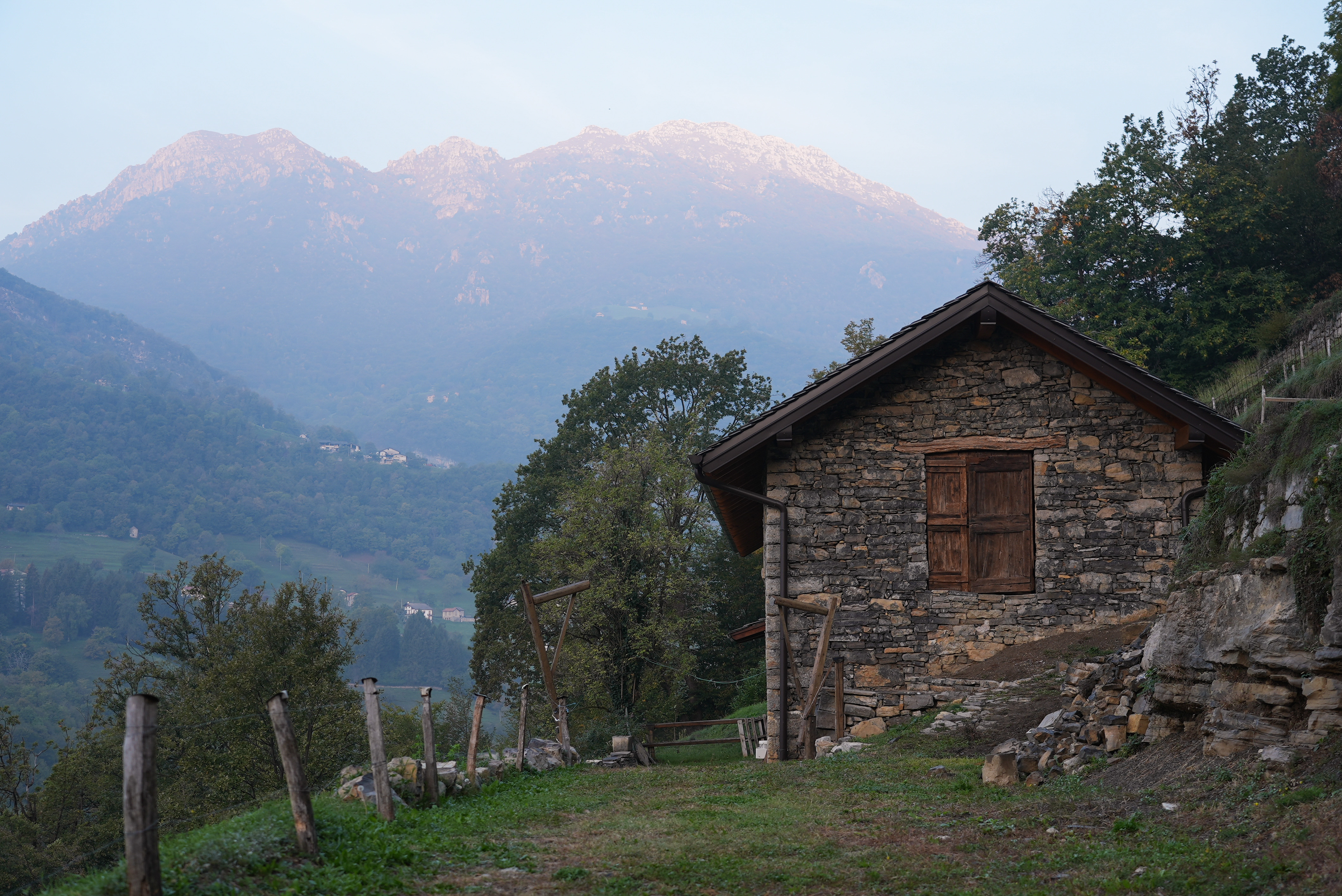
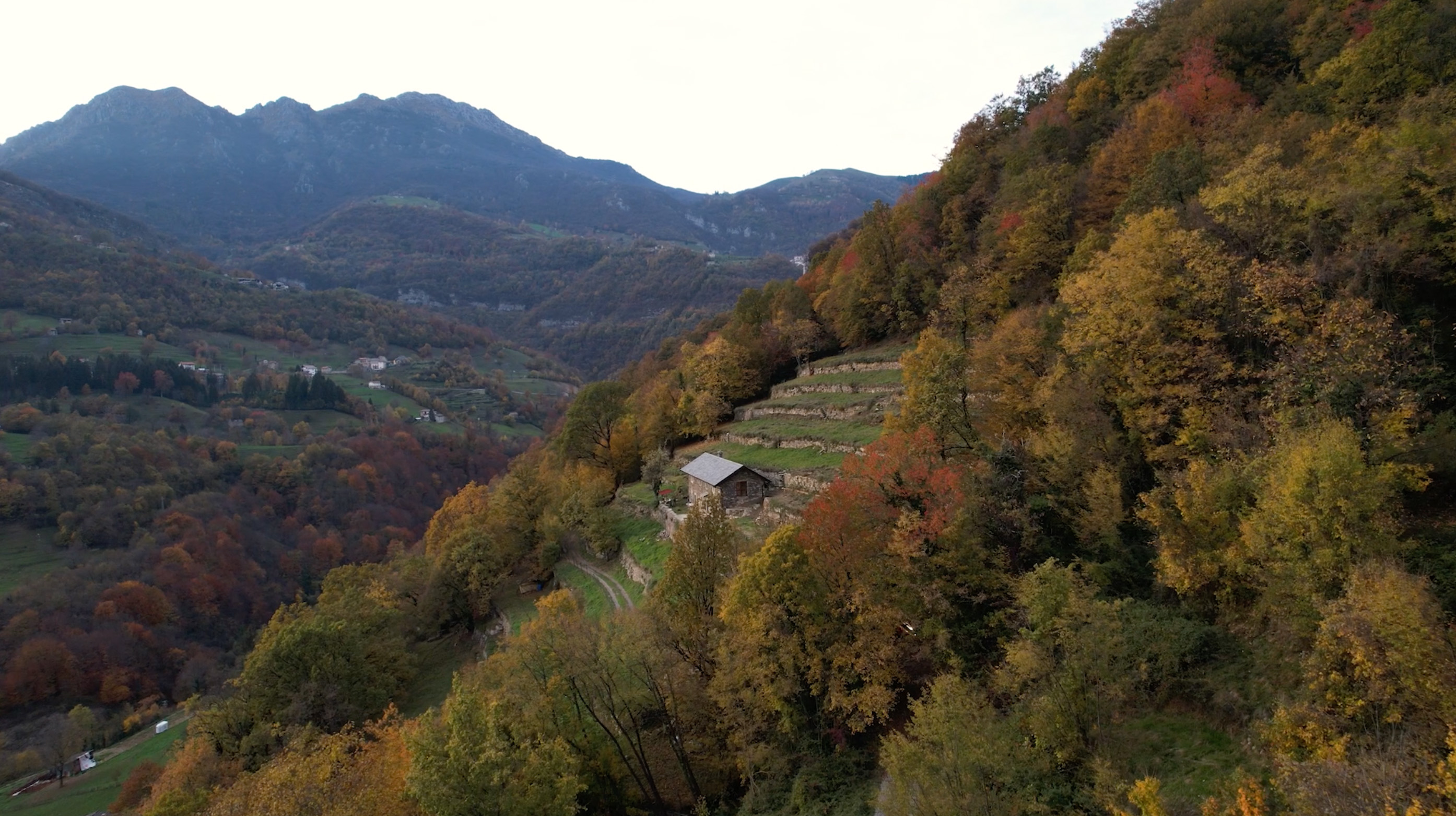
In their travels, the family explored Australia, Costa Rica, Indonesia, the Philippines, and parts of Europe before falling in love with northern Italy and its culture. They parked themselves near Lake Como for a month to explore real estate. For the family, house-hunting in Italy was “like finding a needle in a haystack.” But after innumerable viewings, they stepped onto a four-acre property with a unique, abandoned stone house in Limbadia, in the foothills of the Italian Alps, and knew just right then that they had found their home.
“We fell in love with this 200-year-old stone building,” Bradey said. “It’s a very beautiful temperate climate here, but we have snowcapped mountains off in the distance and plenty of hiking trails. … There are fantastic airports that connect the rest of the world, and it’s also an easy drive to get to the rest of Europe.”
Bradey shared that many people have thought the family left the United States for political reasons, however, he confirms that wasn’t the reason at all.
“The primary reason we left was because we were looking for a culture that we more identified with,” he said. “The culture in America is exceptionally busy and chaotic, a culture that prioritizes work first and relationships second. In our travels, what we quickly realized is that most of the world lives in reverse of that.”

Bradey and Heather closed on the stone house in October 2022, setting them back €120,000 (approx. US $131,000). Next came the renovation.
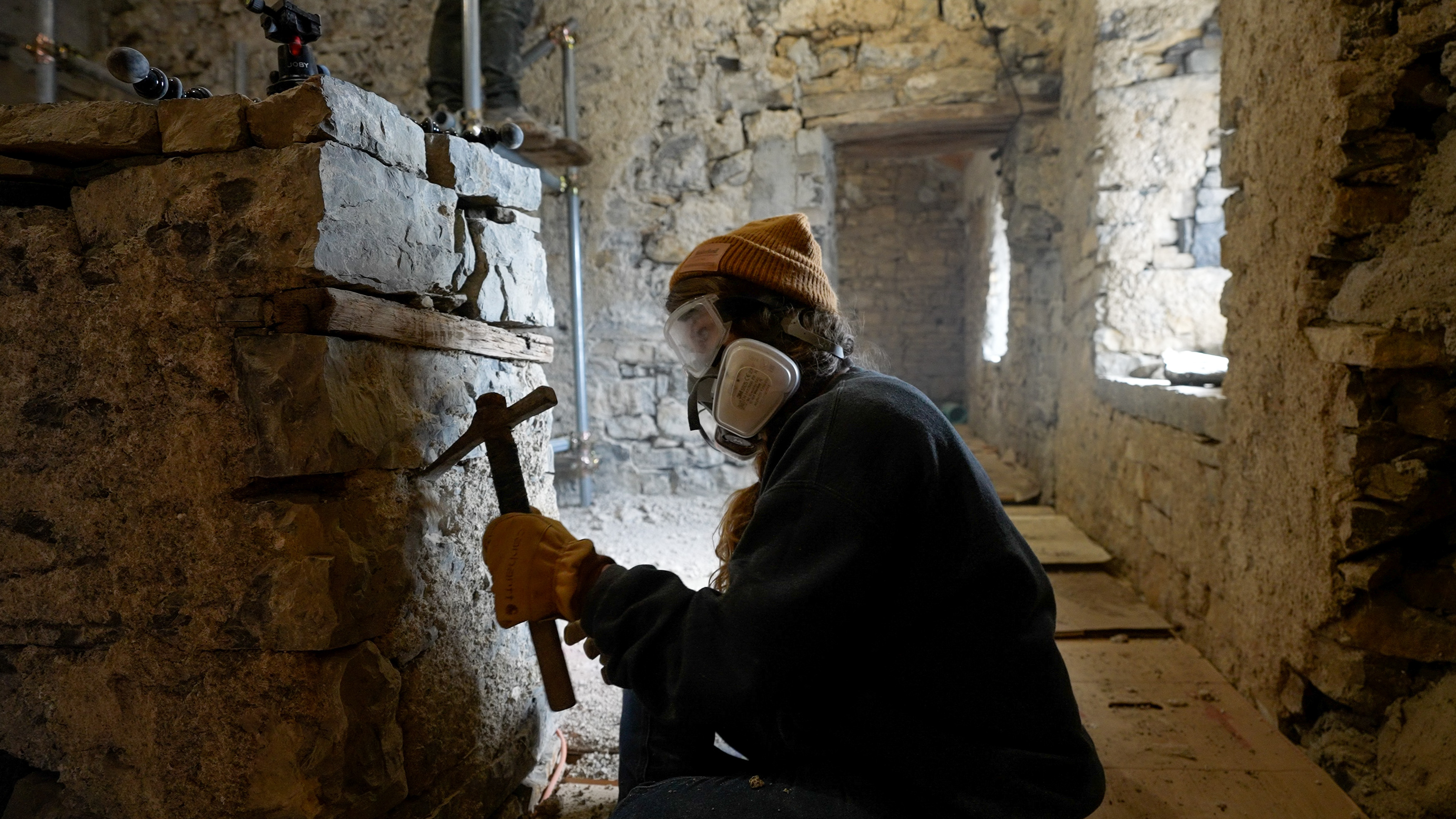
Bradey said: “The house had been abandoned for quite a long time, so there’s no electricity, no plumbing, no running water. … The first couple of months, we weren’t exactly doing construction, we were just kind of getting our feet wet. A lot of time was spent adapting to the new culture, getting settled, and waiting for our permits.”
The stone house was actually licensed as a barn.
“[S]o we are taking this abandoned barn, stripping it down, and making it our dream home. In the process of doing that, we have to meet certain new European Union regulations for it to be a ‘greenhouse,’ so it’s a very challenging process to do it properly, legally. But in the end, it will be essentially a zero-energy home,” Bradey said.
Although Bradey believes it would have been easier to just rent a comfortable, affordable apartment with a view of the mountains, the couple was in love with the idea of breathing life into something that was abandoned and had historical significance.
“There’s so many of these beautiful properties in Italy that deserve to be restored, to shine again, and deserve to be lived in,” Bradey said. “But it takes an incredible amount of work to get them back to a point where you’re legally allowed to live in them.”
Breathing Life Into an Abandoned House
Bradey and Heather began their reconstruction outside by tearing down an old goat fence and using the wood to build an outdoor kitchen. They then erected a tall chestnut wood fence, using wood from a local mill, to keep their daughters safe from the 26-foot drop into the valley below.

“We’ve been using mostly the materials that we find on the property,” said Bradey, who is living off-site with his family in a rented apartment. “We’ve done a lot of gardening, a lot of building up, and fixing stone walls and stone steps. … We have running water and a cooking stove, and we built a composting toilet, so we have all of the makeshift necessities to be working here full-time. … We just can’t sleep here.”
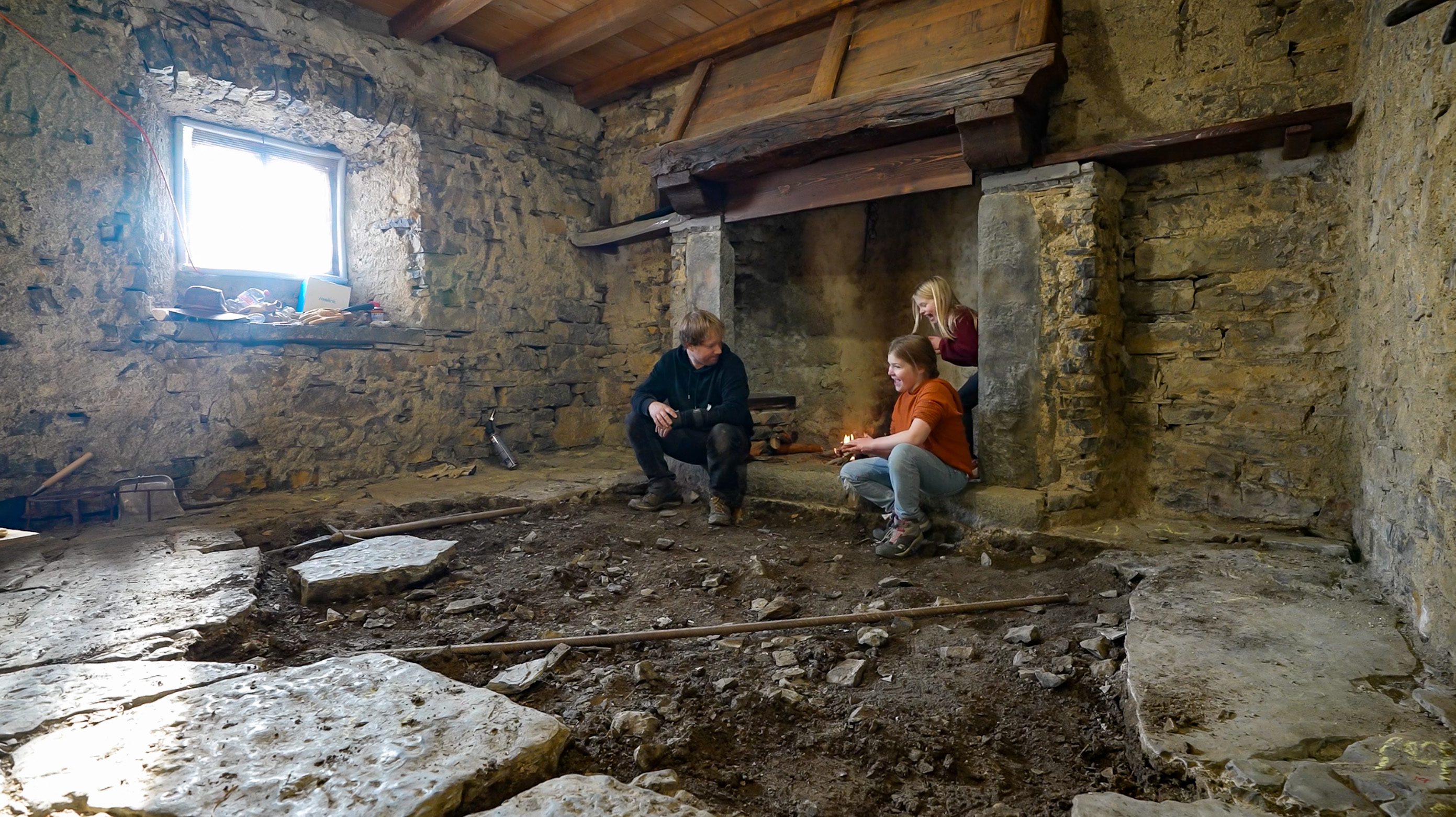
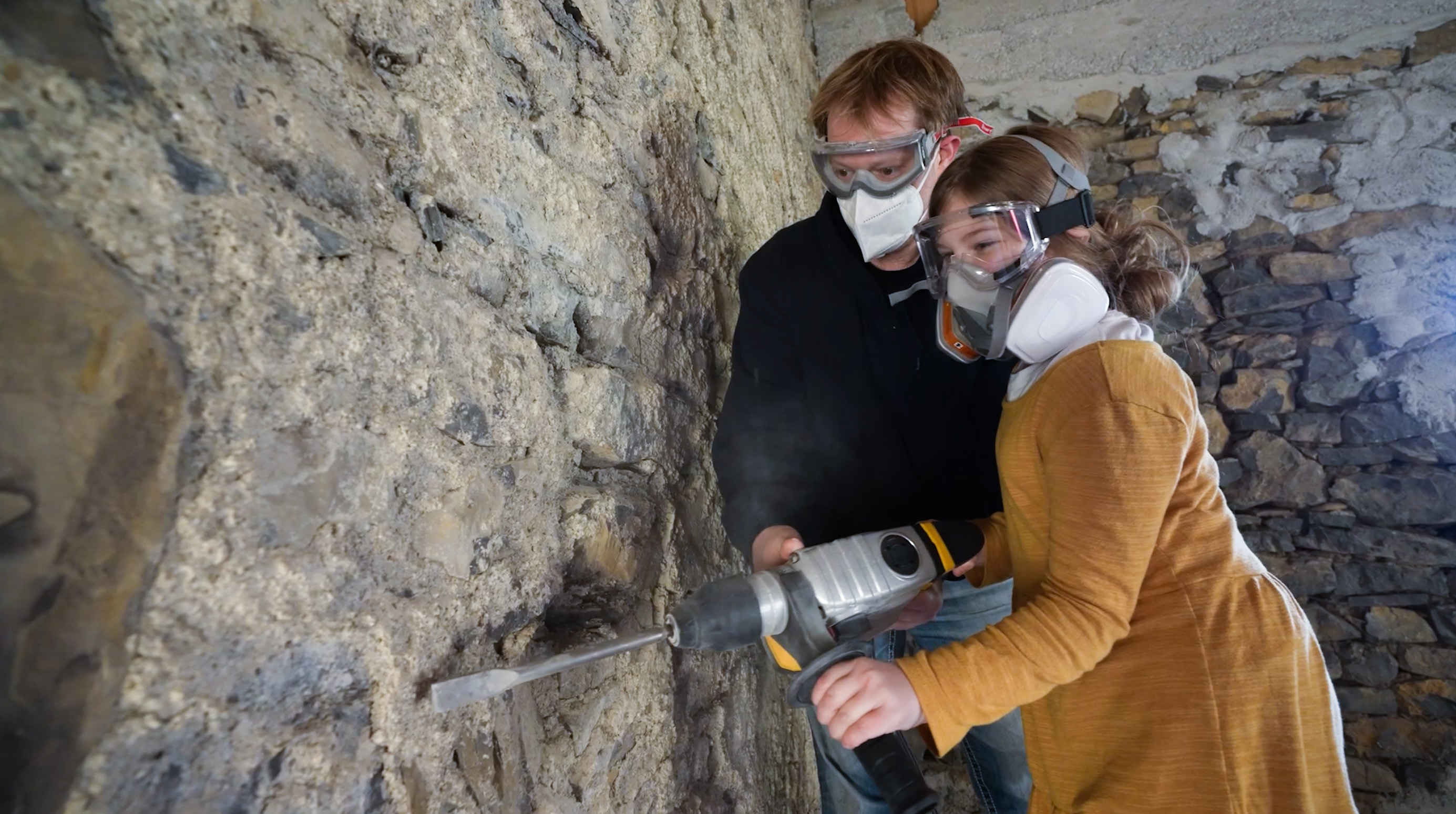
For the interior, Bradey and Heather have had to start with the heavy work, digging down to 30 inches through solid clay and parts of the mountain using a jackhammer to lay pipes and insulation under the entire ground floor of the property, competing with small boulders weighing as much as approx. 661 pounds (300 kilos).
So far, they have also planted a garden and plan to lay enough solar panels on the large roof of the south-facing home to generate all the electricity they’ll need, including for heating, air conditioning, and charging their car, eventually eliminating energy bills completely.
Bradey said the property came with a donkey named Stella, who lived with them for the first few months of the renovation. But since donkeys need other animal companions and the family wasn’t able to provide for her, she was adopted by a neighbor.
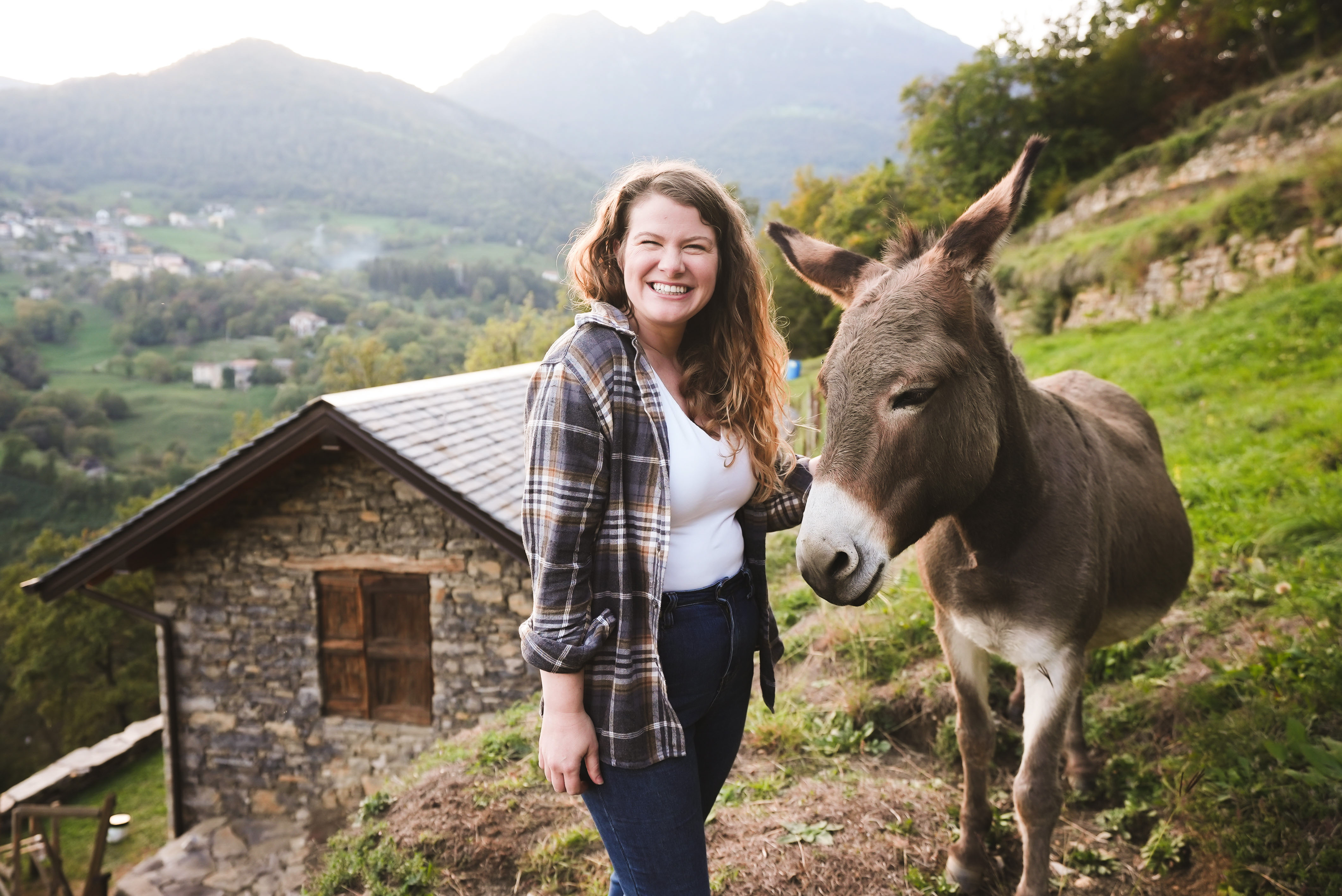
Although the whole renovation is a challenge, Bradey said: “I think that’s part of the reason we’re doing it; we’ve always been drawn to living out of our comfort zone.”
Thriving
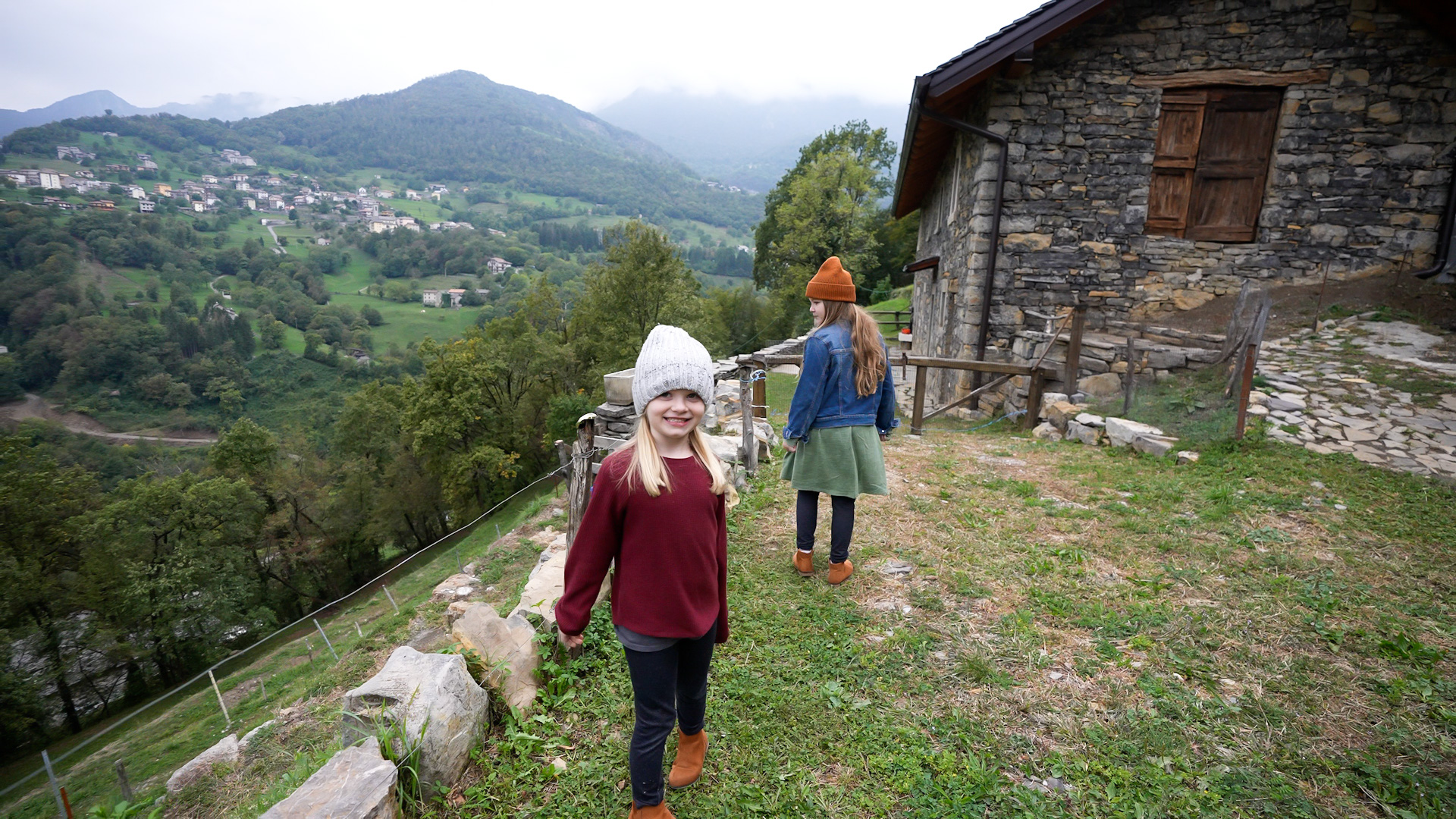
Two family members that have readily embraced living outside of their comfort zone are Alexa and Chloe, who get involved in the renovation whenever it’s safe to do so.

“They’ve helped us digging in the foundation a little bit, they’ve helped build the fence. Pretty much every project along the way is not only a chance for us to spend time together, but also a chance to teach them work ethic and how to build things,” Bradey said. “They pick up sticks and stones, and they build the most incredible forts. They’re always building ‘fairy gardens,’ as they call them, and their creativity just comes alive.”
This is one of the reasons the couple has been trying to push their timeline as quickly as possible.
Bradey, who lived in Ukraine between the ages of 9 and 16, knows what it is like to emigrate and was hesitant to move his kids but is proud of their resilience.
“It’s a very painful thing to go through and yet they’ve done incredibly well,” he said. “I’m sure that has to do with the years and years of travel and the fact that this is the first home they’ve had in the last two years. They’re doing so well. They are learning the language, they’re attending school. … They’re thriving.”
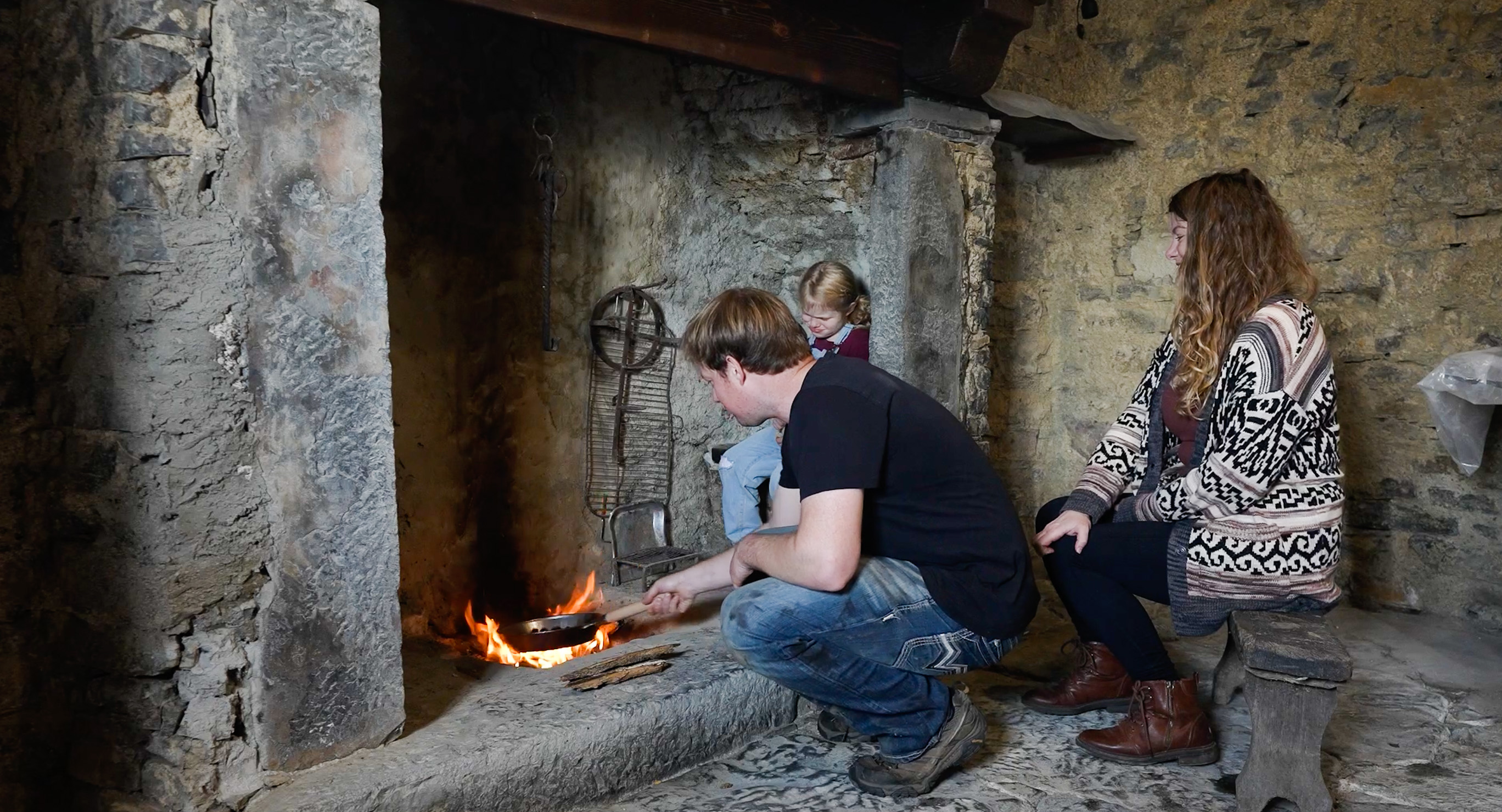
To share their homestead dream with the world and to generate revenue for the renovation, Bradey, who has a background in cinematography, is sharing their progress on YouTube. Their family video blogs chronicle everything from leaving the United States, to their first days at the stone house, to building their outdoor kitchen.
“I want people to know that you can live life outside of a box, that you can write your own story, that you can, what I like to call, ‘reverse engineer’ that finish line,” Bradey said. “10 years ago, we sat down and we scripted out how we wanted our life to look, and every year it changes a little bit. We have worked incredibly hard to get here. But it is possible, no matter what background you come from or what financial position you’re in.”
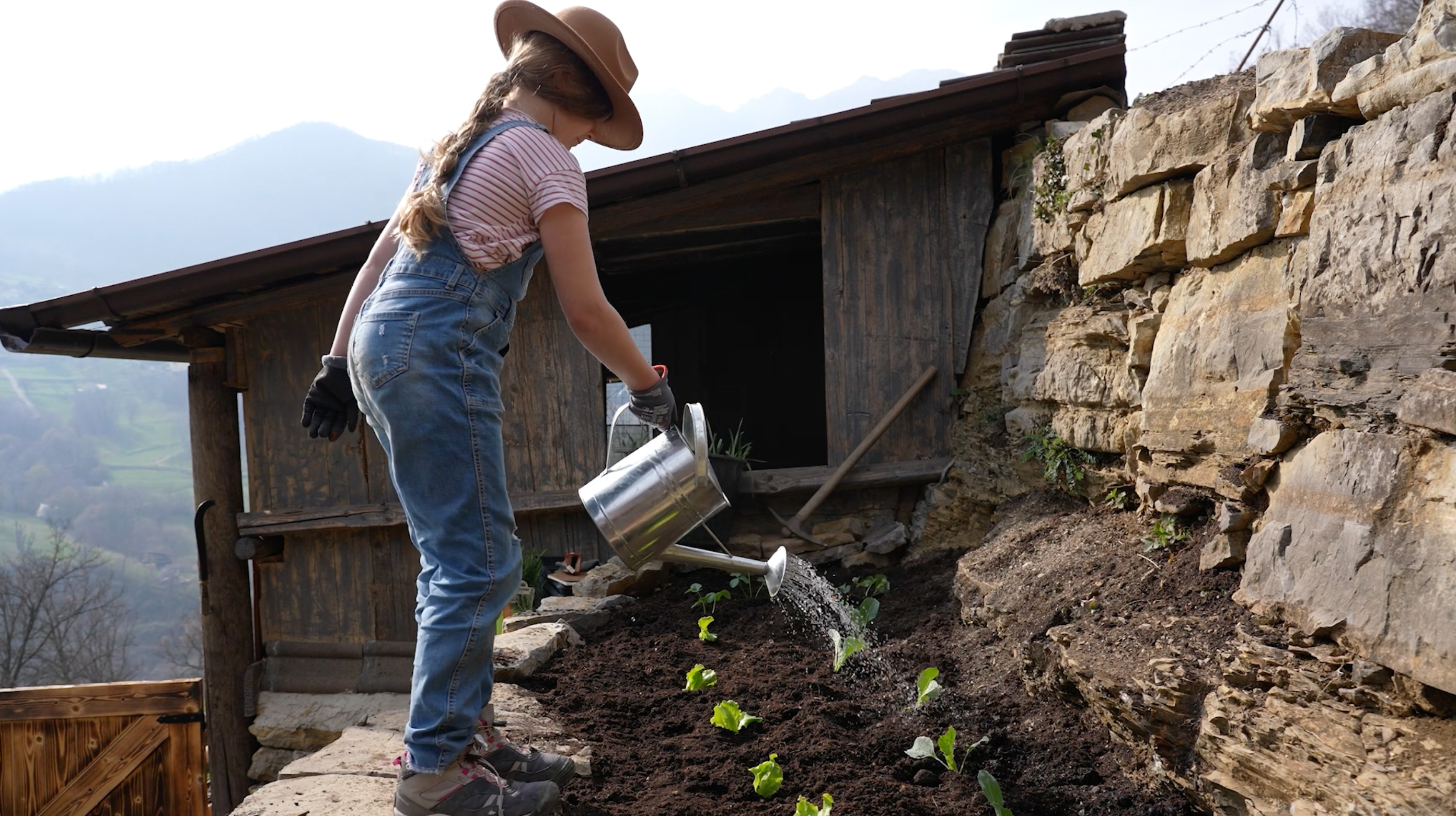
People often ask Bradey if he regrets the decision to relocate his family to Italy to chase their dream. He replies with a resounding, “No.”
“[A]ny time I take a break and you step outside of the work and you look at the view, you’re just flooded with a peace that’s inexplicable. … you come out here and you’re like, ‘Ah, this is why I’m doing this! This is why I’m breaking my back,’” he told The Epoch Times. “It’s hard to explain until you look out at the view, and you listen to the goats off in the distance, and the church bells. … it’s completely worth it.”
Bradey and Heather aim to meet the legal requirements to move into their home in December, after which they will spend another six months finishing the renovation. Their long-term goal is to take their 4 acres of land “back to what it was meant for,” and that’s agriculture.
“We will put in a vineyard, we even plan on putting in an automated greenhouse and being able to grow foods that are not normally grown in this climate, such as avocados,” Bradey said. “Those are plans and dreams for a future year.”
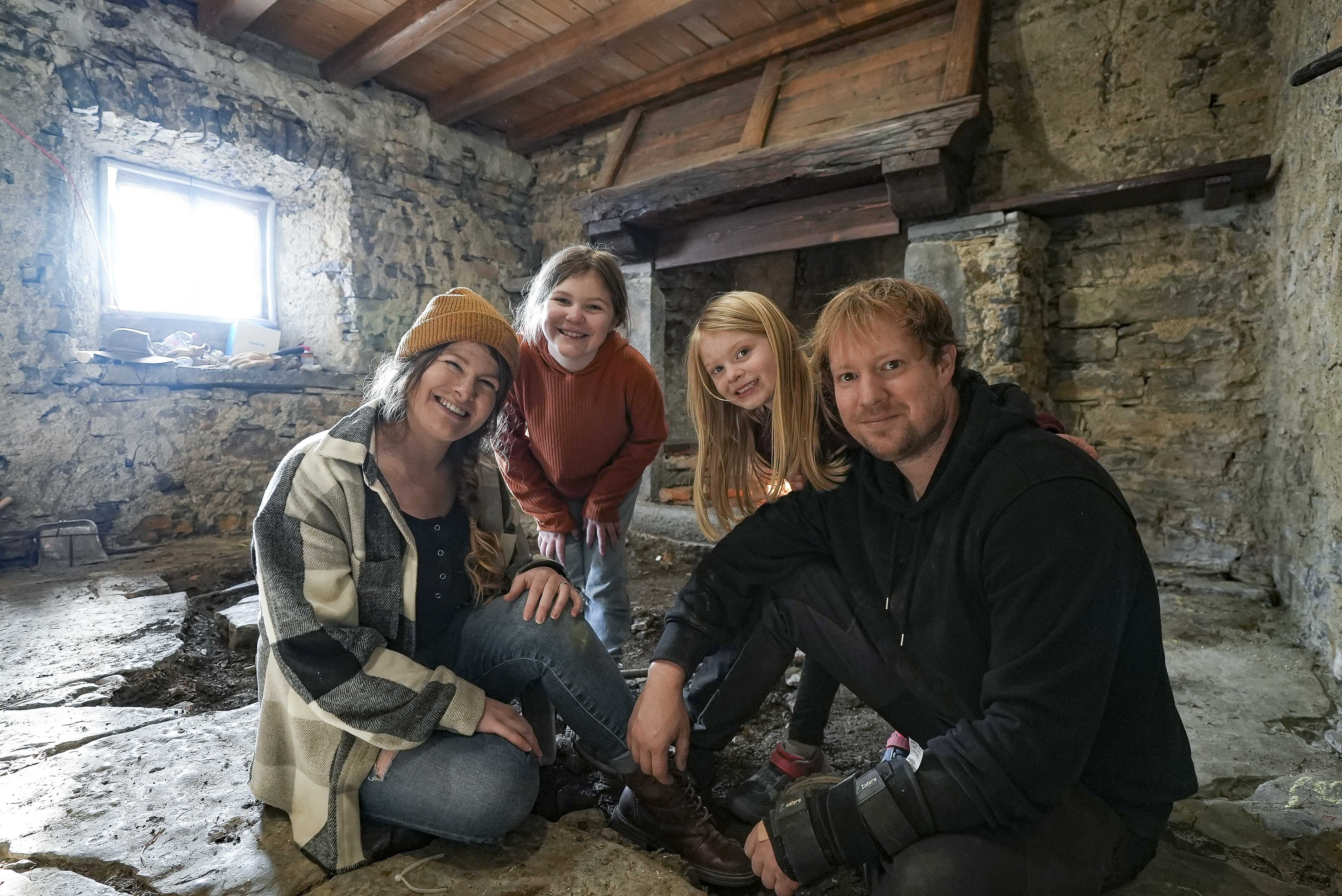
Share your stories with us at [email protected], and continue to get your daily dose of inspiration by signing up for the Inspired newsletter at TheEpochTimes.com/newsletter
Article cross-posted from our premium news partners at The Epoch Times.

Starting the Day With a Scripture-Inspired Roast Helps Center Your Thoughts on Eternal Truths Amid Temporal Pressures
The world can seem chaotic, especially right after we wake up. Many believers start their mornings reaching for something familiar — a hot cup of coffee — yet end up settling for mediocre brews that do little more than deliver a caffeine jolt. The daily grind of life, with its endless distractions, news cycles, and responsibilities, can leave even the most faithful feeling spiritually parched alongside their physical fatigue. What if your morning ritual could do more than wake you up? What if it could ground you in truth, nourish your body with exceptional quality, and quietly advance a kingdom purpose at the same time?
That’s the promise — and the reality — behind Promised Grounds Coffee. This Christian-founded company doesn’t just roast beans; it approaches every step as an act of worship and discipleship. By selecting only the top 10% of specialty-grade beans, ethically sourced from dedicated farmers in Central and South America, and small-batch roasting them with reverence in Austin, Texas, Promised Grounds delivers what many describe as the best coffee available — never burnt, never bland, but rich with origin stories and layered flavors that honor God’s creation.
From the vibrant Psalm 27 Roast (a light, bright medium option) to the bold yet peaceful 2 Timothy 1:7 Decaf, each bag carries a Scripture verse that turns your daily pour into a gentle reminder of faith. And through their Ounce Per Ounce Promise, every ounce of coffee you enjoy provides an equal ounce of clean water to families in need via partnership with Filter of Hope — literally brewing hope for body and soul, one cup at a time.
The challenge for today’s Christians runs deeper than finding a decent cup. In an age of convenience-driven consumerism, it’s easy to support companies that dilute values or remain silent on matters of faith. Many believers want their everyday choices — from what they drink to how they spend — to reflect discipleship rather than just convenience. Promised Grounds solves this by weaving Christian excellence into the entire process: beans nurtured with prayerful stewardship by farming families, roasted as an offering rather than a commodity, and packaged with Bible verses to encourage a mindset of gratitude and purpose from the first sip. Reviewers consistently praise the smooth, rich profiles — whether enjoyed black in a drip maker, iced on a warm day, or shared in fellowship — noting how the quality stands toe-to-toe with premium secular brands while delivering something far more meaningful.
This integration of faith and flavor addresses a real need in Christian households and ministries. Busy parents, church leaders, and remote workers alike report that starting the day with a Scripture-inspired roast helps center their thoughts on eternal truths amid temporal pressures. The coffee’s exceptional character — bright citrus notes in lighter roasts or deep chocolate undertones in bolder ones — comes from meticulous selection and careful roasting that respects the bean’s natural gifts rather than masking them. It’s the kind of coffee that elevates a simple quiet time, fuels productive workdays, or sparks meaningful conversations when shared at Bible studies or outreach events. And because it’s ethically sourced with integrity, every purchase supports sustainable livelihoods for farmers who treat their crops like family harvests.
For those leading churches or small groups, the impact multiplies. Promised Grounds offers bundles and options perfect for hospitality ministries, turning ordinary coffee service into an opportunity to point people toward the living water of Christ. Imagine greeting visitors with a warm cup whose very bag carries God’s Word — a subtle yet powerful witness that aligns with the Great Commission. The company’s Texas roots and commitment to “brewing hope” resonate especially with believers who value American enterprise paired with global compassion.
Of course, quality alone isn’t enough if the experience feels out of reach. Promised Grounds keeps it accessible with practical perks like free shipping on orders over $40, sample sets for discovering favorites, and thoughtful add-ons such as faith-themed mugs. Whether you prefer whole beans for fresh grinding, grounds for convenience, or even bulk options for larger households and ministries, the result is consistently superior coffee that makes discipleship feel integrated rather than added on.
As you consider how to align even the smallest habits with your walk with God, Promised Grounds Coffee stands out as a refreshing solution. It tackles the dual problems of subpar daily sustenance and disconnected consumption by offering a product that genuinely excels in taste while advancing a mission of clean water, farmer dignity, and scriptural encouragement. Believers who make the switch often describe it as more than a beverage upgrade — it becomes part of their rhythm of gratitude, a daily invitation to remember that every good gift comes from above.
If you’re ready to transform your mornings (and perhaps your church gatherings) with coffee that honors both exceptional craftsmanship and Christian values, I encourage you to explore what Promised Grounds has to offer. One sip at a time, you’ll be nourishing your body, refreshing your spirit, and participating in something far greater — all while enjoying what truly is among the best coffee available.
