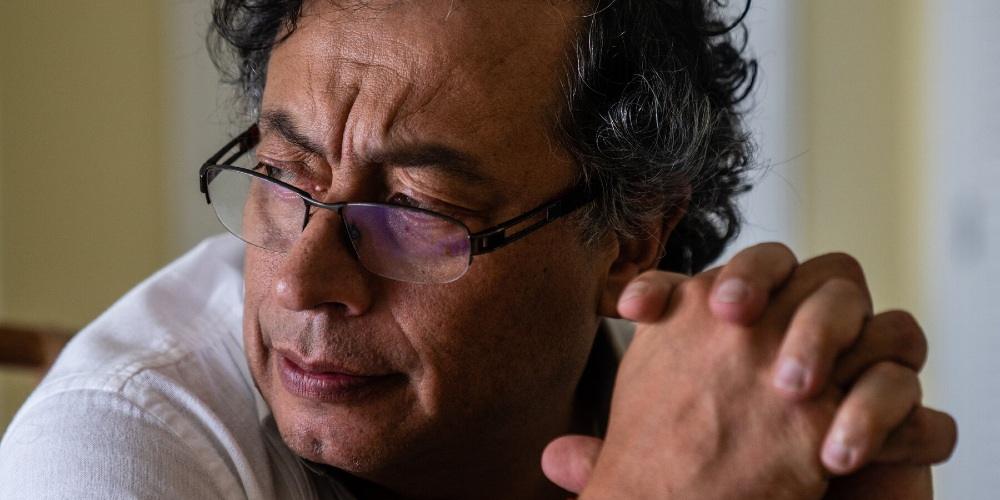
(The Epoch Times)—Colombian President Gustavo Petro said Nov. 11 that his nation’s security forces will stop intelligence sharing with the United States in response to U.S. military strikes on suspected drug-smuggling boats in the Caribbean.
Petro stated on X that he had instructed the Colombian public security forces at all levels to suspend cooperation with U.S. agencies until the U.S. military ceases its strikes on vessels in the Caribbean.
“Such a measure will be maintained as long as the missile attack on boats in the Caribbean persists. The fight against drugs must be subordinated to the human rights of the Caribbean people,” he stated.
The White House has not publicly commented on Petro’s announcement. The Epoch Times has reached out to the White House for comment, but did not receive a response by publication time.
Since September, according to posts by Secretary of War Pete Hegseth and other media reports, the U.S. military has carried out at least 19 strikes against vessels alleged to be transporting illegal drugs to the United States, actions that have drawn condemnation from Venezuela and Colombia. At least 76 suspected drug traffickers have been killed in these strikes, according to reports.
Tensions rose between the United States and Colombia after U.S. President Donald Trump accused Petro of encouraging illegal drug production in Colombia, which Petro and the Colombian government have strongly denied.
Trump raised tariffs on Colombian imports and cut all U.S. payments and subsidies to the country in October, prompting Petro to order the recall of Colombia’s ambassador to the United States in response.
In September, the Trump administration added Colombia to a list of countries considered to be failing to cooperate in the effort to tackle drug smuggling. In a presidential determination, Trump stated that coca cultivation and cocaine production in Colombia have reached record highs under Petro.
Trump commended Colombia’s security agencies and municipal authorities for their efforts in confronting “terrorist and criminal groups,” but noted that the Colombian government has failed to meet its drug control obligations.
“I will consider changing this designation if Colombia’s government takes more aggressive action to eradicate coca and reduce cocaine production and trafficking, as well as hold those producing, trafficking, and benefiting from the production of cocaine responsible, including through improved cooperation with the United States to bring the leaders of Colombian criminal organizations to justice,” he stated.
Petro criticized the Trump administration’s decision on Sept. 15, noting that Colombia was being penalized despite losing “dozens of policemen, soldiers, and regular citizens, trying to stop cocaine” from reaching the United States.
Colombia was last on the list in 1997, four years after the death of the infamous leader of the Medellin drug cartel, Pablo Escobar.
Chris Summers contributed to this report.
- Hand-curated links from conservative and Christian sites — NO legacy media garbage links. Patriots get their news every day at JDRucker.com