

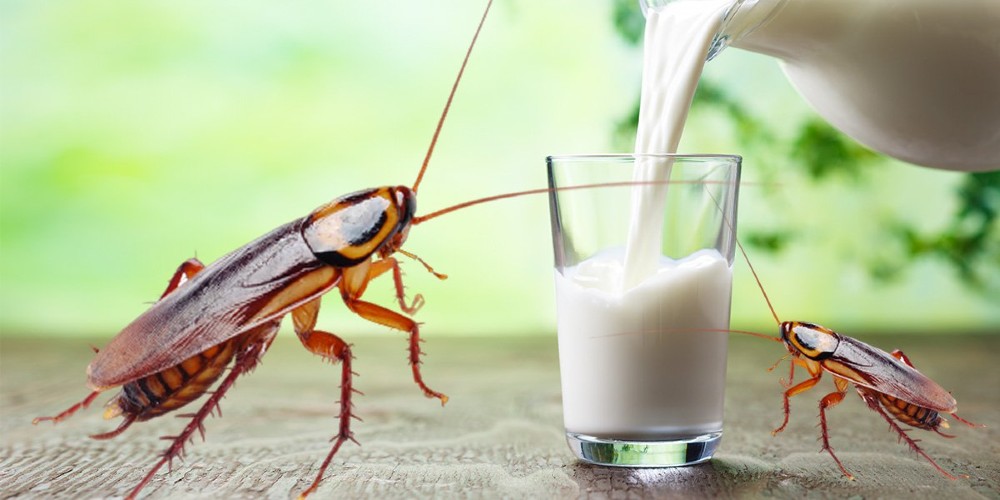

The push to normalize insect consumption has been going on for years, with scientists promoting cockroach milk that is allegedly “more nutritious” than its bovine counterpart.
Back in 2016, a team of scientists from the Institute of Stem Cell Biology and Regenerative Medicine (InStem) in India sequenced a protein crystal found in the mid-gut of the Pacific beetle cockroach (Diploptera punctata). The crystal found in the milk secreted by the insect to feed its young was over three times more nutritious than cow’s milk.
According to the InStem researchers, this crystal found in D. punctata could be the key to feeding the population in the future. A single protein crystal contains more than thrice the amount of energy found in an equivalent amount of buffalo milk.
Seeing that obtaining the crystal from the insects is not a feasible endeavor, the scientists decided to sequence the genes responsible for producing the milk protein crystals – which they successfully did. Now, they are hoping to obtain yeast that will enable them to produce the milk protein crystal in much larger quantities.
Shanchari Banerjee, a researcher and part of the team that synthesized the milk protein crystals, described the purported cockroach milk. He told the Times of India back in 2016: “[It is] like a complete food … [with] proteins, fats and sugars. If you look into the protein sequences, they have all the essential amino acids.”
Lead scientist Subramanian Ramaswamy, meanwhile, touted the cockroach milk as a “time-released food” dense in calories in nutrients. As the protein in the cockroach milk is digested, the milk crystals from D. punctata release more protein at an equivalent rate to continue the digestion.
“If you need food that is calorifically high, is time released [and is] complete, this is it,” he said. Ramaswamy also highlighted that the cockroach milk is “very stable” and “can be a fantastic protein supplement.”
WEF plans to eliminate cattle farming
The introduction of cockroach milk as a more nutritious protein source than cattle bodes well with the globalist World Economic Forum’s (WEF) plan to eliminate cattle farming in the name of “climate change alleviation.”
A July 2021 article on the WEF’s website penned by Antoine Hubert, president and CEO of insect protein company Ynsect, considered the consumption of insects as a better option.
“Insects are a credible and efficient alternative protein source requiring fewer resources than conventional breeding,” he wrote.
“Studies suggest that for the same amount of protein produced, insects – mealworms in particular – require much less land than other sources of animal proteins. A [separate] study on crickets suggests they are twice as efficient in converting feed to meat as chicken, at least four times more efficient than pigs and 12 times more efficient than cattle.”
A video from Business Insider that featured a cricket farm in Canada also defended insects as a protein source. “Crickets actually contain more protein than beef – without any of the environmental damage,” said the video’s narrator. Mask-wearing executives of Entomo Farms in Ontario attested to this, saying that using crickets as food addresses environmental issues purportedly stemming from meat consumption.
The facility harvests roughly 50 million crickets per week for use as human food. After harvesting, the crickets are either ground down into a powder that can be used like flour, or left as is for people to “snack on them whole like chips.” (Related: Footage of cricket farm in Canada highlights globalist push to replace beef with bugs.)
True enough, Entomo Farms – via its Actually Foods banner – has begun selling snack foods fortified with cricket flour. Its corn-based Cheddar Jalapeno Puffs, which lists “organic cricket flour” as an ingredient, is now sold in Canadian supermarkets.
Watch this video that talks about the push to normalize foods like cockroach milk and cricket flour.
This video is from the ADAPT 2030 | Solar Minimum channel on Brighteon.com.
More related stories:
- Crickets are now being farmed in Kenya as a food source for humans.
- UN, WEF push for insect meat consumption amid massive attack on global food supply.
- Canadian government spends $8.5 million on insect production facility to force people to eat BUGS.
- What’s that smell? Big Food corporations are quietly adding crickets and other insects into meal bars, cookies and snacks.
- YOU WILL EAT BUGS AND BE HAPPY: Wales now feeding schoolchildren mealworms and crickets for lunch as part of the Great Reset rollout.
Sources include:
How to Prepare for Food Emergencies if You Don’t Have a Homestead or Bunker
In an unpredictable world, where supply chain disruptions, natural disasters, or economic instability can strike without warning, having a reliable food supply is more than just smart—it’s essential for survival. Whether you’re a “prepper” or not, we all know the golden rule: self-sufficiency is key. But what if you’re living in an apartment, working long hours, or simply don’t have the land to turn into a thriving homestead? Don’t worry; there’s a practical, effective way to build your food security without needing acres of soil or a fortified bunker.
The Ideal Prep: Building Your Own Food Empire
The ultimate dream for any serious prepper is controlling your own food production. Imagine waking up to a sprawling garden bursting with fresh vegetables, fruits, and herbs—tomatoes ripening on the vine, potatoes ready to harvest, and greens that provide nutrition year-round. Add in livestock like chickens for eggs and meat, and you’ve got a self-sustaining system that keeps your family fed no matter what chaos unfolds outside.
This approach isn’t just about calories; it’s about resilience. A well-maintained garden can yield hundreds of pounds of produce annually, while a small flock of chickens might produce dozens of eggs weekly. It’s empowering, cost-effective in the long run, and teaches invaluable skills like crop rotation, animal husbandry, and preservation techniques. If you have the space, time, and resources, starting small and scaling up is the best path to true independence.
The Reality Check: Not Everyone Can Homestead
But let’s face it—not all of us are in a position to go full homesteader. Urban dwellers might be limited to a balcony or community plot that’s far from sufficient for long-term needs. Busy professionals juggling jobs, families, and daily life often lack the hours required for daily tending. And for those in apartments, condos, or regions with harsh climates, raising livestock or maintaining a large garden simply isn’t feasible. Factors like zoning laws, soil quality, water access, or even physical limitations can make this ideal out of reach.
That’s where the frustration sets in. You want to be prepared, but without a homestead or bunker, how do you ensure your pantry doesn’t run dry during a prolonged crisis? The good news is, you don’t have to sacrifice your preparedness goals. There’s a smart, accessible alternative that bridges the gap: investing in high-quality, long-term storage food.
The Smart Alternative: Long-Term Storage Food from Heaven’s Harvest
Long-term storage food is designed for exactly these scenarios—providing nutrient-dense, shelf-stable meals that last for decades without refrigeration or special conditions. It’s the perfect solution for preppers who can’t rely on fresh production but still demand reliability and variety in their emergency stockpile.
At Heaven’s Harvest, they specialize in premium survival food kits that make preparedness effortless. Their products are crafted with the prepper mindset in mind: non-GMO, made in the USA, and packed with real ingredients that taste like home-cooked meals, not bland rations. Whether you’re stocking up for a short-term blackout or a long-haul SHTF event, our kits offer:
- Extended Shelf Life: Up to 25 years of storage, so you can buy once and forget about rotation worries.
- Nutritional Balance: High-protein entrees, fruits, vegetables, and dairy alternatives to keep your energy up and health intact.
- Ease of Preparation: Just add water, and you’ve got hearty meals like beef stroganoff, chili mac, or cheesy lasagna ready in minutes—no garden weeding required.
- Customizable Options: From individual buckets to family-sized kits, scale your supply to fit your needs and budget.
- Peace of Mind: Sealed in durable, waterproof containers that protect against pests, moisture, and light.
Unlike generic store-bought cans that spoil quickly or lack variety, Heaven’s Harvest focuses on quality and sustainability. Our food is freeze-dried or dehydrated to lock in flavor and nutrients, ensuring you’re not just surviving but thriving. And for those concerned about allergens or dietary preferences, we offer gluten-free and vegetarian options to keep everyone covered.
Why Wait? Secure Your Food Supply Today
Preparing for food emergencies doesn’t require a homestead or bunker—it requires action. By choosing long-term storage food from Heaven’s Harvest, you’re taking control in a way that fits your lifestyle. Start small with a 72-hour kit to test the waters, or go all-in with a year’s supply for ultimate security.
Visit Heaven’s Harvest today and use code “PATRIOT” for an exclusive discount on your order. Don’t let limitations hold you back; build your resilient future, one meal at a time. Your family will thank you when it matters most.

So how do you milk bugs and if you don’t, which I suspect, then what happens when you run out of bugs. It would also take about a 10,000 time’s more bugs than cows to produce the same amount of milk.
Tell me you didn’t read the article without telling me you didn’t read the article! Ja ja ja ja😂