

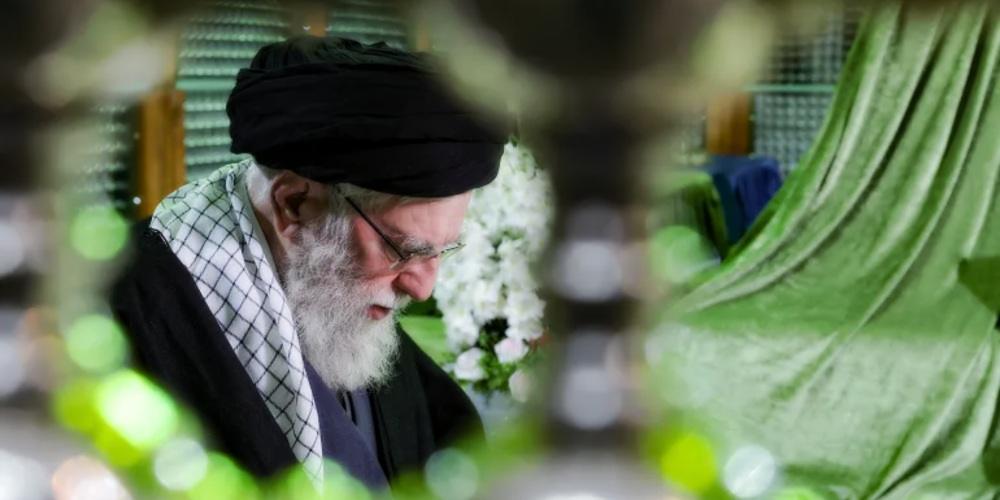
The bombs were already falling on Tehran when the intelligence picture came into full view. The CIA, in assessments produced over the final two weeks of February, had reached a sobering conclusion: even if Supreme Leader Ayatollah Ali Khamenei were killed in a U.S.-Israeli strike on Iran, the regime would almost certainly not collapse. It would more likely harden — reorganized under hardline commanders of the Islamic Revolutionary Guard Corps. That assessment did not stop Operation Epic Fury. It didn’t even slow it down.
On the morning of Saturday, February 28, 2026, the United States and Israel launched what may be the most consequential military operation in the Middle East since the 2003 invasion of Iraq. The Pentagon called it “Operation Epic Fury.” Israel named its component “Operation Roaring Lion.”
Explosions tore through Tehran, Isfahan, Qom, Karaj, and Kermanshah as American and Israeli forces targeted Iran’s missile infrastructure, military command sites, intelligence facilities, and the political nerve center of the Islamic Republic — including areas near Khamenei’s own offices and residence.
President Trump addressed the nation at 2:30 in the morning Eastern time via a video posted to Truth Social. He was direct. “The United States military began major combat operations in Iran,” he said. “Our objective is to defend the American people by eliminating imminent threats from the Iranian regime, a vicious group of very hard, terrible people.” He described the regime as having spent 47 years chanting “death to America” and waging what he called “an unending campaign of bloodshed and mass murder.” He encouraged the Iranian people to rise up once the strikes created an opening. “When we’re finished,” Trump said, “take over your government.”
Israeli Prime Minister Benjamin Netanyahu framed the operation in similarly existential terms. “This murderous terrorist regime must not be armed with nuclear weapons that would allow it to threaten all humanity,” Netanyahu said. “Our joint action will create the conditions for the brave Iranian people to take their fate into their own hands.”
Israeli Defense Minister Israel Katz called it a “preemptive attack” designed to “remove threats to the State of Israel.” According to the Times of Israel, seven missiles struck the district of Tehran where Khamenei normally resides, along with the presidential palace and the National Security Council.
The operation emerged as the culmination of a long, escalating arc stretching back through months of failed diplomacy, a massive U.S. military buildup in the Gulf, and a wave of domestic unrest inside Iran that shook the clerical regime to its foundations. Beginning in late December 2025, nationwide protests erupted across Iran — driven initially by economic despair, the collapse of the rial, and skyrocketing prices — but quickly morphing into open calls for regime change. The protests spread to over 100 cities and became the largest popular uprising in Iran since the 1979 revolution. The regime’s response was brutal. The U.S.-based Human Rights Activists News Agency estimated the death toll at 7,000. Iranian government figures put it at 3,117. Trump claimed the number was 32,000. Whatever the precise count, the massacres were documented, widely reported, and deeply influential in shaping the decision to act.
Trump had given Tehran a window. He demanded a nuclear deal, set a clock, and sent two aircraft carriers — including the USS Gerald R. Ford — into the region as visible proof of intent. Nuclear talks in Geneva collapsed without an agreement. Even on the eve of the strikes, Oman’s Foreign Minister Badr Al-Busaidi reported that a “breakthrough” was within reach, claiming Iran had agreed to never stockpile enriched uranium and to submit to full IAEA verification.
The strikes began anyway with the U.S. stance on the issue being total removal of all enriched uranium from Iran. Secretary of State Marco Rubio had briefed the Gang of Eight — the top congressional leaders cleared for sensitive intelligence — on Friday night that the operation was likely to proceed within hours, while noting Trump could still reverse course. He did not.
The CIA’s intelligence assessment — that eliminating Khamenei would likely produce an IRGC-dominated successor regime rather than a democratic opening — cuts to the heart of the strategic gamble now underway. The IRGC is not simply a military force. It is the institutional backbone of the Islamic Republic, a parallel state within a state with its own economic empire, intelligence apparatus, and ideological mission to protect Shiite clerical rule at all costs. For decades, American strategists have debated whether decapitation of authoritarian regimes produces liberation or merely succession. Iraq and Libya offer cautionary precedents. Iran’s situation is arguably more institutionalized, more ideologically entrenched, and more prepared for exactly the kind of succession crisis a strike on Khamenei might trigger.
That said, the CIA’s assessment was not a verdict. Intelligence officials briefed on the reports were careful to note that no scenario was concluded with certainty. The Islamic Republic is under unprecedented pressure — from within and without. Its proxy network, built over decades through Hezbollah, Hamas, the Houthis, and various Iraqi militias, has been severely degraded by Israeli operations over the past two years. Its nuclear program was struck by the U.S. and Israel in June of last year. Its economy is in freefall. Its people took to the streets by the millions and were shot for it. The regime that emerges from Operation Epic Fury — if it emerges at all — will not be the same one that entered it.
Reuters reported that several IRGC commanders may have been killed in the strikes, though confirmation remained elusive in the chaotic initial hours. Israeli military and regional sources told the outlet that Defense Minister Aziz Nasirzadeh and IRGC commander Mohammad Pakpour were likely killed in Israeli airstrikes. Khamenei himself was reportedly cut off from contact during the operation and relocated to a secure site. He had not been seen publicly in the days prior to the attack.
Iran’s retaliation was swift and broad. The IRGC launched dozens of ballistic missiles across the Middle East, targeting Israel and U.S. military installations in Jordan, Syria, Kuwait, Bahrain, Qatar, Saudi Arabia, and the United Arab Emirates. The Houthis in Yemen announced they would resume attacks on Red Sea shipping. Explosions were heard from Dubai to Doha. Iraq, Kuwait, Bahrain, Qatar, and the UAE closed their airspace.
Major international airlines — Lufthansa, Virgin Atlantic, Wizz Air, Air India — suspended Middle East service through at least March 7. Bahrain reported that Iran targeted the U.S. Navy’s Fifth Fleet headquarters. One person was killed in the UAE by shrapnel from an Iranian missile. The scale of Iran’s response suggested a regime trying to use its missile arsenal before more of it is eliminated.

World reaction split along predictable lines. Canada’s Prime Minister Mark Carney expressed support for U.S. efforts to prevent Iran from obtaining nuclear weapons. France’s Emmanuel Macron warned of “grave consequences for international peace and security.” The European Union called the situation “perilous.” Qatar, whose territory hosts Al Udeid Air Base — a major hub for American air power — condemned the Iranian missile attacks as “a flagrant violation of national sovereignty.” The International Committee of the Red Cross warned that military escalation was “igniting a dangerous chain reaction across the region.” Iran’s parliament national security chief Ebrahim Azizi posted on social media: “We warned you! Now you have started down a path whose end is no longer in your control.”
The timing was notable on multiple levels. The operation was launched during Ramadan, the Muslim holy month of daytime fasting. It came just days before the Jewish holiday of Purim. Israeli officials, according to reporting, were aware of both when authorizing the strike. The political symbolism — deliberate or not — will reverberate across the Muslim world and be leveraged by the Iranian government in whatever messaging campaign it mounts in the days ahead.
The question that the CIA’s assessment raises — and that no one in Washington has answered publicly — is what success looks like here. Trump has spoken of regime change, of the Iranian people taking over their own government, of destroying Iran’s missile program and preventing a nuclear weapon. Those are three distinct objectives that may or may not be achievable simultaneously, and may even work against each other. Destroying military infrastructure and decapitating leadership does not automatically produce a pro-Western democratic successor. It can just as easily produce chaos, a hardened theocratic counterreaction, or — as the intelligence community apparently assessed — an IRGC-run state that is more militaristic, more hostile, and less restrained by the aging clerical establishment Khamenei represents.
None of that means the strikes were demonstrably wrong. The Iranian regime has sponsored terrorism across four decades, pursued nuclear weapons in defiance of the international community, massacred its own citizens in the streets, and spent generations treating American lives and American interests as legitimate targets. The argument for action is not trivial. Nor is the argument that years of diplomacy, sanctions, and limited strikes produced an Iran that grew more dangerous, not less. Trump’s theory — that overwhelming force, combined with direct appeals to the Iranian people, could produce a historic rupture — may yet prove correct. History has surprised analysts before.
But the CIA’s quiet assessment is worth sitting with. It wasn’t a recommendation against action. It was a sober read of what happens next if the stated goal is achieved. If Khamenei dies in these strikes, or is removed in the aftermath, the institution most likely to fill that vacuum is the same institution currently firing missiles at American military bases across six countries. That is not a reason for paralysis. It is a reason for clarity — about what this operation is actually trying to accomplish, how long it will take, and what the United States is prepared to do when the IRGC doesn’t simply lay down its arms in response to a Trump video at 2:30 in the morning.
The operation, by all accounts, is expected to last several days. Officials have described it as more sustained and broader than the limited strikes of June 2025. The U.S. military is not in and out. Whatever comes next — further Iranian retaliation, a regional escalation, a sudden internal collapse of the regime, or a negotiated pause — the Middle East as of today is a fundamentally different place than it was the day before. Operation Epic Fury is underway. The CIA’s warning is now in the rearview mirror. What lies ahead is something no intelligence assessment can fully anticipate.

Two Storms, One Harvest

Every food crisis in living memory has been a one-shock event. The 2008 price spike was a commodity bubble. The 2020 shortages were a logistics failure. The 2022 grain scare was a war on one exporter’s ports. Each time, the system bent, adjusted, and recovered, and each time the experts assured us afterward that global markets are simply too big and too diversified to fail.
What nobody in Washington seems eager to discuss is that 2026 is shaping up to be something the modern food system has never actually faced. Two independent shocks, one climatic and one geopolitical, are converging on the same harvest cycle at the same time. Not sequentially. Simultaneously.
Start with the weather. The Pacific Ocean is currently building toward what forecasters now openly call a record event. NOAA’s Climate Prediction Center puts the odds of at least a strong El Niño near 88 percent, with roughly two in three odds it reaches “very strong” status, the tier reserved for perhaps three or four events in the entire satellite era. Every major global model now projects a median peak in Super El Niño territory, and most of them project it exceeding the 2015-16 event, which until now held the modern record. Sea surface anomalies were already brushing the super threshold in mid-July, months before these events normally peak. The atmosphere has already shifted into El Niño mode, and the event is forecast to crest in late fall and early winter.
This is not about “climate change.” It’s about the standard cycles of weather, and the cycle we’re currently in is one that has likely devastated societies in the past. We’re better prepared as a society today, but not all Americans are equally prepared.
Serious households have started doing the quiet math on their own. Grocery bills tell part of the story, and the forecast maps tell the rest, which is why long-term food storage has moved from fringe hobby to mainstream line item in the family budget, with established suppliers like Heaven’s Harvest seeing demand from people who five years ago would have rolled their eyes at the idea. That instinct is not paranoia. It is pattern recognition, and the pattern is worth walking through carefully.
Editor’s Note: Heaven’s Harvest IS a sponsor, but the warnings of this article are real and would be written even if we didn’t have a survival food sponsor. With that said, those who take advantage of what they offer can use promo code “Patriot” for 15% off.
The Fertilizer Clock Is Already Running
While the Pacific warms, the second shock has been unfolding in the Strait of Hormuz. The conflict with Iran turned the world’s most important energy chokepoint into a contested waterway, and the consequences reach far beyond the gas pump. Roughly a third of global fertilizer trade moves through Hormuz, and the disruption sent urea prices up 86 percent year over year by March, with a 53 percent jump in a single month.
The World Bank projects energy prices rising about 24 percent in 2026 and fertilizer about 31 percent. By its own accounting, fertilizer prices ran 35 percent higher in the first five months of this year than the same period last year.
Here is the mechanism the nightly news will not explain. Fertilizer is not a grocery item. It is a time-delayed input. The nitrogen a farmer in Iowa or Punjab could not afford to apply this spring does not show up as a problem this spring. It shows up as a thinner harvest six to twelve months later.
The World Bank’s own food security brief concedes that the effects of reduced applications earlier this season “are likely to become visible only later in harvest outcomes.” Translate that from institutional language into plain English and it means this. The damage is already done, it is already in the ground, and we are simply waiting for it to arrive on the shelf.
Now check the calendar. Six to twelve months from the spring planting season lands us squarely in late 2026 and early 2027. Which is precisely when the strongest El Niño in the instrumental record is forecast to peak, bringing its signature droughts to Southeast Asia, Australia, southern Africa, northern Brazil, and South Asia, the very regions that grow the world’s rice, sugar, and oilseeds.
The World Bank warns openly that a strong El Niño “could disrupt multiple crop belts simultaneously” on top of the conflict-driven input costs. Their baseline projection assumes the Middle East disruptions ease by autumn. What in the last two years of Middle East history suggests that assumption is safe?
The System Has No Slack Left
The comfortable answer is that global markets always adjust. But adjustment requires slack, and the slack is gone. Global cereal production is expected to decline from last year’s records even before El Niño does its work. The UN World Food Programme, hardly a den of right-wing preppers, is calling this the most significant disruption to its supply chains since Covid and the invasion of Ukraine, and its supply chain director put the stakes bluntly.
Today’s supply chain challenges are tomorrow’s hunger crisis.
There is also a political dimension that markets cannot price. When food gets scarce, governments do not behave like economists. They behave like politicians. Export bans, hoarding mandates, and panic buying at the national level turned the modest rice shortfall of 2008 into a global crisis, and analysts are already warning that import-dependent nations are the first dominoes.
The 2015-16 Super El Niño, a far weaker event than what is now forecast, threw tens of millions into food stress across Africa and Asia. This one is projected to be stronger, and it arrives with fertilizer already rationed by price and shipping lanes already contested by missiles.
What Joseph Knew
Scripture does not treat preparation for lean years as faithlessness. It treats it as wisdom delivered in advance to those willing to act on it.
Behold, there come seven years of great plenty throughout all the land of Egypt: And there shall arise after them seven years of famine; and all the plenty shall be forgotten in the land of Egypt.
Joseph did not respond to that warning with a hashtag or a committee. He stored grain during the years of abundance, and when the famine came, Egypt stood while its neighbors begged. The lesson is not that famine is certain. It is that the time to prepare is precisely when preparation still looks optional.
Nobody who filled a pantry in a year of plenty has ever regretted it, and nobody standing in an empty aisle has ever been glad he waited for certainty.
None of this calls for panic, and panic is the enemy of sound judgment anyway. It calls for the same unglamorous prudence our grandparents considered ordinary. Keep some cash margin, know your local growers, and put real food in deep storage while it is cheap and available, because the entire arc of this story is that cheap and available is a closing window.
Families looking for a straightforward place to start can visit Heaven’s Harvest and use promo code Patriot for 15 percent off long-term storable food. The forecasts may yet soften, the strait may yet reopen, and we should pray they do. But hope is a fine thing to hold and a foolish thing to eat.
