

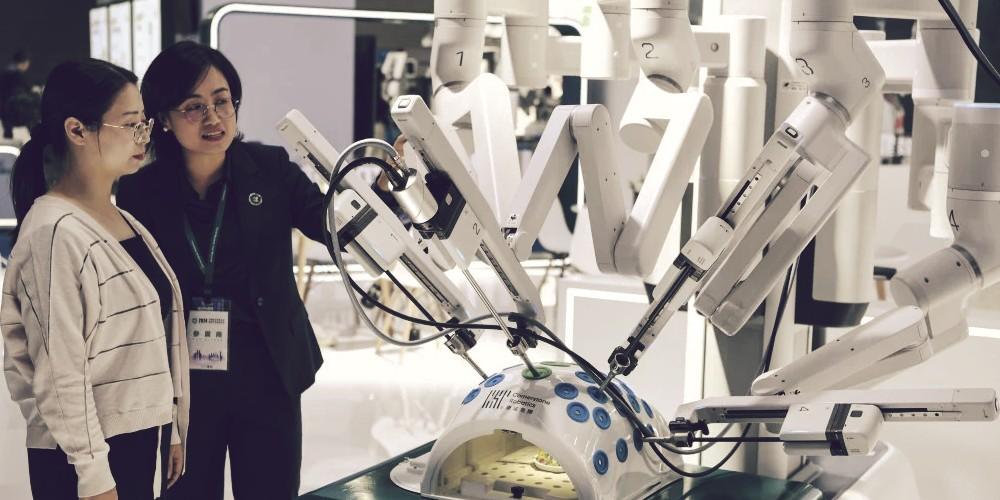
If you don’t think China is a threat, you’re not paying attention. One vulnerability stands out for its intimacy and immediacy: our healthcare system. While headlines often fixate on military posturing or trade wars, a quieter infiltration is underway. Chinese-made medical devices, embedded in hospitals, clinics, and even homes across America, carry risks that extend far beyond faulty equipment. These tools, designed to save lives, could instead expose sensitive patient data, compromise safety, and deepen our dependence on a foreign power with its own agenda.
Drawing from recent investigations and expert analyses, this report uncovers the layers of this threat, revealing how it intersects with broader systems of global influence and control. It’s a story mainstream outlets have largely sidelined, perhaps because it demands uncomfortable questions about our sovereignty and security.
The Hidden Backdoors in Our Hospitals
At the heart of this issue lies a stark reality: Chinese-manufactured medical devices have proliferated throughout the U.S. healthcare ecosystem, often without sufficient scrutiny. A recent opinion piece by Chad Wolf, former Acting Secretary of Homeland Security, highlights this as the “next threat” from the Chinese Communist Party (CCP). Wolf points to specific cases where devices from companies like Shanghai-based United Imaging and Contec have raised red flags.
United Imaging, for instance, has installed equipment in top U.S. research labs, some funded by the National Institutes of Health (NIH). Reports indicate the company has ties to the Chinese military and the state-run Chinese Academy of Sciences, even allegedly bribing NIH lab employees to funnel non-public research data back to China.
The Food and Drug Administration (FDA) issued a warning earlier this year about Contec’s patient monitors, which contain software backdoors. When connected to the internet, these devices can harvest personally identifiable information (PII) and protected health information (PHI), transmitting it outside the healthcare network.
The Cybersecurity and Infrastructure Security Agency (CISA) followed up, noting that such vulnerabilities allow remote actors to execute code or modify device settings—potentially displaying false vital signs like blood pressure or electrocardiograms. In a life-or-death scenario, this could lead to misguided medical interventions, endangering patients directly.
Experts warn that Chinese health-tech firms are aggressively expanding in the U.S., using competitive pricing to undercut domestic alternatives. A report from February details how these devices are “all over” American systems, prompting concerns from federal agencies about cybersecurity gaps. The Foundation for Defense of Democracies (FDD) has called for a Section 232 national security investigation into imports of personal protective equipment (PPE), medical consumables, and devices, emphasizing China’s “dramatic risk” to U.S. security. Historical incidents, like the 2014 cyber attack on Community Health Systems attributed to Chinese actors, underscore the pattern: data theft from hospital networks affecting millions.
Why does this matter so profoundly? These devices don’t just monitor health; they collect troves of data on Americans’ most vulnerable moments. In a nation where healthcare is already fragmented and overburdened, introducing exploitable hardware erodes trust and amplifies risks.
The Surveillance Web: Data as a Tool of Control
Peeling back another layer reveals how this threat ties into China’s broader surveillance ambitions. Under Chinese law, including the National Intelligence Law of 2017 and subsequent updates, companies must cooperate with the CCP, sharing data upon request—even if it belongs to foreign entities. This isn’t optional; it’s mandated, creating a pipeline where U.S. patient data could flow directly to Beijing. As the Center for Internet Security notes, laws like these empower the CCP to harvest information from firms operating globally, turning everyday tech into instruments of intelligence gathering.
Imagine the implications: aggregated health data could map population vulnerabilities, inform psychological operations, or even enable targeted disruptions. This aligns with China’s domestic surveillance state, where big data fuels social control. Extending this abroad, through devices in American hospitals, represents a subtle form of influence—one that sidesteps traditional espionage for something more insidious. Florida Attorney General James Uthmeier has issued subpoenas to companies selling such devices, citing the risk of data transmission to CCP-controlled entities. Yet, federal response remains piecemeal, leaving states to patchwork defenses.
This data dimension connects to censorship patterns observed during the COVID-19 pandemic. China’s influence over the World Health Organization (WHO) delayed critical information sharing, with critics arguing the WHO deferred to Beijing at the expense of global transparency. Today, China is boosting its WHO donations—pledging $500 million over five years—potentially amplifying its sway in global health surveillance frameworks. Cooperative agreements between WHO and China on disease surveillance raise questions about whose interests are prioritized in emerging digital health systems.
Supply Chain Stranglehold: A Path to Leverage
Beyond data, the threat manifests in raw dependence. The U.S. imports 13.9% of its medical devices from China, but this understates the exposure when factoring in active pharmaceutical ingredients (APIs) and supplies. Nearly 700 common medicines rely on chemicals sourced exclusively from China, with estimates of API dependence ranging from 8% to 47% when including indirect imports. The pandemic exposed this fragility: lockdowns in Chinese factories caused shortages of PPE and essentials, contributing to U.S. response failures.
Over 50% of critical medical supplies now come from Chinese producers, per some analyses. This reliance hands the CCP potential leverage—imagine a cutoff during a crisis, mirroring energy dependencies on adversarial nations. Efforts to reshore manufacturing, spurred by tariffs and trade measures, are underway, but progress is slow. As the American Affairs Journal warns, this is a “critical supply chain at risk,” threatening national resilience.
Connecting the Dots: Toward Global Control Systems
These elements—devices, data, and dependence—coalesce into a framework for broader control. China’s growing role in global health, via bilateral aid and multilateral bodies like the WHO, positions it to shape surveillance norms. Policies restricting data sharing from China hinder international collaborations, potentially isolating the U.S. in future health crises. This isn’t mere competition; it’s a strategic play for influence over health governance, where digital tools could enforce compliance on a global scale.

In this context, one can’t ignore parallels to warnings about centralized systems that erode individual freedoms. Scripture offers timeless insight here: Proverbs 14:15 cautions, “The simple believe anything, but the prudent give thought to their steps.”
In an age of interconnected tech, discernment demands questioning alliances that compromise sovereignty. Revelation’s imagery of a beast system exerting control over buying and selling (Revelation 13:16-17) echoes logically in discussions of digital health passports or data-driven restrictions— not as direct prophecy fulfillment, but as a call to vigilance against deceptive powers that prioritize control over truth.
A Call to Discernment and Action
The silence surrounding this threat is deafening. While bipartisan consensus emerges on CCP risks in other sectors, healthcare lags behind. Rebuilding domestic supply chains, enforcing stricter cybersecurity standards, and scrutinizing foreign ties are essential steps. But true resilience requires public awareness—exposing these uncomfortable truths before they escalate.
As a nation, we must connect these dots, not out of paranoia, but prudence. The stakes are our health, privacy, and independence. If we fail to act, the question isn’t if this vulnerability will be exploited, but when.

Starting the Day With a Scripture-Inspired Roast Helps Center Your Thoughts on Eternal Truths Amid Temporal Pressures
The world can seem chaotic, especially right after we wake up. Many believers start their mornings reaching for something familiar — a hot cup of coffee — yet end up settling for mediocre brews that do little more than deliver a caffeine jolt. The daily grind of life, with its endless distractions, news cycles, and responsibilities, can leave even the most faithful feeling spiritually parched alongside their physical fatigue. What if your morning ritual could do more than wake you up? What if it could ground you in truth, nourish your body with exceptional quality, and quietly advance a kingdom purpose at the same time?
That’s the promise — and the reality — behind Promised Grounds Coffee. This Christian-founded company doesn’t just roast beans; it approaches every step as an act of worship and discipleship. By selecting only the top 10% of specialty-grade beans, ethically sourced from dedicated farmers in Central and South America, and small-batch roasting them with reverence in Austin, Texas, Promised Grounds delivers what many describe as the best coffee available — never burnt, never bland, but rich with origin stories and layered flavors that honor God’s creation.
From the vibrant Psalm 27 Roast (a light, bright medium option) to the bold yet peaceful 2 Timothy 1:7 Decaf, each bag carries a Scripture verse that turns your daily pour into a gentle reminder of faith. And through their Ounce Per Ounce Promise, every ounce of coffee you enjoy provides an equal ounce of clean water to families in need via partnership with Filter of Hope — literally brewing hope for body and soul, one cup at a time.
The challenge for today’s Christians runs deeper than finding a decent cup. In an age of convenience-driven consumerism, it’s easy to support companies that dilute values or remain silent on matters of faith. Many believers want their everyday choices — from what they drink to how they spend — to reflect discipleship rather than just convenience. Promised Grounds solves this by weaving Christian excellence into the entire process: beans nurtured with prayerful stewardship by farming families, roasted as an offering rather than a commodity, and packaged with Bible verses to encourage a mindset of gratitude and purpose from the first sip. Reviewers consistently praise the smooth, rich profiles — whether enjoyed black in a drip maker, iced on a warm day, or shared in fellowship — noting how the quality stands toe-to-toe with premium secular brands while delivering something far more meaningful.
This integration of faith and flavor addresses a real need in Christian households and ministries. Busy parents, church leaders, and remote workers alike report that starting the day with a Scripture-inspired roast helps center their thoughts on eternal truths amid temporal pressures. The coffee’s exceptional character — bright citrus notes in lighter roasts or deep chocolate undertones in bolder ones — comes from meticulous selection and careful roasting that respects the bean’s natural gifts rather than masking them. It’s the kind of coffee that elevates a simple quiet time, fuels productive workdays, or sparks meaningful conversations when shared at Bible studies or outreach events. And because it’s ethically sourced with integrity, every purchase supports sustainable livelihoods for farmers who treat their crops like family harvests.
For those leading churches or small groups, the impact multiplies. Promised Grounds offers bundles and options perfect for hospitality ministries, turning ordinary coffee service into an opportunity to point people toward the living water of Christ. Imagine greeting visitors with a warm cup whose very bag carries God’s Word — a subtle yet powerful witness that aligns with the Great Commission. The company’s Texas roots and commitment to “brewing hope” resonate especially with believers who value American enterprise paired with global compassion.
Of course, quality alone isn’t enough if the experience feels out of reach. Promised Grounds keeps it accessible with practical perks like free shipping on orders over $40, sample sets for discovering favorites, and thoughtful add-ons such as faith-themed mugs. Whether you prefer whole beans for fresh grinding, grounds for convenience, or even bulk options for larger households and ministries, the result is consistently superior coffee that makes discipleship feel integrated rather than added on.
As you consider how to align even the smallest habits with your walk with God, Promised Grounds Coffee stands out as a refreshing solution. It tackles the dual problems of subpar daily sustenance and disconnected consumption by offering a product that genuinely excels in taste while advancing a mission of clean water, farmer dignity, and scriptural encouragement. Believers who make the switch often describe it as more than a beverage upgrade — it becomes part of their rhythm of gratitude, a daily invitation to remember that every good gift comes from above.
If you’re ready to transform your mornings (and perhaps your church gatherings) with coffee that honors both exceptional craftsmanship and Christian values, I encourage you to explore what Promised Grounds has to offer. One sip at a time, you’ll be nourishing your body, refreshing your spirit, and participating in something far greater — all while enjoying what truly is among the best coffee available.
