

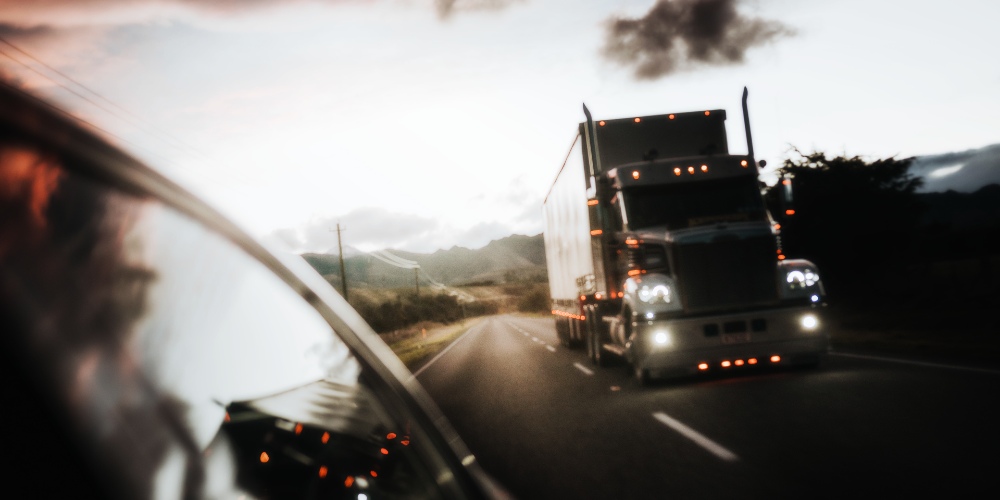
With California’s deadline for zero-emissions vehicles looming, logistics companies are growing concerned that compliance will be impossible.
Under the new mandate, which goes into effect on January 1, 2024, all new trucks that are bought for servicing distribution centers, ports and rail yards must be zero-emission models.
One of the main concerns is the low availability of electric semi-trucks. Those that are available have very high prices, and many in the industry are concerned about the short distances they are capable of traveling on a charge. Trucks need to use dedicated charging stations, and the limited infrastructure in the areas surrounding ports will make keeping these vehicles charged complicated. The need to recharge these trucks frequently, combined with potentially long wait times as multiple trucks vie for limited charging ports, will make operation costs and times rise.
The high costs of replacement parts and maintenance services are only expected to add to logistics companies’ financial woes. For many, these costs are largely unknown at the moment, which means companies are struggling to make their plans and calculate their costs. Currently, maintenance is one of the biggest expenses for diesel trucks, and companies simply don’t know what the maintenance costs on the newer trucks will be. However, some have estimated the costs for electric truck maintenance could be tenfold the costs of maintaining diesel trucks.
The owner of California-based Sibrian Trucking, Nelson Sibrian, told The Epoch Times: “Nobody has real numbers when we ask for details about maintenance and replacement costs,” “With diesel, we know our cost per day to maintain the vehicle.”
The costs of these vehicles are another concern, with the current price for electric semi-trucks coming in at around $500,000. While fleet owners can choose from a range of different manufacturers when purchasing traditional trucks, allowing them to shop around for better deals, their electric counterparts are much harder to find and are often backordered. This means that even those who are in a financial position to purchase the vehicles may not be able to do so due to a lack of availability.
The supply problem is only expected to get worse when the mandate is in full effect. Around 10,000 drayage trucks for ports and rail yards are replaced every year, on average, so the demand is expected to be very high and vehicle makers may not be able to keep up.
Oakland trucking professional John Williams said: “This is a bigger problem than people realize because we’re being forced to do something that is literally impossible. There are not enough trucks, not enough charging stations, and not enough information that we can rely on.”
Weight limits and limited travel ranges could damage profitability
Another factor that could harm profitability is weight limits. For example, Tesla trucks have an estimated 10,000-pound battery in them. This means that the trucks will be forced to carry less cargo in order to remain compliant with weight limit regulations. Packing trucks is considered one of the best ways to boost profits, and heavy vehicles will effectively put an end to this practice.
Some truckers have also expressed concerns about the size of the lithium batteries in these trucks. If fires occur, it could pose a major public safety issue.
Another roadblock is the limited range of electric trucks. Diesel trucks can travel 1,000 miles before they need to be refueled, but the top electric semi-trucks on the market can only go as far as 300 miles before needing a charge; most, however, can only make it around 100 miles.
Although these new regulations will cost trucking companies a lot of money – costs that will ultimately be passed to consumers – Governor Gavin Newsom issued a press release applauding the Biden administration’s approval of the mandate.
He stated: “Now, thanks to the Biden administration, we’re getting more zero-emission heavy duty trucks on the roads, expanding our world-leading efforts to cut air pollution and protect public health.”
Sources for this article include:


Two Storms, One Harvest

Every food crisis in living memory has been a one-shock event. The 2008 price spike was a commodity bubble. The 2020 shortages were a logistics failure. The 2022 grain scare was a war on one exporter’s ports. Each time, the system bent, adjusted, and recovered, and each time the experts assured us afterward that global markets are simply too big and too diversified to fail.
What nobody in Washington seems eager to discuss is that 2026 is shaping up to be something the modern food system has never actually faced. Two independent shocks, one climatic and one geopolitical, are converging on the same harvest cycle at the same time. Not sequentially. Simultaneously.
Start with the weather. The Pacific Ocean is currently building toward what forecasters now openly call a record event. NOAA’s Climate Prediction Center puts the odds of at least a strong El Niño near 88 percent, with roughly two in three odds it reaches “very strong” status, the tier reserved for perhaps three or four events in the entire satellite era. Every major global model now projects a median peak in Super El Niño territory, and most of them project it exceeding the 2015-16 event, which until now held the modern record. Sea surface anomalies were already brushing the super threshold in mid-July, months before these events normally peak. The atmosphere has already shifted into El Niño mode, and the event is forecast to crest in late fall and early winter.
This is not about “climate change.” It’s about the standard cycles of weather, and the cycle we’re currently in is one that has likely devastated societies in the past. We’re better prepared as a society today, but not all Americans are equally prepared.
Serious households have started doing the quiet math on their own. Grocery bills tell part of the story, and the forecast maps tell the rest, which is why long-term food storage has moved from fringe hobby to mainstream line item in the family budget, with established suppliers like Heaven’s Harvest seeing demand from people who five years ago would have rolled their eyes at the idea. That instinct is not paranoia. It is pattern recognition, and the pattern is worth walking through carefully.
Editor’s Note: Heaven’s Harvest IS a sponsor, but the warnings of this article are real and would be written even if we didn’t have a survival food sponsor. With that said, those who take advantage of what they offer can use promo code “Patriot” for 15% off.
The Fertilizer Clock Is Already Running
While the Pacific warms, the second shock has been unfolding in the Strait of Hormuz. The conflict with Iran turned the world’s most important energy chokepoint into a contested waterway, and the consequences reach far beyond the gas pump. Roughly a third of global fertilizer trade moves through Hormuz, and the disruption sent urea prices up 86 percent year over year by March, with a 53 percent jump in a single month.
The World Bank projects energy prices rising about 24 percent in 2026 and fertilizer about 31 percent. By its own accounting, fertilizer prices ran 35 percent higher in the first five months of this year than the same period last year.
Here is the mechanism the nightly news will not explain. Fertilizer is not a grocery item. It is a time-delayed input. The nitrogen a farmer in Iowa or Punjab could not afford to apply this spring does not show up as a problem this spring. It shows up as a thinner harvest six to twelve months later.
The World Bank’s own food security brief concedes that the effects of reduced applications earlier this season “are likely to become visible only later in harvest outcomes.” Translate that from institutional language into plain English and it means this. The damage is already done, it is already in the ground, and we are simply waiting for it to arrive on the shelf.
Now check the calendar. Six to twelve months from the spring planting season lands us squarely in late 2026 and early 2027. Which is precisely when the strongest El Niño in the instrumental record is forecast to peak, bringing its signature droughts to Southeast Asia, Australia, southern Africa, northern Brazil, and South Asia, the very regions that grow the world’s rice, sugar, and oilseeds.
The World Bank warns openly that a strong El Niño “could disrupt multiple crop belts simultaneously” on top of the conflict-driven input costs. Their baseline projection assumes the Middle East disruptions ease by autumn. What in the last two years of Middle East history suggests that assumption is safe?
The System Has No Slack Left
The comfortable answer is that global markets always adjust. But adjustment requires slack, and the slack is gone. Global cereal production is expected to decline from last year’s records even before El Niño does its work. The UN World Food Programme, hardly a den of right-wing preppers, is calling this the most significant disruption to its supply chains since Covid and the invasion of Ukraine, and its supply chain director put the stakes bluntly.
Today’s supply chain challenges are tomorrow’s hunger crisis.
There is also a political dimension that markets cannot price. When food gets scarce, governments do not behave like economists. They behave like politicians. Export bans, hoarding mandates, and panic buying at the national level turned the modest rice shortfall of 2008 into a global crisis, and analysts are already warning that import-dependent nations are the first dominoes.
The 2015-16 Super El Niño, a far weaker event than what is now forecast, threw tens of millions into food stress across Africa and Asia. This one is projected to be stronger, and it arrives with fertilizer already rationed by price and shipping lanes already contested by missiles.
What Joseph Knew
Scripture does not treat preparation for lean years as faithlessness. It treats it as wisdom delivered in advance to those willing to act on it.
Behold, there come seven years of great plenty throughout all the land of Egypt: And there shall arise after them seven years of famine; and all the plenty shall be forgotten in the land of Egypt.
Joseph did not respond to that warning with a hashtag or a committee. He stored grain during the years of abundance, and when the famine came, Egypt stood while its neighbors begged. The lesson is not that famine is certain. It is that the time to prepare is precisely when preparation still looks optional.
Nobody who filled a pantry in a year of plenty has ever regretted it, and nobody standing in an empty aisle has ever been glad he waited for certainty.
None of this calls for panic, and panic is the enemy of sound judgment anyway. It calls for the same unglamorous prudence our grandparents considered ordinary. Keep some cash margin, know your local growers, and put real food in deep storage while it is cheap and available, because the entire arc of this story is that cheap and available is a closing window.
Families looking for a straightforward place to start can visit Heaven’s Harvest and use promo code Patriot for 15 percent off long-term storable food. The forecasts may yet soften, the strait may yet reopen, and we should pray they do. But hope is a fine thing to hold and a foolish thing to eat.

Then all Commiefornia ports will be shutdown and the state will die due to lack of supply chain. No wonder most of California wants to secede .
What your going to end up with is a larger fleet of smaller trucks that get around the mandate. Instead of one big rig with 15 cars on it, you’ll see 5 Ram 3500’s with 3 cars each etc… I’m already seeing more and more of these smaller freight companies on the road.
Environmental mandates that increase pollution and fuel usage. Sounds about right for California.
A blessing in disguise. California hindering Chinese imports. This may help re establish American manufacturing.