

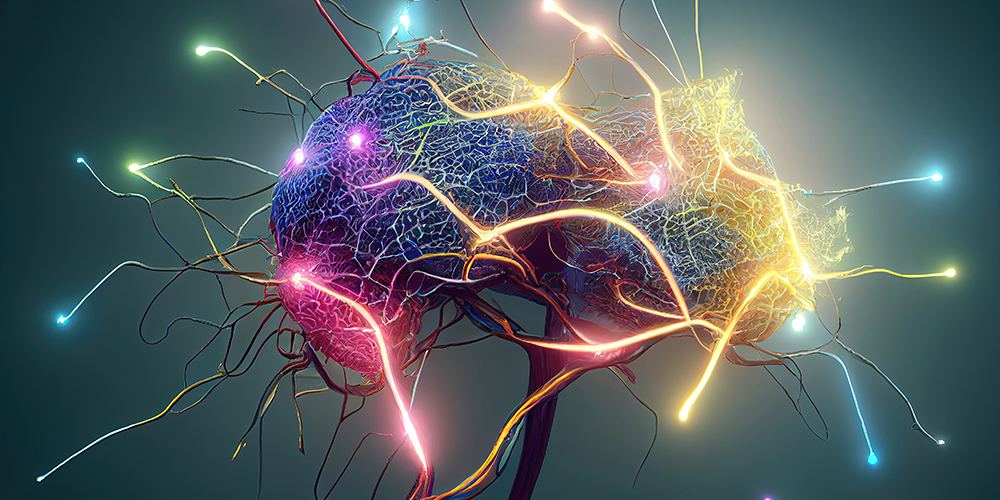
- Elon Musk’s Neuralink successfully implanted its first brain chip in a human patient, aiming to enable telepathic communication and treat neurological disorders, though the technology’s long-term implications remain uncertain.
- Brain stimulation experiments date back decades, with researchers using electrodes to induce pleasure, control behavior and manage pain, raising significant ethical concerns about human intervention in biology.
- Neuralink’s first patient, a quadriplegic, initially controlled a computer cursor with his thoughts, but the device’s effectiveness declined after a month due to thread retraction, prompting plans for deeper implantation in future trials.
- The technology poses risks of misuse, including potential government or corporate manipulation of thoughts, unequal access creating a class divide, and vulnerabilities to hacking or failure.
- Experts emphasize the brain’s complexity and sanctity, urging skepticism and careful consideration of the ethical, societal and long-term consequences of such invasive technological advancements.
(Natural News)—Elon Musk, the tech mogul known for his ambitious ventures into space, electric vehicles and artificial intelligence, has now set his sights on the human brain. His company, Neuralink, recently made headlines by successfully implanting its first brain chip in a human patient. While Musk touts this as a groundbreaking leap toward telepathic communication and curing neurological disorders, the implications of such technology demand a closer, more cautious examination.
The concept of wiring the brain is not new. As Dr. Vernon Coleman pointed out in his 1977 book Paper Doctors, doctors have been experimenting with electronic brain stimulation for decades. By inserting electrodes into the brain, researchers have been able to induce pleasure, eradicate pain and even control behavior from a distance. These experiments, while fascinating, raise profound ethical questions about the limits of human intervention in our own biology.
Neuralink’s first patient, Noland Arbaugh, a quadriplegic, initially experienced promising results, controlling a computer cursor with his thoughts. However, the device’s effectiveness waned after a month due to the retraction of 85% of the implanted threads. Neuralink has since adjusted its approach, planning to implant the wires deeper into the brain in future trials. While this technical fix may improve functionality, it does little to address the broader concerns surrounding such invasive technology.
The idea of embedding devices in the brain to control behavior or enhance cognitive abilities is not without precedent. In the 1950s, Dr. Jose Delgado of Yale University demonstrated that animals – and even humans – could be controlled via implanted electrodes. His experiments, while groundbreaking, were met with skepticism and fear. The notion of humans being manipulated like “electronic toys” is a chilling reminder of the potential dangers of such technology.
Proponents of Neuralink argue that it could revolutionize medicine, offering hope to those with severe neurological disorders. Musk himself has claimed that the company’s first product, Telepathy, will allow users to control devices “just by thinking.” But at what cost? The long-term effects of brain implants remain unknown, and the potential for misuse is staggering.
Brain hacking
Imagine a world where governments or corporations could access and manipulate the thoughts of individuals. The dystopian implications are straight out of a science fiction novel, yet they are not far-fetched. In an era where privacy is already under siege, the idea of our innermost thoughts being vulnerable to external control is deeply unsettling.
Moreover, the ethical considerations of such technology cannot be ignored. Who decides who gets access to these implants? Will they be available only to the wealthy, creating a new class of “enhanced” humans? And what happens if the technology fails or is hacked? The risks are immense, and the potential for unintended consequences is high.
Recent research from the Institute of Science and Technology Austria (ISTA) has shed light on the complexities of the human brain, revealing that our neural connectivity is fundamentally different from that of rodents. This underscores the challenges of translating animal experiments to human applications. The human brain is not a machine to be tinkered with; it is the seat of our consciousness, our identity, and our humanity.
As conservatives, we must approach such technological advancements with a healthy dose of skepticism. While innovation is essential, it must be tempered by a respect for the sanctity of human life and the natural order. The brain is not just another frontier to be conquered; it is the essence of who we are.
Elon Musk’s Neuralink may represent the cutting edge of science, but it also raises profound questions about the future of humanity. Are we ready to embrace a world where our thoughts can be controlled by machines? Or are we opening Pandora’s box, unleashing forces we cannot control?
As we stand on the precipice of this brave new world, we must tread carefully. The promise of progress must not blind us to the potential perils. The human brain is a marvel of nature, and we must ensure that any intervention respects its complexity and sanctity. The stakes are too high to get this wrong.
Sources include:

Starting the Day With a Scripture-Inspired Roast Helps Center Your Thoughts on Eternal Truths Amid Temporal Pressures
The world can seem chaotic, especially right after we wake up. Many believers start their mornings reaching for something familiar — a hot cup of coffee — yet end up settling for mediocre brews that do little more than deliver a caffeine jolt. The daily grind of life, with its endless distractions, news cycles, and responsibilities, can leave even the most faithful feeling spiritually parched alongside their physical fatigue. What if your morning ritual could do more than wake you up? What if it could ground you in truth, nourish your body with exceptional quality, and quietly advance a kingdom purpose at the same time?
That’s the promise — and the reality — behind Promised Grounds Coffee. This Christian-founded company doesn’t just roast beans; it approaches every step as an act of worship and discipleship. By selecting only the top 10% of specialty-grade beans, ethically sourced from dedicated farmers in Central and South America, and small-batch roasting them with reverence in Austin, Texas, Promised Grounds delivers what many describe as the best coffee available — never burnt, never bland, but rich with origin stories and layered flavors that honor God’s creation.
From the vibrant Psalm 27 Roast (a light, bright medium option) to the bold yet peaceful 2 Timothy 1:7 Decaf, each bag carries a Scripture verse that turns your daily pour into a gentle reminder of faith. And through their Ounce Per Ounce Promise, every ounce of coffee you enjoy provides an equal ounce of clean water to families in need via partnership with Filter of Hope — literally brewing hope for body and soul, one cup at a time.
The challenge for today’s Christians runs deeper than finding a decent cup. In an age of convenience-driven consumerism, it’s easy to support companies that dilute values or remain silent on matters of faith. Many believers want their everyday choices — from what they drink to how they spend — to reflect discipleship rather than just convenience. Promised Grounds solves this by weaving Christian excellence into the entire process: beans nurtured with prayerful stewardship by farming families, roasted as an offering rather than a commodity, and packaged with Bible verses to encourage a mindset of gratitude and purpose from the first sip. Reviewers consistently praise the smooth, rich profiles — whether enjoyed black in a drip maker, iced on a warm day, or shared in fellowship — noting how the quality stands toe-to-toe with premium secular brands while delivering something far more meaningful.
This integration of faith and flavor addresses a real need in Christian households and ministries. Busy parents, church leaders, and remote workers alike report that starting the day with a Scripture-inspired roast helps center their thoughts on eternal truths amid temporal pressures. The coffee’s exceptional character — bright citrus notes in lighter roasts or deep chocolate undertones in bolder ones — comes from meticulous selection and careful roasting that respects the bean’s natural gifts rather than masking them. It’s the kind of coffee that elevates a simple quiet time, fuels productive workdays, or sparks meaningful conversations when shared at Bible studies or outreach events. And because it’s ethically sourced with integrity, every purchase supports sustainable livelihoods for farmers who treat their crops like family harvests.
For those leading churches or small groups, the impact multiplies. Promised Grounds offers bundles and options perfect for hospitality ministries, turning ordinary coffee service into an opportunity to point people toward the living water of Christ. Imagine greeting visitors with a warm cup whose very bag carries God’s Word — a subtle yet powerful witness that aligns with the Great Commission. The company’s Texas roots and commitment to “brewing hope” resonate especially with believers who value American enterprise paired with global compassion.
Of course, quality alone isn’t enough if the experience feels out of reach. Promised Grounds keeps it accessible with practical perks like free shipping on orders over $40, sample sets for discovering favorites, and thoughtful add-ons such as faith-themed mugs. Whether you prefer whole beans for fresh grinding, grounds for convenience, or even bulk options for larger households and ministries, the result is consistently superior coffee that makes discipleship feel integrated rather than added on.
As you consider how to align even the smallest habits with your walk with God, Promised Grounds Coffee stands out as a refreshing solution. It tackles the dual problems of subpar daily sustenance and disconnected consumption by offering a product that genuinely excels in taste while advancing a mission of clean water, farmer dignity, and scriptural encouragement. Believers who make the switch often describe it as more than a beverage upgrade — it becomes part of their rhythm of gratitude, a daily invitation to remember that every good gift comes from above.
If you’re ready to transform your mornings (and perhaps your church gatherings) with coffee that honors both exceptional craftsmanship and Christian values, I encourage you to explore what Promised Grounds has to offer. One sip at a time, you’ll be nourishing your body, refreshing your spirit, and participating in something far greater — all while enjoying what truly is among the best coffee available.

They’ve had microwave-based thought manipulation for a long, long time folks.
Television (TELL LIE VISION) is thought manipulation.
This may come as a surprise to some of you whose English skills were lurnd in skule, but the word “government” comes from 2 Latin words…Govern and Mentis, which means “to control the mind”. The very word “government” means “mind control”, people. What else do you think that word means?
Mind control is what government IS, it’s what it DOES, and so long as you have one, you will have the other.
I suggest looking into what anarchy REALLY is.