

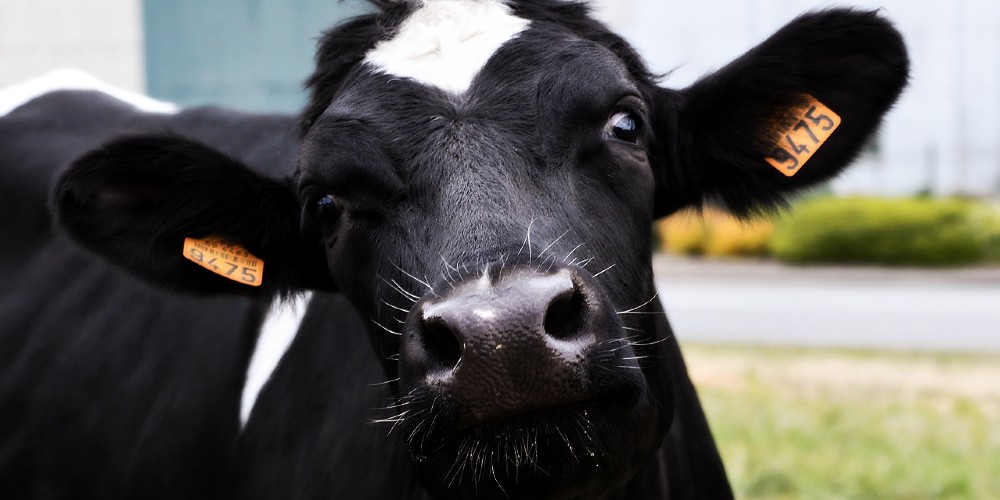
- Cows raised in concentrated animal feeding operations (CAFOs) produce substantial amounts of methane
- Bovaer, a feed additive designed to reduce methane production in cows, has been introduced as a solution, but it lacks sufficient long-term safety testing for both animals and humans
- Concerns exist that Bovaer disrupts the delicate balance of microbes within a cow’s rumen, leading to digestive issues and other adverse health effects over time
- A methane vaccine for cattle is also under development, but critics worry about the unintended consequences of altering the natural microbial ecosystem within the cow’s digestive system
- Regenerative agriculture, which emphasizes managed grazing and soil health, presents a more holistic and sustainable approach to mitigating methane emissions while improving overall ecosystem health
(Mercola)—Cows, along with other livestock, produce significant amounts of methane gas when raised in concentrated animal feeding operations (CAFOs). These large-scale operations concentrate methane emissions, exacerbating their impact on the environment. Scientists are exploring various solutions to this problem, including a new drug called Bovaer.
This drug, when added to cow feed, has been shown to reduce the amount of methane cows produce,1 although a meta-analysis found a range of results.2 Focusing on a drug like Bovaer is a shortsighted approach to a complex problem, however. Critics point out that Bovaer merely masks the symptoms of a larger issue: unsustainable industrial farming practices.3
Further, a key question looms over this seemingly promising solution: Is Bovaer safe? While the drug’s ability to reduce methane is being heavily promoted, its long-term safety for cows, the environment and the humans who consume milk and meat from treated cows is unknown.
A Closer Look Inside a Cow’s Stomach
To understand how cows produce methane, let’s take a simplified look inside their stomachs. Cows have a unique digestive system with four stomach chambers. The first and largest chamber is called the rumen. Think of the rumen as a giant fermentation vat. It’s a dark, warm and moist environment, perfect for microbes.
The rumen is packed with billions of tiny organisms, collectively called microbes. These microbes are essential for cows because they help break down the tough plant material that cows eat, like grass and hay. Cows, unlike humans, can’t digest these materials on their own. It would be like us trying to eat a tree branch — we simply don’t have the right tools for the job.
Among these helpful microbes are some that scientists consider “bad” in terms of environmental impact. These are called methanogens. As they break down plant material, methanogens produce methane as a waste product. This methane is then released into the atmosphere, mostly through cow burps.
Imagine the rumen as a tiny factory inside the cow’s stomach. The workers in this factory are the microbes. Some workers are responsible for breaking down the tough plant material, while others, the methanogens, produce methane as a byproduct of their work. This methane is like the factory’s exhaust — an unwanted waste product that pollutes the environment, particularly when large numbers of cattle are raised in close proximity.
The Missing Pieces in Bovaer’s Safety Profile
Bovaer, also known as 3-nitrooxypropanol or 3-NOP, is a feed additive to reduce the amount of methane produced by cows. It’s a powder that’s mixed into their regular feed. The idea is that by adding Bovaer to their diet, farmers help cows produce less methane.
Bovaer works by targeting the methanogens in the cow’s rumen. It specifically inhibits, or blocks, the activity of these methane-producing microbes. Before any new drug or feed additive is released onto the market, however, it should undergo rigorous testing to make sure it’s safe. This is true for medicines for humans, as well as for products intended for animals.
Thorough safety testing takes a lot of time and resources. It often takes many years, even a decade or more, to complete all the necessary tests for a new drug. However, this process is necessary for protecting public health. While Bovaer has undergone some safety testing, many experts believe it’s not enough. Most of the studies conducted so far have focused on proving that Bovaer reduces methane emissions from cows.
Initial studies also suggest that Bovaer is safe for cows in the short term, however we don’t have enough information about the long-term effects of Bovaer on cow health. Another major gap in knowledge is Bovaer residues that end up in milk or meat. If these residues are present, what are the implications for human health?
These questions have not been adequately studied. We simply don’t know if there are risks associated with consuming products from cows that have been given Bovaer. “All-in-all, there are warning flags that this drug could have harmful effects,” John Fagan, Ph.D., chief scientist of Health Research Institute, told Children’s Health Defense. “It has been rushed to market without adequate testing for safety to the cows and to the people who drink the milk.”4
Bovaer’s Risks to Human and Animal Health
The limited data available on Bovaer’s long-term effects on cow health raises several concerns. We need more research to understand how Bovaer impacts a cow’s ability to reproduce, their immune system’s ability to fight off diseases and their overall lifespan. Bovaer could have subtle effects on cow health that aren’t immediately obvious but could become significant over time.
One particular area of concern is Bovaer’s ability to disrupt the natural balance of microbes in the cow’s rumen. The rumen is a complex ecosystem, and the microbes within it play important roles in digestion and overall cow health. Changing the microbial balance could have unintended consequences, leading to digestive problems or making them more susceptible to certain diseases, for instance.

Another significant concern is Bovaer or its breakdown products ending up in the milk or meat that humans consume. When a cow is given Bovaer, small amounts of the drug or the substances it breaks down into could be present in the products derived from that cow.
The current safety assessment of Bovaer for human consumption is based on very limited data, meaning it’s unknown whether consuming products from Bovaer-treated cows is safe over the long term. More studies are also needed to investigate whether Bovaer residues could cause allergic reactions in some people, or if they could have other long-term health effects that we’re not aware of yet.
It’s also unknown if consuming products from Bovaer-treated cows is safe for all members of the population, including vulnerable groups like pregnant women, children and people with pre-existing health conditions. Bovaer is already approved in the U.S., Mexico, Canada and the U.K.,5 but given the many unanswered questions about its safety, more research is urgently needed.
André Leu, international director of Regeneration International, told Children’s Health Defense that existing Bovaer safety studies are “totally inadequate,” adding, “They are not long enough to determine common adverse health outcomes such as cancers, oxidative stress, endocrine disruption, reproductive problems, mutagenesis and neurotoxicity. No studies show that treated milk and meat products are safe for children.”6
The Risky Rush Toward a Methane Vaccine
While Bovaer is being marketed as a near-term solution, another risky approach is being developed: a methane vaccine for cattle. Billionaires like Bill Gates and Jeff Bezos are heavily funding research into a vaccine designed to alter the microbial makeup of cows’ stomachs, specifically targeting the methane-producing methanogens.
Bezos, through his Bezos Earth Fund, has invested $9.4 million in this endeavor, while Gates is funding the effort through both his philanthropic organization, the Bill & Melinda Gates Foundation and his investment firm, Breakthrough Energy Ventures.7 The stated goal is to develop a vaccine that significantly reduces the amount of methane cows produce during digestion.

Researchers at institutions like the Pirbright Institute and AgResearch are working to understand how methanogens colonize the digestive tracts of calves and how the bovine immune system responds.8 They’re attempting to identify specific antibodies that effectively target these methanogens, paving the way for a vaccine that could trigger an immune response to suppress methane production.
However, critics like crop scientist and regenerative farmer Howard Vlieger raise serious concerns about the consequences of such a vaccine. Vlieger told Children’s Health Defense that targeting the microorganisms essential for cows’ digestion could severely harm their health, similar to the negative impacts observed when necessary microorganisms in the rumen are eliminated, as research on the herbicide glyphosate has shown.9
The push for a methane vaccine is also supported by organizations like the Global Methane Hub, which is funded by the Gates Foundation, the Bezos Earth Fund and Google, among others.10 The hub claims that reducing methane emissions by 45% by 2030 could have a significant impact on atmospheric conditions, using this as justification for the vaccine’s development.11
They are also advocating for countries to sign the Global Methane Pledge, which aims to reduce methane emissions from livestock and fossil fuels. Some critics find the rapid development and promotion of this technology concerning, especially when considering the vast sums of money involved and the likelihood of unforeseen consequences.
Regenerative cattle farmer Will Harris argues that such technological interventions are unnecessary, as cattle raised on well-managed rangeland are beneficial to the environment, acting as “carbon-converting machines.”12 He contends that the focus on technological fixes creates a cycle of problems that require further technological solutions, benefiting large tech companies while doing little to address the root causes of environmental issues.13
A Regenerative Path Forward
While technological interventions like Bovaer and methane vaccines offer the allure of quick fixes to reduce methane emissions from cattle, they ultimately fail to address the root cause of the problem: unsustainable industrial farming practices.
These approaches involve complex chemical or biological manipulations with unknown long-term consequences for animal health, human health and the environment. Moreover, they perpetuate a system that prioritizes intensive confinement and monoculture farming, which are inherently detrimental to ecological balance.
As highlighted by regenerative agriculture experts, the vast majority of livestock-related methane emissions originate from CAFOs. These concentrated animal populations and the associated manure management practices create conditions that exacerbate methane production. In contrast, regenerative farming practices, which prioritize managed grazing and healthy soil ecosystems, offer a more holistic and sustainable solution.
As Leu explained, “In ranch ecosystems, much of the methane emitted by animals on pasture is degraded by soil and water-based methanotrophic (methane-eating) microorganisms. These organisms do not exist in CAFOs, also known as factory farms, and intensive livestock systems — so 100% of their emissions go into the atmosphere.”14
By mimicking natural grazing patterns, regenerative agriculture promotes biodiversity, enhances soil health and facilitates carbon sequestration.
These practices not only mitigate methane emissions through methanotrophic microorganisms present in healthy soils but also actively sequester carbon dioxide from the atmosphere, improving soil health and overall ecosystem function.
This approach stands in stark contrast to technological fixes that primarily focus on reducing methane at the source without addressing the broader ecological context. Shifting away from CAFOs and embracing regenerative agriculture presents a more promising and enduring path toward addressing environmental concerns related to livestock, while simultaneously promoting animal welfare, human health and the long-term resilience of our agricultural systems.
- 1 Animals (Basel). 2021 Dec 13;11(12):3540. doi: 10.3390/ani11123540
- 2 Journal of Dairy Science February 2023, Volume 106, Issue 2, Pages 927-936
- 3, 4, 5, 6, 14 Children’s Health Defense, The Defender December 10, 2024
- 7, 8, 9, 10, 11, 12, 13 Children’s Health Defense, The Defender November 19, 2024

Two Storms, One Harvest

Every food crisis in living memory has been a one-shock event. The 2008 price spike was a commodity bubble. The 2020 shortages were a logistics failure. The 2022 grain scare was a war on one exporter’s ports. Each time, the system bent, adjusted, and recovered, and each time the experts assured us afterward that global markets are simply too big and too diversified to fail.
What nobody in Washington seems eager to discuss is that 2026 is shaping up to be something the modern food system has never actually faced. Two independent shocks, one climatic and one geopolitical, are converging on the same harvest cycle at the same time. Not sequentially. Simultaneously.
Start with the weather. The Pacific Ocean is currently building toward what forecasters now openly call a record event. NOAA’s Climate Prediction Center puts the odds of at least a strong El Niño near 88 percent, with roughly two in three odds it reaches “very strong” status, the tier reserved for perhaps three or four events in the entire satellite era. Every major global model now projects a median peak in Super El Niño territory, and most of them project it exceeding the 2015-16 event, which until now held the modern record. Sea surface anomalies were already brushing the super threshold in mid-July, months before these events normally peak. The atmosphere has already shifted into El Niño mode, and the event is forecast to crest in late fall and early winter.
This is not about “climate change.” It’s about the standard cycles of weather, and the cycle we’re currently in is one that has likely devastated societies in the past. We’re better prepared as a society today, but not all Americans are equally prepared.
Serious households have started doing the quiet math on their own. Grocery bills tell part of the story, and the forecast maps tell the rest, which is why long-term food storage has moved from fringe hobby to mainstream line item in the family budget, with established suppliers like Heaven’s Harvest seeing demand from people who five years ago would have rolled their eyes at the idea. That instinct is not paranoia. It is pattern recognition, and the pattern is worth walking through carefully.
Editor’s Note: Heaven’s Harvest IS a sponsor, but the warnings of this article are real and would be written even if we didn’t have a survival food sponsor. With that said, those who take advantage of what they offer can use promo code “Patriot” for 15% off.
The Fertilizer Clock Is Already Running
While the Pacific warms, the second shock has been unfolding in the Strait of Hormuz. The conflict with Iran turned the world’s most important energy chokepoint into a contested waterway, and the consequences reach far beyond the gas pump. Roughly a third of global fertilizer trade moves through Hormuz, and the disruption sent urea prices up 86 percent year over year by March, with a 53 percent jump in a single month.
The World Bank projects energy prices rising about 24 percent in 2026 and fertilizer about 31 percent. By its own accounting, fertilizer prices ran 35 percent higher in the first five months of this year than the same period last year.
Here is the mechanism the nightly news will not explain. Fertilizer is not a grocery item. It is a time-delayed input. The nitrogen a farmer in Iowa or Punjab could not afford to apply this spring does not show up as a problem this spring. It shows up as a thinner harvest six to twelve months later.
The World Bank’s own food security brief concedes that the effects of reduced applications earlier this season “are likely to become visible only later in harvest outcomes.” Translate that from institutional language into plain English and it means this. The damage is already done, it is already in the ground, and we are simply waiting for it to arrive on the shelf.
Now check the calendar. Six to twelve months from the spring planting season lands us squarely in late 2026 and early 2027. Which is precisely when the strongest El Niño in the instrumental record is forecast to peak, bringing its signature droughts to Southeast Asia, Australia, southern Africa, northern Brazil, and South Asia, the very regions that grow the world’s rice, sugar, and oilseeds.
The World Bank warns openly that a strong El Niño “could disrupt multiple crop belts simultaneously” on top of the conflict-driven input costs. Their baseline projection assumes the Middle East disruptions ease by autumn. What in the last two years of Middle East history suggests that assumption is safe?
The System Has No Slack Left
The comfortable answer is that global markets always adjust. But adjustment requires slack, and the slack is gone. Global cereal production is expected to decline from last year’s records even before El Niño does its work. The UN World Food Programme, hardly a den of right-wing preppers, is calling this the most significant disruption to its supply chains since Covid and the invasion of Ukraine, and its supply chain director put the stakes bluntly.
Today’s supply chain challenges are tomorrow’s hunger crisis.
There is also a political dimension that markets cannot price. When food gets scarce, governments do not behave like economists. They behave like politicians. Export bans, hoarding mandates, and panic buying at the national level turned the modest rice shortfall of 2008 into a global crisis, and analysts are already warning that import-dependent nations are the first dominoes.
The 2015-16 Super El Niño, a far weaker event than what is now forecast, threw tens of millions into food stress across Africa and Asia. This one is projected to be stronger, and it arrives with fertilizer already rationed by price and shipping lanes already contested by missiles.
What Joseph Knew
Scripture does not treat preparation for lean years as faithlessness. It treats it as wisdom delivered in advance to those willing to act on it.
Behold, there come seven years of great plenty throughout all the land of Egypt: And there shall arise after them seven years of famine; and all the plenty shall be forgotten in the land of Egypt.
Joseph did not respond to that warning with a hashtag or a committee. He stored grain during the years of abundance, and when the famine came, Egypt stood while its neighbors begged. The lesson is not that famine is certain. It is that the time to prepare is precisely when preparation still looks optional.
Nobody who filled a pantry in a year of plenty has ever regretted it, and nobody standing in an empty aisle has ever been glad he waited for certainty.
None of this calls for panic, and panic is the enemy of sound judgment anyway. It calls for the same unglamorous prudence our grandparents considered ordinary. Keep some cash margin, know your local growers, and put real food in deep storage while it is cheap and available, because the entire arc of this story is that cheap and available is a closing window.
Families looking for a straightforward place to start can visit Heaven’s Harvest and use promo code Patriot for 15 percent off long-term storable food. The forecasts may yet soften, the strait may yet reopen, and we should pray they do. But hope is a fine thing to hold and a foolish thing to eat.
