

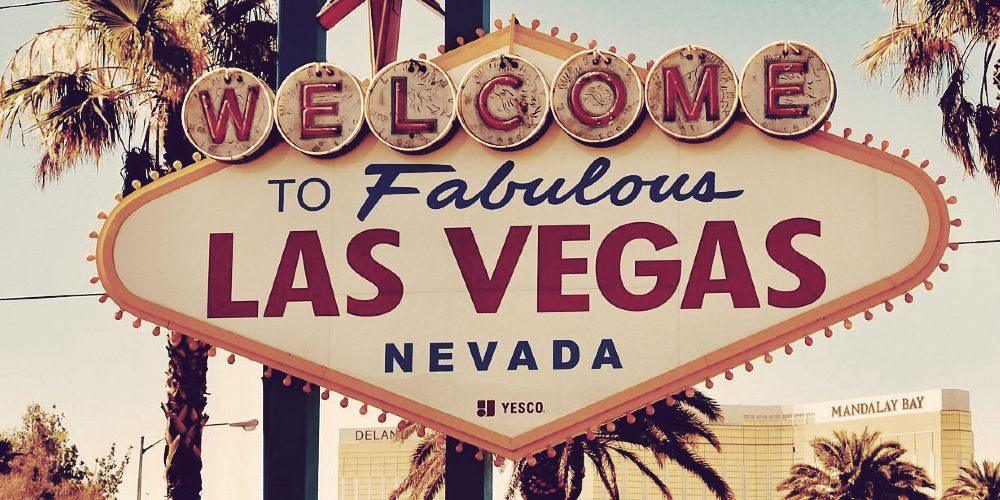
(The Economic Collapse Blog)—If you want to get a really good indication of where the U.S. economy is heading, just look at what is happening in Las Vegas. During good times, hotel occupancy rates are very high and lots of money is thrown around in the casinos. But when times are getting tough, less people head to Las Vegas and those that do go tend to be tighter with their money. We saw a perfect example of this during the Great Recession. Once the global financial crisis hit, gambling revenues in Las Vegas plunged. The following comes from an ABC News article that was published in 2009…
To almost everyone — and especially the Germans — Las Vegas seemed recession-proof. But now, since the summer of 2008, gambling revenues have dropped by more than 10 percent (see graphic) after having plunged to as much as 25 percent in the months immediately following the bankruptcy of Lehman Brothers.
Of course things eventually turned around and Las Vegas thrived for many years.
But now another enormous shift is taking place. A new downturn has begun “with hotel occupancy, visitor numbers and spending all slipping”…
Las Vegas is experiencing a notable downturn in tourism, with hotel occupancy, visitor numbers and spending all slipping.
Industry data points to several key reasons behind the shift, including rising costs, fewer international travellers, and broader economic uncertainties.
So why is this happening?
It doesn’t take a rocket scientist to figure it out.
Despite the absolutely nonsense that you hear on CNBC, the truth is that the U.S. economy is rapidly going in the wrong direction.
As a result, occupancy rates at Las Vegas hotels are absolutely plummeting…
Las Vegas hotels are posting some of the steepest year-over-year performance declines among major U.S. markets this summer as international visitor weakness and economic uncertainty take a toll.
Preliminary STR data indicates Las Vegas occupancy fell 14.9% in June, which, if actualized, would mark the city’s deepest monthly decline so far this year.
The deterioration continued into July, with the week ending July 5 showing Vegas with the worst declines across the top 25 U.S. markets: Occupancy fell 16.8%, to 66.7%, and revenue per available room (RevPAR) plunged 28.7%, to $102.75, according to STR.
Because things are so slow, workers are being laid off, and the unemployment rate in the Las Vegas area jumped quite a bit higher last month…
Las Vegas’ jobless rate ticked higher again last month amid a slump in tourism this year.
The Las Vegas-area’s unemployment rate was 5.8 percent in June, up from 5.5 percent in May, according to non-seasonally adjusted figures released this week by the Nevada Department of Employment, Training and Rehabilitation.
Nobody can deny what is happening in Las Vegas, because the numbers are telling a very clear story. And it turns out that casinos in other areas of the country are also experiencing financial difficulties right now. Here is just one prominent example…
Earlier this month, resort and casino operator Maverick Gaming filed for Chapter 11 protection in the U.S. Southern District of Texas. The Kirkland, Washington-based company owns five casinos across Nevada, Colorado, and Washington and reported that it currently has between $100 million and $500 million in liabilities.
The Nevada properties include a combined 1,200 hotel rooms, 1,700 slot machines and 43 table games. The Washington resorts also have 17 card tables used by visitors specifically seeking out the hotels for gambling trips.
This reminds me so much of the Great Recession.
If you think that I am exaggerating, let me give you another parallel to 2008 and 2009. Our housing market just experienced “its slowest spring season in more than a dozen years”…
The US housing market just logged its slowest spring season in more than a dozen years, leaving Glennda Baker, a veteran real estate agent in Atlanta, struggling to sell 21 listings.
She’s been slashing prices. But months of chatter about AI taking jobs and tariffs tanking the economy is feeding into buyer indecision.
“People say price solves everything,” Baker said. “But price doesn’t solve uncertainty.”
For the entire year of 2025, home sales in the United States are expected to hit the lowest level in 30 years…
Home sales are set to plunge to a 30-year low — with experts warning the slump could deepen into a full‑blown collapse. Just four million transactions are expected in the US this year, according to new data from Realtor.com. That would mark the lowest level since 1995, according to the National Association of Realtors.
Yes, it is being projected that home sales in 2025 will be even lower than they were in 2008 and 2009.
That isn’t just bad. That is really bad.

So why do the talking heads on CNBC continue to insist that the economy is strong? Have they gone completely nuts?
I simply don’t understand why they can’t see the parallels to 2008 and 2009, but one thing that we didn’t have in 2008 and 2009 that we are dealing with today is rampant inflation.
If you can believe it, the average list price of a 3-year-old used vehicle has risen by $9,476 over the past six years…
Detroit Free Press autos writer Jamie LaReau reported recently that the average list price for a 3-year-old vehicle is now $32,635, an infuriating $9,476 more than it was six years ago.
This is one of the primary reasons why so many Americans are driving around in 20-year-old vehicles these days.
The average age of the vehicles on U.S. roads has reached an all-time record high, and that isn’t going to change any time soon.
Meanwhile, meat prices just continue to skyrocket…

In June, meat prices well outpaced the entire food-at-home category, with steak and ground beef prices rising 12.4% and 10.3%, respectively, compared with a year earlier, according to the Labor Department’s consumer price index (CPI).
Beef prices are now hitting a record $9.26 per pound at retailers as of June, according to the USDA.
Inflation is causing our standard of living to collapse.
This is something that I have written about over and over again.
At this stage, things are so bad that 83 percent of Americans are dealing with “stressflation”…
A LifeStance Health survey released today reveals “stressflation” is affecting most Americans, with 83% reporting financial stress driven by inflation, mass layoffs, the rising cost of living and recession fears. Millennials and Gen Z report the most significant mental health impacts.
So if you are feeling stressed about the rapidly rising cost of living, you are certainly not alone.
Sadly, the long-term trends that have brought us to this point are not going to abate any time soon.
In fact, a tremendous amount of societal chaos is on the horizon.
So I would encourage you to batten down the hatches, because the storm that is heading our way is not going to be pleasant.
Michael’s new book entitled “10 Prophetic Events That Are Coming Next” is available in paperback and for the Kindle on Amazon.com, and you can subscribe to his Substack newsletter at michaeltsnyder.substack.com.

Two Storms, One Harvest

Every food crisis in living memory has been a one-shock event. The 2008 price spike was a commodity bubble. The 2020 shortages were a logistics failure. The 2022 grain scare was a war on one exporter’s ports. Each time, the system bent, adjusted, and recovered, and each time the experts assured us afterward that global markets are simply too big and too diversified to fail.
What nobody in Washington seems eager to discuss is that 2026 is shaping up to be something the modern food system has never actually faced. Two independent shocks, one climatic and one geopolitical, are converging on the same harvest cycle at the same time. Not sequentially. Simultaneously.
Start with the weather. The Pacific Ocean is currently building toward what forecasters now openly call a record event. NOAA’s Climate Prediction Center puts the odds of at least a strong El Niño near 88 percent, with roughly two in three odds it reaches “very strong” status, the tier reserved for perhaps three or four events in the entire satellite era. Every major global model now projects a median peak in Super El Niño territory, and most of them project it exceeding the 2015-16 event, which until now held the modern record. Sea surface anomalies were already brushing the super threshold in mid-July, months before these events normally peak. The atmosphere has already shifted into El Niño mode, and the event is forecast to crest in late fall and early winter.
This is not about “climate change.” It’s about the standard cycles of weather, and the cycle we’re currently in is one that has likely devastated societies in the past. We’re better prepared as a society today, but not all Americans are equally prepared.
Serious households have started doing the quiet math on their own. Grocery bills tell part of the story, and the forecast maps tell the rest, which is why long-term food storage has moved from fringe hobby to mainstream line item in the family budget, with established suppliers like Heaven’s Harvest seeing demand from people who five years ago would have rolled their eyes at the idea. That instinct is not paranoia. It is pattern recognition, and the pattern is worth walking through carefully.
Editor’s Note: Heaven’s Harvest IS a sponsor, but the warnings of this article are real and would be written even if we didn’t have a survival food sponsor. With that said, those who take advantage of what they offer can use promo code “Patriot” for 15% off.
The Fertilizer Clock Is Already Running
While the Pacific warms, the second shock has been unfolding in the Strait of Hormuz. The conflict with Iran turned the world’s most important energy chokepoint into a contested waterway, and the consequences reach far beyond the gas pump. Roughly a third of global fertilizer trade moves through Hormuz, and the disruption sent urea prices up 86 percent year over year by March, with a 53 percent jump in a single month.
The World Bank projects energy prices rising about 24 percent in 2026 and fertilizer about 31 percent. By its own accounting, fertilizer prices ran 35 percent higher in the first five months of this year than the same period last year.
Here is the mechanism the nightly news will not explain. Fertilizer is not a grocery item. It is a time-delayed input. The nitrogen a farmer in Iowa or Punjab could not afford to apply this spring does not show up as a problem this spring. It shows up as a thinner harvest six to twelve months later.
The World Bank’s own food security brief concedes that the effects of reduced applications earlier this season “are likely to become visible only later in harvest outcomes.” Translate that from institutional language into plain English and it means this. The damage is already done, it is already in the ground, and we are simply waiting for it to arrive on the shelf.
Now check the calendar. Six to twelve months from the spring planting season lands us squarely in late 2026 and early 2027. Which is precisely when the strongest El Niño in the instrumental record is forecast to peak, bringing its signature droughts to Southeast Asia, Australia, southern Africa, northern Brazil, and South Asia, the very regions that grow the world’s rice, sugar, and oilseeds.
The World Bank warns openly that a strong El Niño “could disrupt multiple crop belts simultaneously” on top of the conflict-driven input costs. Their baseline projection assumes the Middle East disruptions ease by autumn. What in the last two years of Middle East history suggests that assumption is safe?
The System Has No Slack Left
The comfortable answer is that global markets always adjust. But adjustment requires slack, and the slack is gone. Global cereal production is expected to decline from last year’s records even before El Niño does its work. The UN World Food Programme, hardly a den of right-wing preppers, is calling this the most significant disruption to its supply chains since Covid and the invasion of Ukraine, and its supply chain director put the stakes bluntly.
Today’s supply chain challenges are tomorrow’s hunger crisis.
There is also a political dimension that markets cannot price. When food gets scarce, governments do not behave like economists. They behave like politicians. Export bans, hoarding mandates, and panic buying at the national level turned the modest rice shortfall of 2008 into a global crisis, and analysts are already warning that import-dependent nations are the first dominoes.
The 2015-16 Super El Niño, a far weaker event than what is now forecast, threw tens of millions into food stress across Africa and Asia. This one is projected to be stronger, and it arrives with fertilizer already rationed by price and shipping lanes already contested by missiles.
What Joseph Knew
Scripture does not treat preparation for lean years as faithlessness. It treats it as wisdom delivered in advance to those willing to act on it.
Behold, there come seven years of great plenty throughout all the land of Egypt: And there shall arise after them seven years of famine; and all the plenty shall be forgotten in the land of Egypt.
Joseph did not respond to that warning with a hashtag or a committee. He stored grain during the years of abundance, and when the famine came, Egypt stood while its neighbors begged. The lesson is not that famine is certain. It is that the time to prepare is precisely when preparation still looks optional.
Nobody who filled a pantry in a year of plenty has ever regretted it, and nobody standing in an empty aisle has ever been glad he waited for certainty.
None of this calls for panic, and panic is the enemy of sound judgment anyway. It calls for the same unglamorous prudence our grandparents considered ordinary. Keep some cash margin, know your local growers, and put real food in deep storage while it is cheap and available, because the entire arc of this story is that cheap and available is a closing window.
Families looking for a straightforward place to start can visit Heaven’s Harvest and use promo code Patriot for 15 percent off long-term storable food. The forecasts may yet soften, the strait may yet reopen, and we should pray they do. But hope is a fine thing to hold and a foolish thing to eat.

Las Vegas is not a reliable economic barometer. A lot has changed since 2008. Vegas is pricing itself out of the market. With thousands of Indian Casinos competing for gamblers’ money, Vegas has responded with massive price increases. Vegas is a shabby, unpleasant city, overrun with illegal aliens and crime; it no longer has a monopoly on gambling or entertainment, and it’s a long way from anywhere.
I agree. This claim is like looking at many rivers flowing into a flood zone and claiming only one caused the flood. There are many other explanations for decline in Vegas…1) deportation of illegals (while best overall) has a downside of loss of workers and spenders, 2) Vegas has gained significant competitors, 3) Vegas is miserable during the summer, 4) crime, street people, prostitutes are deterrents, and 4) it’s remote location requires a plane trip and for me, planes have become so crammed, miserable, old, and full of riff-raff, I am no longer interested in going anywhere I have to ride one.
Las Vegas has always had high sensitivity to discretionary spending, so it’s no surprise it’s among the first places to show signs of slowdown. But let’s be clear—this is more about consumer pushback than a nationwide economic collapse.
Deceptive Pricing Is Driving Tourists Away – A $45/night hotel room can easily exceed $100 after resort fees, parking charges, facility surcharges, and taxes. Restaurants and bars do the same with hidden “service” or “concession” fees. It’s not inflation alone—it’s visitors feeling gouged and not coming back.
Casinos Are Undermining Their Own Product – Popular table games with skill elements are disappearing. Blackjack pays 6:5 instead of 3:2. Electronic replacements dominate the floor with worse odds and no interaction. Gamblers notice—and they’re choosing not to play.
Crime and Homelessness Are Up – The Strip and surrounding areas have become noticeably less safe and less pleasant. Public drug use, panhandling, and violence are more visible. That’s a local governance failure, not a macroeconomic signal.
Rising Operating Costs, Less Value – Minimum wage hikes and union labor contracts have raised overhead. Instead of delivering better service, many businesses are slashing staff and using self-check kiosks—charging more while delivering less.
Yes, Las Vegas is slowing—but that’s not proof the national economy is collapsing. It’s a poorly run city getting hit with the consequences of nickel-and-diming customers, ignoring basic service quality, and allowing local conditions to deteriorate.
Extrapolating this as a sign of nationwide collapse is a reach. It’s mostly a local trust issue, not a national economic indicator.
There is a move to religion, the fed wont lower interest rates and crime in vegas is to high. Those are the real reasons ..MAGA
Las Vegas’ gambling and entertainment fortunes are hopefully indicative of nothing more than a consumer trend (and a healthy one at that). It is certainly in competition with other gambling and entertainment venues. The article assumes Las Vegas has a high level of normal or fixed support and must grow with the economy, or was destined to ever expand. Las Vegas and other casino operations are no canary for anything more than their own excesses including perhaps overbuilding resulting from “gambling” with investor money based on unreliable market presumptions. The situation is just as likely no more than a disposable income trend or I would hope sensibility. People wear out on the sh*t they offer. I would be content if it was deeper – a rejection of its sordidness particularly of Las Vegas as an anything goes town. Hollywood might be a similar example. Technology, preferences, and cost structures lead elsewhere, indicating no inevitability to any offering.
Maybe typical customers were illegals and those thousands of government workers laid off in DC. LOL.
Actually, there are reports of rising interest in Christianity and rejection of moral debauchery and perversion by all, but by Gen Z especially. For those with sincere convictions based on biblical definitions of sin, Sin City would be affected by a return to a more moral society. There are so many contributors to the explanations for Las Vegas to be dying…a bad economy seems the least likely.
What a croc of shit
This loser is trying to tie gambling to the economy
Newsflash…there are casinos popping everywhere so people dont have to go to Vegas
There is also a rise in Christianity which is waking people up to living better lives
And finally Black Fatigue isnon the rise and people with money just dont want to be around the ignorant
Wages are up, the Market is good the government is making money and you are now the media who is beinf paid to make shit up
So Trump didn’t save the country? Don’t tell Maga that.
adjust your meds
First what are your sources that inflation is still high? Second what about the Fed not lowering interest rates when they should have by now?