

Editor’s Note: SafeBlackout, the company that author Mike Roth founded, has no affiliation with us. They are not a sponsor and I have never tried anything on their site. But the information he provided in the article is sound, so that’s a good sign. With that said, here’s Mike Roth…
Are you searching for dependable alternative energy solutions as a prepper or survivalist? Given the fragility of the power grid in disaster scenarios, investing in reliable and sustainable power generation is necessary for maintaining safety and connectivity.
Delving into renewable energy sources like solar, wind, and hydropower, this article offers insights into diverse power solutions and their setup requirements.
We will provide the following:
- A comprehensive overview of these energy alternatives.
- Exploring their roles in prepping.
- The pros and cons.
- The critical factors in selecting the ideal power source are tailored to your needs and circumstances.
While some folks are already totally off-grid, the rest of us are still looking for answers. Equipping yourself with this knowledge empowers you to harness nature’s power effectively, fortifying your preparation for any contingency.
Solar Power – Definition and Explanation
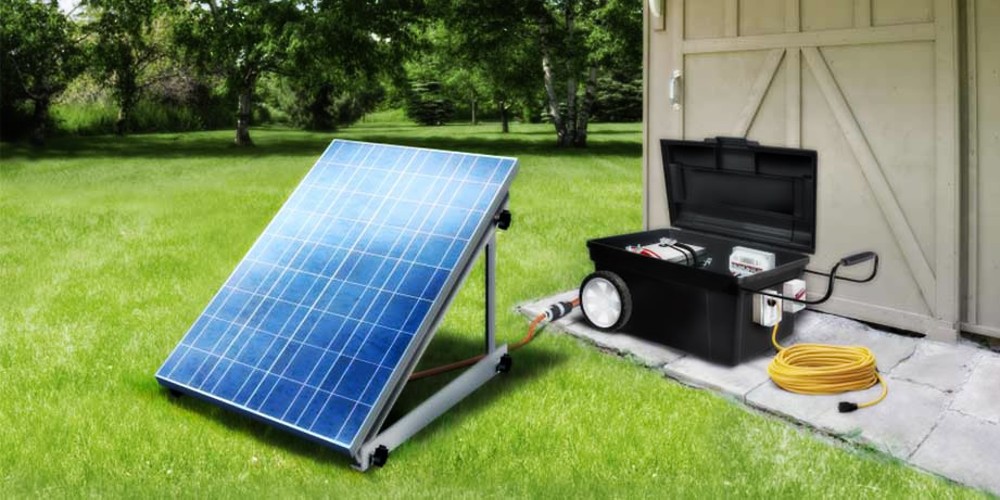
Solar is a renewable energy source that harnesses the energy from the sun and converts it into electricity.
The technology behind solar power has come a long way since its inception in the seventh century, and it is now one of the most significant green energy sources available. It is an environmentally friendly power source that is plentiful, cost-effective, and easy to maintain. Solar power is a great option for preppers and survivalists looking for alternative sources of energy to traditional sources.
Advantages and disadvantages of using solar power
Solar power is considered one of the most popular and widely used forms of alternative energy.
One of the biggest advantages of using solar power is that it is a renewable source of energy that doesn’t produce any harmful emissions or greenhouse gases. It also helps to reduce dependence on fossil fuels, a finite resource becoming increasingly scarce.
However, the initial cost of installing a solar system can be quite expensive, and the storage of solar energy can also be costly. Moreover, solar power is weather dependent, and during periods of low solar activity, homeowners may need to rely on other power sources. Read more here and here.
Factors to consider when using solar power
Several factors need to be considered when solar power is an alternative energy source for prepping and survival planning. Firstly, the location of the area and the specific micro-climate should be analyzed to determine the amount of direct sunlight available and the optimal positioning of solar panels.
Other important factors include the cost of initial installation and maintenance, the lifespan of the panels, and the need for a battery backup system to provide power during periods of low sunlight. Additionally, the system’s capacity should match the prepper’s or survivalist’s energy requirements to ensure a sufficient power supply.
Hydroelectric Power Definition and Explanation
Hydroelectric power, also known as hydropower, is a renewable energy source that harnesses the natural flow of moving water to generate electricity.
It works by using a dam or reservoir to trap water and create a height difference between the water levels on both sides of the dam. The water flows through a small tunnel with turbines that generate electricity from an attached generator.
Hydropower accounts for about 28.7% of total U.S. renewable electricity generation and approximately 6.2% of total U.S. electricity generation. It is also a cost-effective source of electricity that costs less than most other sources.
However, large-scale conventional hydropower dams significantly impact the environment, including displacement of people, loss of valuable farmland and wildlife habitats, and disruption of natural river flow.
Advantages and disadvantages of using hydroelectric power
Hydroelectric power is a popular alternative energy source due to its renewable nature and reliable energy production. It is also considered inexpensive in the long run and associated with job creation and economic benefits.
However, environmental concerns are associated with constructing hydroelectric plants, including the potential disruption of natural river flow and impacts on wildlife.
Additionally, the reliance on river water for energy production makes hydroelectricity susceptible to droughts, which can limit its capacity.
Despite these drawbacks, hydroelectricity remains a viable alternative energy solution for preppers and survivalists to consider in preparing for any disaster. Learn more about it here and here.
Factors to consider when using hydroelectric power
When using hydroelectric power, there are several factors to keep in mind. Firstly, location is key. While not necessary, having a fast-moving river or stream on or near your property can increase the potential for power generation.
Another factor to consider is the amount of water flow available. If the water source is seasonal or unreliable, hydroelectric power may not be a viable option.
It’s also important to take into account the potential impact on the environment and local wildlife. While eco-friendly in theory, dams and other infrastructure can disrupt ecosystems and affect fish populations.
Overall, understanding the limitations and benefits of hydroelectric power can help individuals evaluate whether it’s a suitable alternative energy source for their prepping and survival needs.
Wind Energy Definition and Explanation
Wind is a renewable form of energy that is harnessed through the use of wind turbines.
Wind turbines convert the kinetic energy of the moving air into electrical power, making it a clean and sustainable energy source.
The wind turbine blades are designed to rotate in response to the wind, which turns a generator that produces electricity.
Wind energy has several advantages, including being an abundant and inexhaustible resource that does not produce harmful emissions. However, like all energy sources, it also has its challenges, such as being dependent on wind speeds and the need for suitable locations for wind turbines.
Advantages and disadvantages of using wind energy
Wind energy is one of the cleanest and most sustainable energy sources available. It does not produce any greenhouse gas emissions, nor does it emit any pollutants into the air.
Wind power also has the potential to generate electricity at a lower cost than traditional power sources, and it can provide a reliable and consistent source of power in many areas.
But wind energy also has its drawbacks. Wind turbines can be expensive to install and be noisy and visually unappealing. Additionally, wind turbines can pose a threat to wildlife, particularly birds and bats, and they may require additional infrastructure to connect rural areas to urban centers.
Despite these challenges, wind power remains a promising alternative energy source for many preppers and survivalists.[11]
Factors to consider when using wind energy
When opting for wind energy as an alternative power solution, there are specific considerations you need to bear in mind.
One key factor is the wind speed and direction in your location, which determines the amount of energy that can be generated. Another important consideration is the size and type of turbine, which should be chosen based on your energy needs and the available space.
The cost of installing and maintaining a wind energy system is also a significant factor, and ensuring that the benefits outweigh the costs is important in the long run. Finally, it’s crucial to have a backup energy source in case of low or no wind conditions. Considering all these factors can help you make an informed decision about whether wind energy is a viable option for your needs.
Other Alternative Energy Sources
Apart from solar power systems, hydroelectric power, and wind energy, there are other alternative energy sources that can be explored for prepping and survival planning.
Biomass
One of them is biomass energy, which is produced from nonfossilized plant materials such as wood, wood waste, and biofuels. Biomass energy can be burned to release chemical energy and generate electricity.
Geothermal
Another option is geothermal energy, which derives heat from the earth’s hot interior or near the earth’s surface. Wells drilled into the earth allow a controlled release of steam or water to the surface to generate electricity, with the earth’s constant temperature utilized in geothermal heat pumps for heating and cooling buildings.
Both have advantages and disadvantages, and it is essential to consider individual needs and circumstances when selecting the best alternative energy source.
Advantages and disadvantages of using these alternative energy sources
Biomass is a renewable energy source since it uses organic materials like wood and agricultural waste as fuel. This efficiency makes it a cost-effective energy solution.
However, biomass has a higher carbon footprint compared to other renewable energy sources, and its supply chain can contribute to deforestation and land use issues.
On the other hand, geothermal energy uses the earth’s natural heat as a power source.
It is a reliable and constant energy source.
Still, it requires a specific geography to be viable, and drilling geothermal wells can be expensive. It is essential to weigh the pros and cons of each alternative energy source to select the best solution that fits individual needs and circumstances.
If you need help choosing the right alternative energy for your needs, don’t hesitate to get more information here.
Tailoring Your Energy System to Your Needs
Strategically planning for your energy needs requires an in-depth understanding of your power consumption habits. This process can be streamlined through a series of steps.
Inventory Analysis
Firstly, take stock of all electricity-consuming equipment appliances in your premises. This will provide a comprehensive picture of the devices contributing to your energy usage.
Energy Consumption Metrics
The subsequent step involves identifying the energy usage of each appliance, which is generally indicated in watts or kilowatt-hours (kWh) on the device or in the product specifications.
Appliance Usage Patterns
Consider the average duration each appliance is utilized daily. This will contribute to determining your overall energy consumption.
Individual Energy Consumption
For each appliance, compute the daily energy consumption by multiplying its wattage by the daily usage duration.
Aggregate Energy Consumption
By summing up the daily energy consumption of all appliances, you will get a snapshot of your total daily energy requirements.
Peak and Low Demand Periods
Incorporate considerations for energy needs during peak and off-peak times. This factor is crucial to accurately size your power system to meet fluctuations in usage levels.
Power System Configuration
Decide on your preferred system configuration: complete independence with an off-grid system or a grid-tied setup with net metering capabilities.
Gaining insights into your energy requirements enables you to make informed choices about the most suitable type and size of renewable energy systems for your needs.
Calculating Your Power System Needs and Appliance Energy Usage
Here’s how to figure out how much energy you need.
Daily Energy Demand
Start by determining your daily energy demand in watt-hours like above. This entails adding up the wattage of each appliance and multiplying it by its daily usage duration.
Inefficiency Adjustment
To account for potential system inefficiencies, multiply your total daily energy requirement by a factor of 1.3. This provides a more accurate estimate of your power system requirements.
Power System Size
This systematic approach enables you to estimate your power system needs accurately and ensure the chosen setup can meet your energy demands reliably and efficiently.
How to select the best alternative energy source based on individual needs and circumstances
When it comes to selecting the best alternative energy source, there are various factors to consider.
First, individual needs and circumstances should be taken into account. For example, a solar power system may be the best option for those living in sunny areas.
At the same time, wind energy may be more suitable for those in areas with consistently cloudy weather and strong winds. Other factors to consider include upfront costs, maintenance requirements, and local regulations.
It may also be helpful to consult a professional to determine which alternative energy source would be the most beneficial for a specific situation.
Selecting the right alternative energy source can help save money on energy bills and reduce environmental impact.
Importance of considering alternative energy solutions for prepping and survival planning.
Considering energy sources is crucial for preppers and survivalists due to the unpredictability of natural disasters and other SHTF scenarios. When the power grid fails, we rely on electricity for our essential needs, such as communication, food, and heating. Alternative energy sources provide a sustainable solution, enabling individuals to have enough energy to be independent and prepared even in the toughest times.
While traditional fuel sources such as gasoline or diesel are finite resources, renewable energy sources such as solar, hydro, and wind energy are abundant and have far fewer environmental impacts.
Therefore, considering alternative renewable energy sources for prepping and survival planning is necessary and an environmentally responsible choice. For more information, check out our article on how the odds are for a Massive Global Energy Crisis.
Recap of the different alternative energy solutions
In summary, alternative energy sources offer a viable solution for preppers and survivalists looking to live off the grid or prepare for emergencies.
Solar power, hydroelectric power, and wind energy are the most popular alternative energy sources. Each has its advantages and disadvantages, as well as factors to consider when implementing them. Additionally, biomass and geothermal energy are also alternative energy sources to consider.
Ultimately, selecting the best alternative energy source depends on individual needs and circumstances. It is important to consider these options when prepping and planning for survival.
Do you have any alternative energy sources set up? What do you plan to use when the power goes out? Have you tried any sources that ultimately did not work well for you?
Let’s discuss alternative energy solutions for preppers and survivalists in the comments section at my Late Prepper Substack.
Article cross-posted from The Organic Prepper.
About Mike
Mike Roth, the founder of SafeBlackout, is a dedicated advocate for preparedness and self-sufficiency. His work focuses on educating others on how to handle unpredictable situations confidently. With a commitment to transparency and thorough research, Mike’s writings provide a reliable source of information on survival scenarios, blackout preparedness, and more. His goal is to empower individuals to navigate any challenge with confidence and self-reliance.

Two Storms, One Harvest

Every food crisis in living memory has been a one-shock event. The 2008 price spike was a commodity bubble. The 2020 shortages were a logistics failure. The 2022 grain scare was a war on one exporter’s ports. Each time, the system bent, adjusted, and recovered, and each time the experts assured us afterward that global markets are simply too big and too diversified to fail.
What nobody in Washington seems eager to discuss is that 2026 is shaping up to be something the modern food system has never actually faced. Two independent shocks, one climatic and one geopolitical, are converging on the same harvest cycle at the same time. Not sequentially. Simultaneously.
Start with the weather. The Pacific Ocean is currently building toward what forecasters now openly call a record event. NOAA’s Climate Prediction Center puts the odds of at least a strong El Niño near 88 percent, with roughly two in three odds it reaches “very strong” status, the tier reserved for perhaps three or four events in the entire satellite era. Every major global model now projects a median peak in Super El Niño territory, and most of them project it exceeding the 2015-16 event, which until now held the modern record. Sea surface anomalies were already brushing the super threshold in mid-July, months before these events normally peak. The atmosphere has already shifted into El Niño mode, and the event is forecast to crest in late fall and early winter.
This is not about “climate change.” It’s about the standard cycles of weather, and the cycle we’re currently in is one that has likely devastated societies in the past. We’re better prepared as a society today, but not all Americans are equally prepared.
Serious households have started doing the quiet math on their own. Grocery bills tell part of the story, and the forecast maps tell the rest, which is why long-term food storage has moved from fringe hobby to mainstream line item in the family budget, with established suppliers like Heaven’s Harvest seeing demand from people who five years ago would have rolled their eyes at the idea. That instinct is not paranoia. It is pattern recognition, and the pattern is worth walking through carefully.
Editor’s Note: Heaven’s Harvest IS a sponsor, but the warnings of this article are real and would be written even if we didn’t have a survival food sponsor. With that said, those who take advantage of what they offer can use promo code “Patriot” for 15% off.
The Fertilizer Clock Is Already Running
While the Pacific warms, the second shock has been unfolding in the Strait of Hormuz. The conflict with Iran turned the world’s most important energy chokepoint into a contested waterway, and the consequences reach far beyond the gas pump. Roughly a third of global fertilizer trade moves through Hormuz, and the disruption sent urea prices up 86 percent year over year by March, with a 53 percent jump in a single month.
The World Bank projects energy prices rising about 24 percent in 2026 and fertilizer about 31 percent. By its own accounting, fertilizer prices ran 35 percent higher in the first five months of this year than the same period last year.
Here is the mechanism the nightly news will not explain. Fertilizer is not a grocery item. It is a time-delayed input. The nitrogen a farmer in Iowa or Punjab could not afford to apply this spring does not show up as a problem this spring. It shows up as a thinner harvest six to twelve months later.
The World Bank’s own food security brief concedes that the effects of reduced applications earlier this season “are likely to become visible only later in harvest outcomes.” Translate that from institutional language into plain English and it means this. The damage is already done, it is already in the ground, and we are simply waiting for it to arrive on the shelf.
Now check the calendar. Six to twelve months from the spring planting season lands us squarely in late 2026 and early 2027. Which is precisely when the strongest El Niño in the instrumental record is forecast to peak, bringing its signature droughts to Southeast Asia, Australia, southern Africa, northern Brazil, and South Asia, the very regions that grow the world’s rice, sugar, and oilseeds.
The World Bank warns openly that a strong El Niño “could disrupt multiple crop belts simultaneously” on top of the conflict-driven input costs. Their baseline projection assumes the Middle East disruptions ease by autumn. What in the last two years of Middle East history suggests that assumption is safe?
The System Has No Slack Left
The comfortable answer is that global markets always adjust. But adjustment requires slack, and the slack is gone. Global cereal production is expected to decline from last year’s records even before El Niño does its work. The UN World Food Programme, hardly a den of right-wing preppers, is calling this the most significant disruption to its supply chains since Covid and the invasion of Ukraine, and its supply chain director put the stakes bluntly.
Today’s supply chain challenges are tomorrow’s hunger crisis.
There is also a political dimension that markets cannot price. When food gets scarce, governments do not behave like economists. They behave like politicians. Export bans, hoarding mandates, and panic buying at the national level turned the modest rice shortfall of 2008 into a global crisis, and analysts are already warning that import-dependent nations are the first dominoes.
The 2015-16 Super El Niño, a far weaker event than what is now forecast, threw tens of millions into food stress across Africa and Asia. This one is projected to be stronger, and it arrives with fertilizer already rationed by price and shipping lanes already contested by missiles.
What Joseph Knew
Scripture does not treat preparation for lean years as faithlessness. It treats it as wisdom delivered in advance to those willing to act on it.
Behold, there come seven years of great plenty throughout all the land of Egypt: And there shall arise after them seven years of famine; and all the plenty shall be forgotten in the land of Egypt.
Joseph did not respond to that warning with a hashtag or a committee. He stored grain during the years of abundance, and when the famine came, Egypt stood while its neighbors begged. The lesson is not that famine is certain. It is that the time to prepare is precisely when preparation still looks optional.
Nobody who filled a pantry in a year of plenty has ever regretted it, and nobody standing in an empty aisle has ever been glad he waited for certainty.
None of this calls for panic, and panic is the enemy of sound judgment anyway. It calls for the same unglamorous prudence our grandparents considered ordinary. Keep some cash margin, know your local growers, and put real food in deep storage while it is cheap and available, because the entire arc of this story is that cheap and available is a closing window.
Families looking for a straightforward place to start can visit Heaven’s Harvest and use promo code Patriot for 15 percent off long-term storable food. The forecasts may yet soften, the strait may yet reopen, and we should pray they do. But hope is a fine thing to hold and a foolish thing to eat.
