

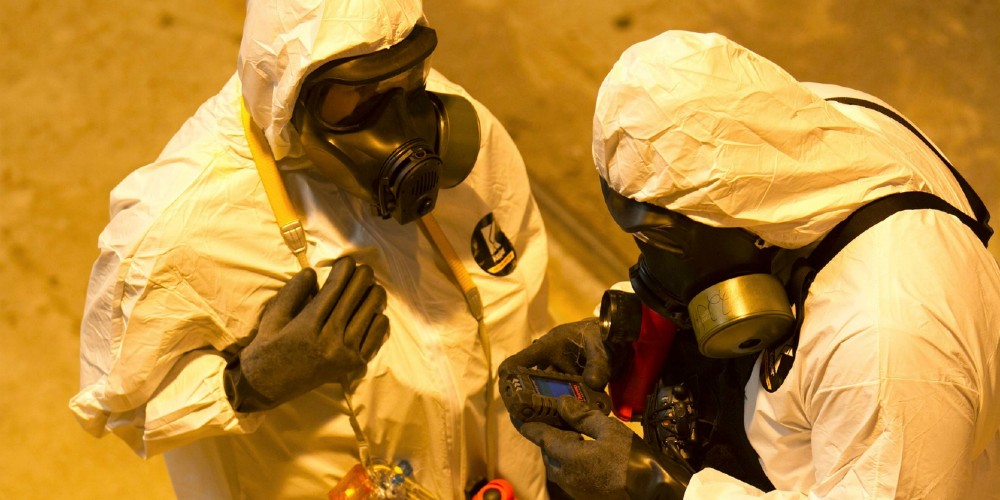
On August 12, the FBI and Department of Homeland Security released a joint bulletin to law enforcement agencies about increased threats following the raid on Donald Trump’s Mar-A-Lago residence. While the bulletin is supposed to be for official use only, Project Veritas found a copy of it, and you can view the bulletin here. FBI and DHS released the joint bulletin after a man entered the FBI building in Cincinnati and started firing at people with a nail gun on August 11. The FBI/DHS bulletin also states that a variety of threats have been made online, including the threat to place a dirty bomb in front of FBI headquarters.
What should you know about a dirty bomb?
Most of us don’t work for the FBI, but how concerned should we be about “dirty bombs”? How easy are they to make? How destructive are they?
The Nuclear Regulatory Commission defines dirty bombs as “a type of ‘radiological dispersal device’ that combines a conventional explosive, such as dynamite, with radioactive material.” Dirty bombs do not have the same ability to spread radiation for thousands of square miles that nuclear bombs do; in the event of a dirty bomb exploding, most people would likely be injured by the explosive device itself, not the actual radiation.
The NRC also says that the dirty bomb is not a “weapon of mass destruction” but a “weapon of mass disruption.” This has to do with the public fear factor regarding radiation and the very expensive cleanup involved.
For example, back in 2019, radioactive Cesium 137 leaked at Seattle’s Harborview Research and Training Building. This leak was due to actions on the part of contractors who were not obeying standard safety procedures. The contractor started sawing through pipes containing the Cesium and did not notice when it started to leak. He was not wearing any of the radiation detecting equipment (rings and/or badges) that have been standard in that field of work for quite a while, and that would have alerted him that something was wrong.
And while no one suffered long-term injuries from this incident, the cleanup took two years and cost $156 million. This $156 million price tag was just for a leak; radioactive material sprayed by an explosive device would be that much more expensive to clean up. Even if no injuries were involved, cleaning up after a dirty bomb would be a logistical and financial nightmare.
And as bad as the financial aftermath of a dirty bomb would be, the psychological impact on the community would probably be worse. The public is terrified of radiation. We’ve all heard horror stories about Hiroshima and Nagasaki, Chernobyl, and Three Mile Island. Photos of animals near Chernobyl with grotesque mutations are all over the internet.
If you’re into fear porn, boy, does radiation have a lot to offer!
But what if you want a sober assessment of what might happen if you, say, worked next to a building in which a dirty bomb went off?
Well, according to the NRC, it would depend on the amount of radiation absorbed by the body, the type of radiation, the distance of the source of radiation to your body, type of exposure (absorbed by skin, inhaled, or ingested,) and the length of time of exposure. And, of course, the strength of the explosive device.
If you don’t remember the different types of radiation and genuinely want a better understanding of possible scenarios, you can always revisit your favorite middle-school science book. My personal favorite is The Usborne Science Encyclopedia, but I’m sure there are plenty of other good ones out there.
There are three types of radiation: alpha, beta, and gamma. Alpha particles are absorbed by thick pieces of paper and travel less than 4 inches through air. While they are heavy and very harmful if swallowed or inhaled, they are too big to be absorbed through skin unless it is cut.
Beta particles can travel up to three feet in the air and are absorbed by thin sheets of copper. Your clothes will protect you from beta particles, though some types of beta particles can cause radiation burns on bare skin. Like alpha particles, they do the most damage if swallowed or inhaled.
Gamma rays are the most penetrating. They have no mass; they are pure energy. X-rays are not identical to gamma rays, though both are commonly used in medicine.
X-rays are lower in intensity and so are not as damaging. Gamma rays are more high energy; it takes several inches of lead to completely stop gamma rays. They can pass through not only clothes but your entire body, causing damaging ionization on the way.

But don’t panic.
This sounds scary, but people are exposed to all kinds of radiation in everyday activities. Many smoke detectors contain alpha particles. Beta particles have a variety of medical applications, like in positron emission tomography (PET). Do you only eat organic home grown, home processed food? Including all your spices? No?
Then you probably have irradiated food in your regular diet. Almost all spices on the market have been exposed to gamma rays to kill pathogens, and it’s permissible in other foods, too. Gamma rays are also used to sterilize medical equipment.
And radioactive substances are ubiquitous in the environment. We’re all exposed to some forms of radiation. Do you like bananas? They’re radioactive. Do you like traveling by plane? You’re being exposed to cosmic radiation, then, too. Humans have evolved to deal with certain amounts of radioactive substances in the environment.
Yes, in the past hundred years, we have been working with larger quantities of synthetically produced radioactive material than ever before. This absolutely warrants additional safety protocols. But today, people have been working in various industries, handling radioactive substances on a daily basis for decades. We should be cautious and attentive toward radioactive substances; people that work in those industries need to be attentive to their own physical well-being to make sure they are not being negatively affected.
(Looking for information on emergency evacuations? Check out our free QUICKSTART Guide.)
The public should not be stupidly terrified about the possibility of a dirty bomb.
And it is worth repeating that most of the actual damage done by a dirty bomb would be done by the explosive itself. And the more powerful the explosion was, the less damage would be done by the radioactive material because it would be more widely dispersed. The dose makes the poison we’ve known for a long time; a powerful blast that dispersed radioactive material over a wide radius would also highly dilute the radioactive material, rendering it far less dangerous.

Radioactive material is widely used in medicine and industry, but purchasing is highly regulated.
Each state has its own rules regarding purchasing radioactive materials, but in none of them can anyone off the street just call a distributor and buy whatever they want. However, other countries also use radioactive material, and many don’t regulate it as well as we do in the States. It’s theoretically possible that a bad actor could get hold of radioactive material in a country like Mexico and then sneak it across the border into the U.S. Also, there have been cases of cars transporting radioactive material being stolen.
Having said that, a dirty bomb is something to be aware of, not something to lose sleep over.
Journalists love making people terrified of radiation, but the truth is that 36 years after Chernobyl, we know now much more about the long-term effects of radiation exposure, and they are not as bad as we feared 50 years ago. Yes, Chernobyl was horrible, wasteful, and tragic. Many people lost their lives, and many more lost quality of life. However, fears that mutations observed as a result of the blast would be passed down from generation to generation turned out to be misplaced. People who suffered as a result of the Chernobyl blast were able to have healthy children.
The fear-mongering surrounding dirty bombs may do more damage, and I can’t help but wonder a little bit at some of the timing. About a month ago, NBC did a news report on how easy it is to get radioactive material.
The whole 2 minutes were basically fear porn about radioactive substances we’ve been using in medicine for years. Their reporters were able to order some radioactive substances using a fake license and used this as a pretext for pushing stricter controls on the part of medical physicists and sellers.
They also use the incident to incite fear; they say that a dirty bomb made with the improperly purchased amount of radioactive material stolen could “cause hundreds of deaths from evacuations and billions of dollars of socioeconomic effects.” (Go to 1:10 in this video to see.)
This report did not offer many specific details. NBC didn’t say what kind of radioactive materials were improperly purchased; they didn’t say what kind of explosive device it would take to spread the materials around that would cause hundreds of people to die in an evacuation.
Notice that the reporter did not say that hundreds of people would die from radiation poisoning because that would be a blatant lie. But saying that hundreds could possibly die in an evacuation scenario is much vaguer and, therefore, much harder to dispute definitively.
This report was designed to spread fear regarding dirty bombs.
But why? Why do mainstream media and government officials want to keep us in a permanent state of being terrified of something, whether it’s Covid, or the Russians, or monkeypox, or now dirty bombs?
Without going into a huge amount of detail, I think it has to do with Mattias Desmet’s idea of mass formation. There are a variety of reasons that powerful people want the public terrified right now.
Dirty bombs are just another layer on the fear cake.
If the thought of a dirty bomb genuinely scares you, I would recommend taking a look at the OP’s very reasonable, not-fear-mongering article on How to Prepare for a Nuclear Attack. And then bear in mind that dirty bombs are far, far less damaging. For even more information, check out The Organic Prepper Nuclear Survival Anthology. As always, I think the best antidote to fear is knowledge and then preparedness. Don’t let the thought of a dirty bomb terrify you. Learn about what you’re most likely to encounter in your particular environment, prepare accordingly, and then go about your life.
Are you concerned about the possibility of a dirty bomb? How likely do you think it is that someone would get these materials and create a terrorist disaster? Do you have any particular knowledge about dirty bombs that you’d like to share with us? Let us know your thoughts in the comments.
About the Author
A lover of novels and cultivator of superb apple pie recipes, Marie spends her free time writing about the world around her.
Article cross-posted from The Organic Prepper.

Starting the Day With a Scripture-Inspired Roast Helps Center Your Thoughts on Eternal Truths Amid Temporal Pressures
The world can seem chaotic, especially right after we wake up. Many believers start their mornings reaching for something familiar — a hot cup of coffee — yet end up settling for mediocre brews that do little more than deliver a caffeine jolt. The daily grind of life, with its endless distractions, news cycles, and responsibilities, can leave even the most faithful feeling spiritually parched alongside their physical fatigue. What if your morning ritual could do more than wake you up? What if it could ground you in truth, nourish your body with exceptional quality, and quietly advance a kingdom purpose at the same time?
That’s the promise — and the reality — behind Promised Grounds Coffee. This Christian-founded company doesn’t just roast beans; it approaches every step as an act of worship and discipleship. By selecting only the top 10% of specialty-grade beans, ethically sourced from dedicated farmers in Central and South America, and small-batch roasting them with reverence in Austin, Texas, Promised Grounds delivers what many describe as the best coffee available — never burnt, never bland, but rich with origin stories and layered flavors that honor God’s creation.
From the vibrant Psalm 27 Roast (a light, bright medium option) to the bold yet peaceful 2 Timothy 1:7 Decaf, each bag carries a Scripture verse that turns your daily pour into a gentle reminder of faith. And through their Ounce Per Ounce Promise, every ounce of coffee you enjoy provides an equal ounce of clean water to families in need via partnership with Filter of Hope — literally brewing hope for body and soul, one cup at a time.
The challenge for today’s Christians runs deeper than finding a decent cup. In an age of convenience-driven consumerism, it’s easy to support companies that dilute values or remain silent on matters of faith. Many believers want their everyday choices — from what they drink to how they spend — to reflect discipleship rather than just convenience. Promised Grounds solves this by weaving Christian excellence into the entire process: beans nurtured with prayerful stewardship by farming families, roasted as an offering rather than a commodity, and packaged with Bible verses to encourage a mindset of gratitude and purpose from the first sip. Reviewers consistently praise the smooth, rich profiles — whether enjoyed black in a drip maker, iced on a warm day, or shared in fellowship — noting how the quality stands toe-to-toe with premium secular brands while delivering something far more meaningful.
This integration of faith and flavor addresses a real need in Christian households and ministries. Busy parents, church leaders, and remote workers alike report that starting the day with a Scripture-inspired roast helps center their thoughts on eternal truths amid temporal pressures. The coffee’s exceptional character — bright citrus notes in lighter roasts or deep chocolate undertones in bolder ones — comes from meticulous selection and careful roasting that respects the bean’s natural gifts rather than masking them. It’s the kind of coffee that elevates a simple quiet time, fuels productive workdays, or sparks meaningful conversations when shared at Bible studies or outreach events. And because it’s ethically sourced with integrity, every purchase supports sustainable livelihoods for farmers who treat their crops like family harvests.
For those leading churches or small groups, the impact multiplies. Promised Grounds offers bundles and options perfect for hospitality ministries, turning ordinary coffee service into an opportunity to point people toward the living water of Christ. Imagine greeting visitors with a warm cup whose very bag carries God’s Word — a subtle yet powerful witness that aligns with the Great Commission. The company’s Texas roots and commitment to “brewing hope” resonate especially with believers who value American enterprise paired with global compassion.
Of course, quality alone isn’t enough if the experience feels out of reach. Promised Grounds keeps it accessible with practical perks like free shipping on orders over $40, sample sets for discovering favorites, and thoughtful add-ons such as faith-themed mugs. Whether you prefer whole beans for fresh grinding, grounds for convenience, or even bulk options for larger households and ministries, the result is consistently superior coffee that makes discipleship feel integrated rather than added on.
As you consider how to align even the smallest habits with your walk with God, Promised Grounds Coffee stands out as a refreshing solution. It tackles the dual problems of subpar daily sustenance and disconnected consumption by offering a product that genuinely excels in taste while advancing a mission of clean water, farmer dignity, and scriptural encouragement. Believers who make the switch often describe it as more than a beverage upgrade — it becomes part of their rhythm of gratitude, a daily invitation to remember that every good gift comes from above.
If you’re ready to transform your mornings (and perhaps your church gatherings) with coffee that honors both exceptional craftsmanship and Christian values, I encourage you to explore what Promised Grounds has to offer. One sip at a time, you’ll be nourishing your body, refreshing your spirit, and participating in something far greater — all while enjoying what truly is among the best coffee available.
