

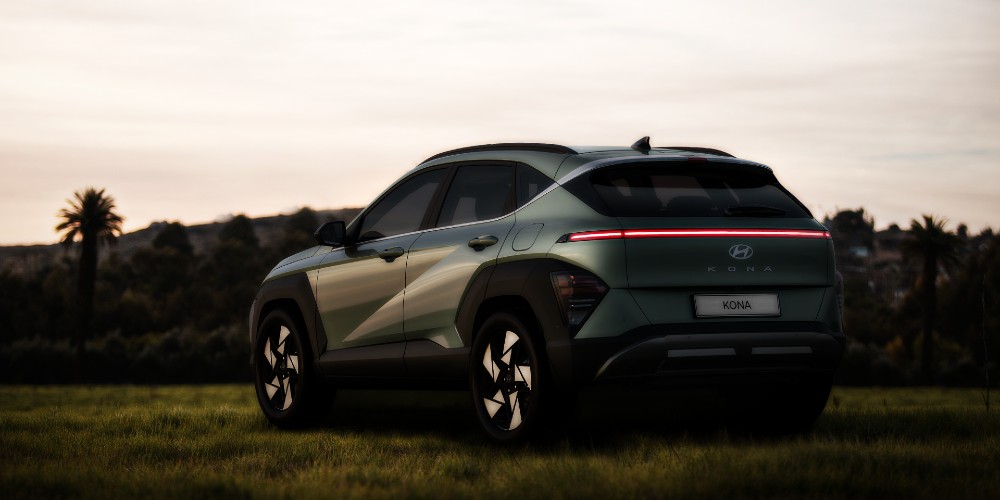
25 refrigerators. That’s how much the additional electricity consumption per household would be if the average US home adopted electric vehicles (EVs).
Congressman Thomas Massie—an electrical engineer—revealed this information while discussing with Pete Buttigieg, the Secretary of Transportation, President Biden’s plan to have 50% of cars sold in the US be electric by 2030.
The current and future grid in most places will not be able to support each home running 25 refrigerators—not even close. Just look at California, where the grid is already buckling under the existing load.
Massie claims, correctly, in my view, that the notion of widespread adoption of electric vehicles anytime soon is a dangerous fantasy based on political science, not sound engineering.
Nonetheless, governments, the media, academia, large corporations, and celebrities tout an imminent “transition” to EVs as if it’s preordained from above. It’s not.
They’re trying to manufacture your consent for a scam of almost unimaginable proportions.
Below are three reasons why something sinister is going on with the big push for EVs. But first, a necessary clarification. You no doubt have heard of the term “fossil fuels” before.
When the average person hears “fossil fuels,” they think of a dirty technology that belongs in the 1800s. Many believe they are burning dead dinosaurs to power their cars.
They also think “fossil fuels” will destroy the planet within a decade and run out soon—despite the fact that, after water, oil is the second most abundant liquid on this planet.
None of these ridiculous notions are true, but many people believe them. Using propaganda terms like “fossil fuels” plays a large role.
Orwell was correct when he said that corrupting the language can corrupt people’s thoughts. I suggest expunging “fossil fuels” from your vocabulary in favor of hydrocarbons—a much better and more precise word.
A hydrocarbon is a molecule made up of carbon and hydrogen atoms. These molecules are the building blocks of many different substances, including energy sources like coal, oil, and gas. These energy sources have been the backbone of the global economy for decades, providing power for industries, transportation, and homes. Now, on to the three reasons EVs are a giant scam at best and possibly something much worse.
Reason #1: EVs Are Not Green
The central premise for EVs is they help to save the planet from carbon because they use electricity instead of gas. It’s astounding so few think to ask, what generates the electricity that powers EVs?
Hydrocarbons generate over 60% of the electricity in the US. That means there’s an excellent chance that oil, coal, or gas is behind the electricity charging an EV.

It’s important to emphasize carbon is an essential element for life on this planet. It’s what humans exhale and what plants need to survive.
After decades of propaganda, Malthusian hysterics have created a twisted perception in many people’s minds that carbon is a dangerous substance that must be reduced to save the planet.
Let’s entertain this bogus premise momentarily and assume carbon is bad. Even by this logic, EVs do not really reduce carbon emissions; they just rearrange them. Further, extracting and processing the exotic materials needed to make EVs requires tremendous power in remote locations, which only hydrocarbons can provide.
Additionally, EVs require an enormous amount of rare elements and metals—like lithium and cobalt—that companies mine in conditions that couldn’t remotely be considered friendly to the environment.
Analysts estimate that each EV requires around one kilogram of rare earth elements. Extracting and processing these rare elements produces a massive amount of toxic waste. That’s why it mainly occurs in China, which doesn’t care much about environmental concerns.
In short, the notion that EVs are green is laughable. It’s simply the thin patina of propaganda that governments need as a pretext to justify the astronomical taxpayer subsidies for EVs.

Reason #2: EVs Can’t Compete Without Government Support
For many years, governments have heavily subsidized EVs through rebates, sales tax exemptions, loans, grants, tax credits, and other means.
According to the Wall Street Journal, US taxpayers will subsidize EVs by at least $393 billion in the coming years—more than the GDP of Hong Kong.
To put that in perspective, if you earned $1 a second 24/7/365—about $31 million per year—it would take you over 12,677 YEARS to make $393 billion. And that’s not even considering the immense subsidies and government support that have occurred in the past.
Furthermore, governments impose burdensome regulations and taxes on gasoline vehicles to make EVs seem relatively more attractive. Even with this enormous government support, EVs can barely compete with gasoline vehicles.
According to J.D. Power, a consumer research firm, the average EV still costs at least 21% more than the average gasoline vehicle. Without government support, it’s not hard to see how the market for EVs would evaporate as they would become unaffordable for the vast majority of people.
In other words, the EV market is a giant mirage artificially propped up by extensive government intervention.
It begs the question, why are governments going all out to push an obviously uneconomic scam? While they are undoubtedly corrupt thieves and simply stupid, something more nefarious could also be at play.
Reason #3: EVs Are About Controlling You
EVs are spying machines. They collect an unimaginable amount of data on you, which governments can access easily. Analysts estimate that cars generate about 25 gigabytes of data every hour.
Seeing how governments could integrate EVs into a larger high-tech control grid doesn’t take much imagination. The potential for busybodies—or worse—to abuse such a system is obvious.
Consider this. The last thing any government wants is an incident like what happened with the Canadian truckers rebelling against vaccine mandates. Had the Canadian truckers’ vehicles been EVs, the government would have been able to stamp out the resistance much easier.
Here’s the bottom line. The people really in charge do not want the average person to have genuine freedom of movement or access to independent power sources.
They want to know everything, keep you dependent, and have the ability to control everything, just like how a farmer would with his cattle. They think of you in similar terms. That’s why gasoline vehicles have to go and why they are trying to herd us into EVs.
Conclusion
To summarize, EVs are not green, cannot compete with gas cars without enormous government support, and are probably a crucial piece of the emerging high-tech control grid.
The solution is simple: eliminate all government subsidies and support and let EVs compete on their own merits in a totally free market. But that’s unlikely to happen. Instead, it’s only prudent to expect them to push EVs harder and harder.
If EVs were simply government-subsidized status symbols for wealthy liberals who want to virtue signal how they think they’re saving the planet, that would be bad enough. But chances are, the big push for EVs represents something much worse.
Along with 15-minute cities, carbon credits, CBDCs, digital IDs, phasing out hydrocarbons and meat, vaccine passports, an ESG social credit system, and the war on farmers, EVs are likely an integral part of the Great Reset—the dystopian future the global elite has envisioned for mankind.
In reality, the so-called Great Reset is a high-tech form of feudalism. Sadly, most of humanity has no idea what is coming.
Worse, many have become unwitting foot soldiers for this agenda because they have been gaslighted into believing they are saving the planet or acting for the greater good. This trend is already in motion… and the coming weeks will be pivotal.
That’s precisely why I just released an urgent report on where this is all headed and what you can do about it… including three strategies everyone needs today. Click here to download the PDF now.
Article cross-posted from International Man.

Starting the Day With a Scripture-Inspired Roast Helps Center Your Thoughts on Eternal Truths Amid Temporal Pressures
The world can seem chaotic, especially right after we wake up. Many believers start their mornings reaching for something familiar — a hot cup of coffee — yet end up settling for mediocre brews that do little more than deliver a caffeine jolt. The daily grind of life, with its endless distractions, news cycles, and responsibilities, can leave even the most faithful feeling spiritually parched alongside their physical fatigue. What if your morning ritual could do more than wake you up? What if it could ground you in truth, nourish your body with exceptional quality, and quietly advance a kingdom purpose at the same time?
That’s the promise — and the reality — behind Promised Grounds Coffee. This Christian-founded company doesn’t just roast beans; it approaches every step as an act of worship and discipleship. By selecting only the top 10% of specialty-grade beans, ethically sourced from dedicated farmers in Central and South America, and small-batch roasting them with reverence in Austin, Texas, Promised Grounds delivers what many describe as the best coffee available — never burnt, never bland, but rich with origin stories and layered flavors that honor God’s creation.
From the vibrant Psalm 27 Roast (a light, bright medium option) to the bold yet peaceful 2 Timothy 1:7 Decaf, each bag carries a Scripture verse that turns your daily pour into a gentle reminder of faith. And through their Ounce Per Ounce Promise, every ounce of coffee you enjoy provides an equal ounce of clean water to families in need via partnership with Filter of Hope — literally brewing hope for body and soul, one cup at a time.
The challenge for today’s Christians runs deeper than finding a decent cup. In an age of convenience-driven consumerism, it’s easy to support companies that dilute values or remain silent on matters of faith. Many believers want their everyday choices — from what they drink to how they spend — to reflect discipleship rather than just convenience. Promised Grounds solves this by weaving Christian excellence into the entire process: beans nurtured with prayerful stewardship by farming families, roasted as an offering rather than a commodity, and packaged with Bible verses to encourage a mindset of gratitude and purpose from the first sip. Reviewers consistently praise the smooth, rich profiles — whether enjoyed black in a drip maker, iced on a warm day, or shared in fellowship — noting how the quality stands toe-to-toe with premium secular brands while delivering something far more meaningful.
This integration of faith and flavor addresses a real need in Christian households and ministries. Busy parents, church leaders, and remote workers alike report that starting the day with a Scripture-inspired roast helps center their thoughts on eternal truths amid temporal pressures. The coffee’s exceptional character — bright citrus notes in lighter roasts or deep chocolate undertones in bolder ones — comes from meticulous selection and careful roasting that respects the bean’s natural gifts rather than masking them. It’s the kind of coffee that elevates a simple quiet time, fuels productive workdays, or sparks meaningful conversations when shared at Bible studies or outreach events. And because it’s ethically sourced with integrity, every purchase supports sustainable livelihoods for farmers who treat their crops like family harvests.
For those leading churches or small groups, the impact multiplies. Promised Grounds offers bundles and options perfect for hospitality ministries, turning ordinary coffee service into an opportunity to point people toward the living water of Christ. Imagine greeting visitors with a warm cup whose very bag carries God’s Word — a subtle yet powerful witness that aligns with the Great Commission. The company’s Texas roots and commitment to “brewing hope” resonate especially with believers who value American enterprise paired with global compassion.
Of course, quality alone isn’t enough if the experience feels out of reach. Promised Grounds keeps it accessible with practical perks like free shipping on orders over $40, sample sets for discovering favorites, and thoughtful add-ons such as faith-themed mugs. Whether you prefer whole beans for fresh grinding, grounds for convenience, or even bulk options for larger households and ministries, the result is consistently superior coffee that makes discipleship feel integrated rather than added on.
As you consider how to align even the smallest habits with your walk with God, Promised Grounds Coffee stands out as a refreshing solution. It tackles the dual problems of subpar daily sustenance and disconnected consumption by offering a product that genuinely excels in taste while advancing a mission of clean water, farmer dignity, and scriptural encouragement. Believers who make the switch often describe it as more than a beverage upgrade — it becomes part of their rhythm of gratitude, a daily invitation to remember that every good gift comes from above.
If you’re ready to transform your mornings (and perhaps your church gatherings) with coffee that honors both exceptional craftsmanship and Christian values, I encourage you to explore what Promised Grounds has to offer. One sip at a time, you’ll be nourishing your body, refreshing your spirit, and participating in something far greater — all while enjoying what truly is among the best coffee available.

Outstanding article!
Reason #4: EVs and eBikes and scooters also will UNNECESSARILY exhaust rare earth metals in existence, which will hasten the collapse of North America and Western Civilization, leading to their global totalitarian neofeudalist order!
But #3 is the most important reason!!! IMHO!