



- Dr. Hoffe, a physician with experience in Africa, claims that vaccines have been used covertly to reduce fertility, reigniting debates about the ethics of vaccination programs and their potential misuse for population control.
- Dr. Hoffe’s claims are supported by historical instances in Africa, Brazil, Mexico and India, where vaccines were allegedly administered under the guise of protecting pregnant women and their babies but were intended to sterilize them, aligning with the field of immunocontraception.
- Bill Gates’ comments on population control and the potential of vaccines to lower the world’s population have been scrutinized, with critics suggesting a more deliberate agenda behind his statements on improving health and reducing child mortality.
- The pandemic highlighted concerns about the use of fear and coercion in public health responses, with revelations that organizations like the American College of Obstetricians and Gynecologists (ACOG) were incentivized to promote COVID-19 vaccines to pregnant women without sufficient safety data.
- The intersection of vaccines, fertility and population control raises profound ethical questions, emphasizing the need for transparency, informed consent, rigorous safety testing and independent oversight in public health initiatives to ensure that health is a right, not a tool for control.
In a world where public health initiatives are often framed as altruistic efforts to protect and save lives, a darker narrative has emerged—one that suggests vaccines have been weaponized as tools for population control. This revelation, brought to light by Dr. Hoffe, a physician with firsthand experience in Africa, has reignited debates about the ethics of vaccination programs and their potential misuse.
“I knew that vaccines had been used five times in the past to reduce fertility, and I thought that would be a key way of reducing the population,” Dr. Hoffe stated in a recent interview. His comments, shared by Children’s Health Defense on social media, have sparked outrage and concern among health freedom advocates and natural health journalists alike.
History of covert population control
Dr. Hoffe’s claims are not without historical precedent. He pointed to instances in Africa, Brazil, Mexico and India where vaccines were allegedly administered under the guise of protecting pregnant women and their babies, but with the covert intent of sterilizing them. “I knew it had been done in Africa. I came from Africa. I knew it had been done there on pregnant women who were told they needed this vaccine to keep their baby safe from tetanus. But actually, it was to sterilize them,” he said.
This practice aligns with broader discussions about immunocontraception—a field of research that explores the use of vaccines to control fertility. A 2018 study published in Reproductive Biology and Endocrinology highlighted the potential of vaccines to inhibit fertility by targeting reproductive hormones or gametes. While the study framed this as a potential solution for wildlife population management and human contraception, it also raised ethical questions about the misuse of such technology.
Bill Gates, a prominent figure in global health initiatives, has also been scrutinized for his comments on population control. In a 2010 TED Talk, Gates famously stated, “If we do a really great job on new vaccines, health care and reproductive health services, we could lower [the world’s population] by 10 to 15 percent.” While Gates framed this as a natural outcome of improved health and reduced child mortality, critics argue that his words hint at a more deliberate agenda.
COVID-19 pandemic: A case study in coercion?
The COVID-19 pandemic brought these concerns to the forefront. Dr. Hoffe noted that the government’s response to the pandemic relied heavily on fear and coercion. “When this pandemic broke, it didn’t take me very long to realize that it was being massively exaggerated,” he said. “The government was controlling [people] with fear, coercing them with fear, and they were lining up for these shots.”
This sentiment is echoed in recent revelations about the American College of Obstetricians and Gynecologists (ACOG). According to a Freedom of Information Act (FOIA) request, ACOG received $11.8 million from the Department of Health and Human Services (HHS) to encourage pregnant women to get vaccinated against COVID-19. The funds came with strict conditions: ACOG was required to align with CDC guidance and promote the safety and effectiveness of the vaccines, despite the absence of clinical trial data for pregnant women.
The implications are staggering. ACOG, the largest organization of obstetricians and gynecologists in the U.S., was effectively incentivized to push vaccines on a vulnerable population without sufficient evidence of safety. “Vaccination may occur in any trimester, and emphasis should be on vaccine receipt as soon as possible to maximize maternal and fetal health,” ACOG stated on its website. Yet, the FDA’s fact sheets for Moderna and Pfizer vaccines explicitly noted the lack of data on their use during pregnancy.
Ethical dilemma: Protecting health or controlling populations?
The intersection of vaccines, fertility and population control raises profound ethical questions. On one hand, vaccines have undeniably saved millions of lives and eradicated deadly diseases. On the other hand, their potential misuse as tools for sterilization or population reduction cannot be ignored.
Dr. Hoffe’s comments and the ACOG revelations underscore the need for transparency and accountability in public health initiatives. As natural health journalist Laura Harris noted, “The government’s bribery of ACOG to push COVID-19 vaccines on pregnant women is a stark reminder of how easily trust can be exploited in the name of public health.”
For health freedom advocates, these revelations are a call to action. They highlight the importance of informed consent, rigorous safety testing and independent oversight in vaccination programs. As Dr. Hoffe aptly put it, “If anybody can’t see the inconsistency in [using vaccines to reduce the population], you’d have to be three days dead. Vaccines are supposed to keep you safe. How is that going to reduce the population?”
The answer lies in the fine print—and in the hands of those who wield the power to shape public health policy. As we move forward, the lessons of history and the voices of whistleblowers like Dr. Hoffe must guide us toward a future where health is truly a right, not a tool for control.
Learn more about the risks of vaccines and the fight for health freedom at VaccineDamage.news.
Sources include:
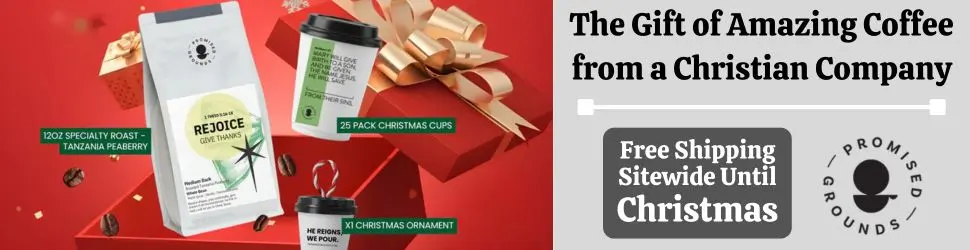
Three Reasons a Coffee Gift Set From This Christian Company Is Perfect for Christmas

When you’re searching for a Christmas gift that’s meaningful, useful, and rooted in faith, you don’t want to settle for anything generic. This season is filled with noise — mass-produced products, last-minute picks, and trends that fade as quickly as they appear. But one gift stands apart because it blends genuine quality with a message that matters: a coffee gift set from Promised Grounds Coffee.
This small Christian-owned company has become a favorite among believers who want to support faith-driven businesses while giving friends and family something they’ll actually enjoy. Here are three reasons a Promised Grounds Coffee gift set may be the most thoughtful and impactful present you give this year.
1. It’s Truly Delicious Coffee
Too many “gift-worthy” coffees look beautiful in the package but disappoint when the cup is poured. Promised Grounds takes the opposite approach — exceptional taste first, thoughtful presentation second.
Their beans are sourced with care, roasted in small batches, and crafted to bring out a rich, smooth flavor profile that appeals to both casual drinkers and true coffee lovers. Whether someone enjoys bold, dark roasts or lighter, more delicate blends, every sip reflects quality that stands shoulder-to-shoulder with the biggest specialty brands.
Simply put: this coffee is good. Really good. Some say it’s absolutely fantastic. If you want a gift that won’t be re-gifted, ignored, or shoved in a cabinet, this is it.
2. It Spreads the Word While Serving a Real Purpose
There are many Christian gifts that are meaningful… but not exactly practical. There are also useful gifts that have nothing to do with faith. Promised Grounds Coffee bridges both worlds beautifully.
Each gift set delivers an encouraging, faith-centered message through its packaging and presentation — a simple but powerful reminder of God’s goodness during the Christmas season. The cups are especially popular and serve as a daily reminder of the blessings from our Lord. At the same time, the product itself is something people will actually use and appreciate every single day.
It’s a gift that uplifts the spirit and fills the mug. A gift that points loved ones toward Scripture while still being part of the normal rhythm of life. And in a culture that increasingly pushes faith to the margins, giving a gift that quietly but confidently honors Christ can make a deeper impact than you might expect.
3. It’s Affordable, Valuable, and Elegantly Presented
Many people want to give something meaningful without breaking their Christmas budget. Promised Grounds Coffee strikes that perfect balance — the sets look and feel premium, but the price remains accessible.
The packaging is classy, clean, and gift-ready, making it ideal for:
- Family members of all ages
- Co-workers or employees
- Church friends or small-group leaders
- Hosts, neighbors, and last-minute gift needs
It’s the kind of gift that feels more expensive than it is — and more thoughtful than most of what you’ll find on store shelves.
The Perfect Blend of Faith, Flavor, and Christmas Cheer
A coffee gift set from Promised Grounds Coffee checks every box: a gift that tastes amazing, conveys your faith, supports a Christian business, and brings daily enjoyment to the person who receives it. In a season when so many gifts are forgotten, this one stands out for all the right reasons.
If you want a Christmas present that reflects your values and delivers genuine joy, Promised Grounds Coffee is the perfect place to start.
