

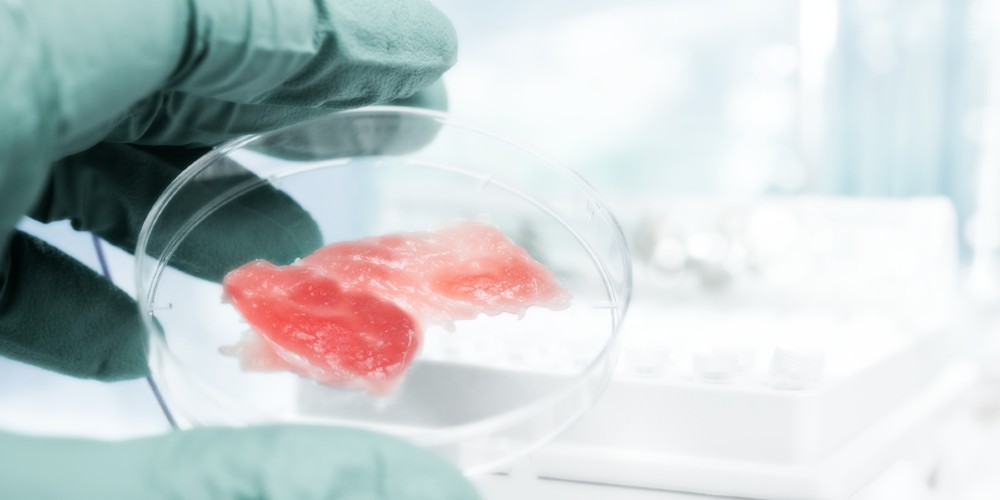

The foundation for food manufacturers’ promotion of “Frankenfood” is the claim that lab-grown, plant-based, or 3D-printed meat and fish are humane, sustainable and environmentally friendly methods of food production. Yet, what the industry never talks about are the energy and water consumption required for these laboratory creations and the possible effects on human health.
What the fake meat industry doesn’t tell you is that their products are not healthy alternatives to natural meat, but are just another name for ultraprocessed food, filled with genetically engineered and pesticide-laden ingredients designed to look as much like meat as possible. Scientific evidence demonstrates that consuming ultraprocessed food can shorten your lifespan and increase your risk for chronic disease.1,2
One of the key players in this agricultural agenda is the Bill & Melinda Gates Foundation. Bill Gates’ desire for the widespread adoption of synthetic meat is tied to controlling the food supply. When asked whether he thinks plant-based and lab-grown meats could be a global solution to protein, he said that in poor countries “we’ll have to use animal genetics,” and in middle- to above-income countries, yes, and that people can “get used” to it.3
Bill Gates owns more farmland in the U.S. than any other private farmer, having purchased 270,000 acres — much of it considered some of the richest soil in the U.S. — in the past few years.4 The future of that farmland remains to be seen. Currently, Gates acts as a landlord and lets the farmers continue to work the land, “even if those practices are ruinous to the environment.”5
It’s worth noting that when you own the land, you also own the water that’s beneath it, and with his vast amounts of land, he can grow all the genetically engineered soy necessary to create the fake meat he wants the world to be eating.
For those who control resources like food and water, control of the food supply is part of “building back better,” and the power is limitless. Fake meats are not about your health or the environment; they are a tool to phase out farmers, ranchers and fishermen and replace them with a controllable ultraprocessed food product.
Not only is ultraprocessed lab-grown meat not a healthy choice, but its production is plagued with environmental and contamination concerns. Ironically, the real wave of the future won’t be found through technology, but through the return to regenerative farming practices that have been time-tested and valued across the ages.
Deep Tech Food Company Prints Fish Filet
Study Finds6 calls the most recent fake meat product “Faux-let o’fish,” referring to the first cultivated fish filet produced through 3D printing technology by Israeli firm Steakholder Foods. The company boasts that production does not harm the environment or marine species and still has the taste and texture of real fish. The company uses the same propaganda statements as other fake meat companies, claiming it is a “sustainable” solution that will protect food security.
Mihir Pershad, CEO of Umami Meats, called the product “the world’s first whole filet cultivated fish.”7 The reference to cultivated meat has been used to describe lab-grown products using cellular agriculture. During this process, “meat” is produced by first extracting a small tissue sample from the animal, which is then placed in a controlled environment and provided nutrients.
The cells are allowed to grow and multiply, eventually developing into muscle tissue that is processed into meat products. The company calls it a “slaughter-free solution” to produce seafood products and “an alternative to industrialized farming and fishing.”8
The company celebrated the production of 3D-printed fish with a tasting that included the CEO of Steakholder Foods Arik Kaufman, CEO of Umami Meats Mihir Pershad, and Israeli Prime Minister Benjamin Netanyahu.9 Both Pershad10 and Netanyahu11 are members of the World Economic Forum.
Steakholder Foods claims production of the 3D-printed grouper is just one step in the path to using bioink and bioprinting technologies to facilitate the printing of a variety of species. The company does not make claims about the nutritional value of the Frankenfish filet.
How Does 3D Food Printing Work?
3D printing is also called additive manufacturing, since the process constructs a three-dimensional object by adding layers of material to form a tangible, solid product. In the case of 3D food printing, nearly anything in a paste or liquid state can be used to 3D print food. In 2023,12 most 3D-food printers are used in gourmet restaurants to produce intricate accents; bakers may also use them to produce edible wedding cake decorations.
Alt-Steak has produced plant-based 3D-printed meat, using “alt-muscle” (plant protein from peas and soybean), “alt-fat” (plant fats) and “alt-blood” (colors and flavors labeled as “natural” by the manufacturer, although they don’t say what all those “natural” ingredients might be), which are printed simultaneously.13 Stakeholder Foods cultivated grouper cells harvested by Umami Meats as the raw material for the 3D-printed faux-let o’fish.

David Humbird is a UC Berkeley-trained chemical engineer who spent over two years researching the cell culture process.14 Speaking to a reporter from The Counter, he discussed the type of sterile environment these cells require to prevent cell and tissue loss from bacteria and viruses.
“[Animal cells] “grow so slowly that if we get any bacteria in a culture — well, then we’ve just got a bacteria culture. Bacteria grow every 20 minutes, and the animal cells are stuck at 24 hours. You’re going to crush the culture in hours with a contamination event.”
“There are documented cases of, basically, operators getting the culture sick. Not even because the operator themselves had a cold. But there was a virus particle on a glove. Or not cleaned out of a line. The culture has no immune system. If there’s virus particles in there that can infect the cells, they will. And generally, the cells just die, and then there’s no product anymore. You just dump it.””
Armed Forces Look to Printable Edibles
The U.S. Armed Forces use the Department of Defense’s Combat Feeding Directorate to develop military rations that are tailored to optimize a soldier’s performance.15 At the Food Engineering and Analysis Lab, scientists are using 3D-printed bars to address the nutritional requirements of individual soldiers.
The U.S. Armed Services hypothesizes that these printers may one day be synchronized with wearable sensors that determine a person’s nutritional needs in real-time and then create supplementary rations as needed. Hod Lipson from Columbia University believes they may allow people to customize their own culinary experiments at home creating tastes and textures that have never been sampled before.
In 2019,16 the Defense Advanced Research Projects Agency (DARPA) announced the ReSource project they hoped would convert military waste, including plastic, into food and water. In November 2021,17 they announced Phase 1 had been completed.
The ReSource program manager commented on the work, saying, “Part of what makes DARPA special is that we de-risk technologies to enable scientific innovation.” It should come as no surprise that since the military is willing to feed their soldiers plastic and refuse, that they embrace 3D-printed animal, vegetable and fish cells.
Bad Choices: Lab-Grown, Cultivated Meat and Fish
In November 2021, the Good Food Institute (GFI), a nonprofit group behind the alternative protein industry, released a techno-economic analysis of cultivated meat,18 claiming cultured meat could be economically feasible by 2030. Several experts have countered this claim with concerns that range from production to cost.
In an in-depth exposé by Joe Fassler,19 The Counter’s deputy editor, he compares the science behind lab-grown or cultivated meat and the industry’s claims about the cells needed to produce 3D-printed meat or fish. Contamination is one issue. Fassler writes:
“If even a single speck of bacteria can spoil batches and halt production, clean rooms may turn out to be a basic, necessary precondition. It may not matter if governments end up allowing cultured meat facilities to produce at food-grade specs, critics say — cells are so intensely vulnerable that they’ll likely need protection to survive.”
Cost is another issue. Humbird spent two years preparing an analysis of the challenges faced by the industry. If a facility produced roughly 6.8 kilotons per year, it could not reach a cost-competitive price. According to the analysis, the cultivated meat would cost $17 per pound when produced in a 20,000-liter reactor and $23 per pound for a smaller reactor.
However, $17 a pound is for the single-celled slurry, which is only used for ground meat-style products. Humbird estimates that by the time ground meat-style product reaches the grocery store it would be $40 a pound, and approximately $100 for a quarter pounder hamburger at a restaurant.
Humbird’s analysis was countered by the GFI analysis, which used secret and proprietary data provided by 15 private companies and showed the industry could lower the production costs from $10,000 per pound in 2023 to roughly $2.50 per pound in the next nine years.20
The GFI report makes it appear as if cultured meat is ready to be on grocery store shelves within the next decade. Fassler spoke with Paul Wood, a former pharmaceutical industry executive, who was outraged by GFI’s TEA report, which “did little to justify increased public investment” and “trafficked more in wishful thinking than in science.”
Wood hired Huw Hughes, a former Pfizer colleague and private consultant who’s worked on multiple sites to culture cells at scale, to analyze GFI’s analysis.21 According to Fassler:22
“Hughes concluded that GFI’s report projected unrealistic cost decreases, and left key aspects of the production process undefined, while significantly underestimating the expense and complexity of constructing a suitable facility.”
In his review,23 Hughes wrote that “a finished product fit for consumption is not defined, and so estimating a cost for an acceptable consumer product is challenging.” Still, he estimated that the cost of 1 kilogram of cell culture product for human consumption would cost in excess of $8,500 to $3,600 per kilogram. “By comparison,” he wrote, “the wholesale price of trimmed chicken meat in the U.S. is $3.11.”
Government-Backed Fake Food Industry Is a Disaster
September 12, 2022, U.S. President Joe Biden signed an “Executive Order on Advancing Biotechnology and Biomanufacturing Innovation for a Sustainable, Safe and Secure American Bioeconomy.”24 The order makes biotechnology a national priority across agencies and branches of government, which they state will be used to “improve” food security, sustainability and agricultural innovation in the U.S.
In late March 2023, Biden, also a member of the World Economic Forum,25 expanded the plan in a “Bold Goals for U.S. Biotechnology and Biomanufacturing” report.26 According to the report, the food industry is now to be led by biotech, and the “improvements” we can look forward to are more lab-grown meats and bioengineered plant foods.
In other words, the taxpayers will now be paying for the government to fund private corporations involved in the production of fake food. You only have to look at farm subsidies to recognize that the end result is predictable. Farm subsidies are used almost exclusively for large monoculture farms growing genetically engineered basic ingredients used in processed food.
This means the processed food industry is government-funded and grown on taxpayer dollars, all while public health dramatically deteriorates. The same will happen when the government subsidizes the next processed food industry — cultivated and 3D-printed meat and fish.
As the U.S. government moves at full speed to approve lab grown meats, a Food Hazards Identification report27 by the British Food Standards Agency (FSA) and Food Standards Scotland, published in March 2023, warns there are “considerable gaps in knowledge” when it comes to cell-based meat production. As reported by Food Safety News:28
“The FSA report found there are several stages of development for producing cultured meat and at each one, different chemicals, biologics, media formulations, additives, and supplements are used. The contamination risk of each input needs to be assessed, as any undesirable components that remain in the final product need to be at an acceptable exposure level or be food-grade and safe.”
Potential problem areas identified by the FSA included contamination, use of antibiotics or chemicals during production that are toxic to human health, cross-contamination of one cell line into another, new diseases and/or allergic reactions to new proteins and, most importantly, nutritional deficiencies.
Boosting Food Manufacturing Doesn’t Magically Lower Emissions
Synthetic meat is the epitome of ultraprocessed food, and it seems naive to think it won’t have similar health effects as other ultraprocessed junk foods, such as obesity, cardiovascular disease, cancer and depression.29,30,31 Although proponents of the fake food industry claim it is sustainable and environmentally friendly, a 2022 review of the industry found ultraprocessed food:32

“… accounted for between 17 and 39% of total diet-related energy use, 36–45% of total diet-related biodiversity loss, up to one-third of total diet-related greenhouse gas emissions, land use and food waste and up to one-quarter of total diet-related water-use among adults in a range of high-income countries.”
The industry claims that by expanding the manufacturing and consumption of more ultraprocessed food, it could magically lower greenhouse gas emissions despite currently being a large producer of the same emissions. As noted in a September 2022 Journal of Cleaner Production paper:33
“Ultraprocessed foods are fundamentally unsustainable products; they have been associated with poor health and social outcomes and require finite environmental resources for their production … are responsible for significant diet-related energy, [and] greenhouse gas emissions.”
Increasing consumption of processed foods will worsen economic inequalities, as it redirects money away from small farmers to transnational corporations that rely on underpaid workers. Claims of food security and equity are not supported by reality, all of which will be paid for with taxpayer dollars.
Ultimately, the answer to food safety and food security lies not in a biotech-centered food system that is controlled from the top down, but rather in a decentralized system that connects communities with farmers who grow real food in sustainable ways and distribute that food locally.
Strategies that can get us there were covered in the Children’s Health Defense’s March 4, 2023, Attack on Food symposium.34 Food Sovereignty was primarily covered beginning at three hours and 45 minutes.
This section included helpful strategies on how to grow and preserve your own food, how to bolster local farmers and farmers’ markets, and larger legislative solutions to fight back against the war on food. This included comments by U.S. Rep Thomas Massie who highlighted core vulnerabilities in the food supply, which became blatantly evident during the pandemic.
- 1 Loma Linda University Health, May 17, 2022
- 2 Critical Reviews in Food Science Nutrition, 2022; doi: 10.1080/10408398.2022.2084359
- 3 MIT Tech Review, February 14, 2021
- 4, 5 Popular Mechanics, January 18, 2023
- 6 Study Finds, May 3, 2023
- 7 Steakholder Foods, April 24, 2023
- 8 Study Finds, May 3, 2023, para 3 from bottom
- 9 Steakholder Foods, April 24, 2023 Para 2
- 10 World Economic Forum, Mihir Pershad
- 11 World Economic Forum, Benjamin Netanyahu
- 12 All 3DP, February 24, 2023, Where is it used? Para 1, 2
- 13 SBS, August 21, 2020
- 14, 19, 20, 22 The Counter, September 22, 2021
- 15 C&EN, February 2, 2022
- 16 DARPA, August 7, 2019
- 17 DARPA, November 29, 2021
- 18 CE Delft, November 2021
- 21, 23 Cultivated Meat Review of the Cost of Manufacturing
- 24 White House, September 12, 2022, Section 3a/iv and b
- 25 World Economic Forum, Joseph R. Biden
- 26 Bold Goals for US Biotechnology and Biomanufacturing March 2023
- 27 Food Standards Agency, Hazards Identification Report November 2022
- 28 Food Safety News, March 24, 2023
- 29 JAMA Internal Medicine, 2019;179(4)
- 30 JAMA 2017;317(9)
- 31 BMJ, 2018;360
- 32, 33 Journal of Cleaner Production, 2022;368(133155)
- 34 Rumble, March 4, 2023
Article cross-posted from Dr. Mercola’s site.
Three Reasons a Coffee Gift Set From This Christian Company Is Perfect for Christmas

When you’re searching for a Christmas gift that’s meaningful, useful, and rooted in faith, you don’t want to settle for anything generic. This season is filled with noise — mass-produced products, last-minute picks, and trends that fade as quickly as they appear. But one gift stands apart because it blends genuine quality with a message that matters: a coffee gift set from Promised Grounds Coffee.
This small Christian-owned company has become a favorite among believers who want to support faith-driven businesses while giving friends and family something they’ll actually enjoy. Here are three reasons a Promised Grounds Coffee gift set may be the most thoughtful and impactful present you give this year.
1. It’s Truly Delicious Coffee
Too many “gift-worthy” coffees look beautiful in the package but disappoint when the cup is poured. Promised Grounds takes the opposite approach — exceptional taste first, thoughtful presentation second.
Their beans are sourced with care, roasted in small batches, and crafted to bring out a rich, smooth flavor profile that appeals to both casual drinkers and true coffee lovers. Whether someone enjoys bold, dark roasts or lighter, more delicate blends, every sip reflects quality that stands shoulder-to-shoulder with the biggest specialty brands.
Simply put: this coffee is good. Really good. Some say it’s absolutely fantastic. If you want a gift that won’t be re-gifted, ignored, or shoved in a cabinet, this is it.
2. It Spreads the Word While Serving a Real Purpose
There are many Christian gifts that are meaningful… but not exactly practical. There are also useful gifts that have nothing to do with faith. Promised Grounds Coffee bridges both worlds beautifully.
Each gift set delivers an encouraging, faith-centered message through its packaging and presentation — a simple but powerful reminder of God’s goodness during the Christmas season. The cups are especially popular and serve as a daily reminder of the blessings from our Lord. At the same time, the product itself is something people will actually use and appreciate every single day.
It’s a gift that uplifts the spirit and fills the mug. A gift that points loved ones toward Scripture while still being part of the normal rhythm of life. And in a culture that increasingly pushes faith to the margins, giving a gift that quietly but confidently honors Christ can make a deeper impact than you might expect.
3. It’s Affordable, Valuable, and Elegantly Presented
Many people want to give something meaningful without breaking their Christmas budget. Promised Grounds Coffee strikes that perfect balance — the sets look and feel premium, but the price remains accessible.
The packaging is classy, clean, and gift-ready, making it ideal for:
- Family members of all ages
- Co-workers or employees
- Church friends or small-group leaders
- Hosts, neighbors, and last-minute gift needs
It’s the kind of gift that feels more expensive than it is — and more thoughtful than most of what you’ll find on store shelves.
The Perfect Blend of Faith, Flavor, and Christmas Cheer
A coffee gift set from Promised Grounds Coffee checks every box: a gift that tastes amazing, conveys your faith, supports a Christian business, and brings daily enjoyment to the person who receives it. In a season when so many gifts are forgotten, this one stands out for all the right reasons.
If you want a Christmas present that reflects your values and delivers genuine joy, Promised Grounds Coffee is the perfect place to start.
