

(Daily Signal)—There’s a popular meme that originates with an episode of “SpongeBob SquarePants” in which a previously beaten-up individual once again is surrounded by angry townsfolk. As they close in, one attacker shakes his fist and shouts, “How many times do we have to teach you this lesson, old man?”
Target Corp., the popular American department store chain, may be in for another round of lessons in the consequences of annoying its consumers with “Pride” merchandising. With the Christmas season approaching quickly, Target has a special gift for Americans: a woke Christmas.
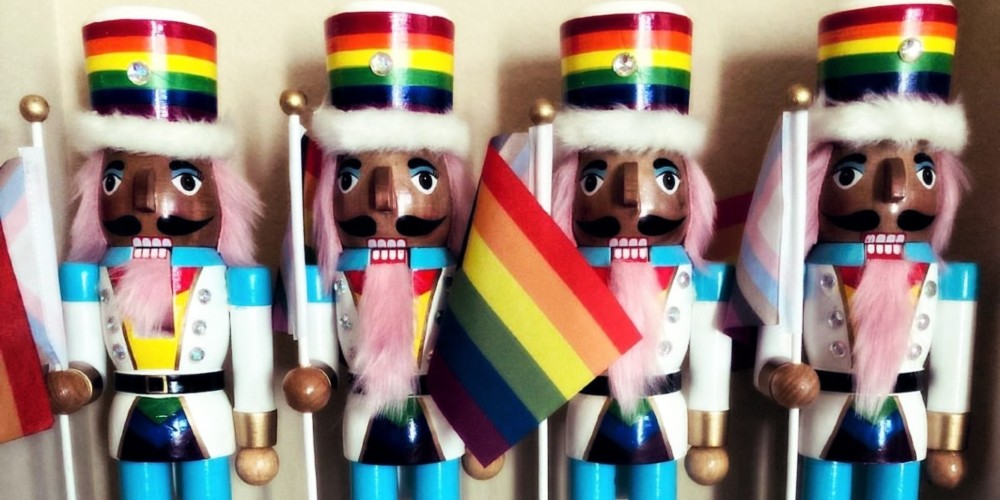
Shoppers can expect to see “gay Santas and LGBTQ-themed nutcrackers” on Target’s shelves of this season, the Washington Examiner reported.
Erik Thompson, identified as a “Senior LGBTQIA+ Segmentation Strategist & Pride Lead,” announced he would be joining Target in an Instagram post earlier this week. His post appears to have been deleted.
In the post, which decried the devastating consumer boycott over the summer after Target sold creepy LGBTQ-themed merchandise marketed to minors, Thompson promised “Glitter & Hellfire” to “rip that old world to shreds.”
Quite frankly, I’m almost awestruck at the doubling-down amid what has been, unequivocally, the most powerful year for boycotters of absurdly liberal business promotions.
Lest we forget, the conservative backlash against Anheuser-Busch for partnering transgender activist Dylan Mulvaney with its Bud Light brand cost the company at least $15.7 billion. It also resulted in lots of Bud Light sitting unpurchased on thousands of pallets around the country.
Benoit Garbe, Anheuser-Busch’s former U.S. chief marketing officer, was removed Nov. 16 after Bud Light sales refused to bounce back.
Target suffered similarly, with stock losses of nearly $14 billion and sales slumps of 5.4% in stores and 10.5% online in the second quarter. Target’s CFO blamed the losses on the “reaction to our Pride assortment.”
The Walt Disney Co.’s woke strategies met similar reactions, with streaming subscriptions slumping, park attendance abysmal, and movie releases failing box office expectations. Releases of the live-action “The Little Mermaid” and Disney-owned Marvel’s “The Marvels” lost hundreds of millions apiece for the megacorporation.
In September, Disney CEO Bob Iger told investors that he would endeavor to “quiet the noise” of Disney’s previous political posturing, and since has delayed release of the live-action version of “Snow White” by a full year, following leaks that revealed a serious departure from Disney’s original animated movie from 1937.
Despite crystal-clear indicators that this is the perfect time for companies to quit political posturing and pushing liberal propagandistic efforts, it looks like Target will take the same lessons yet again—and stubbornly so.
The reaction to Luke Gentile’s reporting in the Washington Examiner already looks bad for Target.
Sen. Tom Cotton, R-Ark., calls it an insult to his constituents and warns of legislative consequences.

“When companies like Target that insult conservatives seek Republicans’ help on Capitol Hill,” Cotton said, “our response will be: ‘I’m sorry that’s happening to you. Best of luck.’”
In a market where traditionally brick-and-mortar stores face increasingly threatening competition from online retailers, Target can’t afford to play so loosely during the holiday season. Anheuser-Busch’s decision to double down after the Mulvaney fiasco cost the beermaker far more than profit margins; such arrogance cost many of its employees their jobs because of the brewery company’s unwillingness to appease the market.
The answer to such inflammatory shenanigans is deceptively simple: Apologize and get back to doing what you do best.
Heckler & Koch, a German arms manufacturer I’m quite fond of, previously employed a social media manager who had begun to use her platform at the brand to lecture H&K fans about sexism.
The backlash began to build following a Twitchy article, with boycotts almost certain. But Heckler & Koch then broke the mold. It fired the woke social media manager and issued a statement on X, formerly Twitter: “H&K does not engage in identity politics. A policy was violated. Changes were made.”
Since that post, H&K sales have risen comfortably. No boycotts, no drop in sales, no problem.

If Target wants a merry Christmas and a happy new year, it only has to stop with the identity politics that have fatigued millions of Americans. We don’t need to hear about Santa’s sex life or which gender the nutcracker is pretending to be.
As one consumer posted on X: “This is so annoying, I just want to shop.”
How executives can miss the forest for the trees in such a monumental blunder is truly beyond me. If Target wants to learn the same lesson again, then by all means we will deliver until the corporation’s leaders get the message.

Starting the Day With a Scripture-Inspired Roast Helps Center Your Thoughts on Eternal Truths Amid Temporal Pressures
The world can seem chaotic, especially right after we wake up. Many believers start their mornings reaching for something familiar — a hot cup of coffee — yet end up settling for mediocre brews that do little more than deliver a caffeine jolt. The daily grind of life, with its endless distractions, news cycles, and responsibilities, can leave even the most faithful feeling spiritually parched alongside their physical fatigue. What if your morning ritual could do more than wake you up? What if it could ground you in truth, nourish your body with exceptional quality, and quietly advance a kingdom purpose at the same time?
That’s the promise — and the reality — behind Promised Grounds Coffee. This Christian-founded company doesn’t just roast beans; it approaches every step as an act of worship and discipleship. By selecting only the top 10% of specialty-grade beans, ethically sourced from dedicated farmers in Central and South America, and small-batch roasting them with reverence in Austin, Texas, Promised Grounds delivers what many describe as the best coffee available — never burnt, never bland, but rich with origin stories and layered flavors that honor God’s creation.
From the vibrant Psalm 27 Roast (a light, bright medium option) to the bold yet peaceful 2 Timothy 1:7 Decaf, each bag carries a Scripture verse that turns your daily pour into a gentle reminder of faith. And through their Ounce Per Ounce Promise, every ounce of coffee you enjoy provides an equal ounce of clean water to families in need via partnership with Filter of Hope — literally brewing hope for body and soul, one cup at a time.
The challenge for today’s Christians runs deeper than finding a decent cup. In an age of convenience-driven consumerism, it’s easy to support companies that dilute values or remain silent on matters of faith. Many believers want their everyday choices — from what they drink to how they spend — to reflect discipleship rather than just convenience. Promised Grounds solves this by weaving Christian excellence into the entire process: beans nurtured with prayerful stewardship by farming families, roasted as an offering rather than a commodity, and packaged with Bible verses to encourage a mindset of gratitude and purpose from the first sip. Reviewers consistently praise the smooth, rich profiles — whether enjoyed black in a drip maker, iced on a warm day, or shared in fellowship — noting how the quality stands toe-to-toe with premium secular brands while delivering something far more meaningful.
This integration of faith and flavor addresses a real need in Christian households and ministries. Busy parents, church leaders, and remote workers alike report that starting the day with a Scripture-inspired roast helps center their thoughts on eternal truths amid temporal pressures. The coffee’s exceptional character — bright citrus notes in lighter roasts or deep chocolate undertones in bolder ones — comes from meticulous selection and careful roasting that respects the bean’s natural gifts rather than masking them. It’s the kind of coffee that elevates a simple quiet time, fuels productive workdays, or sparks meaningful conversations when shared at Bible studies or outreach events. And because it’s ethically sourced with integrity, every purchase supports sustainable livelihoods for farmers who treat their crops like family harvests.
For those leading churches or small groups, the impact multiplies. Promised Grounds offers bundles and options perfect for hospitality ministries, turning ordinary coffee service into an opportunity to point people toward the living water of Christ. Imagine greeting visitors with a warm cup whose very bag carries God’s Word — a subtle yet powerful witness that aligns with the Great Commission. The company’s Texas roots and commitment to “brewing hope” resonate especially with believers who value American enterprise paired with global compassion.
Of course, quality alone isn’t enough if the experience feels out of reach. Promised Grounds keeps it accessible with practical perks like free shipping on orders over $40, sample sets for discovering favorites, and thoughtful add-ons such as faith-themed mugs. Whether you prefer whole beans for fresh grinding, grounds for convenience, or even bulk options for larger households and ministries, the result is consistently superior coffee that makes discipleship feel integrated rather than added on.
As you consider how to align even the smallest habits with your walk with God, Promised Grounds Coffee stands out as a refreshing solution. It tackles the dual problems of subpar daily sustenance and disconnected consumption by offering a product that genuinely excels in taste while advancing a mission of clean water, farmer dignity, and scriptural encouragement. Believers who make the switch often describe it as more than a beverage upgrade — it becomes part of their rhythm of gratitude, a daily invitation to remember that every good gift comes from above.
If you’re ready to transform your mornings (and perhaps your church gatherings) with coffee that honors both exceptional craftsmanship and Christian values, I encourage you to explore what Promised Grounds has to offer. One sip at a time, you’ll be nourishing your body, refreshing your spirit, and participating in something far greater — all while enjoying what truly is among the best coffee available.

Many people can go to college for 8 or 10 years and come out with pure unadulterated shirt (minus the R) for brains. A mind is a terrible thing to waste!!