

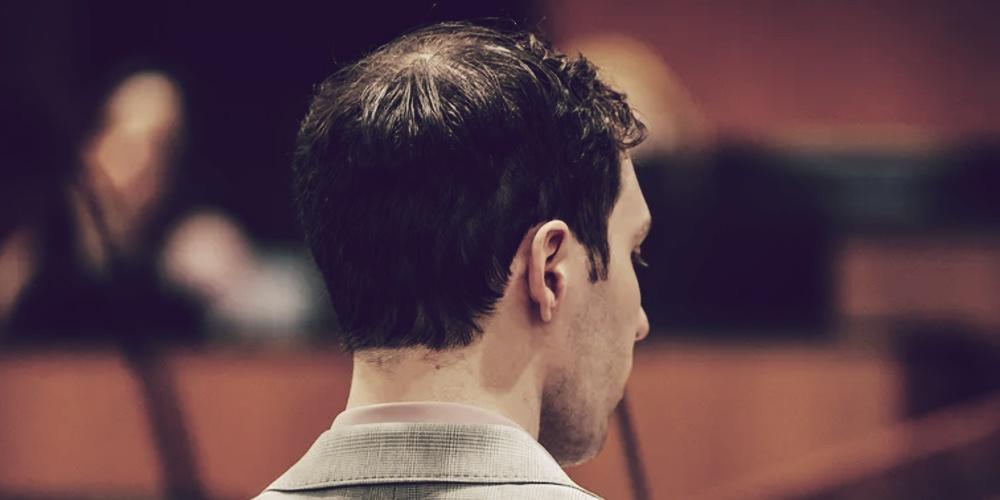
Nearly a year after Charlie Kirk was shot through the neck in front of a packed Utah campus, a judge finally said the quiet part out loud. Tyler Robinson is going to trial. The death penalty stays on the table. And the defense’s year-long project of shrinking a political assassination into a paperwork dispute just ran into a wall.
Fourth District Judge Tony Graf ruled Tuesday in Provo that prosecutors met their burden on every count against Robinson, 23, including aggravated murder, the charge that makes capital punishment available under Utah law. An attorney entered a not-guilty plea on Robinson’s behalf after the ruling.
No trial date has been set.
Kirk, 31, founder of Turning Point USA and one of the most effective campus evangelists the American right has produced in a generation, was assassinated September 10, 2025, while debating students at Utah Valley University in Orem. Prosecutors say Robinson climbed to a rooftop, fired a single rifle shot over a crowd of thousands, and left a screwdriver behind. Children were in that crowd. Babies were in arms.
A Mountain of Evidence and a Year of Delay
Utah County prosecutor Ryan McBride did not waste the afternoon on atmospherics.
There is a mountain of evidence that proves he is the shooter.
That mountain, laid out across a five-day preliminary hearing in July and argued again Tuesday, includes campus surveillance that prosecutors say tracks Robinson’s movements to the rooftop, DNA traces on the rifle and the screwdriver, a handwritten note, Discord logs, and text messages to his partner Lance Twiggs in which Robinson allegedly bragged about the killing. Twiggs later described an in-person conversation in which Robinson confirmed what he had written. Then Robinson turned himself in.
McBride tied the motive to the thing Kirk actually did for a living. He told the court Kirk was “an outspoken advocate for traditional conservative values, including traditional family and marriage,” and that those ideas were “repugnant to the defendant, who was in a homosexual relationship with a man who was considering transitioning genders.”
The defense called that a leap. Attorney Richard Novak argued there was a “significant gap” between Kirk’s public positions and whatever Robinson felt about him, and that the state was filling the gap with speculation about Robinson’s love life.
Some online commentators, like Jimmy Dore, believe there is a cover-up underway:
Graf did not buy the shrink-the-crime strategy. He found probable cause on the aggravated-murder count and on the remaining charges of felony discharge of a firearm causing serious bodily injury, two counts of obstruction of justice, two counts of tampering with a witness, and a violent offense committed in the presence of a child.
The Crowd Was Not Decor
The death-penalty fight turned on one legal question. Did the shooter knowingly create a great risk of death to someone other than Kirk?
The defense said no. One shot. Intended target. Nobody else hit. Therefore not capital. That is a lawyer’s sentence, not a father’s. McBride put video in front of the judge and noted that Kirk was surrounded “literally on all sides.” In one frame, he said, he found three babies in arms. Graf agreed the circumstances support a reasonable inference that Robinson knew other people were standing near Kirk when he fired.
That is the aggravator. That is why this is not a routine murder docket. A man who picks a rooftop above a political event and sends a high-powered round into a packed courtyard is not engaged in private violence. He is announcing that speech itself is fair game, and that the people standing next to the speaker are acceptable collateral.
Robinson’s team has spent months trying to knock the noose off the case by other means. In June they asked Graf to strip the death penalty as punishment after Deputy Utah County Attorney Christopher Ballard was held in civil contempt for talking too freely to the press about the strength of the evidence. Graf refused. He called that remedy “grossly disproportionate” and legally unavailable, then left capital punishment in place and said jury selection could handle any taint. Fox News and The Post Millennial both recorded the same result. The defense wanted a procedural foul to erase the sword. The court handed them attorney fees instead.

Utah’s primary method of execution is lethal injection. The firing squad remains a lawful alternative. Either way, the state is not required to pretend that assassinating a man for his politics is just another sad local homicide.
What Justice Still Owes a Widow and Two Children
Kirk’s widow, Erika, sat in the courtroom with his parents, Robert and Kathryn. The family stepped out during part of the prosecution’s description of the shooting. After the ruling they released a statement that did not waste a syllable on process worship.
Today’s decision, which comes nearly a year since Charlie was taken from us, marks an important step in our family’s pursuit of justice for him. Every step in this process carries the weight of all that Charlie’s murder has taken from his family, especially his children who will grow up without their father.
Erika Kirk has already done the Christian thing the cameras love. At the memorial she forgave the man accused of killing her husband, because that is what Christ did and what Charlie would have done. Forgiveness is not a veto on the magistrate. She later told Jesse Watters she does not want this man’s blood on her ledger when she stands before the Lord. She wants the government to decide.
That is not confusion. That is the difference between personal mercy and public justice.
For he is the minister of God to thee for good. But if thou do that which is evil, be afraid; for he beareth not the sword in vain: for he is the minister of God, a revenger to execute wrath upon him that doeth evil.
Charlie Kirk spent his short adult life telling students that truth is not hate, that a man is a man, that marriage is not a costume, and that the country is still worth arguing for in the open air. Someone answered that argument with a rifle from a roof.

The judge has now said a jury will hear the evidence, and that if the state proves what it claims, Utah may take a life for a life. That is not bloodlust. That is the civil sword doing the job the family, however gracious, was never asked to do.
Starting the Day With a Scripture-Inspired Roast Helps Center Your Thoughts on Eternal Truths Amid Temporal Pressures
The world can seem chaotic, especially right after we wake up. Many believers start their mornings reaching for something familiar — a hot cup of coffee — yet end up settling for mediocre brews that do little more than deliver a caffeine jolt. The daily grind of life, with its endless distractions, news cycles, and responsibilities, can leave even the most faithful feeling spiritually parched alongside their physical fatigue. What if your morning ritual could do more than wake you up? What if it could ground you in truth, nourish your body with exceptional quality, and quietly advance a kingdom purpose at the same time?
That’s the promise — and the reality — behind Promised Grounds Coffee. This Christian-founded company doesn’t just roast beans; it approaches every step as an act of worship and discipleship. By selecting only the top 10% of specialty-grade beans, ethically sourced from dedicated farmers in Central and South America, and small-batch roasting them with reverence in Austin, Texas, Promised Grounds delivers what many describe as the best coffee available — never burnt, never bland, but rich with origin stories and layered flavors that honor God’s creation.
From the vibrant Psalm 27 Roast (a light, bright medium option) to the bold yet peaceful 2 Timothy 1:7 Decaf, each bag carries a Scripture verse that turns your daily pour into a gentle reminder of faith. And through their Ounce Per Ounce Promise, every ounce of coffee you enjoy provides an equal ounce of clean water to families in need via partnership with Filter of Hope — literally brewing hope for body and soul, one cup at a time.
The challenge for today’s Christians runs deeper than finding a decent cup. In an age of convenience-driven consumerism, it’s easy to support companies that dilute values or remain silent on matters of faith. Many believers want their everyday choices — from what they drink to how they spend — to reflect discipleship rather than just convenience. Promised Grounds solves this by weaving Christian excellence into the entire process: beans nurtured with prayerful stewardship by farming families, roasted as an offering rather than a commodity, and packaged with Bible verses to encourage a mindset of gratitude and purpose from the first sip. Reviewers consistently praise the smooth, rich profiles — whether enjoyed black in a drip maker, iced on a warm day, or shared in fellowship — noting how the quality stands toe-to-toe with premium secular brands while delivering something far more meaningful.
This integration of faith and flavor addresses a real need in Christian households and ministries. Busy parents, church leaders, and remote workers alike report that starting the day with a Scripture-inspired roast helps center their thoughts on eternal truths amid temporal pressures. The coffee’s exceptional character — bright citrus notes in lighter roasts or deep chocolate undertones in bolder ones — comes from meticulous selection and careful roasting that respects the bean’s natural gifts rather than masking them. It’s the kind of coffee that elevates a simple quiet time, fuels productive workdays, or sparks meaningful conversations when shared at Bible studies or outreach events. And because it’s ethically sourced with integrity, every purchase supports sustainable livelihoods for farmers who treat their crops like family harvests.
For those leading churches or small groups, the impact multiplies. Promised Grounds offers bundles and options perfect for hospitality ministries, turning ordinary coffee service into an opportunity to point people toward the living water of Christ. Imagine greeting visitors with a warm cup whose very bag carries God’s Word — a subtle yet powerful witness that aligns with the Great Commission. The company’s Texas roots and commitment to “brewing hope” resonate especially with believers who value American enterprise paired with global compassion.
Of course, quality alone isn’t enough if the experience feels out of reach. Promised Grounds keeps it accessible with practical perks like free shipping on orders over $40, sample sets for discovering favorites, and thoughtful add-ons such as faith-themed mugs. Whether you prefer whole beans for fresh grinding, grounds for convenience, or even bulk options for larger households and ministries, the result is consistently superior coffee that makes discipleship feel integrated rather than added on.
As you consider how to align even the smallest habits with your walk with God, Promised Grounds Coffee stands out as a refreshing solution. It tackles the dual problems of subpar daily sustenance and disconnected consumption by offering a product that genuinely excels in taste while advancing a mission of clean water, farmer dignity, and scriptural encouragement. Believers who make the switch often describe it as more than a beverage upgrade — it becomes part of their rhythm of gratitude, a daily invitation to remember that every good gift comes from above.
If you’re ready to transform your mornings (and perhaps your church gatherings) with coffee that honors both exceptional craftsmanship and Christian values, I encourage you to explore what Promised Grounds has to offer. One sip at a time, you’ll be nourishing your body, refreshing your spirit, and participating in something far greater — all while enjoying what truly is among the best coffee available.