

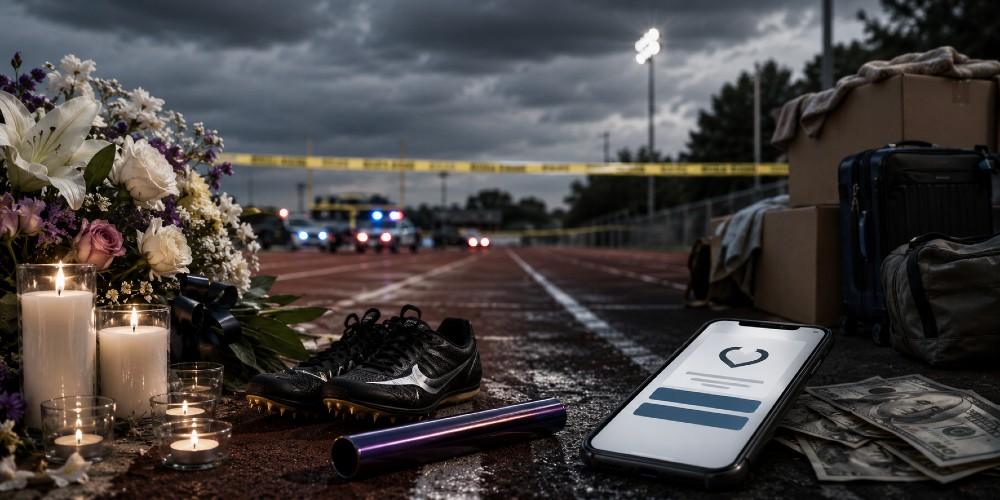
The tragic stabbing death of 17-year-old Austin Metcalf at a Frisco, Texas high school track meet in April 2025 exposed not only raw violence but a troubling pattern of how public sympathy and crowdfunding can be redirected away from justice toward personal convenience.
Karmelo Anthony, now 19, stands convicted of murder and sentenced to 35 years in prison. Yet his family’s GiveSendGo campaign, which raised nearly $634,000, openly acknowledged using funds for moving expenses and basic living costs rather than solely legal defense.
This case demands scrutiny. A young life cut short in what prosecutors described as a deliberate attack, not self-defense, now leaves Metcalf’s family grieving while questions swirl about accountability for the funds donated in the name of supporting a defendant who ultimately faced justice.
According to court proceedings and public records, Anthony fatally stabbed Metcalf during a dispute at the track meet. The jury deliberated for just three hours before convicting him of first-degree murder, rejecting claims of sudden passion or self-defense. Anthony has filed a notice of appeal, but the verdict stands as a clear affirmation that the evidence pointed to guilt.
The fundraiser, launched by Anthony’s mother Kala Hayes just weeks after the stabbing, initially set an ambitious goal approaching $1.4 million. Its description explicitly stated that while legal defense mattered, the money would also cover “safe relocation” due to threats, basic living costs, transportation, counseling, and security.
GiveSendGo later confirmed the campaign was taken down post-conviction, with funds dispersed for the stated purposes including family relocation. Anthony’s father appears to have ties to New Orleans, though details of the move remain unclear.
Critics rightly point out the optics. Donations poured in amid claims of threats and hardship, yet the family openly shifted focus from mounting a robust defense to uprooting and sustaining their lifestyle. One earlier report noted the campaign’s evolution in purpose, and public records fueled speculation about property and vehicles—though the family and platform disputed outright purchases with donated funds at certain points. The platform’s co-founder had emphasized legal defense as primary early on, but the written appeal broadened to everyday needs.
This raises uncomfortable questions about crowdfunding accountability. Platforms like GiveSendGo allow flexibility, but when a murder conviction follows, the diversion of substantial sums to non-legal expenses invites skepticism. Supporters of Anthony may frame it as necessary protection, yet the convicted killer’s family benefiting materially while a victim lies in the ground strikes many as profoundly misplaced priorities.
The Metcalf family has endured unimaginable loss without similar public spectacle or financial windfall. Their son, an athlete simply participating in a school event, became a casualty in what appears to have been a needless escalation. Prosecutors presented evidence of Anthony’s actions as aggressive, not defensive, underscoring the jury’s swift decision.
In an era where narratives of victimhood often eclipse personal responsibility, this case highlights the dangers of excusing violence through financial campaigns. Justice prevailed in the courtroom, but the aftermath reveals how funds intended perhaps for fairness were partly redirected to ease the consequences for the perpetrator’s circle.
As Scripture reminds us in Ecclesiastes 8:11, “Because sentence against an evil work is not executed speedily, therefore the heart of the sons of men is fully set in them to do evil.”
Delayed or diluted accountability, including through well-meaning but misdirected donations, risks emboldening further disregard for life and law.
The Anthony family’s new fundraiser efforts and ongoing appeals may continue drawing support from those convinced of injustice, yet the conviction and sentencing stand firm. For a nation wrestling with youth violence, broken families, and eroded moral clarity, the Frisco track meet tragedy offers no easy answers—only a sobering call to value truth, restitution, and the sanctity of innocent life over convenient relocations and living expenses funded by public appeals.

Starting the Day With a Scripture-Inspired Roast Helps Center Your Thoughts on Eternal Truths Amid Temporal Pressures
The world can seem chaotic, especially right after we wake up. Many believers start their mornings reaching for something familiar — a hot cup of coffee — yet end up settling for mediocre brews that do little more than deliver a caffeine jolt. The daily grind of life, with its endless distractions, news cycles, and responsibilities, can leave even the most faithful feeling spiritually parched alongside their physical fatigue. What if your morning ritual could do more than wake you up? What if it could ground you in truth, nourish your body with exceptional quality, and quietly advance a kingdom purpose at the same time?
That’s the promise — and the reality — behind Promised Grounds Coffee. This Christian-founded company doesn’t just roast beans; it approaches every step as an act of worship and discipleship. By selecting only the top 10% of specialty-grade beans, ethically sourced from dedicated farmers in Central and South America, and small-batch roasting them with reverence in Austin, Texas, Promised Grounds delivers what many describe as the best coffee available — never burnt, never bland, but rich with origin stories and layered flavors that honor God’s creation.
From the vibrant Psalm 27 Roast (a light, bright medium option) to the bold yet peaceful 2 Timothy 1:7 Decaf, each bag carries a Scripture verse that turns your daily pour into a gentle reminder of faith. And through their Ounce Per Ounce Promise, every ounce of coffee you enjoy provides an equal ounce of clean water to families in need via partnership with Filter of Hope — literally brewing hope for body and soul, one cup at a time.
The challenge for today’s Christians runs deeper than finding a decent cup. In an age of convenience-driven consumerism, it’s easy to support companies that dilute values or remain silent on matters of faith. Many believers want their everyday choices — from what they drink to how they spend — to reflect discipleship rather than just convenience. Promised Grounds solves this by weaving Christian excellence into the entire process: beans nurtured with prayerful stewardship by farming families, roasted as an offering rather than a commodity, and packaged with Bible verses to encourage a mindset of gratitude and purpose from the first sip. Reviewers consistently praise the smooth, rich profiles — whether enjoyed black in a drip maker, iced on a warm day, or shared in fellowship — noting how the quality stands toe-to-toe with premium secular brands while delivering something far more meaningful.
This integration of faith and flavor addresses a real need in Christian households and ministries. Busy parents, church leaders, and remote workers alike report that starting the day with a Scripture-inspired roast helps center their thoughts on eternal truths amid temporal pressures. The coffee’s exceptional character — bright citrus notes in lighter roasts or deep chocolate undertones in bolder ones — comes from meticulous selection and careful roasting that respects the bean’s natural gifts rather than masking them. It’s the kind of coffee that elevates a simple quiet time, fuels productive workdays, or sparks meaningful conversations when shared at Bible studies or outreach events. And because it’s ethically sourced with integrity, every purchase supports sustainable livelihoods for farmers who treat their crops like family harvests.
For those leading churches or small groups, the impact multiplies. Promised Grounds offers bundles and options perfect for hospitality ministries, turning ordinary coffee service into an opportunity to point people toward the living water of Christ. Imagine greeting visitors with a warm cup whose very bag carries God’s Word — a subtle yet powerful witness that aligns with the Great Commission. The company’s Texas roots and commitment to “brewing hope” resonate especially with believers who value American enterprise paired with global compassion.
Of course, quality alone isn’t enough if the experience feels out of reach. Promised Grounds keeps it accessible with practical perks like free shipping on orders over $40, sample sets for discovering favorites, and thoughtful add-ons such as faith-themed mugs. Whether you prefer whole beans for fresh grinding, grounds for convenience, or even bulk options for larger households and ministries, the result is consistently superior coffee that makes discipleship feel integrated rather than added on.
As you consider how to align even the smallest habits with your walk with God, Promised Grounds Coffee stands out as a refreshing solution. It tackles the dual problems of subpar daily sustenance and disconnected consumption by offering a product that genuinely excels in taste while advancing a mission of clean water, farmer dignity, and scriptural encouragement. Believers who make the switch often describe it as more than a beverage upgrade — it becomes part of their rhythm of gratitude, a daily invitation to remember that every good gift comes from above.
If you’re ready to transform your mornings (and perhaps your church gatherings) with coffee that honors both exceptional craftsmanship and Christian values, I encourage you to explore what Promised Grounds has to offer. One sip at a time, you’ll be nourishing your body, refreshing your spirit, and participating in something far greater — all while enjoying what truly is among the best coffee available.
