

The “world order” is certainly shifting, isn’t it?
Since Obama’s presidency, central banks have been reducing their holdings of U.S. dollars and increasing their gold reserves. This trend began when the Obama administration used the dollar’s status as the world reserve currency and U.S. leverage over international financial institutions (particularly the international payment system known as SWIFT) to punish Russia for its annexation of Crimea back in 2014. Later, the Biden administration and the European Commission used these same financial weapons — while imposing widespread economic sanctions and asset freezes — to punish Russia following its invasion of Ukraine. The message to the world was clear: The more that nation states depend upon U.S. dollars and Western-controlled financial institutions, the more vulnerable they are to economic coercion.
During this same period of time, U.S. national debt has continued to grow. That debt will soon reach forty trillion dollars, while annual interest payments are approaching one trillion dollars. When President George W. Bush was in office, there was a clamor among D.C.’s class of political and economic pundits about how the financial toll of our wars in Iraq and Afghanistan had pushed the national debt over six trillion dollars.
Some analysts argued that if the federal government did not immediately arrest its profligate spending, the global financial system would one day collapse. Those warnings fell on deaf ears. “Austerity” became a dirty word. Government spending in the U.S., Europe, and throughout most of the world has continued unabated. The stubborn arithmetic of the global debt bomb abides.
The economic system as we know it today is on wobbly footing. Some people have been predicting economic Armageddon for two decades or more. (Some have been predicting catastrophe since the Federal Reserve’s stealthy creation during Christmas of 1913, or at least since President Nixon decoupled the U.S. dollar from gold in mid-August of 1971.)
Others point to the ability of central bank magicians to somehow conjure novel financial instruments — sometimes not much more than money-printing duct tape hidden behind the complexity of an economic Rube Goldberg machine — and keep the global system humming, notwithstanding the increasingly loud rumblings and unnerving vibrations shaking the whole funny money contraption.
Regardless of one’s faith in the future of the U.S. dollar or the wisdom of allowing an elite cadre of central bankers to manage the not-so-free market according to the managerial class’s “best judgment,” one thing is clear: The powerful economic institutions that supposedly ensure the impartial operation of the “rules-based international order” are an essential part of the hybrid warfare being conducted on a global scale.
Along with information warfare (propaganda and censorship), industrial sabotage, the theft of trade secrets, artificially concocted “color revolutions,” foreign-funded “protest” movements, agricultural ruination, influence operations (blackmail), attacks on civil infrastructure, digital infiltration, covert assassinations, and traditional espionage, economic warfare is an indisputable part of the threat environment that defines the modern battlespace.
In this battlespace, the U.S. dollar continues to survive because it acts as an economic version of the Cold War’s “mutually assured destruction” paradigm used to constrain the nuclear actions of the Soviet Union and the United States. The threat of total nuclear war and mutual annihilation harnessed madness to counsel restraint. In the same way, America’s enemies, adversaries, and competitors — whose economies are inextricably linked to the U.S. dollar as the world reserve currency — are painfully aware that should they exploit the vulnerabilities of the U.S.-controlled global financial system to weaken the United States, they will also be attacking the stability of their own systems.
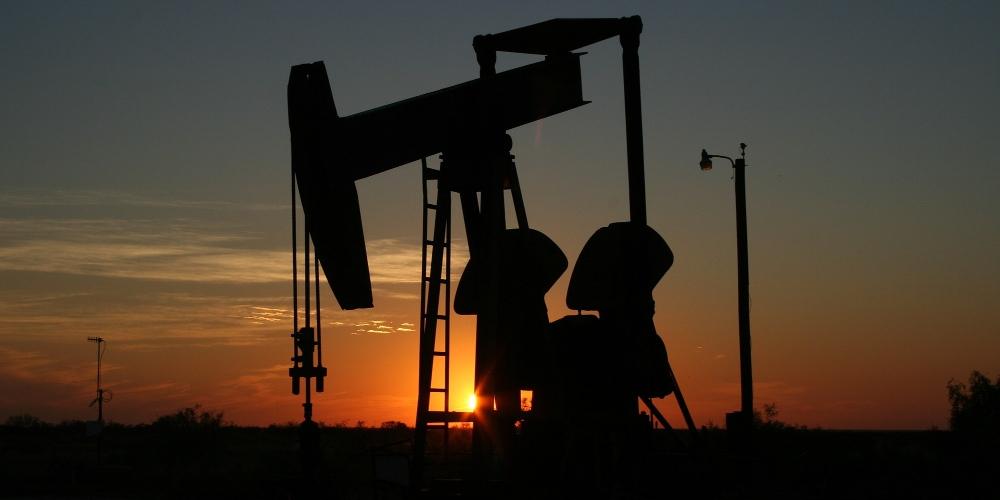
In this Mexican standoff in which adversarial nation states struggle to gain an advantage without damaging their own interests, what do (hybrid-) warring nations do? They invest in hard commodities such as gold and oil. Those real, tangible commodities, in turn, provide nations with enduring sovereign wealth that can be used to prop up a future monetary system should the existing one collapse. Nations that are gobbling up gold and hydrocarbon energies these days are taking out insurance on an unstable future.
Should the dollar collapse in the future, the rest of the world’s fiat currencies will fall like dominos, too. If decentralized Bitcoin fails to supplant central bankers’ micromanaged funny monies, governments will institute government-controlled digital currencies of their own.
Although some U.S. lawmakers have been squawking about the need to prevent the emergence of central bank digital currencies — because their use empowers governments to monitor and control all economic transactions, as well as enabling governments to confiscate (tax) and redistribute (from “privileged” groups to “victim” classes) personal savings at will — the European Central Bank is moving ahead with plans to institute a digital euro.
The People’s Bank of China already issued a digital renminbi several years ago, making it easier than ever for the communist regime to spy on the digital currency’s users and adjust citizens’ “social credit scores” according to their “positive” or “negative” transaction histories. If (or when) the days of worthless paper currency come to an end (after more than a century of central bank money-printing abuse), digital currencies backed by hard assets will be the emergency off-ramp for nation states.
After a devastating financial collapse, real commodities become the backbone of any new system. A nation’s natural resources — including agricultural goods, minerals, metals, timber, coal, gas, and oil — become the stored value backing any kind of currency that a nation issues. Countries that are rich in hydrocarbon energies — such as the Russian Federation and the United States — have a distinct advantage over countries that import energy today.
Through this lens, consider how President Trump has positioned the United States relative to the rest of the world. In Trump’s first term, he unleashed a “Drill, baby, drill!” agenda that produced an American oil boom and transformed the U.S. into the world’s largest producer of natural gas.
While China, India, and Europe are all suffering economic hardship from the effective closure of the Strait of Hormuz during the U.S. military’s ongoing pummeling of Iran’s Islamic-terrorist regime, Americans are in much better shape. Trump’s domestic energy policies succeeded in reducing American reliance on Middle Eastern energy exports. The U.S. imports less than 3% of its oil from the region and less than 1% of the supply that goes through the strait. By replacing Venezuelan dictator Nicolás Maduro with a leader more friendly to American interests, Trump has secured an additional source of hydrocarbon energies much closer to home.
In contrast, roughly 80% of Persian Gulf oil goes to China and other Asian markets. While the U.S. is completely self-sufficient when it comes to natural gas, Europe and Asia are heavily dependent on Middle Eastern supplies, including those from Qatar, which has been forced to shut down much of its natural gas operations.
China will find it much more expensive to manufacture goods when it is paying two or three times more for energy. Having already crippled its industrial sectors by foolishly chaining its economy to the unicorn dreams of wind and solar energies, Europe’s economic situation will become more dire. When German Chancellor Friedrich Merz spoke for all of Europe’s moronic leaders and insisted that European nations would refuse to protect oil shipments destined for European ports, he accelerated Europe’s economic suicide. It is difficult to prop up a digital euro when “green energy” buffoonery has separated the continent from its natural resources.
In the volatile years ahead, resource-rich nations will survive and lead. Resource-starved nations will crumble and beg. Meanwhile, American hydrocarbon producers are selling. It’s not the “new world order” that the greenie globalists want. But it is the one that’s coming.

Starting the Day With a Scripture-Inspired Roast Helps Center Your Thoughts on Eternal Truths Amid Temporal Pressures
The world can seem chaotic, especially right after we wake up. Many believers start their mornings reaching for something familiar — a hot cup of coffee — yet end up settling for mediocre brews that do little more than deliver a caffeine jolt. The daily grind of life, with its endless distractions, news cycles, and responsibilities, can leave even the most faithful feeling spiritually parched alongside their physical fatigue. What if your morning ritual could do more than wake you up? What if it could ground you in truth, nourish your body with exceptional quality, and quietly advance a kingdom purpose at the same time?
That’s the promise — and the reality — behind Promised Grounds Coffee. This Christian-founded company doesn’t just roast beans; it approaches every step as an act of worship and discipleship. By selecting only the top 10% of specialty-grade beans, ethically sourced from dedicated farmers in Central and South America, and small-batch roasting them with reverence in Austin, Texas, Promised Grounds delivers what many describe as the best coffee available — never burnt, never bland, but rich with origin stories and layered flavors that honor God’s creation.
From the vibrant Psalm 27 Roast (a light, bright medium option) to the bold yet peaceful 2 Timothy 1:7 Decaf, each bag carries a Scripture verse that turns your daily pour into a gentle reminder of faith. And through their Ounce Per Ounce Promise, every ounce of coffee you enjoy provides an equal ounce of clean water to families in need via partnership with Filter of Hope — literally brewing hope for body and soul, one cup at a time.
The challenge for today’s Christians runs deeper than finding a decent cup. In an age of convenience-driven consumerism, it’s easy to support companies that dilute values or remain silent on matters of faith. Many believers want their everyday choices — from what they drink to how they spend — to reflect discipleship rather than just convenience. Promised Grounds solves this by weaving Christian excellence into the entire process: beans nurtured with prayerful stewardship by farming families, roasted as an offering rather than a commodity, and packaged with Bible verses to encourage a mindset of gratitude and purpose from the first sip. Reviewers consistently praise the smooth, rich profiles — whether enjoyed black in a drip maker, iced on a warm day, or shared in fellowship — noting how the quality stands toe-to-toe with premium secular brands while delivering something far more meaningful.
This integration of faith and flavor addresses a real need in Christian households and ministries. Busy parents, church leaders, and remote workers alike report that starting the day with a Scripture-inspired roast helps center their thoughts on eternal truths amid temporal pressures. The coffee’s exceptional character — bright citrus notes in lighter roasts or deep chocolate undertones in bolder ones — comes from meticulous selection and careful roasting that respects the bean’s natural gifts rather than masking them. It’s the kind of coffee that elevates a simple quiet time, fuels productive workdays, or sparks meaningful conversations when shared at Bible studies or outreach events. And because it’s ethically sourced with integrity, every purchase supports sustainable livelihoods for farmers who treat their crops like family harvests.
For those leading churches or small groups, the impact multiplies. Promised Grounds offers bundles and options perfect for hospitality ministries, turning ordinary coffee service into an opportunity to point people toward the living water of Christ. Imagine greeting visitors with a warm cup whose very bag carries God’s Word — a subtle yet powerful witness that aligns with the Great Commission. The company’s Texas roots and commitment to “brewing hope” resonate especially with believers who value American enterprise paired with global compassion.
Of course, quality alone isn’t enough if the experience feels out of reach. Promised Grounds keeps it accessible with practical perks like free shipping on orders over $40, sample sets for discovering favorites, and thoughtful add-ons such as faith-themed mugs. Whether you prefer whole beans for fresh grinding, grounds for convenience, or even bulk options for larger households and ministries, the result is consistently superior coffee that makes discipleship feel integrated rather than added on.
As you consider how to align even the smallest habits with your walk with God, Promised Grounds Coffee stands out as a refreshing solution. It tackles the dual problems of subpar daily sustenance and disconnected consumption by offering a product that genuinely excels in taste while advancing a mission of clean water, farmer dignity, and scriptural encouragement. Believers who make the switch often describe it as more than a beverage upgrade — it becomes part of their rhythm of gratitude, a daily invitation to remember that every good gift comes from above.
If you’re ready to transform your mornings (and perhaps your church gatherings) with coffee that honors both exceptional craftsmanship and Christian values, I encourage you to explore what Promised Grounds has to offer. One sip at a time, you’ll be nourishing your body, refreshing your spirit, and participating in something far greater — all while enjoying what truly is among the best coffee available.
