


People are understandably anxious about the rise of artificial intelligence (AI) systems. There are serious moral, economic, and social issues that arise in a world where synthetic “brains” perform jobs and make decisions in place of humans. As AI takes over social media platforms and other online repositories of human knowledge, it is unsettling to see algorithmic entities policing language and curating established “truths.” The more widespread that AI becomes, the more dominant it will become in “defining” our world.
There is a race underway to define what is “true.” Certain members of society have long imposed unwritten rules of “political correctness” to manipulate the “acceptable” limits of public debate. Certain governments are increasingly criminalizing thoughts and words as “disinformation” or “hate speech” to stifle free speech, silence dissent, and protect forms of institutional power.
As tech companies and government bureaucracies “teach” AI to enforce speech rules upon human populations, “politically correct” propaganda and censorship will spread exponentially.
We humans are not prepared for what is coming. In increasingly fractured Western societies, the public cannot agree about anything. We already read different websites and pay attention to different social media influencers. As AI becomes more adept at influencing our opinions, we become more vulnerable to those who wish to distort or obscure the truth.
The novelist Ann Bauer wrote a thread on X the other day in which she shared parts of an online conversation she had with a “nice” Minnesota woman. The woman had sent Bauer pictures of the makeshift Renee Good memorial in Minneapolis that included numerous images equating federal immigration enforcement to the Holocaust.
Incensed by the obscene comparison, Bauer responded by pointing out that Holocaust remembrance groups had strongly objected to the way Governor Tim Walz has been describing legitimate law enforcement actions as tantamount to the murder of six million Jews. To the Minnesota woman’s credit, she acknowledged that she had no idea that Holocaust groups had condemned Walz for the comparison.
Bauer replied by stating that, as much as she personally “deplored” the shootings of Renee Good and Alex Pretti, she blamed Governor Walz for creating a “dangerous, violent situation” meant “to run cover for the fraud investigations.” To which the woman inquired, “What fraud investigations?” After sending the woman articles concerning the multi-billion-dollar Somali fraud scandal in Minneapolis, the poor lady later exclaimed, “Oh my God. Do we ever get the money back?”
Though exasperated, Bauer wants readers to know that “this is not a stupid woman,” but “she’s busy.” “She relies on MN media for her news.” Describing the plight of Minnesotans, generally, Bauer rues, “They have no freakin’ idea what’s going on.”
I have seen this sharp information divide all over social media platforms. Outside of Minnesota, a lot of Americans wish that President Trump had officially declared leftist anti-ICE agitators in Minneapolis to be engaged in insurrection against the federal government. They wish the president had flooded Minnesota with troops in order to put an end to the political left’s armed rebellion against law enforcement agents.
This recurring phenomenon in which Democrat-aligned groups are permitted to riot in Democrat cities without suffering any criminal repercussions sustains the growing sense that two-tiered “justice” exists in America in which Democrat politicians, prosecutors, and judges aggressively harass political opponents while protecting political allies.
Inside Minnesota, however, there is a widespread belief that confrontations against federal ICE agents in the state are indistinguishable from the civil rights protests of the ‘60s. Businesses have signs on their front windows saying, “ICE Out!” Church pastors implore congregants to shield immigrants from federal authorities.
There is endless online chatter about how the whole “mood” in and around Minneapolis is weighed down by dread and depression about the federal government’s law enforcement actions in the state. Meanwhile, those locals seem completely oblivious to the reality that ICE agents are rounding up pedophiles and murderers living among them and rescuing trafficked children from dangerous homes. The disconnect is staggering.
The Minnesota information divide — in which locals and outsiders see the ongoing riots against ICE agents so differently — is mostly a result of self-identification. Democrat
Those voters listen to leftist voices on local NPR radio, watch leftist commentators on MSNOW, and share information on social media groups that are hostile to non-leftists. Self-selection prevents conflicting viewpoints from “contaminating” dominant leftist narratives. Online leftist “safe spaces” such as Bluesky actively censor anything that challenges leftist orthodoxy.

As divided as society already is today, imagine how much more divided it will become as AI takes over the role of “information curator” for large chunks of the population. As algorithms become even more adept at filtering information and sequestering people according to their perceived political alignment, the remnants of society’s shared “public square” will largely disappear.
We will complete our transformation into plural societies living beside each other but separated by incompatible worldviews. We will become incongruous tribes beholden to contradictory “facts.” The more we abandon real human debate and rely upon artificial definitions of “truth,” the more likely that neighbors will become strangers.
This “brave new world” of ours is not for the faint of heart. Democrats in the United States have already repeatedly tried to establish “governance boards” to police the Internet for so-called “disinformation” and “hate” speech. On the other side of the Atlantic, the United Kingdom’s Online Safety Act and the European Union’s Digital Services Act are structured to eliminate public dissent to official government policies. Last week, French President Emmanuel Macron dismissed unregulated free speech as pure “bullshit.”
While Western governments become increasingly antagonistic toward citizens’ natural right to free expression, those governments describe the future of online communication as one in which AI will monitor everything and “objectively” police “false” or “hateful” information. A vast technological infrastructure for dominating our minds is being built all around us, and an era of unmitigated government propaganda is about to take effect. The Minnesota information divide will soon look small compared to the divisions yet to come.
Thirty years ago, the rise of the Internet appeared liberating. People living under the yoke of dictatorships had access to information that could help set them free. People with limited access to books could find a lifetime’s education right at their fingertips. People who had been taught to hate each other could find common purpose online.
Despite providing all of these great gifts, our online connections now isolate and divide us. It is as if we rolled the Trojan horse inside our own homes until the day when AI could burst out and subdue us. Instead of liberating our minds, we risk becoming prisoners under the watchful eyes of self-replicating digital wardens that intend to hide from us what we are “not allowed” to know. In this new world where governments and synthetic entities work together to keep us under their control, thinking “outside the box” becomes more important than ever.
Politicians already “divide and rule” over us. AI systems will do the same. Freethinkers capable of becoming real leaders will have to push back against both malevolent humans and malicious machines.
Starting the Day With a Scripture-Inspired Roast Helps Center Your Thoughts on Eternal Truths Amid Temporal Pressures
The world can seem chaotic, especially right after we wake up. Many believers start their mornings reaching for something familiar — a hot cup of coffee — yet end up settling for mediocre brews that do little more than deliver a caffeine jolt. The daily grind of life, with its endless distractions, news cycles, and responsibilities, can leave even the most faithful feeling spiritually parched alongside their physical fatigue. What if your morning ritual could do more than wake you up? What if it could ground you in truth, nourish your body with exceptional quality, and quietly advance a kingdom purpose at the same time?
That’s the promise — and the reality — behind Promised Grounds Coffee. This Christian-founded company doesn’t just roast beans; it approaches every step as an act of worship and discipleship. By selecting only the top 10% of specialty-grade beans, ethically sourced from dedicated farmers in Central and South America, and small-batch roasting them with reverence in Austin, Texas, Promised Grounds delivers what many describe as the best coffee available — never burnt, never bland, but rich with origin stories and layered flavors that honor God’s creation.
From the vibrant Psalm 27 Roast (a light, bright medium option) to the bold yet peaceful 2 Timothy 1:7 Decaf, each bag carries a Scripture verse that turns your daily pour into a gentle reminder of faith. And through their Ounce Per Ounce Promise, every ounce of coffee you enjoy provides an equal ounce of clean water to families in need via partnership with Filter of Hope — literally brewing hope for body and soul, one cup at a time.
The challenge for today’s Christians runs deeper than finding a decent cup. In an age of convenience-driven consumerism, it’s easy to support companies that dilute values or remain silent on matters of faith. Many believers want their everyday choices — from what they drink to how they spend — to reflect discipleship rather than just convenience. Promised Grounds solves this by weaving Christian excellence into the entire process: beans nurtured with prayerful stewardship by farming families, roasted as an offering rather than a commodity, and packaged with Bible verses to encourage a mindset of gratitude and purpose from the first sip. Reviewers consistently praise the smooth, rich profiles — whether enjoyed black in a drip maker, iced on a warm day, or shared in fellowship — noting how the quality stands toe-to-toe with premium secular brands while delivering something far more meaningful.
This integration of faith and flavor addresses a real need in Christian households and ministries. Busy parents, church leaders, and remote workers alike report that starting the day with a Scripture-inspired roast helps center their thoughts on eternal truths amid temporal pressures. The coffee’s exceptional character — bright citrus notes in lighter roasts or deep chocolate undertones in bolder ones — comes from meticulous selection and careful roasting that respects the bean’s natural gifts rather than masking them. It’s the kind of coffee that elevates a simple quiet time, fuels productive workdays, or sparks meaningful conversations when shared at Bible studies or outreach events. And because it’s ethically sourced with integrity, every purchase supports sustainable livelihoods for farmers who treat their crops like family harvests.
For those leading churches or small groups, the impact multiplies. Promised Grounds offers bundles and options perfect for hospitality ministries, turning ordinary coffee service into an opportunity to point people toward the living water of Christ. Imagine greeting visitors with a warm cup whose very bag carries God’s Word — a subtle yet powerful witness that aligns with the Great Commission. The company’s Texas roots and commitment to “brewing hope” resonate especially with believers who value American enterprise paired with global compassion.
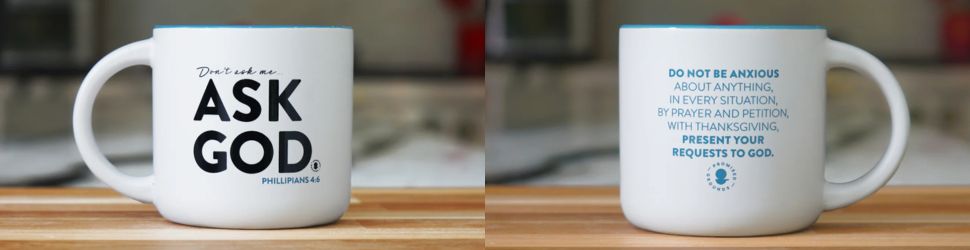
Of course, quality alone isn’t enough if the experience feels out of reach. Promised Grounds keeps it accessible with practical perks like free shipping on orders over $40, sample sets for discovering favorites, and thoughtful add-ons such as faith-themed mugs. Whether you prefer whole beans for fresh grinding, grounds for convenience, or even bulk options for larger households and ministries, the result is consistently superior coffee that makes discipleship feel integrated rather than added on.
As you consider how to align even the smallest habits with your walk with God, Promised Grounds Coffee stands out as a refreshing solution. It tackles the dual problems of subpar daily sustenance and disconnected consumption by offering a product that genuinely excels in taste while advancing a mission of clean water, farmer dignity, and scriptural encouragement. Believers who make the switch often describe it as more than a beverage upgrade — it becomes part of their rhythm of gratitude, a daily invitation to remember that every good gift comes from above.
If you’re ready to transform your mornings (and perhaps your church gatherings) with coffee that honors both exceptional craftsmanship and Christian values, I encourage you to explore what Promised Grounds has to offer. One sip at a time, you’ll be nourishing your body, refreshing your spirit, and participating in something far greater — all while enjoying what truly is among the best coffee available.
