

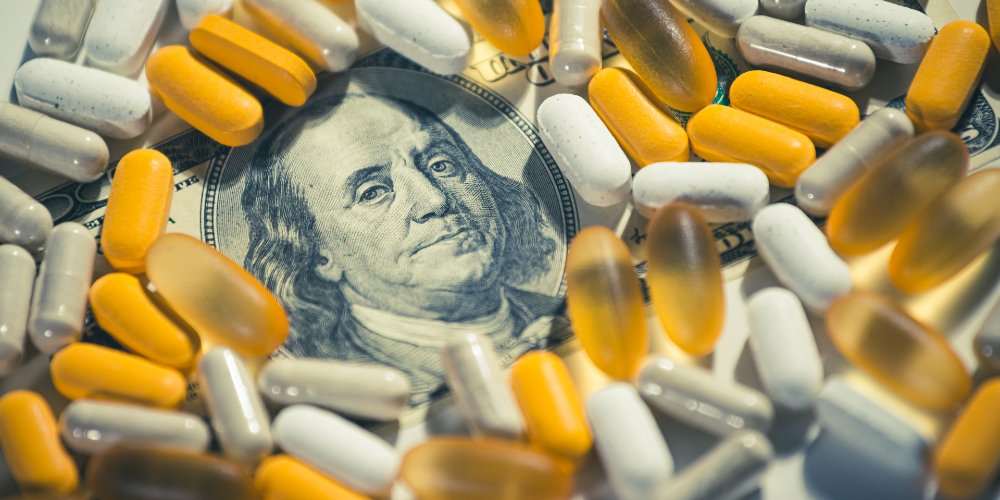
(End of the American Dream)—The goal of the healthcare industry in the United States is to take as much money away from you as possible. I truly wish that I was exaggerating, but I am not. Can you guess which nation spends the highest percentage of GDP on healthcare? Without looking it up, you probably already know that it is us. Gigantic pharmaceutical corporations and massively bloated health insurance companies are raking in colossal mountains of cash, and yet the quality of the healthcare that we receive in return is rather quite poor.
People living in Albania, Panama and Kuwait have higher life expectancy rates than we do. Residents of Belarus, Cuba and Latvia have lower infant mortality rates than we do. We are the most medicated population on the planet and yet we are also one of the sickest. If the U.S. healthcare system was a country, it would have the 6th largest economy on the entire globe and yet rates of cancer, heart disease and diabetes continue to soar.
The numbers that I am about to share with you are absolutely stunning. For as much money as we spend on healthcare, we should have the greatest system in the world by a wide margin.
But we don’t.
We have lost our way, and I don’t know if we will ever be able to find our way back.
At this stage, our healthcare system is completely and utterly dominated by immensely powerful money making institutions, and those institutions pour vast amounts of money into political campaigns in order to make sure that there will never be any serious reforms.
There are literally trillions of dollars pouring through our healthcare system. Those that are becoming exceedingly wealthy from this system will do whatever it takes to protect it.
So it is dangerous to even write an article like this.
Pharmaceutical corporations aren’t in the business of saving lives. What they want is for you to take their pills for as long as possible, and they want the profit margins on those pills to be as large as they can get away with.
Health insurance companies are more profitable when they provide less healthcare. Every year health insurance premiums go even higher, but when it comes time to pay out, health insurance executives will deploy their “delay, deny and defend” tactics. They will search high and low for any potential reason that will allow them to deny a claim.
But of course most Americans feel that they must have health insurance because of how absurdly high medical bills have become. Many hospitals have adopted a policy of charging “whatever they can get away with”, knowing that the vast majority of their victims will never challenge their grossly inflated bills. If you have been hit with a hospital bill that is five or six figures, you know exactly what I am talking about.
The system is broken. Everyone knows it.
But it never gets fixed.
The following are 33 shocking facts that prove that the entire U.S. healthcare industry has become one giant money making scam…

- The U.S. spends about 5 trillion dollars on healthcare each year.
- What the United States spends on healthcare is greater than the GDP of the United Kingdom.
- If the U.S. healthcare system was a country, it would be the 6th largest economy in the entire world.
- Federal, state and local governments account for nearly half of all healthcare spending in the United States.
- Today, more than 68 million Americans are enrolled in Medicare.
- If you can believe it, more than 71 million Americans are enrolled in Medicaid.
- Does it seem like almost half of the commercials on television are for pharmaceutical drugs? You may not be surprised to learn that pharmaceutical companies actually spend more than 15 billion dollars on television advertising in the United States each year.
- According to one survey, 61 percent of U.S. adults are currently taking at least one pharmaceutical drug.
- Globally, the pharmaceutical industry brings in about 1.6 trillion dollars in revenue each year. That is more money than the Pentagon spends.
- There are 10 pharmaceutical industry executives that received total compensation of at least 20 million dollars in 2023.
- According to the CDC, 1.5 million people a year are rushed to emergency rooms in the United States because of adverse reactions to pharmaceutical drugs. 600,000 of those people are age 65 or older.
- On average, more than 1,200 pharmaceutical drugs are recalled by the FDA each year.
- In 2023, the six largest health insurance companies in the United States had combined revenues of almost 1.1 trillion dollars. That is also more money than the Pentagon spends.
- The profits of health insurance companies in the U.S. increased by 287 percent in a 10 year period.
- On average, annual health insurance premiums for family coverage have reached a total of $25,572 per year.
- In 2023, the CEOs of the five largest health insurance companies in the U.S. brought home approximately 75 million dollars in total compensation.
- The CEO of UnitedHealth Group, Andrew Witty, received a total of 23.5 million dollars in compensation in 2023.
- One survey found that 18 percent of all insured adults in the U.S. have had a health insurance claim denied just within the past year.
- More than 27 million Americans do not even have health insurance.
- Why are c-sections on the rise? It is because a vaginal delivery costs approximately $12,235 on average, while a c-section costs approximately $17,004 on average.
- The infant mortality rate in the United States is nearly three times as high as it is in Singapore.
- According to the CFPB, approximately 100 million Americans are in medical debt right now.
- Even though the vast majority of the population is covered by health insurance, 62 percent of the two million personal bankruptcies that are filed each year in the United States are caused by medical debt.
- One survey found that U.S. households have piled up more than 220 billion dollars in medical debt.
- A three day stay in the hospital will typically cost you somewhere around $30,000.
- Americans spend more than 200 billion dollars treating cancer each year.
- According to the CDC, heart disease costs this country more than 250 billion dollars each year.
- According to the NIH, diabetes costs this country more than 400 billion dollars each year.
- A 25-year-old mother in Nevada was handed a bill for $700,000 after her baby daughter spent about two months in the neonatal intensive care unit.
- One study found that hospitals overcharge Americans “by as much as 18 times over their costs”.
- 78 percent of U.S. adults have avoided hospital visits because they cost so much.
- Hospital profits have risen by more than 400 percent since 1999.
- A study that was conducted a few years ago determined that more than 90 percent of all hospital bills contain errors that can result in “overcharges, unnecessary costs, and insurance claim denials”.
Michael’s new book entitled “Why” is available in paperback and for the Kindle on Amazon.com, and you can subscribe to his Substack newsletter at michaeltsnyder.substack.com.

Two Storms, One Harvest

Every food crisis in living memory has been a one-shock event. The 2008 price spike was a commodity bubble. The 2020 shortages were a logistics failure. The 2022 grain scare was a war on one exporter’s ports. Each time, the system bent, adjusted, and recovered, and each time the experts assured us afterward that global markets are simply too big and too diversified to fail.
What nobody in Washington seems eager to discuss is that 2026 is shaping up to be something the modern food system has never actually faced. Two independent shocks, one climatic and one geopolitical, are converging on the same harvest cycle at the same time. Not sequentially. Simultaneously.
Start with the weather. The Pacific Ocean is currently building toward what forecasters now openly call a record event. NOAA’s Climate Prediction Center puts the odds of at least a strong El Niño near 88 percent, with roughly two in three odds it reaches “very strong” status, the tier reserved for perhaps three or four events in the entire satellite era. Every major global model now projects a median peak in Super El Niño territory, and most of them project it exceeding the 2015-16 event, which until now held the modern record. Sea surface anomalies were already brushing the super threshold in mid-July, months before these events normally peak. The atmosphere has already shifted into El Niño mode, and the event is forecast to crest in late fall and early winter.
This is not about “climate change.” It’s about the standard cycles of weather, and the cycle we’re currently in is one that has likely devastated societies in the past. We’re better prepared as a society today, but not all Americans are equally prepared.
Serious households have started doing the quiet math on their own. Grocery bills tell part of the story, and the forecast maps tell the rest, which is why long-term food storage has moved from fringe hobby to mainstream line item in the family budget, with established suppliers like Heaven’s Harvest seeing demand from people who five years ago would have rolled their eyes at the idea. That instinct is not paranoia. It is pattern recognition, and the pattern is worth walking through carefully.
Editor’s Note: Heaven’s Harvest IS a sponsor, but the warnings of this article are real and would be written even if we didn’t have a survival food sponsor. With that said, those who take advantage of what they offer can use promo code “Patriot” for 15% off.
The Fertilizer Clock Is Already Running
While the Pacific warms, the second shock has been unfolding in the Strait of Hormuz. The conflict with Iran turned the world’s most important energy chokepoint into a contested waterway, and the consequences reach far beyond the gas pump. Roughly a third of global fertilizer trade moves through Hormuz, and the disruption sent urea prices up 86 percent year over year by March, with a 53 percent jump in a single month.
The World Bank projects energy prices rising about 24 percent in 2026 and fertilizer about 31 percent. By its own accounting, fertilizer prices ran 35 percent higher in the first five months of this year than the same period last year.
Here is the mechanism the nightly news will not explain. Fertilizer is not a grocery item. It is a time-delayed input. The nitrogen a farmer in Iowa or Punjab could not afford to apply this spring does not show up as a problem this spring. It shows up as a thinner harvest six to twelve months later.
The World Bank’s own food security brief concedes that the effects of reduced applications earlier this season “are likely to become visible only later in harvest outcomes.” Translate that from institutional language into plain English and it means this. The damage is already done, it is already in the ground, and we are simply waiting for it to arrive on the shelf.
Now check the calendar. Six to twelve months from the spring planting season lands us squarely in late 2026 and early 2027. Which is precisely when the strongest El Niño in the instrumental record is forecast to peak, bringing its signature droughts to Southeast Asia, Australia, southern Africa, northern Brazil, and South Asia, the very regions that grow the world’s rice, sugar, and oilseeds.
The World Bank warns openly that a strong El Niño “could disrupt multiple crop belts simultaneously” on top of the conflict-driven input costs. Their baseline projection assumes the Middle East disruptions ease by autumn. What in the last two years of Middle East history suggests that assumption is safe?
The System Has No Slack Left
The comfortable answer is that global markets always adjust. But adjustment requires slack, and the slack is gone. Global cereal production is expected to decline from last year’s records even before El Niño does its work. The UN World Food Programme, hardly a den of right-wing preppers, is calling this the most significant disruption to its supply chains since Covid and the invasion of Ukraine, and its supply chain director put the stakes bluntly.
Today’s supply chain challenges are tomorrow’s hunger crisis.
There is also a political dimension that markets cannot price. When food gets scarce, governments do not behave like economists. They behave like politicians. Export bans, hoarding mandates, and panic buying at the national level turned the modest rice shortfall of 2008 into a global crisis, and analysts are already warning that import-dependent nations are the first dominoes.
The 2015-16 Super El Niño, a far weaker event than what is now forecast, threw tens of millions into food stress across Africa and Asia. This one is projected to be stronger, and it arrives with fertilizer already rationed by price and shipping lanes already contested by missiles.
What Joseph Knew
Scripture does not treat preparation for lean years as faithlessness. It treats it as wisdom delivered in advance to those willing to act on it.
Behold, there come seven years of great plenty throughout all the land of Egypt: And there shall arise after them seven years of famine; and all the plenty shall be forgotten in the land of Egypt.
Joseph did not respond to that warning with a hashtag or a committee. He stored grain during the years of abundance, and when the famine came, Egypt stood while its neighbors begged. The lesson is not that famine is certain. It is that the time to prepare is precisely when preparation still looks optional.
Nobody who filled a pantry in a year of plenty has ever regretted it, and nobody standing in an empty aisle has ever been glad he waited for certainty.
None of this calls for panic, and panic is the enemy of sound judgment anyway. It calls for the same unglamorous prudence our grandparents considered ordinary. Keep some cash margin, know your local growers, and put real food in deep storage while it is cheap and available, because the entire arc of this story is that cheap and available is a closing window.
Families looking for a straightforward place to start can visit Heaven’s Harvest and use promo code Patriot for 15 percent off long-term storable food. The forecasts may yet soften, the strait may yet reopen, and we should pray they do. But hope is a fine thing to hold and a foolish thing to eat.

WAY too many things in America have become giant, money-making scams, including hyper-partisan news portals (on both sides). America has a new opportunity to to lead the world toward a era of world freedom, but with healthy boundaries and guardrails in our civil society to protect the future from excessive greed, excessive compassion, excessive government and excessive hedonism…
and it’s getting so much worse. nurses now do the work that doctors used to do so the hospitals save on labor costs.
nurses do not work you jest they are lazy as all get out.
Great list! Thanks!
This is what you get whenever government lays its fat thumb on the scales of a truly free-market system. I write a very small substack about our frustrations with what I call The MedicoBlob™. From one of my Posts: “In the early 1900’s the US had about 125,000 allopaths (MDs) and about 40,000 naturopaths. In other words, not counting the other practitioners mentioned above, nearly 1/3 of medical service providers at that time were naturopaths! Today we have over 1.4 million MDs but only about 6,000 naturopathic practitioners. What if natural free market forces had prevailed and naturopathic and allopathic practitioners had pursued their own fates the way Cord, Hudson, Cadillac, Ford and other auto makers had been able to do? Where would our health be today?”
Cognitive dissonance. We have seen all of these things which are geared toward making us sick, or killing us, yet we refuse to believe the obvious.
At one time they claimed we are using too much paper. Remember that one? Well, you should see the paper you receive from your healthcare providers every months. I’m astonished at the amount of paper used to tell my benefits every months. Literally at the end of the year it’s HUNDREDS of pages and they include that Demoncrap notice about your rights and phone numbers to call if you cannot speak English and dozens of other languages with every monthly statement.
The sole reason our infant mortality rate doesn’t lead the world is because we treat so many premature & seriously ill infants other countries would just let die.
So I was in Mercy hospital in Miami for 2 1/2 days as I was hit with severe kidney stone pains. The pain subsided on the third day and they messed up the schedule and I had to fly to LA the following day, so no surgery etc. They billed me $87,000. The one line item that stood out was one labeled unspecified for $67,000. The room charge was highlighted. The bloodwork was highlighted. The CAT scan was highlighted but not the $67,000 one.
stay away from the stethoscope-*******
Ambulance companies will rip you off, too, if they can. AMR never billed me directly for my ride to the hospital in 2019; they sent the statement directly to a collection agency. When I sent an explanatory letter to the collection agency and paid the bill — which was less than what the ambulance had initially charged — AMR sent me a duplicate billing! I told them where they could stick it and reported the matter to my state AG office and the Better Business Bureau. My conclusion: the entire medical system is corrupt. If you’re forced to seek medical care, the first question they ask you is if you’re “vaccinated.” My response: ‘Against what? The rebranding/remarketing of the seasonal flu?’ Please.
http://www.doctoryourself.com/
‘Doctors give drugs of which they know little, into bodies, of which they know less, for diseases of which they know nothing at all.’ -Voltaire
When answering questions in 2024 for Medicare, Anthem Advantage, and now the new Humana plan I’m on since I lost AA benefits Jan/2025…..I was amazed at the response to ‘I take no prescriptions at all’ from all the reps helping me apply.
I’m only 74 and you’d think that was the normal answer, ‘oh, I take a few herbal and vitamins daily’…..but this article is reveal…..for me.
just noticed this huh? talk about blind.
Now you are trolling in here. You really get around!
One hour of treatment.
No doctor. No anesthesia.
Severe pain under knife.
$700 out of pocket. Medicare. Total billed $8000.
Is this a great country or what ?
Well, the wuhan shot deaths should really be taking off soon and that will lower the numbers for line items five and six. Of course that means fewer slaves to keep the medical and pharma executives in their posh life styles. Yeah, we are hosed and letting it happen.
Doctors are educated idiots they can’t cure you they butcher you and take everything you have along with hospitals. The reason for all this mess is the release of liability forms that make them not responsible for what they do to you, they need to be held accountable for their draconian care tactics and the staff/ nurses are as bad if not worse. If your dying they can keep you alive until the insurance runs out then they let you die , if you die under their care they get paid for your death like using ventalators for a non existent plandemic.
They do what the government tells them too do cause the government is the one who wants Americans dead jabajaba die
No free speech here. Pos!!
Add to it that the 3rd leading cause of death in the US is iatrogenic reasons.
I blame the Jews
It is a crime of epic proportions that the US has no insurance to cover those that cannot afford the outrageous premiums on a decent healthcare plan. I have a daughter that has a health problem that she just cannot hold down a 8 hour 5 day a week job. She works when she can. The place she works does not have a healthcare plan, they can barely meet the payroll on some weeks. Her husband works there, too. He has insurance through the veterans health benefits. Just today my daughter called my wife & I to take her to the emergency room. (I want to speak to the emergency room later) She was doubled over in pain which I thought was a kidney stone (I’ve had 2). Turned out that she had a bad UTI according to the doc. When the Dr. asked her if she wanted pain meds she said no. I am sure that it was the additional cost that made her say no. My wife and I told her we would pay for them. Independent as hell, not going to be a burden on mom & dad. We know that the bill will be a whopper and told her we would help her pay it off. She nixed that. On emergency room: I learned that we Americans have a new definition of the meaning or emergency. Where as I always thought emergency meant urgent & quick attention, I am wrong on that. The place should be called the “Wait in pain room”, we waited from 930Am to 115PM for her to be seen. Probably as many as 15 or 20 other souls were sitting in pain, too. Saw the doc, had a MRI & was out by 2PM. America, the greatest country in the world …
I once heard a story about a Christian man on his deathbed in the hospital and instead of calling for his family to be at his side as he passed, asked to have his doctor and his lawyer there on either side of the bed. They agreed to do it, but asked why his doctor and his lawyer instead of family? The man replied, well, I have always wanted to die just like my Lord. Between 2 thieves.