

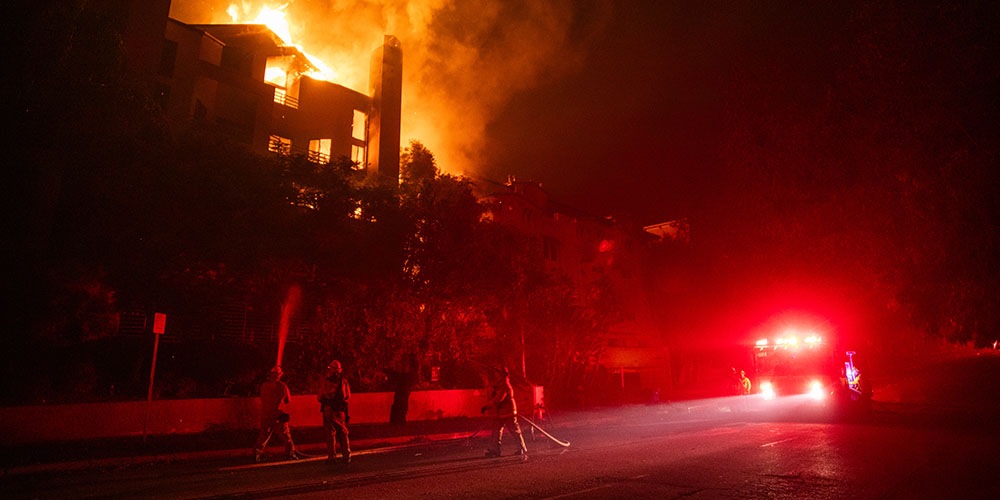
- California’s wildfires are incinerating structures containing PVC materials, releasing highly toxic dioxins into the air. These “forever chemicals” are carcinogenic and pose severe health risks, including cancer, reproductive issues and immune system damage, even at extremely low exposure levels.
- Dioxin-laden ash is settling on California’s Central Valley, a major agricultural hub, threatening crops, orchards, and water sources. This contamination could disrupt the nation’s food supply, as the region produces a significant portion of the United States’ fruits, vegetables and nuts.
- The dioxin crisis coincides with a surge in “turbo cancers” linked to vaccine-related illnesses, potentially creating a public health disaster. The scale of the fires surpasses past environmental disasters, with long-term implications for millions of Americans.
- Some experts suggest the fires may be part of a larger plan to destabilize the U.S., citing controversial predictions like the Deagel Report and criticizing government policies, such as budget cuts to fire departments, for exacerbating the crisis.
- Experts recommend immediate action to mitigate dioxin exposure, including detoxifying supplements like spirulina and chlorella, stockpiling organic foods, and considering relocation from high-risk areas. The crisis underscores the importance of vigilance and survival strategies in the face of a potential long-term environmental and health catastrophe.
(Natural News)—As California’s wildfires rage, a hidden catastrophe is unfolding – one that could have far-reaching consequences for public health, the food supply and the future of the nation. The combustion of 10,000 structures – including homes, businesses and infrastructure – is releasing a toxic cloud of cancer-causing dioxins into the air, threatening millions of lives.
Experts warn that even femtogram-level exposure to these “forever chemicals” can trigger turbo cancers, compounding the health crisis already fueled by vaccine-related illnesses. This is not just an environmental disaster; it is a silent epidemic that could reshape the health and stability of America for decades to come.
The chemistry of catastrophe
The fires ravaging California are not just consuming trees and brush – they are incinerating human-built structures laden with polyvinyl chloride (PVC) materials. From water pipes to clothing, PVC is ubiquitous in modern construction. When these materials combust, they produce dioxins, some of the most toxic chemicals known to science. Dioxins are persistent organic pollutants that accumulate in the environment and the human body, causing cancer, reproductive issues and immune system damage at extraordinarily low concentrations.
“Every person breathing the smoke from these structure fires is inhaling cancer-causing chemicals at femtograms of exposure which is a millionth of a millionth of a gram,” the Health Ranger Mike Adams said during a recent “Health Ranger Report” episode with guest Steve Quayle. (Related: Mike Adams and Steve Quayle explore the hidden dangers of California wildfires: Are toxic dioxin clouds putting public health and food supply at risk?)
The fallout from these fires is not limited to the air. The toxic particles are settling on California’s Central Valley, the nation’s breadbasket, contaminating crops, orchards and water sources. This contamination threatens to ripple through the food supply, affecting millions of Americans who rely on California for fresh produce, nuts and dairy.
A perfect storm of health crises
The dioxin crisis comes at a time when the nation is already grappling with a surge in turbo cancers linked to vaccine-related illnesses. Quayle, a renowned researcher and author, warned that the combination of these factors could lead to a public health disaster of unprecedented scale.
The nationally known radio host stated the fires will cause water sources to be contaminated, and the carcinogenic nature of PVC being burned is not a good thing.
The parallels to past disasters are chilling. After the 9/11 attacks, first responders who inhaled toxic smoke from the World Trade Center collapse faced a wave of cancers and respiratory illnesses. Similarly, the East Palestine train derailment in Ohio released dioxins into the environment, leaving a legacy of contamination. But the scale of the California fires dwarfs these events, with the potential to affect not just a localized population but the entire nation.
California’s Central Valley is now blanketed in dioxin-laden ash and the fallout threatens not only the current harvest but also the long-term viability of the region’s agricultural output. Adams warned the dioxins will contaminate everything – the air, the soil, the water, the crops – and it isn’t just an economic disaster but a food security crisis.
The implications extend beyond California. The Central Valley’s produce is shipped across the country, meaning that dioxin contamination could affect food supplies nationwide. Moreover, the toxic particles are being carried by wind into neighboring states like Arizona, further spreading the contamination.
A larger, engineered plan?
Both Adams and Quayle suggest that the fires may be part of a larger, engineered plan to destabilize America. Quayle points to the Deagel Report, a controversial document that predicts a dramatic reduction in the United States population by 2025.
The author and photographer mentioned the globalist Luciferians want to kill 250 million Americans, and they are accelerating their agenda with the fires being a part of it. Adams highlighted the role of government policies in exacerbating the crisis.
Quayle commented that Los Angeles Mayor Karen Bass cut $48 million from the fire department’s budget just days before the fires erupted. He also took note that the funds were diverted to diversity, equity and inclusion training, leaving the city ill-prepared to respond to the disaster.
The road ahead: Survival and preparedness
As the fires continue to burn, the long-term consequences of dioxin exposure loom large. Adams and Quayle emphasized the importance of preparedness in the face of this unfolding crisis. Both experts recommend taking immediate steps to protect oneself from dioxin exposure.

Spirulina and chlorella, microalgae known for their detoxifying properties, can help mitigate the effects of dioxin ingestion. Storable, organic foods and supplements are also critical, as the contamination of the food supply is expected to worsen. Quayle also urged Americans to consider relocating from high-risk areas like California.
The California fires are more than a natural disaster – they are a wake-up call. The release of dioxins into the environment represents a silent, insidious threat that could reshape the health and stability of the nation. As Adams and Quayle warned, this crisis may be part of a larger plan to destabilize America, making preparedness and vigilance more important than ever.
Watch the full “Operation Meltdown” interview between Steve Quayle and the Health Ranger Mike Adams below.
This video is from the Health Ranger Report channel on Brighteon.com.
More related stories:
- Palisades Fire becomes L.A.’s most destructive wildfire amid water shortages and power outages.
- DIOXINS released after Ohio train derailment PERSIST in the environment and collect in lipids, meaning they will contaminate milk, cheese, eggs and meat from farms and ranches.
- DIOXINS GALORE: How to BLOCK toxic chemical exposure fallout in the food, water and air.
Sources include:

Starting the Day With a Scripture-Inspired Roast Helps Center Your Thoughts on Eternal Truths Amid Temporal Pressures
The world can seem chaotic, especially right after we wake up. Many believers start their mornings reaching for something familiar — a hot cup of coffee — yet end up settling for mediocre brews that do little more than deliver a caffeine jolt. The daily grind of life, with its endless distractions, news cycles, and responsibilities, can leave even the most faithful feeling spiritually parched alongside their physical fatigue. What if your morning ritual could do more than wake you up? What if it could ground you in truth, nourish your body with exceptional quality, and quietly advance a kingdom purpose at the same time?
That’s the promise — and the reality — behind Promised Grounds Coffee. This Christian-founded company doesn’t just roast beans; it approaches every step as an act of worship and discipleship. By selecting only the top 10% of specialty-grade beans, ethically sourced from dedicated farmers in Central and South America, and small-batch roasting them with reverence in Austin, Texas, Promised Grounds delivers what many describe as the best coffee available — never burnt, never bland, but rich with origin stories and layered flavors that honor God’s creation.
From the vibrant Psalm 27 Roast (a light, bright medium option) to the bold yet peaceful 2 Timothy 1:7 Decaf, each bag carries a Scripture verse that turns your daily pour into a gentle reminder of faith. And through their Ounce Per Ounce Promise, every ounce of coffee you enjoy provides an equal ounce of clean water to families in need via partnership with Filter of Hope — literally brewing hope for body and soul, one cup at a time.
The challenge for today’s Christians runs deeper than finding a decent cup. In an age of convenience-driven consumerism, it’s easy to support companies that dilute values or remain silent on matters of faith. Many believers want their everyday choices — from what they drink to how they spend — to reflect discipleship rather than just convenience. Promised Grounds solves this by weaving Christian excellence into the entire process: beans nurtured with prayerful stewardship by farming families, roasted as an offering rather than a commodity, and packaged with Bible verses to encourage a mindset of gratitude and purpose from the first sip. Reviewers consistently praise the smooth, rich profiles — whether enjoyed black in a drip maker, iced on a warm day, or shared in fellowship — noting how the quality stands toe-to-toe with premium secular brands while delivering something far more meaningful.
This integration of faith and flavor addresses a real need in Christian households and ministries. Busy parents, church leaders, and remote workers alike report that starting the day with a Scripture-inspired roast helps center their thoughts on eternal truths amid temporal pressures. The coffee’s exceptional character — bright citrus notes in lighter roasts or deep chocolate undertones in bolder ones — comes from meticulous selection and careful roasting that respects the bean’s natural gifts rather than masking them. It’s the kind of coffee that elevates a simple quiet time, fuels productive workdays, or sparks meaningful conversations when shared at Bible studies or outreach events. And because it’s ethically sourced with integrity, every purchase supports sustainable livelihoods for farmers who treat their crops like family harvests.
For those leading churches or small groups, the impact multiplies. Promised Grounds offers bundles and options perfect for hospitality ministries, turning ordinary coffee service into an opportunity to point people toward the living water of Christ. Imagine greeting visitors with a warm cup whose very bag carries God’s Word — a subtle yet powerful witness that aligns with the Great Commission. The company’s Texas roots and commitment to “brewing hope” resonate especially with believers who value American enterprise paired with global compassion.
Of course, quality alone isn’t enough if the experience feels out of reach. Promised Grounds keeps it accessible with practical perks like free shipping on orders over $40, sample sets for discovering favorites, and thoughtful add-ons such as faith-themed mugs. Whether you prefer whole beans for fresh grinding, grounds for convenience, or even bulk options for larger households and ministries, the result is consistently superior coffee that makes discipleship feel integrated rather than added on.
As you consider how to align even the smallest habits with your walk with God, Promised Grounds Coffee stands out as a refreshing solution. It tackles the dual problems of subpar daily sustenance and disconnected consumption by offering a product that genuinely excels in taste while advancing a mission of clean water, farmer dignity, and scriptural encouragement. Believers who make the switch often describe it as more than a beverage upgrade — it becomes part of their rhythm of gratitude, a daily invitation to remember that every good gift comes from above.
If you’re ready to transform your mornings (and perhaps your church gatherings) with coffee that honors both exceptional craftsmanship and Christian values, I encourage you to explore what Promised Grounds has to offer. One sip at a time, you’ll be nourishing your body, refreshing your spirit, and participating in something far greater — all while enjoying what truly is among the best coffee available.

Bad news is a way of life in the U.S.