

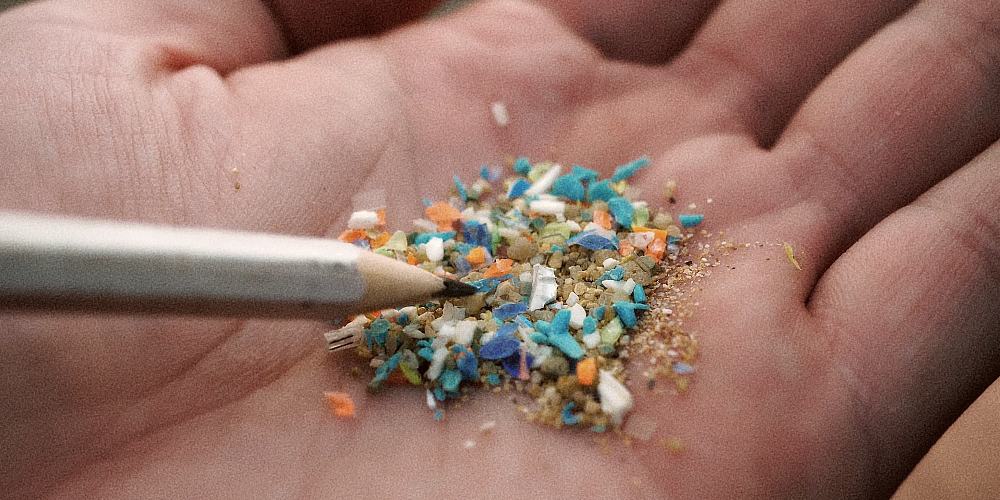
- Microplastics mimic hormones like estrogen, leading to health issues such as infertility and breast cancer due to their endocrine-disrupting properties
- These particles are linked to increased risks of heart attack and stroke, highlighting their broader impact on cardiovascular health
- Plastic production is projected to increase by 70% by 2040, exacerbating pollution and human exposure to microplastics
- Microplastics accumulate in organs, causing inflammation and immune disruption, which leads to chronic health conditions
- Strategies to reduce microplastic exposure include using reusable items, avoiding plastic packaging and implementing legislative measures like plastic bag bans
(Mercola)—Microplastics and nanoplastics have infiltrated every corner of our environment and bodies. These tiny particles, resulting from the breakdown of larger plastics, are characterized by their minuscule size — microplastics measuring less than 5 millimeters and nanoplastics under 0.1 micrometers — and easily penetrate and accumulate within the human body.
Once inside your body, these plastic particles mimic natural hormones like estrogen, disrupting the endocrine system and exacerbating hormone-driven conditions such as breast cancer. This hormonal chaos also has profound implications for reproductive health worldwide, necessitating the need for policies that reduce both plastic waste and subsequent exposure.
The Effects of Microplastics on Hormonal Health
A recent report published in Forbes highlights the pervasive presence of microplastics in our environment and their impact on human health.1 Specifically, it explores how these tiny plastic particles interact with our hormonal systems and the broader implications of their widespread contamination.
To start, the report touched on the impact of microplastics as endocrine disruptors. For context, endocrine disruptors are substances that interfere with hormone function, and in this case, microplastics were identified as major culprits. These particles mimic natural hormones like estrogen and cortisol. As noted by Dr. Christopher Thompson, a medical professor at Harvard University:2
“By mimicking hormones like estrogen and cortisol, microplastics may contribute to weight gain, metabolic issues, fertility and other serious health problems.”
Once microplastics enter your body, estrogen dominance occurs — a state where there is too much estrogen relative to other hormones. This contributes to infertility and increases the risk of hormone-driven cancers, such as breast cancer.3
Furthermore, the report underscored the connection between microplastic exposure and serious cardiovascular risks. Another previously published Forbes report indicated that individuals exposed to higher levels of microplastics face an increased risk of heart attacks and strokes. This association highlights the broader health implications of microplastics beyond hormonal disruptions.4,5
What causes the different health problems to appear? Simply put, it’s the bioaccumulation of microplastics in your various organs. As microplastics enter your body through ingestion, inhalation or skin contact, they travel to different organs, including the liver, kidneys and brain. Once there, they release endocrine-disrupting chemicals, which interfere with normal hormonal functions, subsequently contributing to oxidative stress.6,7
Microplastics also cause chronic inflammation, which is a significant concern for public health.8 Inflammation is the body’s natural response to harmful stimuli, but when it becomes chronic, it leads to a host of health issues, including autoimmune diseases and increased susceptibility to infections.9,10,11,12
Enacting Waste Reduction on a Massive Scale
The Forbes report also addressed the environmental aspect of microplastics. In particular, over 400 million tons of plastic is discarded annually. This massive waste contributes to the ubiquitous presence of microplastics in our water, air and soil. The sheer volume has spurred authorities to come up with various solutions, or else we’ll end up being buried in plastic waste that will take centuries to decompose.13
One strategy that authorities have tried is banning single-use plastic bags, which was proven to be effective in reducing plastic litter and pollution. The European Union’s target for citizens to use a maximum of 40 plastic bags per year is an example of international efforts to curb plastic pollution. However, more policies are needed to help curb plastic exposure right at the beginning.14
Recycling Plastic Isn’t an Effective Way to Reduce Waste
A study published in Nanomaterials highlights the alarming scale of plastic production and its subsequent environmental dispersion. In 2019 alone, global plastic production surpassed 368 million tons, with a significant portion inadequately managed and disposed of. This rampant production trend is set to reach 736 million tons by 2040, intensifying pollution levels and increasing human exposure to plastics.15
In another report, published by Smaller Footprint Co., found that although plastics have become integral to modern life, their overuse and poor management have led to severe environmental challenges.16
Moreover, the report highlights the rapid increase in global plastic production, which doubled between 2000 and 2019 and is expected to rise by 70% by 2040. The study emphasizes that recycling alone is insufficient to address the growing plastic crisis, as only 6% of plastics are projected to be recycled by 2040.17
One contributing factor to the dismal recycling is the concept of “recycling bias” or “reduction neglect.” This means that people often prioritize recycling over avoiding plastic consumption in the first place. Why? Consumers feel justified in using more plastics, mistakenly believing that sending waste to recycling centers will mitigate the environmental impact.

Recycling bias undermines efforts to decrease overall plastic consumption, as the reliance on recycling detracts from more effective strategies. Consequently, without addressing the root cause, plastic leakage into the environment will continue to escalate. To combat this, the report suggests shifting focus toward mindful consumption. By consciously reducing plastic use from the beginning, you’ll be able to make a more significant impact on lowering plastic pollution.18
Other suggestions include implementing a plastics-free day each week, choosing reusable items and supporting brands that prioritize reducing their plastic footprint. These actions promote sustainable habits that are both achievable and reasonable, encouraging long-term behavioral changes.19
The report emphasizes that small, consistent changes will lead to significant reductions in plastic consumption over time.20 For example, advocating sustainable brands will play a crucial role in driving broader change. By choosing companies committed to reducing their plastic use, consumers will eventually influence the market so much so that other companies will adopt environmentally responsible practices.21
How to Reduce Your Dependence on Plastics
Microplastics are a significant threat to the public’s hormonal health and overall well-being. In fact, I believe that it’s one of the biggest contributors to declining fertility rates. Tackling this issue requires a multifaceted approach that results in reducing plastic usage in your daily life. Here are some effective strategies I recommend:
- Opt for reusable shopping bags — Switch to reusable bags made from materials like canvas or other sustainable fabrics when you go grocery shopping. This simple change will significantly reduce the number of single-use plastic bags you bring into your home, diminishing the accumulation of plastics in the environment and lowering your personal plastic exposure.
- Choose alternatives to plastic containers — Use glass, stainless steel or BPA-free containers for storing food and beverages. Avoid plastic wraps and opt for beeswax wraps or silicone lids instead. This not only reduces the leaching of harmful chemicals like BPA and phthalates but also minimizes the ingestion of microplastics from food packaging.
- Avoid single-use plastics — Reduce your reliance on single-use plastics such as straws, cutlery and water bottles. Carry your own reusable utensils and invest in a durable, refillable water bottle. These will help decrease the overall production and disposal of plastic waste, addressing the root cause of microplastic pollution.
- Limit use of plastic in your home — Minimize the use of plastic products in your household by replacing them with natural or eco-friendly alternatives. For instance, use bamboo or metal toothbrushes instead of plastic ones, choose wooden or glass dishes, and opt for natural cleaning products that come in non-plastic packaging.
This comprehensive approach helps lower the presence of plastics in your living environment, reducing the risk of chronic exposure to endocrine disruptors.
Other Strategies to Help Reduce Plastic Exposure
Exposure to plastic packaging is one of the most common ways people get microplastics inside their body, but there are other routes as well. According to published research, microplastics enter your body through your skin and nose. This means that you also have to pay attention to other plastics in your household.
For parents, I recommend replacing plastic toys with those made from sustainable, clean materials. Similarly, replace all your household cleaning products and cosmetics that contain phthalates with natural alternatives.
The very items that make up the identity of your home are also made from plastics. These include vinyl blinds, flooring and wallpaper. Once dust settles on these items, it becomes contaminated and easily inhaled by people in the home.
In cases of estrogen dominance, supplemental progesterone can be helpful. Progesterone is a natural estrogen antagonist and will counteract the adverse effects of excess estrogen. It’s one of four hormones I believe many adults can benefit from. The remaining three are thyroid hormone T34, DHEA and pregnenolone. In the next section, I’ll go into detail how to administer progesterone properly.
How to Use Progesterone
Before you consider using progesterone, it is important to understand that it is not a magic bullet, and that you get the most benefit by implementing a Bioenergetic diet approach that allows you to effectively burn glucose as your primary fuel without backing up electrons in your mitochondria that reduces your energy production. My new book, “Your Guide to Cellular Health: Unlocking the Science of Longevity and Joy,” covers this process in great detail.
Once you have dialed in your diet, an effective strategy that can help counteract estrogen excess is to take transmucosal progesterone (i.e., applied to your gums, not oral or transdermal), which is a natural estrogen antagonist. Progesterone is one of only four hormones I believe many adults can benefit from. (The other three are thyroid hormone T3, DHEA and pregnenolone.)
I do not recommend transdermal progesterone, as your skin expresses high levels of 5-alpha reductase enzyme, which causes a significant portion of the progesterone you’re taking to be irreversibly converted primarily into allopregnanolone and cannot be converted back into progesterone.
Ideal Way to Administer Progesterone
Please note that when progesterone is used transmucosally on your gums as I advise, the FDA believes that somehow converts it into a drug and prohibits any company from advising that on its label. This is why companies like Health Natura promotes their progesterone products as “topical.”
However, please understand that it is perfectly legal for any physician to recommend an off-label indication for a drug to their patient. In this case, progesterone is a natural hormone and not a drug and is very safe even in high doses. This is unlike synthetic progesterone called progestins that are used by drug companies, but frequently, and incorrectly, referred.
Dr. Ray Peat has done the seminal work in progesterone and probably was the world’s greatest expert on progesterone. He wrote his Ph.D. on estrogen in 1982 and spent most of his professional career documenting the need to counteract the dangers of excess estrogen with low LA diets and transmucosal progesterone supplementation.
He determined that most solvents do not dissolve progesterone well and discovered that vitamin E is the best solvent to optimally provide progesterone in your tissue. Vitamin E also protects you against damage from LA. You just need to be very careful about which vitamin E you use as most supplemental vitamin E on the market is worse than worthless and will cause you harm not benefit.
It is imperative to avoid using any synthetic vitamin E (alpha tocopherol acetate — the acetate indicates that it’s synthetic). Natural vitamin E will be labeled “d alpha tocopherol.” This is the pure D isomer, which is what your body can use.
There are also other vitamin E isomers, and you want the complete spectrum of tocopherols and tocotrienols, specifically the beta, gamma, and delta types, in the effective D isomer. As an example of an ideal vitamin E, you can look at the label on our vitamin E in our store. You can use any brand that has a similar label.
You can purchase pharmaceutical grade bioidentical progesterone as Progesterone Powder, Bioidentical Micronized Powder, 10 grams for about $40 on many online stores like Amazon. That is nearly a year’s supply, depending on the dose you choose.
However, you will need to purchase some small stainless steel measuring spoons as you will need a 1/64 tsp, which is 25 mg and a 1/32 tsp, which is 50 mg. A normal dose is typically 25-50 mg and is taken 30 minutes before bed, as it has an anti-cortisol function and will increase GABA levels for a good night’s sleep.
Unfortunately, this vendor frequently runs out of product, and if that’s the case, then you can use Simply Progesterone by Health Natura. It’s premixed with vitamin E and MCT oil. Again, while Health Natura states that its product is for “topical use only,” I recommend applying it transmucosally, by rubbing it on your gums.
If you are a menstruating woman, you should take the progesterone during the luteal phase or the last half of your cycle, which can be determined by starting 10 days after the first day of your period and stopping the progesterone when your period starts.
If you are a male or non-menstruating woman, you can take the progesterone every day for four to six months and then cycle off for one week. The best time of day to take progesterone is 30 minutes before bed as it has an anti-cortisol function and will increase GABA levels for a good night’s sleep.
This is what I have been personally doing for over a year with very good results. I am a physician so do not have any problems doing this. If you aren’t a physician, you should consult one before using this therapy, as transmucosal progesterone therapy requires a doctor’s prescription.
- 1, 2, 3, 4, 13, 14 Forbes, November 26, 2024
- 5 Forbes, March 12, 2024
- 6 UNM Health Sciences April 12, 2024
- 7 News Medical October 16, 2024
- 8, 15 Nanomaterials, February 16, 2021, 11(2)
- 9 ACS Publications August 10, 2023
- 10 ACS Publications August 2, 2023
- 11 Geneva Environment Network November 26, 2024
- 12 AAMC June 27, 2024
- 16, 17, 18, 19, 20, 21 Smaller Footprint, November 21, 2024

Two Storms, One Harvest

Every food crisis in living memory has been a one-shock event. The 2008 price spike was a commodity bubble. The 2020 shortages were a logistics failure. The 2022 grain scare was a war on one exporter’s ports. Each time, the system bent, adjusted, and recovered, and each time the experts assured us afterward that global markets are simply too big and too diversified to fail.
What nobody in Washington seems eager to discuss is that 2026 is shaping up to be something the modern food system has never actually faced. Two independent shocks, one climatic and one geopolitical, are converging on the same harvest cycle at the same time. Not sequentially. Simultaneously.
Start with the weather. The Pacific Ocean is currently building toward what forecasters now openly call a record event. NOAA’s Climate Prediction Center puts the odds of at least a strong El Niño near 88 percent, with roughly two in three odds it reaches “very strong” status, the tier reserved for perhaps three or four events in the entire satellite era. Every major global model now projects a median peak in Super El Niño territory, and most of them project it exceeding the 2015-16 event, which until now held the modern record. Sea surface anomalies were already brushing the super threshold in mid-July, months before these events normally peak. The atmosphere has already shifted into El Niño mode, and the event is forecast to crest in late fall and early winter.
This is not about “climate change.” It’s about the standard cycles of weather, and the cycle we’re currently in is one that has likely devastated societies in the past. We’re better prepared as a society today, but not all Americans are equally prepared.
Serious households have started doing the quiet math on their own. Grocery bills tell part of the story, and the forecast maps tell the rest, which is why long-term food storage has moved from fringe hobby to mainstream line item in the family budget, with established suppliers like Heaven’s Harvest seeing demand from people who five years ago would have rolled their eyes at the idea. That instinct is not paranoia. It is pattern recognition, and the pattern is worth walking through carefully.
Editor’s Note: Heaven’s Harvest IS a sponsor, but the warnings of this article are real and would be written even if we didn’t have a survival food sponsor. With that said, those who take advantage of what they offer can use promo code “Patriot” for 15% off.
The Fertilizer Clock Is Already Running
While the Pacific warms, the second shock has been unfolding in the Strait of Hormuz. The conflict with Iran turned the world’s most important energy chokepoint into a contested waterway, and the consequences reach far beyond the gas pump. Roughly a third of global fertilizer trade moves through Hormuz, and the disruption sent urea prices up 86 percent year over year by March, with a 53 percent jump in a single month.
The World Bank projects energy prices rising about 24 percent in 2026 and fertilizer about 31 percent. By its own accounting, fertilizer prices ran 35 percent higher in the first five months of this year than the same period last year.
Here is the mechanism the nightly news will not explain. Fertilizer is not a grocery item. It is a time-delayed input. The nitrogen a farmer in Iowa or Punjab could not afford to apply this spring does not show up as a problem this spring. It shows up as a thinner harvest six to twelve months later.
The World Bank’s own food security brief concedes that the effects of reduced applications earlier this season “are likely to become visible only later in harvest outcomes.” Translate that from institutional language into plain English and it means this. The damage is already done, it is already in the ground, and we are simply waiting for it to arrive on the shelf.
Now check the calendar. Six to twelve months from the spring planting season lands us squarely in late 2026 and early 2027. Which is precisely when the strongest El Niño in the instrumental record is forecast to peak, bringing its signature droughts to Southeast Asia, Australia, southern Africa, northern Brazil, and South Asia, the very regions that grow the world’s rice, sugar, and oilseeds.
The World Bank warns openly that a strong El Niño “could disrupt multiple crop belts simultaneously” on top of the conflict-driven input costs. Their baseline projection assumes the Middle East disruptions ease by autumn. What in the last two years of Middle East history suggests that assumption is safe?
The System Has No Slack Left
The comfortable answer is that global markets always adjust. But adjustment requires slack, and the slack is gone. Global cereal production is expected to decline from last year’s records even before El Niño does its work. The UN World Food Programme, hardly a den of right-wing preppers, is calling this the most significant disruption to its supply chains since Covid and the invasion of Ukraine, and its supply chain director put the stakes bluntly.
Today’s supply chain challenges are tomorrow’s hunger crisis.
There is also a political dimension that markets cannot price. When food gets scarce, governments do not behave like economists. They behave like politicians. Export bans, hoarding mandates, and panic buying at the national level turned the modest rice shortfall of 2008 into a global crisis, and analysts are already warning that import-dependent nations are the first dominoes.
The 2015-16 Super El Niño, a far weaker event than what is now forecast, threw tens of millions into food stress across Africa and Asia. This one is projected to be stronger, and it arrives with fertilizer already rationed by price and shipping lanes already contested by missiles.
What Joseph Knew
Scripture does not treat preparation for lean years as faithlessness. It treats it as wisdom delivered in advance to those willing to act on it.
Behold, there come seven years of great plenty throughout all the land of Egypt: And there shall arise after them seven years of famine; and all the plenty shall be forgotten in the land of Egypt.
Joseph did not respond to that warning with a hashtag or a committee. He stored grain during the years of abundance, and when the famine came, Egypt stood while its neighbors begged. The lesson is not that famine is certain. It is that the time to prepare is precisely when preparation still looks optional.
Nobody who filled a pantry in a year of plenty has ever regretted it, and nobody standing in an empty aisle has ever been glad he waited for certainty.
None of this calls for panic, and panic is the enemy of sound judgment anyway. It calls for the same unglamorous prudence our grandparents considered ordinary. Keep some cash margin, know your local growers, and put real food in deep storage while it is cheap and available, because the entire arc of this story is that cheap and available is a closing window.
Families looking for a straightforward place to start can visit Heaven’s Harvest and use promo code Patriot for 15 percent off long-term storable food. The forecasts may yet soften, the strait may yet reopen, and we should pray they do. But hope is a fine thing to hold and a foolish thing to eat.
