

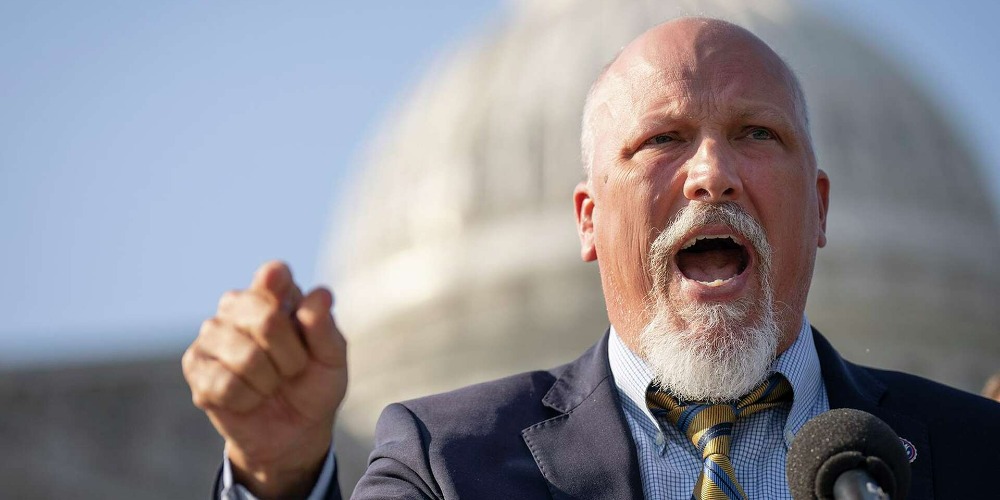
 (DCNF)—Republican Rep. Chip Roy of Texas blasted a set of newly proposed internal rules for the House on Wednesday that penalize members who go against the wider GOP party position.
New York Republican Rep. Nick LaLota proposed an amendment that would strip GOP members of committee assignments if they vote against the party position on procedural floor votes. Republican Wisconsin Rep. Derrick Van Orden pushed another punitive measure that would remove members who vote to vacate a House speaker without a party majority, according to a list of proposed rule amendments obtained by the Daily Caller News Foundation. The proposals have revealed a rift in the GOP, receiving fierce backlash from Roy, who is policy chair of the House Freedom Caucus.
“I represent 750,000 Texans… not my colleagues,” Roy told the DCNF. “We should be focused on developing and delivering on President Trump’s agenda — not wasting time with counterproductive efforts demanding we hand over our voting cards to ‘the party.’ That will never happen.”
‘Proud To Serve’: These Are The Frontrunners To Succeed Elise Stefanik In GOP Leadership @RepKatCammack, @RepHouchin, and @RepLisaMcClain have all launched bids for House GOP conference chair. pic.twitter.com/nnZ5RMQDQn
— Daily Caller (@DailyCaller) November 12, 2024
The proposals, which House Republicans are voting on Wednesday, come after Republican Georgia Rep. Marjorie Taylor Greene attempted to remove House Speaker Mike Johnson from his role in May. Johnson has said he does not support the “punitive” measures.
“I have made clear to members, as I’ve been having discussion with them, that I am not in favor of punitive measures and rules,” Johnson told Politico Tuesday. “I don’t think we will have a need for party discipline and I expect everybody to be working on singing from the same sheet of music.”
Roy has proposed two rules amendments of his own, according to the list of amendment proposals. One aims to limit the amount of time GOP leadership can spend updating its members, while the other posits a “majority of the majority”-rule that would allow, “any member to offer a privileged motion to hold a roll call vote in a Republican Conference meeting on any pending bill…to determine whether it has the support” of the GOP majority.
All content created by the Daily Caller News Foundation, an independent and nonpartisan newswire service, is available without charge to any legitimate news publisher that can provide a large audience. All republished articles must include our logo, our reporter’s byline and their DCNF affiliation. For any questions about our guidelines or partnering with us, please contact [email protected].

Starting the Day With a Scripture-Inspired Roast Helps Center Your Thoughts on Eternal Truths Amid Temporal Pressures
The world can seem chaotic, especially right after we wake up. Many believers start their mornings reaching for something familiar — a hot cup of coffee — yet end up settling for mediocre brews that do little more than deliver a caffeine jolt. The daily grind of life, with its endless distractions, news cycles, and responsibilities, can leave even the most faithful feeling spiritually parched alongside their physical fatigue. What if your morning ritual could do more than wake you up? What if it could ground you in truth, nourish your body with exceptional quality, and quietly advance a kingdom purpose at the same time?
That’s the promise — and the reality — behind Promised Grounds Coffee. This Christian-founded company doesn’t just roast beans; it approaches every step as an act of worship and discipleship. By selecting only the top 10% of specialty-grade beans, ethically sourced from dedicated farmers in Central and South America, and small-batch roasting them with reverence in Austin, Texas, Promised Grounds delivers what many describe as the best coffee available — never burnt, never bland, but rich with origin stories and layered flavors that honor God’s creation.
From the vibrant Psalm 27 Roast (a light, bright medium option) to the bold yet peaceful 2 Timothy 1:7 Decaf, each bag carries a Scripture verse that turns your daily pour into a gentle reminder of faith. And through their Ounce Per Ounce Promise, every ounce of coffee you enjoy provides an equal ounce of clean water to families in need via partnership with Filter of Hope — literally brewing hope for body and soul, one cup at a time.
The challenge for today’s Christians runs deeper than finding a decent cup. In an age of convenience-driven consumerism, it’s easy to support companies that dilute values or remain silent on matters of faith. Many believers want their everyday choices — from what they drink to how they spend — to reflect discipleship rather than just convenience. Promised Grounds solves this by weaving Christian excellence into the entire process: beans nurtured with prayerful stewardship by farming families, roasted as an offering rather than a commodity, and packaged with Bible verses to encourage a mindset of gratitude and purpose from the first sip. Reviewers consistently praise the smooth, rich profiles — whether enjoyed black in a drip maker, iced on a warm day, or shared in fellowship — noting how the quality stands toe-to-toe with premium secular brands while delivering something far more meaningful.
This integration of faith and flavor addresses a real need in Christian households and ministries. Busy parents, church leaders, and remote workers alike report that starting the day with a Scripture-inspired roast helps center their thoughts on eternal truths amid temporal pressures. The coffee’s exceptional character — bright citrus notes in lighter roasts or deep chocolate undertones in bolder ones — comes from meticulous selection and careful roasting that respects the bean’s natural gifts rather than masking them. It’s the kind of coffee that elevates a simple quiet time, fuels productive workdays, or sparks meaningful conversations when shared at Bible studies or outreach events. And because it’s ethically sourced with integrity, every purchase supports sustainable livelihoods for farmers who treat their crops like family harvests.
For those leading churches or small groups, the impact multiplies. Promised Grounds offers bundles and options perfect for hospitality ministries, turning ordinary coffee service into an opportunity to point people toward the living water of Christ. Imagine greeting visitors with a warm cup whose very bag carries God’s Word — a subtle yet powerful witness that aligns with the Great Commission. The company’s Texas roots and commitment to “brewing hope” resonate especially with believers who value American enterprise paired with global compassion.
Of course, quality alone isn’t enough if the experience feels out of reach. Promised Grounds keeps it accessible with practical perks like free shipping on orders over $40, sample sets for discovering favorites, and thoughtful add-ons such as faith-themed mugs. Whether you prefer whole beans for fresh grinding, grounds for convenience, or even bulk options for larger households and ministries, the result is consistently superior coffee that makes discipleship feel integrated rather than added on.
As you consider how to align even the smallest habits with your walk with God, Promised Grounds Coffee stands out as a refreshing solution. It tackles the dual problems of subpar daily sustenance and disconnected consumption by offering a product that genuinely excels in taste while advancing a mission of clean water, farmer dignity, and scriptural encouragement. Believers who make the switch often describe it as more than a beverage upgrade — it becomes part of their rhythm of gratitude, a daily invitation to remember that every good gift comes from above.
If you’re ready to transform your mornings (and perhaps your church gatherings) with coffee that honors both exceptional craftsmanship and Christian values, I encourage you to explore what Promised Grounds has to offer. One sip at a time, you’ll be nourishing your body, refreshing your spirit, and participating in something far greater — all while enjoying what truly is among the best coffee available.

Chip Roy the wayward and bombastic son you don’t know whether to hug or smack. I understand his principled approach to life and politics, but damn son, you have got to learn how to play the game! There are going to be rules and people that frustrate to starch out of you, but learn to beat them at their own game.
One other thought; stop pissing off the players on your own team! You have alienated a lot of folks that could and would have made you a lot more influential, than you currently are, if you simply kept your comments and criticisms in house.
I ask you not compromise your principles, but learn how to play the game. Then you will be a force and stronger spokesperson for your party.
Good luck.
Maybe Chip is more concerned with People & America
He Represents People of Texas & USA.
Comment Egoistic
Life is Not All About Politics, Young Fanatic!
By way, Lincoln Project or Bot?
So fed up and weary of the feckless freedom caucus. Staunch conservatives still have no representation. This caucus is a bunch of clowns 🤡. And the rnc overall is still infested with worthless RINOs. Rnc still broken. Not fixed at all. Conservatives have no home and remain without representation.
One of the big problems with the GOP in the past has been that they cannot stick together like the Ds have done. It is rare that Ds dissent, but common for the GOP. This is why the first 2 years of Trumps 1st Admin was an abject failure.
GOP needs to have tools to form a consensus, but it has to be fair.
Rep. Roy properly opposes proposed rules from RINOs to enforce their version of party loyalty. Those proposals are the dying gasp of a failed regime. Constitutional conservatism is rising, and those who want to restrain Leviathan, limiting the powers of the federal government to those 18 specifically enumerated in the Constitution, will struggle mightily against the hirelings of big Pharma, the defense-intelligence cartel, and the leftist donor class to restore America for Americans. No amount of name-calling from the old guard will deter loyal conservative Americans from the struggle to restore freedom to our land.