

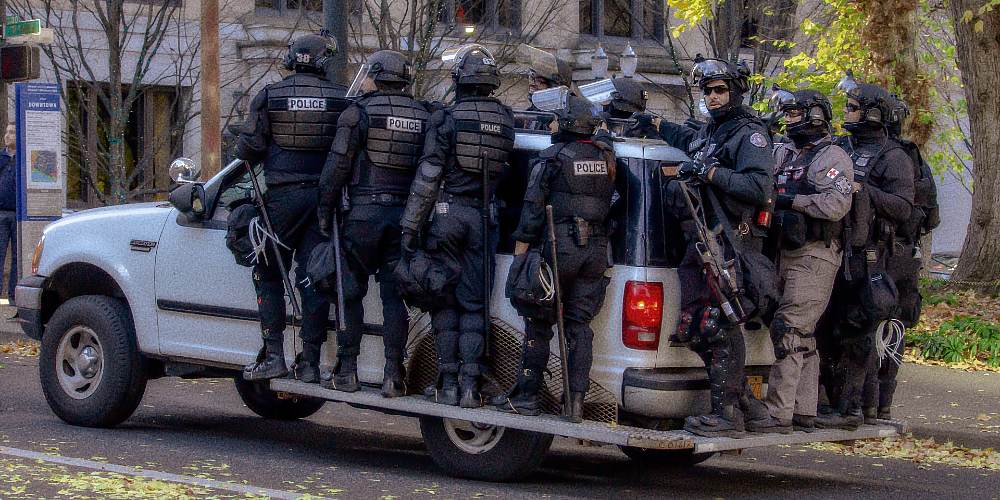
(Daily Signal)—Demographer, historian, and author Neil Howe hasn’t just coined the term “Millennial,” he’s also predicted the future to an eerie degree—and he thinks America’s in for very rough seas ahead. He says a civil war in the U.S. is far more plausible than most people think, and he dismisses the reasons Americans often discount that possibility.
In 1997, he published a book with Bill Strauss, “The Fourth Turning: An American Prophecy—What the Cycles of History Tell Us About America’s Next Rendezvous with Destiny.” In that book, he suggested five catalysts for a major crisis—and four of the five have already come to pass.
“One of our events was a crisis over the debt, which would issue forth in a new tea party movement,” Howe tells “The Daily Signal Podcast.” He calls it “just completely random that we happened to use that phrase,” which the tea party movement adopted in 2010.
“The other one was a WMD [weapon of mass destruction] attack on New York City,” Howe says, noting the eerie parallel with Sept. 11, 2001. “The other one was the [COVID-19] pandemic, and the fourth one was Russia invading a former Soviet republic,” such as Ukraine.
The final potential catalyst? “A nullification crisis, where one or more of the states would actually nullify federal regulation, which would lead to a new secession movement,” Howe says.
According to his generational theory, America should expect a major crisis about every 80-100 years, and we’re due for another “rendezvous with destiny” such as the Great Depression and World War II. He calls these periods “fourth turnings,” and they force society to create a new order in the civic “outer world” about 40 or 50 years after “awakenings” drive people inward, seeking order in their spiritual “inner worlds.”
Why a Civil War Is Likely
Howe notes that “our politics have taken on this kind of Manichaean style, where the red zone and blue zone are so mutually exclusive in their sense of themselves, their agenda for the nation’s future, that it hardly even matters who’s leading the party.” (“Manichaean” refers to the tendency to view one side as perfectly good and the other side as perfectly evil, and it traces back to a world religion that arose with the prophet Mani in the 200s A.D., which taught that the physical world is evil and the spiritual world is good.)
He cites Carl Becker, who wrote an essay in 1941, “The Dilemma of Modern Democracy.”
“When most of what you’re talking about is the width of sidewalks and the diameter of sewer pipes, just coordination issues, democracy works really well,” Howe says. “But when you’re talking about issues that virtually define who you are, it doesn’t work. He said no one is going to accede to a vote count that goes 51% against you.”
“You are not going to give up everything you believe in just because you came up three votes short,” he explains.
Howe says U.S. polarization reached similar levels in the 1770s, the 1850s, and the 1930s.
When The Daily Signal noted that American polarization doesn’t neatly fall along lines on a map like in the U.S. Civil War, Howe says the presence of blue cities in red states actually makes conflict more likely.
“One misconception people have is that civil wars require geographically separated places,” he notes. “This is not true, and take a look at the Spanish Civil War. That was a brutal, horrible war, and there was very little geographical contiguity about it. … It was like honeycombed. The civil war in China was the same way.”
Even in the U.S. Civil War, there were “civil wars within states,” especially in “border states.”

“And actually, your point about blue zone cities within red zone states or vice versa is a classic reason why civil wars get touched off, and why they are never resolved amicably,” Howe says.
Problems for World in U.S. Civil War
“There are two ways in which we enter this fourth turning very differently from earlier fourth turnings, which are worrying,” Howe says.
First, he notes, “government is so huge going into this fourth turning,” while most fourth turnings require government to ramp up in order to face existential threats.
Second, he notes “the size and global power of our military” make the U.S. a central player in world affairs, so a U.S. Civil War will have massive ramifications across the globe.
“If it requires our forces around the world to stand down for six months, the entire world will remake itself,” he says. “The entire world, for better or for worse, depends upon our presence to be what it is.”
Howe also notes that during a civil war, one side often asks for external help: “This is a rule through all civil wars.”

So, When Would Civil War Start?
The Daily Signal asked Howe why the “mini starter crises” of 9/11, the tea party movement, COVID-19, and the Ukraine war did not “catch fire” and ignite the massive existential crisis that defines a fourth turning.
“The survival of the country has to be at stake,” the author says.
“With regard to World War II, I think FDR made the case—it was very persuasive for the country—we did not want to be the only democracy left on earth,” he explains.
“This is the way incentives work,” Howe says. “You’ve got to feel everything’s on the line to push you to do something.”
Things have to come to a head in order to force people to come together and create a new order in society. How exactly that will happen is yet to be determined.
Starting the Day With a Scripture-Inspired Roast Helps Center Your Thoughts on Eternal Truths Amid Temporal Pressures
The world can seem chaotic, especially right after we wake up. Many believers start their mornings reaching for something familiar — a hot cup of coffee — yet end up settling for mediocre brews that do little more than deliver a caffeine jolt. The daily grind of life, with its endless distractions, news cycles, and responsibilities, can leave even the most faithful feeling spiritually parched alongside their physical fatigue. What if your morning ritual could do more than wake you up? What if it could ground you in truth, nourish your body with exceptional quality, and quietly advance a kingdom purpose at the same time?
That’s the promise — and the reality — behind Promised Grounds Coffee. This Christian-founded company doesn’t just roast beans; it approaches every step as an act of worship and discipleship. By selecting only the top 10% of specialty-grade beans, ethically sourced from dedicated farmers in Central and South America, and small-batch roasting them with reverence in Austin, Texas, Promised Grounds delivers what many describe as the best coffee available — never burnt, never bland, but rich with origin stories and layered flavors that honor God’s creation.
From the vibrant Psalm 27 Roast (a light, bright medium option) to the bold yet peaceful 2 Timothy 1:7 Decaf, each bag carries a Scripture verse that turns your daily pour into a gentle reminder of faith. And through their Ounce Per Ounce Promise, every ounce of coffee you enjoy provides an equal ounce of clean water to families in need via partnership with Filter of Hope — literally brewing hope for body and soul, one cup at a time.
The challenge for today’s Christians runs deeper than finding a decent cup. In an age of convenience-driven consumerism, it’s easy to support companies that dilute values or remain silent on matters of faith. Many believers want their everyday choices — from what they drink to how they spend — to reflect discipleship rather than just convenience. Promised Grounds solves this by weaving Christian excellence into the entire process: beans nurtured with prayerful stewardship by farming families, roasted as an offering rather than a commodity, and packaged with Bible verses to encourage a mindset of gratitude and purpose from the first sip. Reviewers consistently praise the smooth, rich profiles — whether enjoyed black in a drip maker, iced on a warm day, or shared in fellowship — noting how the quality stands toe-to-toe with premium secular brands while delivering something far more meaningful.
This integration of faith and flavor addresses a real need in Christian households and ministries. Busy parents, church leaders, and remote workers alike report that starting the day with a Scripture-inspired roast helps center their thoughts on eternal truths amid temporal pressures. The coffee’s exceptional character — bright citrus notes in lighter roasts or deep chocolate undertones in bolder ones — comes from meticulous selection and careful roasting that respects the bean’s natural gifts rather than masking them. It’s the kind of coffee that elevates a simple quiet time, fuels productive workdays, or sparks meaningful conversations when shared at Bible studies or outreach events. And because it’s ethically sourced with integrity, every purchase supports sustainable livelihoods for farmers who treat their crops like family harvests.
For those leading churches or small groups, the impact multiplies. Promised Grounds offers bundles and options perfect for hospitality ministries, turning ordinary coffee service into an opportunity to point people toward the living water of Christ. Imagine greeting visitors with a warm cup whose very bag carries God’s Word — a subtle yet powerful witness that aligns with the Great Commission. The company’s Texas roots and commitment to “brewing hope” resonate especially with believers who value American enterprise paired with global compassion.
Of course, quality alone isn’t enough if the experience feels out of reach. Promised Grounds keeps it accessible with practical perks like free shipping on orders over $40, sample sets for discovering favorites, and thoughtful add-ons such as faith-themed mugs. Whether you prefer whole beans for fresh grinding, grounds for convenience, or even bulk options for larger households and ministries, the result is consistently superior coffee that makes discipleship feel integrated rather than added on.
As you consider how to align even the smallest habits with your walk with God, Promised Grounds Coffee stands out as a refreshing solution. It tackles the dual problems of subpar daily sustenance and disconnected consumption by offering a product that genuinely excels in taste while advancing a mission of clean water, farmer dignity, and scriptural encouragement. Believers who make the switch often describe it as more than a beverage upgrade — it becomes part of their rhythm of gratitude, a daily invitation to remember that every good gift comes from above.
If you’re ready to transform your mornings (and perhaps your church gatherings) with coffee that honors both exceptional craftsmanship and Christian values, I encourage you to explore what Promised Grounds has to offer. One sip at a time, you’ll be nourishing your body, refreshing your spirit, and participating in something far greater — all while enjoying what truly is among the best coffee available.
