

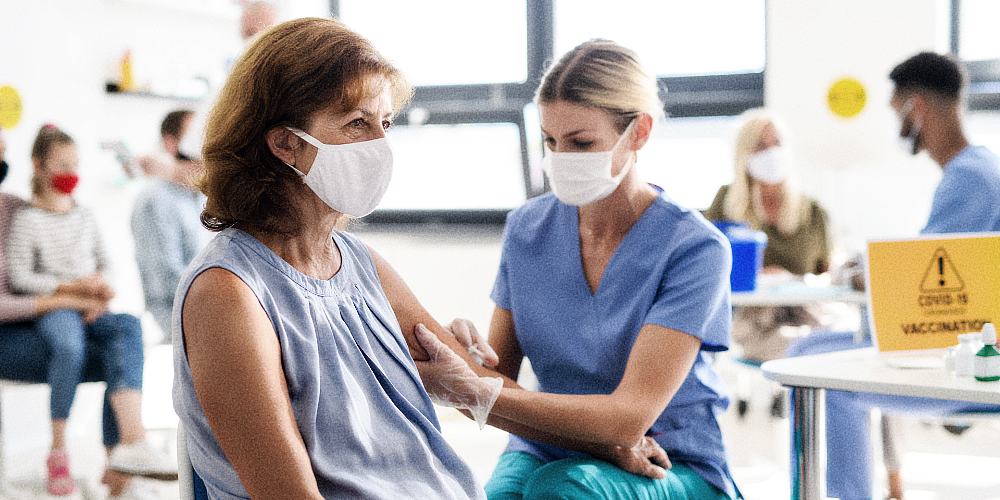
- Published research suggests that hospitalized patients who received the COVID jab die at a faster rate compared to unjabbed patients, even after adjusting for comorbidities
- The world is reaching a tipping point, so much so that mainstream media is now turning around its steadfast stance on vaccines. One media outlet ran a front-page story specifically questioning the COVID shots as the source for the excess deaths between 2020 and 2022
- The recent uptick in “turbo cancers” — cancers that grow at such an alarming pace that patients frequently die before a proper treatment plan was even executed — may be a side effect of the COVID jab
- Not getting the shot in the first place is the best way to avoid its adverse effects. For those who already been injured, certain protocols such as I-RECOVER from the Front Line COVID-19 Critical Care Alliance may help
(Mercola)—Three years since the first mRNA COVID-19 injections were released, the world is finally becoming aware of the dangers of getting them. Thanks to the committed efforts of many individuals fighting for the truth, it seems that — in the words of Dr. Meryl Nass — “the dam has broken.”1
The Effectiveness of the Jabs Is Put Into Question
In a study2 published in Frontiers in Immunology, researchers from the hospital of Ohio State University sought to find out if the COVID injections actually improved the outcomes of hospitalized COVID-19 patients. From March 2020 to November 2022, 152 adult patients were selected — 112 of them tested positive for COVID-19, while the rest didn’t. Furthermore, 23 of those who tested positive for COVID-19 were jabbed while the remaining 89 weren’t.
What they discovered was a startling difference between those who got the shots and those who didn’t. Mortality for the non-infected population was 36% and 27% among non-jabbed and injected groups respectively. But for the infected population, the non-jabbed subset had a mortality rate of 37% while the injected subset had a shocking 70% mortality rate.
Going deeper into the participants’ backgrounds, researchers investigated the possible influence of comorbidities using the Charlson Comorbidity Index (CCI), a widely used analytical tool to determine the survival rate of patients with multiple comorbidities.3 They discovered that the CCI score was significantly higher in jabbed versus unjabbed patients. The researchers noted:4
“Comorbidities and age are the known contributors to increased mortality among COVID-19 patients. Nonetheless, in our study, mortality remained significantly higher in the Vax patients even after adjustment for CCI, suggesting there are other risk factors in vaccinated patients.”
The researchers also investigated the antibodies between the two populations. Interestingly, they discovered that the unjabbed subset had significantly higher antibody titers compared to those who got the shots. This discovery suggests the possible role of natural immunity in the protection against severe COVID-19.
Furthermore, the researchers suggest that getting the shot can lead to immune tolerance — a process that makes your immune system less likely to respond to antigens, such as SARS-CoV-2.5
Mainstream Media Now Reporting Shots Contributed to Excess Deaths
The alarming rise in excess mortality cannot be ignored anymore. It’s reached a tipping point, so much so that mainstream media is even covering this topic. On June 5, 2024, The Telegraph published a front-page headline that doesn’t mince words — “COVID Vaccines May Have Helped Fuel Rise in Excess Deaths.”6
The article discusses a study published in BMJ Public Health on June 3, 2024, which looked at the excess mortality rates across 47 countries in the Western world from 2020 to 2022. To contextualize the findings, here’s the definition of excess mortality, according to the researchers:7
“Excess mortality is assessed as the deviation between the reported number of deaths in a country during a certain week or month in 2020 until 2022 and the expected or projected number of deaths in a country for that period under normal conditions.”
The researchers analyzed the records found in the “Our World in Data.” It’s an open-access database, which includes reports from the World Mortality Dataset and the Human Mortality Database.8 According to their findings, 87% of the countries included in the study reported a total excess mortality rate of 1,033,122 deaths during 2020.9
In 2021, that figure jumped to 1,256,942 excess deaths. This is an eye-opener, since this was the year in which lockdowns were implemented and the newly released mRNA shots were promoted to ostensibly contain the spread of the pandemic. As you can see, the number of excess deaths is staggering — yet this is not the only study that highlighted this issue.10
In another study, this time published in BMC Public Health, Norwegian researchers noted that there was an increase of excess mortality in Norway during 2020 to 2022. While it’s easy to assume that COVID-19 was the top culprit, it wasn’t:11
“There was considerable excess non-COVID-19 mortality in Norway from March 2020 until December 2022, mainly due to excess cardiovascular deaths. For respiratory diseases and dementia, mortality was lower than predicted.”
Were the COVID shots responsible for this increase in excess mortality? While the researchers didn’t specify this as the reason, this line of thought was suggested. According to their findings, “There is a temporal concordance between increasing vaccine coverage and increasing excess mortality.”
New COVID Shots Are Still Approved Despite Condemning Evidence
In a report by SOMO, vaccine manufacturers such as Pfizer, BioNTech, Moderna and Sinovac collectively made a staggering $90 billion in profit, and that’s just between 2021 and 2022. How much more will they make as more COVID-19 variants emerge? Clearly, the answer is “never enough,” as the gravy train is too profitable.
In a report12 by The Defender, the JN.1 variant is the most dominant strain in 2024, and the U.S. Food and Drug Administration’s (FDA) vaccine advisory committee unanimously voted to include it in the vaccine composition for 2024 to 2025. The updated “vaccine” will also target subvariants KP.2 and KP.3.13 Unsurprisingly, when the vote was announced, shares of Novavax, a biotechnology company that manufactures vaccines, increased by 11%.14

Why is Big Pharma still pushing to manufacture these shots despite the glaring evidence of harm? The only answer that makes sense is the desire for profit — even at the cost of human lives. According to cancer researcher Dr. William Makis, the science isn’t at the center anymore:15
“Unfortunately, the entire LNP/mRNA Vaccine field is a fraud. It’s a failed technology with an unacceptably terrible side effect profile. The entire field now depends on the suppression of COVID-19 mRNA Vaccine injuries and deaths, which are now in the millions (5.3 million in WHO VigiAccess alone), so we are no longer dealing with scientists but con artists …
They are trying to find ‘novel’ ways to market a failed technology platform and sneak failed vaccine products onto the market. The Moderna HIV mRNA Vaccine is such a product … And yes, they are moving forward, despite 20% of HIV mRNA Vaccine Victims developing skin rashes in Phase I trials. Moderna will repeat the Phase I trials with a slightly lower dose. The poisonings will continue until vaccine injuries improve.”
The COVID-19 Jabs Leave ‘Turbo Cancers’ in Their Wake
Based on mounting evidence, it seems that the recent uptick in “turbo cancers”16 may be a side effect of getting the jab. For those unfamiliar, oncologists coined this term to describe cancers that grow at such an alarming pace that patients frequently die before a proper treatment plan can even be executed.
In one example,17 described by board-certified internist and cardiologist Dr. Peter McCullough, a 56-year-old man developed basaloid carcinoma shortly after he received an mRNA COVID-19 shot. The patient experienced symptoms just four days after getting the jab, noting similarities to Bell’s palsy and head pain. Shortly thereafter, a tumor developed on his face.
According to Dr. Makis,18 that kind of aggressiveness typically takes a few months to a couple of years. But in this case, it took only four days. The study notes:19
“We place this within the context of multiple immune impairments potentially related to the mRNA injections that would be expected to potentiate more aggressive presentation and progression of cancer.
The type of malignancy we describe suggests a population risk for occurrence of a large variety of relatively common basaloid phenotype cancer cells, which may have the potential for metastatic disease.”
In another report, published in Frontiers in Medicine, researchers found a rapid progression of angioimmunoblastic T-cell lymphoma (AITL) — a rare type of non-Hodgkin lymphoma (NHL) — after receiving a COVID-19 booster shot. AITL is a cancer affecting the lymph system, primarily involving T-cells, a type of white blood cell that plays a crucial role in the immune system:20
“Such a rapid evolution would be highly unexpected in the natural course in the disease. Since mRNA vaccination is known to induce enlargement and hypermetabolic activity of draining lymph nodes, it is reasonable to postulate that it was the trigger of the changes observed.
Indeed, the increase in size and metabolic activity was higher in axillary lymph nodes draining the site of vaccine injection as compared to their contralateral counterparts. However, pre-existing lymphomatous nodes were also clearly enhanced as compared to the first test. Moreover, new hypermetabolic lesions most likely of lymphomatous nature clearly appeared at distance of the injection site.”
How Turbo Cancers Can Possibly Develop
In a Highwire interview21 with Del Bigtree, Dr. Makis describes several possible mechanisms that can lead to cancer in susceptible individuals. The primary one is the modification of the mRNA used. The COVID shots actually don’t have the identical mRNA found in the SARS-CoV-2 virus.

Instead, the mRNA has been manipulated through “codon optimization,” a process where a genetic code is inserted into the spike protein, creating a rigid “skeleton.”22 The reason codon optimization was used is because it’s required for clinical trials and subsequent mass manufacturing. However, there’s a downside to this, as noted by researchers:23
“Unfortunately, some of the potential problems associated with codon optimization, which can affect protein function and increase immunogenicity, may not be seen until the drug is in late-stage clinical trials, or after the drug is on the market.”
Vaccine manufacturers bypassed this problem by making substitutions in the genetic instructions. Certain nucleotides (three nucleotides make up a codon) are swapped out, but still end up with the same protein. However, the enhanced efficiency comes at a price, which millions of people have already paid.
Injured by the Jab? These Resources Can Help
The best way to avoid exposing yourself to COVID jab-related injuries is by refusing the shot in the first place. But if you or a loved one already got it, what can you do?
The first step I recommend you take is seeking out expert advice. You can start by contacting the Front Line COVID-19 Critical Care Alliance (FLCCC). I believe that this organization has one of the best treatment protocols for those who were injured by the shot. The protocol’s name is I-RECOVER, which can be downloaded from covid19criticalcare.com.
The World Health Council has also published a database of remedies that can help inhibit and eliminate spike proteins, which most experts agree is the primary culprit of the injuries. I summarize the recommendations in my article, “World Council for Health Reveals Spike Protein Detox.”
- 1 Meryl’s COVID Newsletter, June 4, 2024
- 2 Frontiers in Immunology, Abstract
- 3 Medscape, Charlson Comorbidity Index Score (CCI Score)
- 4 Frontiers in Immunology, Results
- 5 The Defender, June 4, 2024
- 6 The Telegraph, June 5, 2024
- 7 BMJ Public Health 2024;2:e000282, Study Design
- 8 Our World in Data, Excess mortality during the Coronavirus pandemic, How is excess mortality measured?
- 9, 10 BMJ Public Health 2024;2:e000282, Excess Mortality
- 11 BMC Public Health 24, 244 (2024), Abstract
- 12, 13 The Defender, June 5, 2024
- 14 Reuters, June 3, 2024
- 15 X, William Makis MD March 18, 2024
- 16 Makis MD Substack June 16, 2023
- 17, 19 EXCLI Journal 2023;22:992-1011, Abstract
- 18, 21 The HighWire With Del Bigtree, Is the COVID Vaccine Causing Turbo Cancers?
- 20 Front Med (Lausanne). 2021; 8: 798095, Discussion
- 22 Ehden Substack August 20, 2021
- 23 BioDrugs, 2018, Volume 32, 69-81, Summary and Conclusions

Two Storms, One Harvest

Every food crisis in living memory has been a one-shock event. The 2008 price spike was a commodity bubble. The 2020 shortages were a logistics failure. The 2022 grain scare was a war on one exporter’s ports. Each time, the system bent, adjusted, and recovered, and each time the experts assured us afterward that global markets are simply too big and too diversified to fail.
What nobody in Washington seems eager to discuss is that 2026 is shaping up to be something the modern food system has never actually faced. Two independent shocks, one climatic and one geopolitical, are converging on the same harvest cycle at the same time. Not sequentially. Simultaneously.
Start with the weather. The Pacific Ocean is currently building toward what forecasters now openly call a record event. NOAA’s Climate Prediction Center puts the odds of at least a strong El Niño near 88 percent, with roughly two in three odds it reaches “very strong” status, the tier reserved for perhaps three or four events in the entire satellite era. Every major global model now projects a median peak in Super El Niño territory, and most of them project it exceeding the 2015-16 event, which until now held the modern record. Sea surface anomalies were already brushing the super threshold in mid-July, months before these events normally peak. The atmosphere has already shifted into El Niño mode, and the event is forecast to crest in late fall and early winter.
This is not about “climate change.” It’s about the standard cycles of weather, and the cycle we’re currently in is one that has likely devastated societies in the past. We’re better prepared as a society today, but not all Americans are equally prepared.
Serious households have started doing the quiet math on their own. Grocery bills tell part of the story, and the forecast maps tell the rest, which is why long-term food storage has moved from fringe hobby to mainstream line item in the family budget, with established suppliers like Heaven’s Harvest seeing demand from people who five years ago would have rolled their eyes at the idea. That instinct is not paranoia. It is pattern recognition, and the pattern is worth walking through carefully.
Editor’s Note: Heaven’s Harvest IS a sponsor, but the warnings of this article are real and would be written even if we didn’t have a survival food sponsor. With that said, those who take advantage of what they offer can use promo code “Patriot” for 15% off.
The Fertilizer Clock Is Already Running
While the Pacific warms, the second shock has been unfolding in the Strait of Hormuz. The conflict with Iran turned the world’s most important energy chokepoint into a contested waterway, and the consequences reach far beyond the gas pump. Roughly a third of global fertilizer trade moves through Hormuz, and the disruption sent urea prices up 86 percent year over year by March, with a 53 percent jump in a single month.
The World Bank projects energy prices rising about 24 percent in 2026 and fertilizer about 31 percent. By its own accounting, fertilizer prices ran 35 percent higher in the first five months of this year than the same period last year.
Here is the mechanism the nightly news will not explain. Fertilizer is not a grocery item. It is a time-delayed input. The nitrogen a farmer in Iowa or Punjab could not afford to apply this spring does not show up as a problem this spring. It shows up as a thinner harvest six to twelve months later.
The World Bank’s own food security brief concedes that the effects of reduced applications earlier this season “are likely to become visible only later in harvest outcomes.” Translate that from institutional language into plain English and it means this. The damage is already done, it is already in the ground, and we are simply waiting for it to arrive on the shelf.
Now check the calendar. Six to twelve months from the spring planting season lands us squarely in late 2026 and early 2027. Which is precisely when the strongest El Niño in the instrumental record is forecast to peak, bringing its signature droughts to Southeast Asia, Australia, southern Africa, northern Brazil, and South Asia, the very regions that grow the world’s rice, sugar, and oilseeds.
The World Bank warns openly that a strong El Niño “could disrupt multiple crop belts simultaneously” on top of the conflict-driven input costs. Their baseline projection assumes the Middle East disruptions ease by autumn. What in the last two years of Middle East history suggests that assumption is safe?
The System Has No Slack Left
The comfortable answer is that global markets always adjust. But adjustment requires slack, and the slack is gone. Global cereal production is expected to decline from last year’s records even before El Niño does its work. The UN World Food Programme, hardly a den of right-wing preppers, is calling this the most significant disruption to its supply chains since Covid and the invasion of Ukraine, and its supply chain director put the stakes bluntly.
Today’s supply chain challenges are tomorrow’s hunger crisis.
There is also a political dimension that markets cannot price. When food gets scarce, governments do not behave like economists. They behave like politicians. Export bans, hoarding mandates, and panic buying at the national level turned the modest rice shortfall of 2008 into a global crisis, and analysts are already warning that import-dependent nations are the first dominoes.
The 2015-16 Super El Niño, a far weaker event than what is now forecast, threw tens of millions into food stress across Africa and Asia. This one is projected to be stronger, and it arrives with fertilizer already rationed by price and shipping lanes already contested by missiles.
What Joseph Knew
Scripture does not treat preparation for lean years as faithlessness. It treats it as wisdom delivered in advance to those willing to act on it.
Behold, there come seven years of great plenty throughout all the land of Egypt: And there shall arise after them seven years of famine; and all the plenty shall be forgotten in the land of Egypt.
Joseph did not respond to that warning with a hashtag or a committee. He stored grain during the years of abundance, and when the famine came, Egypt stood while its neighbors begged. The lesson is not that famine is certain. It is that the time to prepare is precisely when preparation still looks optional.
Nobody who filled a pantry in a year of plenty has ever regretted it, and nobody standing in an empty aisle has ever been glad he waited for certainty.
None of this calls for panic, and panic is the enemy of sound judgment anyway. It calls for the same unglamorous prudence our grandparents considered ordinary. Keep some cash margin, know your local growers, and put real food in deep storage while it is cheap and available, because the entire arc of this story is that cheap and available is a closing window.
Families looking for a straightforward place to start can visit Heaven’s Harvest and use promo code Patriot for 15 percent off long-term storable food. The forecasts may yet soften, the strait may yet reopen, and we should pray they do. But hope is a fine thing to hold and a foolish thing to eat.
