

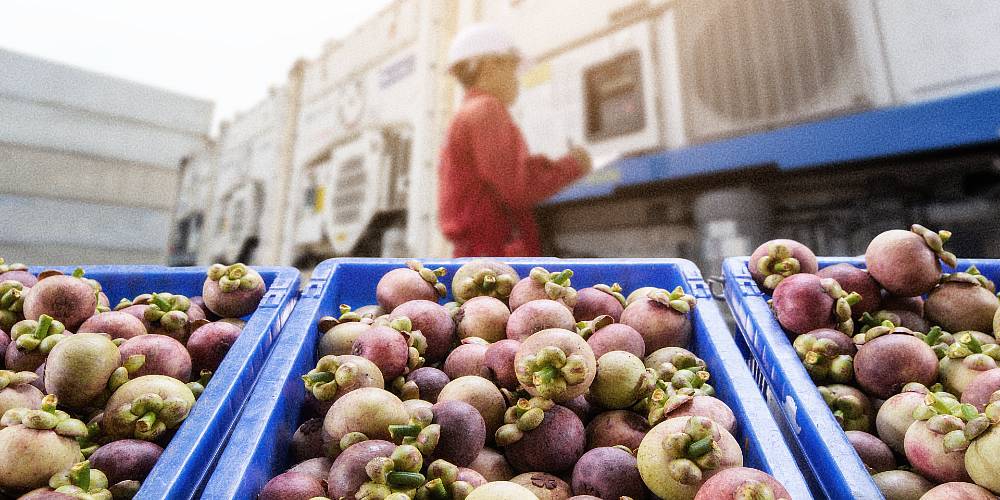
- U.S. organic farmers are being undercut by low-priced organic imports, particularly from developing countries, where grower/producer groups are not subjected to annual inspections with USDA permission
- The USDA’s allowance of grower/producer groups in developing countries has led to commercial-scale farms escaping proper oversight, with only about 2% being inspected annually
- U.S. organic turmeric and hazelnut farmers are struggling to compete with imports that may not meet organic standards but are sold at lower prices
- Legal complaints and lawsuits have been filed against the USDA, challenging the legality of grower group certifications and demanding stricter enforcement of organic standards
- Fraud in the organic industry is a significant concern, with recent high-profile cases involving millions of dollars’ worth of conventionally grown produce being sold as organic
(Mercola)—U.S. organic farmers are being driven out of business by low-priced organic imports of hazelnuts, turmeric and other products, which may not be grown to the organic standards you’d expect. The Organic Foods Production Act (OFPA) of 1990 is a U.S. federal law that was enacted to establish national standards for the production and handling of organic foods.
The act requires that agricultural products labeled as organic be overseen by an independent third party that’s supervised by the U.S. Department of Agriculture (USDA). The process comes with additional costs and requirements for U.S. organic farmers, which should theoretically be offset by the higher prices commanded for organic foods.
However, uninspected organic imports are flooding the U.S. market from grower/producer groups in developing countries, which are not being subjected to annual inspections — with the USDA’s permission.
“The bottom line: Food is being imported at under the cost of production, forcing U.S. growers — who are complying with the law — out of business,” reported OrganicEye,1 which is “dedicated to protecting family-scale farmers and preserving the availability of authentic organic food”2 in the U.S.
USDA Protects Agribusiness Lobbyists at the Expense of US Organic Farmers
In certain developing countries, the USDA has allowed the formation of grower/producer groups. These groups are often used for crops like coffee, nuts, chocolate, tea and herbs, and while they started out as a way to help small farmers or indigenous groups in developing countries, the loophole is now putting U.S. organic farmers and organic standards at risk. According to OrganicEye:3
“Although there is no legal provision for the exemption, decades ago certifiers started allowing cooperatives, small villages, or groups of indigenous peoples, producing high-value, specialty crops, like coffee, chocolate, or spices, to be grouped together in ‘peer-supervised’ producer groups.
It was assumed that the small landholders would not be able to afford individual certification and inspections and the exception would both help them access world markets, improving their economic standing, and provide authentic organic food to more affluent Western countries.”
The global organic industry, however, is now a $205.9 billion industry, projected to reach a worth of $532.72 billion by 2032,4 and the grower groups have morphed to include commercial-scale farms that are escaping USDA oversight. Organic Insider reported:5
“As the organic industry surged in popularity and became a multibillion-dollar industry, grower groups were believed to be manipulated by agribusiness entities and compliant certifiers worldwide, according to industry watchdogs, which resulted in their circumventing the rules and avoiding direct USDA oversight.
The narrative was that agribusinesses created agreements with for-profit accredited certifiers so that they, instead of the certifier itself, would inspect the members of the agribusiness’ own supplier base.
… not only were these agribusiness entities doing the organic certification not recognized by the USDA as an approved organic certifier, but there was no restriction on how many participants were in these grower groups, how large individual farms could be or the limit of geographical range. Furthermore, these agribusiness entities didn’t even need to be farmers themselves.”
Only about 2% of the farmers involved in these grower/producer groups are being inspected annually, which means the vast majority — 98% — are not being inspected as frequently, if at all.
“Although almost universally complied with in domestic production, that system has completely broken down for imports,” Mark Kastel, OrganicEye’s executive director, said in a news release. “A large percentage of all foreign imports, making up a sizable amount of the organic food Americans eat, are coming from ‘producer groups,’ whose grower-members the USDA has exempted from the requirements to be certified.”6
US Organic Turmeric, Hazelnut Farmers Suffering
OrganicEye interviewed Brian and Valerie Quant, certified organic turmeric farmers who say they’ve been pushed out of the wholesale market by lower priced organic imports. “What grinds my gears is that we, as U.S. farmers and carrying GAP [Good Agricultural Practices] and organic certification, are held to a much higher standard and have annual inspections, associated fees, and extensive required bookkeeping responsibilities,” Brian Quant said.7
He added, “I’m not sure it’s really all that great a deal for them [the small foreign farmers] as they are sort of ‘bound’ to the corporate entity whose umbrella they are certified under.”8 The USDA Organic Integrity Database is an online resource meant to provide comprehensive information about certified organic operations and help ensure transparency and trust in the organic certification process.
But when OrganicEye investigated public records on organic turmeric production in Fiji, it found significant differences between the USDA’s Integrity Database and information from Fiji’s major exporters. They’ve since filed a legal compliant, asking the USDA to investigate and take any necessary enforcement action against alleged violations of National Organic Program (NOP) requirements.9
OrganicEye farmer and attorney Bruce Kaser explains, “In general, it’s a compelling imbalance when you take into account that ‘organic’ is supposed to be produced by farms, yet hardly any certified turmeric farmers exist in the USDA ‘Integrity Database,’ while scads of certified handlers are apparently operating. It’s a huge, inverted pyramid that suggests a totally out-of-whack system.”10
The complaint mentions certification by Ecocert, a certifier based in France. According to OrganicEye, “Some international certifiers, such as France-based Ecocert (an organization that has been in trouble with the USDA and international bodies over the years), certify over 600 groups alone, likely representing many thousands of individual farmers and agribusinesses.”11
Hazelnut growers have been similarly affected. An investigation revealed the USDA’s Organic Integrity Database lists no certified organic hazelnut growers in Turkey. Yet, the country is the leading importer of organic hazelnuts into the U.S., at prices close to conventionally grown hazelnuts. Kaser filed a legal compliant with the USDA, then a lawsuit against the agency after it failed to take action.

“The basis of the lawsuit,” according to Organic Insider, “is that according to OFPA, all organic farms must be certified annually by a qualified and approved organic certifier. As such, the plaintiff is asking the District Court to declare grower group certifications illegal and direct the USDA federal officer in charge of the USDA’s National Organic Program, currently Dr. Jennifer Tucker, to instruct certifiers to cease grower group certifications immediately.”12
‘Agribusiness Puppetmasters’ Are Leading Organic Import Inspections
Kastel describes the group certifications allowed by the USDA as a scheme that’s turned into a racket, “with agribusiness puppet masters in charge of inspections.”13 As a result, producers of organic imports are not being held to the same rigorous standards as U.S. farmers, and the system, instead of helping indigenous communities, is supporting agribusiness.
In fact, among the 2 in 100 growers that would be inspected, one of them could actually be a ringmaster agribusiness with a faux grower front. OrganicEye reported:
“‘The documented conflict of interest, and the potential for fraud, in this USDA-sanctioned ‘shadow’ inspection/certification program — which is fully supported by the Organic Trade Association, the dominant industry lobby group — is palpable,’ said Kastel.
Even under newly enhanced regulations adopted after repeated incidents of major fraud, commonly known as the Strengthening Organic Enforcement rule, the USDA solely delegates the authority to for-profit certifiers working overseas to design their own group administrative systems and internal controls to prevent fraud by their customers.
Kastel added, ‘We’re trusting the certifiers, whose primary motivator is profit, to oversee their agribusiness ‘clients,’ who in turn are responsible for overseeing all their own suppliers (i.e., the group members).’”
Fraud Is Rampant Even Among US Organics
The USDA’s Strengthening Organic Enforcement rule is intended to enhance the integrity and transparency of the organic supply chain, via expanded certification requirements, enhanced supply chain traceability, increased oversight and inspections and fraud prevention procedures.
The rule follows decades of problems with USDA oversight of organics and rampant fraud in the industry, including several recent high-profile cases. One major fraud case among U.S. organics involved the late Missouri grain broker Randy Constant, who sold tens of millions of dollars’ worth of conventionally grown grain as organic between 2010 and 2017.14
“Prosecutors said Constant used the proceeds of his fraud to travel more than 20 times to Las Vegas, where he stayed in luxury hotels, hired escorts and gambled. He died by suicide in 2019 after being sentenced to 11 years in prison,” according to the SC Times.15

In another case in 2021, a grain broker in South Dakota, Kent Duane Anderson, made about $71 million by selling conventionally grown grain as organic. And in 2023, James Wolf, a corn, soybean and wheat farmer in Minnesota, was also indicted for selling “organic” grains that weren’t really organic — and making $46 million in profits in the process.16
Critics have expressed doubt that even with the new rule the USDA will be able to effectively prevent fraud in the organic food sector. Food lawyer Baylen Linnekin suggested a better option is to return oversight to organic industry groups and the states.17 OrganicEye also suggests seeking out U.S.-grown organic products and contacting your congressional representatives to protect the authenticity of the organic food supply.
Take Action to Protect Organic Farmers and US Organics
After OrganicEye backed a federal lawsuit demanding that the USDA discontinue their practice of allowing foreign agribusinesses to inspect their own suppliers (a profound conflict of interest), the industry’s corporate lobby group, the Organic Trade Association (OTA), suggested that, if the USDA loses the lawsuit, they will simply go to Congress and lobby to change the law to legalize “group certification.”
Don’t let that happen! Federal law currently requires every organic farm to be certified and inspected annually by independent, accredited, third-party certifiers — not foreign corporations with a financial interest.
Please invest two minutes of your time in sending a personal message directly to your congressperson and two U.S. senators, asking them to respect the spirit and letter of the law protecting organic farmers, ethical businesses, and consumers. To leverage your voice even further, please forward and/or share this action alert with your friends, family and business associates on social media.
- 1, 3, 6, 7, 8, 10, 11 OrganicEye June 18, 2024
- 2 OrganicEye, About
- 4 Globe Newswire April 30, 2024
- 5, 12 Organic Insider November 8, 2023
- 9 OrganicEye June 17, 2024
- 13 OrganicEye October 17, 2023
- 14 The New Yorker November 15, 2021
- 15, 16 SC Times January 26, 2023
- 17 Reason February 4, 2023


Sounds like it would be cheaper and wiser to encourage ALL AMERICANS TO HAVE A VICTORY GARDEN. Stop planting ornamental plants in your yard. If you can’t eat it, don’t waste your time with it. Food Forrest. Earth Ships. Make American Gardens Great Again.
I,m an organic dairy farmer, when Obama was installed our management and others hailed “the age of enforcement” nothing happened, then Trump and the wailing about how we were doomed. now Biden and no enforcement. The only one who shut off any fraudulent grain was the Trump adminstation! He believes in rules and obeying them, funny that
Because we don’t have enough crops. Weather damage, pest damage, diseases, are all excuses for not growing crops, and when we do grow crops, our best harvests get exported overseas to countries that are willing to pay higher prices for those crops than we are. In Southern California, tract housing replaced farmland. When is the last time you’ve had an orange juice from Florida or California? That’s right. Thirty years ago. Orange orchards in the U.S. are practically non-existent while Mexico and Brazil are filling the gap. Yes, they have the same weather and crop disease problems that we have, yet they endure. We can’t even grow our own non-organic food let alone organic food because our once great agriculture-based nation has been replaced by a service industry nation and consumer nation.
You want U.S. based organic eggs? $9.99/doz. U.S. based organic loaf of bread? $6.99/loaf. Then you wonder why our domestic organic industry is struggling.
And enough with the “grow your own.” The majority of us do not have the time or the acreage for that, and a tiny box garden isn’t sufficient to sustain for human life.