

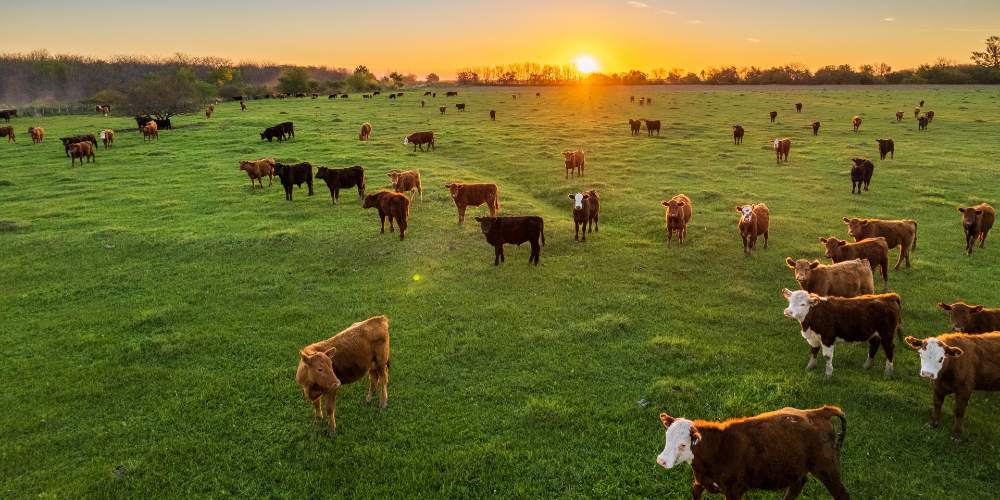
American’s Will Lose the Choice to Buy Local Meats
(Dr. Malone’s Substack)—On January 23, 2024, under Biden Administration guidance, the Environmental Protection Agency (EPA) proposed a new rule that will bring 3,879 meat and poultry products (MPP) processing facilities under their jurisdiction. This was swiftly followed by an abbreviated comment period which closed on March 25, 2024, and then immediate implementation of the rule change. All justified by wastewater levels of Nitrogen and Phosphorus coming from animal meat processing, mirroring the WEF agenda to minimize Nitrogen runoff from European farms which has sparked the widespread farmer protests throughout the European Union.
The new rule involves a major shift in the technology-based effluent limitations guidelines and standards (ELGs) for the meat and poultry industry, threatening their livelihoods by forcing them to add water filtration systems to their facilities.
What does this mean to small meat processing facilities? It’s been reported that the initial cost to install a water filtration system bringing them into compliance be $300,000-400,000 with a minimum of $100,000 annual maintenance. This would force many small meat processing facilities to shutter their doors.
It is also a direct attack on the buy local foods movement. If local meat producers no longer have a nearby facility to process the meat, they will no longer be able to provide their product direct to the customer at food markets or online.
The EPA initially promulgated the MPP ELGs in 1974 and amended them in 2004. Currently, they only apply to approximately 150 of the 5,055 MPP facilities in the industry. But, in the EPA’s Benefit Cost Analysis, they state that “EPA estimates the regulatory options potentially affect 3,879 MPP facilities.”
Accordingly, the history of EPA’s regulation of MPP effluent guidelines and standards has never extended beyond direct discharge facilities and this rule significantly expands their regulatory overreach.
The Kansas Natural Resource Coalition (KNRC) filed comments opposing the proposed rule and was joined by other county coalitions and American Stewards of Liberty. KNRC, an organization of 30 Kansas counties, states these proposed rules will “regulate indirect discharge facilities” that “departs from constitutional and statutory authority” significantly altering the balance between state and federal powers.
They also state that the proposal “gives priority to environmental justice goals and emphasizes ecological benefits, but the EPA jurisdiction under the Clean Water Act is not based on ecological importance or environmental justice.”
Demonstrating that the “comment period” was mere window dressing to meet formal federal comment requirements, immediately on March 25, 2024 the EPA jammed through a finalized version of its devastating new interpretation of the Clean Water Act, which it has titled “Effluent Limitations Guidelines and Standards for the Meat and Poultry Products Point Source Category.” Clearly this is another case of aggressive, arbitrary and capricious EPA regulatory overreach, directly analogous to the recent Supreme Court case West Virginia v. Environmental Protection Agency, 597 U.S. 697 (2022), a landmark decision of the U.S. Supreme Court relating to the Clean Air Act, and the extent to which the Environmental Protection Agency (EPA) can regulate carbon dioxide emissions related to climate change.
According to the EPA, after months of study and testing to look for bacteria, viruses etc, what they actually found in the wastewater of processing facilities was Nitrogen and Phosphorus. Two of the fundamental elements which all living things are composed of (Carbon, Hydrogen, Nitrogen, Oxygen, Phosphorus).
As a result, The EPA has decided that the entire meat industry – from slaughtering beef to poultry, marinas to packaging – must now retrofit current facilities with lagoons and biomass dissipates to turn “nutrients” into C02 and methane in order to prevent these “pollutants” from entering local water supplies.
The EPA anticipates these new rules will, at least, result in the closure of 16 processing facilities across the country at a time when our country’s meat producers are already struggling to survive due to bottlenecks in USDA certified facilities. However, on the high side EPA estimates include an impact range of up to 845 processing facilities.
The EPA acknowledges (via the Federal Register) that this rule change will have far-reaching impacts up and down the supply chain from consumer prices to producer losses.
A press release was just put out by a consortium of protein producers who have said this will cost “millions more than the EPA’s highest estimates and result in the loss of tens of thousands of jobs.”

It gets worse;
Facilities can bypass these new regulations by drastically reducing their weekly/annual pounds processed. However, the US population continues to grow (largely due to immigration) at a rate that we’re currently incapable of feeding with record low volumes of meet production. Reducing pounds processed will have sizable impacts upon food security, as will further closures, and supply chain disruptions. These issues have now risen to the point of being a national security threat.
Problems in the rule change;
– The rule change fails to provide clarity or funding to local water treatment facilities for testing or range of acceptable levels of runoff, and in my opinion over-steps federal authority (WOTUS jurisdiction) by dictating local water rights. Especially as the EPA acknowledges most water used in processing is from a well source, or privately owned water source.
– The rules fail to account for foreign inputs, and actually incentivize domestic closures, prioritizing imported meat products in a manner conducive to the monopolistic multinational conglomerate beef producers who are not US based. This, at a time when the US has gradually become a net importer yet facing critical infrastructure collapses, such as Key Bridge.
– The rules specify 17 species of endangered animals that may become affected by the salt residues (a byproduct of the process they want used to turn biomass into gas), as these salts flow “downstream” from processing facilities. This is bogus language to attempt to establish jurisdictional standing, as the rules do not differentiate between facilities that are near navigable waters vs facilities that have private water rights.

However, for those who do comply, as opposed to reducing production, they’ll be left open and vulnerable to future lawsuits from environmental activists over endangered species. These lawsuits have historically become costly, with states eventually caving to the demands made, as evidenced by the Oregon Dept of Forestry v Cascadia in filing after filing – Spotted Owl to CoHo Salmon – resulting in the drastic reduction of privately owned timber lands and logging contracts.
– The rules currently allow for the off-gassing of the biomass as it becomes C02 and methane, but say nothing about future carbon taxes, or financial burdens that may be incurred due to the additional carbon outputs via the new carbon credit/taxes the Biden Administration created via the Commodities Credit Corporation. Oregon, California and Washington have already instituted state versions of Cap and Trade legislation e.g. requiring companies to purchase these carbon credits in order to remain in business.
Aside from the massive overreach in relation to non-navigable waters of the US, typically locally regulated, or an authority reserved to the states to regulate, these new rule changes have the potential to negatively impact our food supply for years to come.
Congressmen Estes and Burlison have proposed H.R 7079, the “BEEF ACT” (formally known as H.R.7079 – Banning EPA’s Encroachment on Facilities Act), as a means of prohibiting the EPA from using its deferential authority (Chevron doctrine) to interpret the Clean Water Act. However, this legislation currently has a 1% chance of being enacted, and only a 4% chance of passing out of the House Committee on Transportation.
In parallel to direct legislative action, there is clearly a need to mount a legal challenge to this action, one which can build upon the precedent established by West Virginia v. Environmental Protection Agency, which should benefit from the anticipated Supreme Court action to overturn the Chevron Deference legal precedent which currently enables this type of regulatory overreach. Further information concerning the Chevron Deference can be found in this substack essay, and SCOTUS Blog has covered the current status of the Supreme Court case in an article titled “Supreme Court likely to discard Chevron”.
This substack essay includes analysis and text from both Breeauna Sagdal, Senior Writer and Research Fellow at The Beef Initiative Foundation as well as from American Stewards of Liberty.
Two Storms, One Harvest

Every food crisis in living memory has been a one-shock event. The 2008 price spike was a commodity bubble. The 2020 shortages were a logistics failure. The 2022 grain scare was a war on one exporter’s ports. Each time, the system bent, adjusted, and recovered, and each time the experts assured us afterward that global markets are simply too big and too diversified to fail.
What nobody in Washington seems eager to discuss is that 2026 is shaping up to be something the modern food system has never actually faced. Two independent shocks, one climatic and one geopolitical, are converging on the same harvest cycle at the same time. Not sequentially. Simultaneously.
Start with the weather. The Pacific Ocean is currently building toward what forecasters now openly call a record event. NOAA’s Climate Prediction Center puts the odds of at least a strong El Niño near 88 percent, with roughly two in three odds it reaches “very strong” status, the tier reserved for perhaps three or four events in the entire satellite era. Every major global model now projects a median peak in Super El Niño territory, and most of them project it exceeding the 2015-16 event, which until now held the modern record. Sea surface anomalies were already brushing the super threshold in mid-July, months before these events normally peak. The atmosphere has already shifted into El Niño mode, and the event is forecast to crest in late fall and early winter.
This is not about “climate change.” It’s about the standard cycles of weather, and the cycle we’re currently in is one that has likely devastated societies in the past. We’re better prepared as a society today, but not all Americans are equally prepared.
Serious households have started doing the quiet math on their own. Grocery bills tell part of the story, and the forecast maps tell the rest, which is why long-term food storage has moved from fringe hobby to mainstream line item in the family budget, with established suppliers like Heaven’s Harvest seeing demand from people who five years ago would have rolled their eyes at the idea. That instinct is not paranoia. It is pattern recognition, and the pattern is worth walking through carefully.
Editor’s Note: Heaven’s Harvest IS a sponsor, but the warnings of this article are real and would be written even if we didn’t have a survival food sponsor. With that said, those who take advantage of what they offer can use promo code “Patriot” for 15% off.
The Fertilizer Clock Is Already Running
While the Pacific warms, the second shock has been unfolding in the Strait of Hormuz. The conflict with Iran turned the world’s most important energy chokepoint into a contested waterway, and the consequences reach far beyond the gas pump. Roughly a third of global fertilizer trade moves through Hormuz, and the disruption sent urea prices up 86 percent year over year by March, with a 53 percent jump in a single month.
The World Bank projects energy prices rising about 24 percent in 2026 and fertilizer about 31 percent. By its own accounting, fertilizer prices ran 35 percent higher in the first five months of this year than the same period last year.
Here is the mechanism the nightly news will not explain. Fertilizer is not a grocery item. It is a time-delayed input. The nitrogen a farmer in Iowa or Punjab could not afford to apply this spring does not show up as a problem this spring. It shows up as a thinner harvest six to twelve months later.
The World Bank’s own food security brief concedes that the effects of reduced applications earlier this season “are likely to become visible only later in harvest outcomes.” Translate that from institutional language into plain English and it means this. The damage is already done, it is already in the ground, and we are simply waiting for it to arrive on the shelf.
Now check the calendar. Six to twelve months from the spring planting season lands us squarely in late 2026 and early 2027. Which is precisely when the strongest El Niño in the instrumental record is forecast to peak, bringing its signature droughts to Southeast Asia, Australia, southern Africa, northern Brazil, and South Asia, the very regions that grow the world’s rice, sugar, and oilseeds.
The World Bank warns openly that a strong El Niño “could disrupt multiple crop belts simultaneously” on top of the conflict-driven input costs. Their baseline projection assumes the Middle East disruptions ease by autumn. What in the last two years of Middle East history suggests that assumption is safe?
The System Has No Slack Left
The comfortable answer is that global markets always adjust. But adjustment requires slack, and the slack is gone. Global cereal production is expected to decline from last year’s records even before El Niño does its work. The UN World Food Programme, hardly a den of right-wing preppers, is calling this the most significant disruption to its supply chains since Covid and the invasion of Ukraine, and its supply chain director put the stakes bluntly.
Today’s supply chain challenges are tomorrow’s hunger crisis.
There is also a political dimension that markets cannot price. When food gets scarce, governments do not behave like economists. They behave like politicians. Export bans, hoarding mandates, and panic buying at the national level turned the modest rice shortfall of 2008 into a global crisis, and analysts are already warning that import-dependent nations are the first dominoes.
The 2015-16 Super El Niño, a far weaker event than what is now forecast, threw tens of millions into food stress across Africa and Asia. This one is projected to be stronger, and it arrives with fertilizer already rationed by price and shipping lanes already contested by missiles.
What Joseph Knew
Scripture does not treat preparation for lean years as faithlessness. It treats it as wisdom delivered in advance to those willing to act on it.
Behold, there come seven years of great plenty throughout all the land of Egypt: And there shall arise after them seven years of famine; and all the plenty shall be forgotten in the land of Egypt.
Joseph did not respond to that warning with a hashtag or a committee. He stored grain during the years of abundance, and when the famine came, Egypt stood while its neighbors begged. The lesson is not that famine is certain. It is that the time to prepare is precisely when preparation still looks optional.
Nobody who filled a pantry in a year of plenty has ever regretted it, and nobody standing in an empty aisle has ever been glad he waited for certainty.
None of this calls for panic, and panic is the enemy of sound judgment anyway. It calls for the same unglamorous prudence our grandparents considered ordinary. Keep some cash margin, know your local growers, and put real food in deep storage while it is cheap and available, because the entire arc of this story is that cheap and available is a closing window.
Families looking for a straightforward place to start can visit Heaven’s Harvest and use promo code Patriot for 15 percent off long-term storable food. The forecasts may yet soften, the strait may yet reopen, and we should pray they do. But hope is a fine thing to hold and a foolish thing to eat.

They ought Not fuque with our cattle industry, because cowboys don’t take kindly when some bureaucrat wants to tell him how to raise his cattle. My advice to cattle ranchers, talk to your neighbors and form a Posse of like-minded men to secure your livelihoods and property from government overreach. Don’t forget the Bundy Ranch affair where armed cowboys backed down Federal BLM Thugs.
Also, know that we meat eaters are behind you 100% and if you need protection, just call upon us ! I also want our government to know that we won’t sit still and put up with its BS while it tries to ramrod its bureaucratic crap down our throats, and the reason we have been warning our government about Civil War.
EPA demonstrates its sociopathology with each new anti-human edict………