

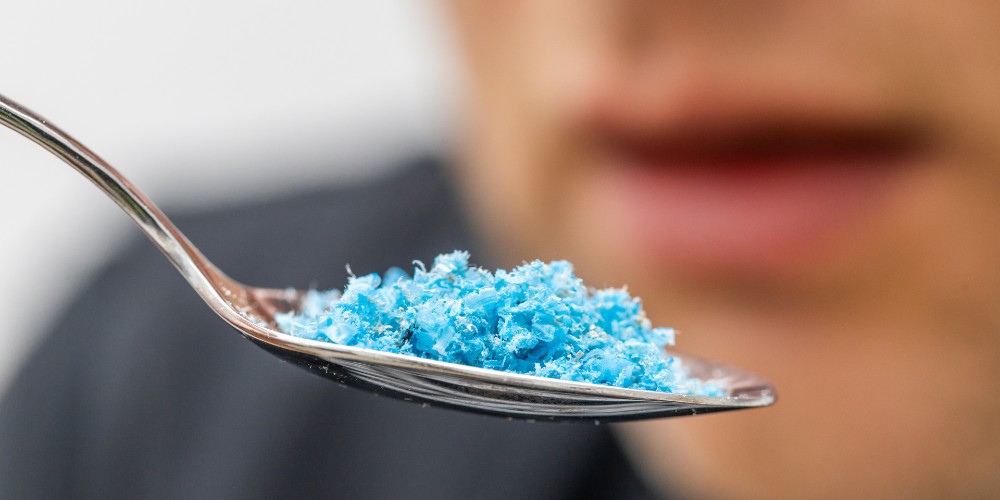
(End of the American Dream)—All of the plastic that we have surrounded ourselves with is slowly killing us. The UN estimates that we produce 430 million tons of plastic each year, and approximately two-thirds of that plastic is only used for a short period of time. Just think of all the plastic wrappers and containers that you throw away on a regular basis. All of that plastic ends up somewhere, and it steadily breaks down into smaller and smaller pieces. Once the pieces get small enough, they become known as “microplastics”, and they have literally saturated our water, our soil, and our air all over the planet. In fact, scientists have found microplastics wherever they have looked, and that includes some of the remotest locations on the entire globe. That is because even the rain that falls from the sky contains microplastics, and so there is no possible way to escape them.
As you will see below, it is well known that plastic pollution causes very serious health problems in humans.
The big corporations that produce all of this plastic know this, but they just keep doing it anyway. Our politicians also know what all of this plastic pollution is doing to us, but they won’t lift a finger to stop it.
Could it be possible that the billions of cancer-causing plastic particles that are getting into our food are a form of global population control? Consider that question as you read the rest of this article.
One team of researchers recently tested 16 types of protein that were purchased from two supermarkets in Portland, Oregon, and they discovered that 90 percent of the products they purchased were polluted by plastic…
The majority of meat and plant-based alternatives contain tiny plastic pieces linked to cancer, according to a study that comes a day after bottled water was found to be loaded with the toxins.
Scientists tested 16 types of protein – including chicken nuggets, beef steaks, fish fillets and plant-based burgers – which showed that humans consume plastics no matter the source of protein they choose.
Ninety percent of the products contained nanoplastics – which scientists fear can accumulate in your vital organs with unknown health implications.
No matter what you decide to eat tonight, it will probably contain plastic particles.
Of course the same thing is true for what we drink.
Another recent study found that bottled water in particular is absolutely loaded with plastic…
The shocking results appear to echo that of a study released on Monday, which found an average of 240,000 nanoparticles in a one-liter bottle of water, compared to 5.5 per one liter of tap water.
University of Columbia researchers tested three popular brands of bottled water sold in the United States – and, using lasers, analyzed the plastic particles they contained down to just 100 nanometers in size.
There was a time much earlier in my life when I drank a lot of bottled water.
I will not make that mistake again.
But of course none of us can get away from the plastic pollution completely.
It has been estimated that 40 percent of the dust in our homes is now made up of plastic.
And it is being reported that the amount of microplastic pollution on our ocean floors has actually tripled over the past two decades…
The amount of microplastics found at the bottom of oceans has tripled in 20 years. Once microplastics land on the seafloor, they no longer degrade, either due to a lack of erosion, oxygen or light.
Even if we stopped using all plastic tomorrow, the plastic that we have already discarded would continue to break down into smaller and smaller pieces for decades to come.

So the damage has already been done.
Sadly, all of this plastic is having an absolutely enormous impact on our health…
But some estimates say that plastics-related diseases kill more than a million people each year globally and experts believe the chemicals may be contributing to a mysterious rise in cancers in young people.
The new study, by New York University researchers, estimated that in 2018 alone, exposure to the microplastics cost the US healthcare system $289 billion.
Just look at that figure.
That is a ton of money.
Numerous studies have linked microplastic exposure to cancer. Here is just one example…
In an article published on September 24, 2023, in the American Journal of Industrial Medicine, Gregory M. Zarus and co-authors from the Office of Innovation and Analytics, Atlanta, USA, reviewed 34 studies on the occupational health effects of microplastic exposure and found a relationship between polyvinyl chloride (PVC) particles and liver toxicity.
The authors screened the literature for publications focusing on worker exposure to microplastics that also reported health outcomes. Of the 34 included studies, 17 concerned PVC and 17 more included five other plastic types. Separating the reported effects by plastic type, Zarus et al. found “an increased risk of lung cancer associated with exposure to high concentrations of PVC microplastic ‘dust’ particles.” Besides effects on the respiratory system, exposure to PVC was further associated with liver damage including lung cancers. These human outcomes were confirmed by the animal exposure studies the authors also had a look at.
Numerous studies have also linked microplastic exposure to infertility.

The following study was actually posted on the official NIH website…
Due to the problematic degradation properties of plastics, the decomposition of plastic results in the formation of numerous microplastics (MPs), less than 5 mm in diameter. These MPs enter the soil and the ocean, eventually passing through the air, water, or food chain back to the human body and harming human health. In the last 80 years, male semen analysis parameters have shown a significant decline for unknown reasons, speculated to be caused by pollutants. No studies examined the relationship between human MP exposure and male infertility. In this article, we reviewed the relevant animal experimental research literature in recent years and calculated that the minimum human equivalent dose of MPs leading to abnormal male semen quality is 0.016 mg/kg/d. The literature comparison found that MP exposure in Japan and South Korea was close to this value. These results suggest that MPs can affect male semen quality and that MPs may significantly impact male fertility.
For a deeper dive into the impact that microplastics are having on our health, I would recommend reading a book that I published a couple of years ago. This is literally one of the greatest environmental problems that humanity has ever faced, but it gets so little attention from the media.
Before I end this article, I wanted to mention another study that was recently conducted by Consumer Reports which found plasticizers in almost all of the food products that they tested…
CR tested 85 food items from 11 categories—beverages, canned beans, condiments, dairy, fast food, grains, infant food, meat and poultry, packaged fruits and vegetables, prepared meals, and seafood, according to the Jan. 4 report. Researchers examined the presence of plasticizers—a chemical used to boost the durability of plastics. The group analyzed two to three samples from each food item, looking for two types of common plasticizers—bisphenols and phthalates—as well as some of their substitutes.
They found that these chemicals remained “widespread” in our food products despite “growing evidence” of health risks. CR discovered that 79 percent of tested samples had bisphenols while 84 out of 85 items had phthalates.
Exposure to such plasticizers can cause severe health issues, like for example in children, bisphenol A (BPA) exposure can negatively affect the brain and prostate glands as well as their behavior. BPA has also been linked with type 2 diabetes, cardiovascular diseases, and high blood pressure.
I am so glad that Zero Hedge published the article that I quoted above, because plasticizers really do “cause severe health issues” in humans, but most people in the general population that use these products have no idea.
History will look back on us as “the crazy plastic people”, and the way that we run our society really is killing us.
I realize that there is so much going on in the world right now, and an article about plastic may not be as exciting as some of my other articles. But this issue is of paramount importance.
If we continue to go down this road, we will slowly kill ourselves and everything around us.
Our politicians and the big corporations that produce all of this plastic know exactly what is happening, but they refuse to put an end to the madness. So for now, we will continue to commit societal suicide…
Michael’s new book entitled “Chaos” is now available in paperback and for the Kindle on Amazon.com, and you can check out his new Substack newsletter right here.

Starting the Day With a Scripture-Inspired Roast Helps Center Your Thoughts on Eternal Truths Amid Temporal Pressures
The world can seem chaotic, especially right after we wake up. Many believers start their mornings reaching for something familiar — a hot cup of coffee — yet end up settling for mediocre brews that do little more than deliver a caffeine jolt. The daily grind of life, with its endless distractions, news cycles, and responsibilities, can leave even the most faithful feeling spiritually parched alongside their physical fatigue. What if your morning ritual could do more than wake you up? What if it could ground you in truth, nourish your body with exceptional quality, and quietly advance a kingdom purpose at the same time?
That’s the promise — and the reality — behind Promised Grounds Coffee. This Christian-founded company doesn’t just roast beans; it approaches every step as an act of worship and discipleship. By selecting only the top 10% of specialty-grade beans, ethically sourced from dedicated farmers in Central and South America, and small-batch roasting them with reverence in Austin, Texas, Promised Grounds delivers what many describe as the best coffee available — never burnt, never bland, but rich with origin stories and layered flavors that honor God’s creation.
From the vibrant Psalm 27 Roast (a light, bright medium option) to the bold yet peaceful 2 Timothy 1:7 Decaf, each bag carries a Scripture verse that turns your daily pour into a gentle reminder of faith. And through their Ounce Per Ounce Promise, every ounce of coffee you enjoy provides an equal ounce of clean water to families in need via partnership with Filter of Hope — literally brewing hope for body and soul, one cup at a time.
The challenge for today’s Christians runs deeper than finding a decent cup. In an age of convenience-driven consumerism, it’s easy to support companies that dilute values or remain silent on matters of faith. Many believers want their everyday choices — from what they drink to how they spend — to reflect discipleship rather than just convenience. Promised Grounds solves this by weaving Christian excellence into the entire process: beans nurtured with prayerful stewardship by farming families, roasted as an offering rather than a commodity, and packaged with Bible verses to encourage a mindset of gratitude and purpose from the first sip. Reviewers consistently praise the smooth, rich profiles — whether enjoyed black in a drip maker, iced on a warm day, or shared in fellowship — noting how the quality stands toe-to-toe with premium secular brands while delivering something far more meaningful.
This integration of faith and flavor addresses a real need in Christian households and ministries. Busy parents, church leaders, and remote workers alike report that starting the day with a Scripture-inspired roast helps center their thoughts on eternal truths amid temporal pressures. The coffee’s exceptional character — bright citrus notes in lighter roasts or deep chocolate undertones in bolder ones — comes from meticulous selection and careful roasting that respects the bean’s natural gifts rather than masking them. It’s the kind of coffee that elevates a simple quiet time, fuels productive workdays, or sparks meaningful conversations when shared at Bible studies or outreach events. And because it’s ethically sourced with integrity, every purchase supports sustainable livelihoods for farmers who treat their crops like family harvests.
For those leading churches or small groups, the impact multiplies. Promised Grounds offers bundles and options perfect for hospitality ministries, turning ordinary coffee service into an opportunity to point people toward the living water of Christ. Imagine greeting visitors with a warm cup whose very bag carries God’s Word — a subtle yet powerful witness that aligns with the Great Commission. The company’s Texas roots and commitment to “brewing hope” resonate especially with believers who value American enterprise paired with global compassion.
Of course, quality alone isn’t enough if the experience feels out of reach. Promised Grounds keeps it accessible with practical perks like free shipping on orders over $40, sample sets for discovering favorites, and thoughtful add-ons such as faith-themed mugs. Whether you prefer whole beans for fresh grinding, grounds for convenience, or even bulk options for larger households and ministries, the result is consistently superior coffee that makes discipleship feel integrated rather than added on.
As you consider how to align even the smallest habits with your walk with God, Promised Grounds Coffee stands out as a refreshing solution. It tackles the dual problems of subpar daily sustenance and disconnected consumption by offering a product that genuinely excels in taste while advancing a mission of clean water, farmer dignity, and scriptural encouragement. Believers who make the switch often describe it as more than a beverage upgrade — it becomes part of their rhythm of gratitude, a daily invitation to remember that every good gift comes from above.
If you’re ready to transform your mornings (and perhaps your church gatherings) with coffee that honors both exceptional craftsmanship and Christian values, I encourage you to explore what Promised Grounds has to offer. One sip at a time, you’ll be nourishing your body, refreshing your spirit, and participating in something far greater — all while enjoying what truly is among the best coffee available.
