

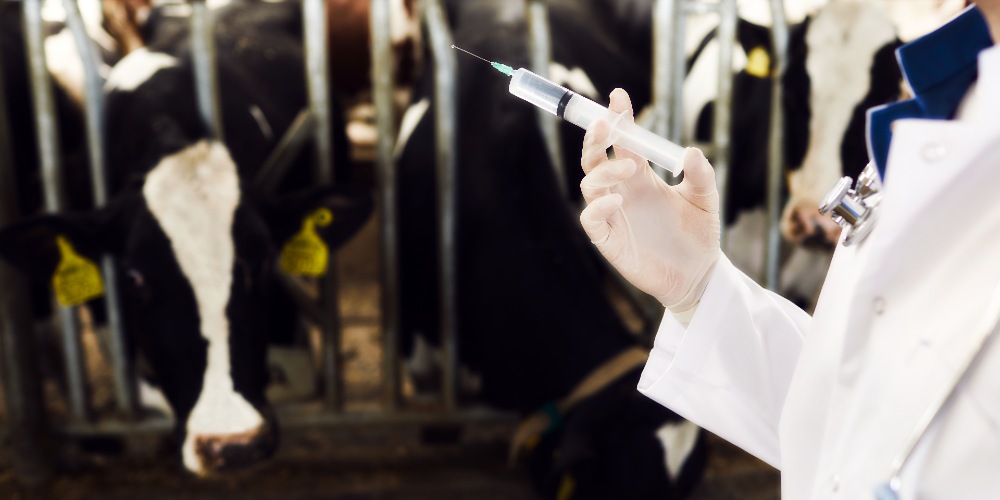
- Not all genetic technologies used in veterinary medicine fall under the categories of “mRNA vaccines” or “mRNA gene therapies.” There are other terms to look out
- There are several DNA and RNA-based genetic technologies that have received USDA approval or conditional approval for use on chickens, cows, fish, and pigs
- The required labeling for meat, dairy and egg products is not transparent about possible exposure to DNA or RNA-based veterinary biologics
1. What Are the Different Terms Used for DNA or RNA-Based Veterinary Biologics?
Not all genetic technologies used in veterinary medicine fall under the categories of “mRNA vaccines” or “mRNA gene therapies.” There are other terms to look out for when it comes to genetic technologies for veterinary medicine. These terms also include:
- “RNA Particle Technology”
- “RNA Particle Platform”
- “DNA Vaccine”
- “DNA Immunostimulant”
- “Prescription Platform Product”
2. How Do DNA or RNA-Based Veterinary Biologics Work?
With SEQUIVITY’s RNA Particle Technology, a “gene of interest provides instructions” to the immune cells which “translate the sequence into proteins” that “act as antigens.” This triggers an immune response.
As for AgriLab’s ExactVac DNA technology, “the vaccine is produced by splicing a gene for a specific antigen” into “a bacterial plasmid” which “is then multiplied, purified and administered” for “delivery into target cells, where antigens produced by the plasmid elicit an immune response.”
Bayer’s Zelnate DNA immunostimulant is “made up of a special type of immunostimulatory DNA surrounded by a lipid carrier or liposome” which is then “engulfed by the animal’s immune cell” where the “liposome breaks down exposing the DNA” and the “pathogen-associated molecular pattern” of the DNA “attaches to the immune cell’s toll-like receptors triggering activation of the immune cell.”
3. Which Agency Approves Veterinary Biologics?
The USDA’s Animal and Plant Health Inspection Service (APHIS) and their Center for Veterinary Biologics is responsible for approving veterinary biological products including vaccines and DNA or RNA-based biologics. Here are the lists of the currently licensed veterinary biological products and biologics for aquatic animals.
4. Which DNA or RNA-Based Biologics Have Been Approved for Food Animals?
There are several DNA and RNA-based genetic technologies that have received USDA approval or conditional approval for use on chickens, cows, fish, and pigs as outlined below.
- Chickens
◦In September 2015, Harrisvaccines received a USDA conditional license for an RNA-based avian influenza vaccine. Harrisvaccines “employs their unique SirraVaxSM RNA Particle (RP) technology platform” which can be updated to match current and future avian flu strains.
In October 2015, Harrisvaccines was awarded a USDA stockpile contract of 48 million doses of their “pioneering RNA particle vaccine.” In November 2015, Merck acquired Harrisvaccines.
◦In November 2017, AgriLabs received USDA conditional approval for “the first DNA vaccine ever licensed for chickens” for avian flu using “AgriLabs’ ExactVac DNA technology with ENABL adjuvant.” In January 2018, Huvepharma acquired AgriLabs. Huvepharma’s DNA-based avian influenza vaccine has a conditional license on APHIS’s most recent list of approved veterinary biological products.
- Cows
◦Bayer’s Zelnate DNA Immunostimulant received USDA approval for use against bovine respiratory disease (BRD) in January 2014. Zelnate is the “first-of-its-kind” DNA immunostimulant that is a genetic technology rather than a vaccine or antibiotic. Bayer’s DNA immunostimulant is on APHIS’s most recent list of approved veterinary biological products.
- Fish
◦Elanco’s Apex IHN DNA vaccine for salmonids against Infectious Hematopoietic Necrosis Virus (IHNV) has received USDA approval and is on APHIS’s most recent list of licensed biologics for aquatic animals.
Elanco’s DNA technology uses “relevant genetic components of the virus” that are inserted into a plasmid and injected into the muscle, after which the plasmid “instructs cells to produce antigens, which initiate an immune response.”
- Pigs
◦In June 2014, Harrisvaccines became the first in the nation to receive USDA conditional licensing for their RNA-based PEDv vaccine for pigs. In November 2015, Merck acquired Harrisvaccines. Merck’s “RNA particle platform” for Coronavirus and Porcine Epidemic Diarrhea Vaccine (PEDv) has conditional approval by the USDA and this product has conditional licensing on APHIS’s most recent list of veterinary biological products.
◦In December 2017, AgriLabs received USDA approval for a DNA-based swine flu vaccine. In January 2018, Huvepharma acquired AgriLabs. Huvepharma’s ExactVac DNA-based swine flu vaccine is on APHIS’s most recent list of approved veterinary biological products.

◦In 2020, Huvepharma’s DNA-based vaccine platform for pigs received USDA approval as a “prescription platform product” so that the “manufacturer may update the gene insert in this vaccine under expedited procedures to respond to emerging needs.” Huvepharma’s DNA-based swine vaccine platform has conditional licensing as a prescription product on APHIS’s most recent list of approved veterinary biological products.
◦In 2020 and 2021, Merck’s Sequivity RNA vaccines for strains of swine influenza, which use “RNA particle technology,” were approved by the USDA and are on APHIS’s most recent list of approved veterinary biological products.
◦Also in 2021, Merck’s RNA particle technology, for use as a “prescription platform product,” was conditionally approved by the USDA and has conditional licensing on APHIS’s most recent list of veterinary biological products.
5. Is There Ongoing Research Into DNA or RNA-Based Veterinary Biologics?
There are a number of ongoing studies on DNA and RNA-based genetic technologies for veterinary medicine, as outlined below.
- Bayer Partners with BioNTech to Develop mRNA Vaccines, Drugs for Animal Health, May 2016
- Development of a Self-amplifying mRNA Vaccine for African Swine Fever and Classical Swine Fever, Start Date: Jun 1, 2021, End Date: May 31, 2024
- Development of mRNA-based Vaccines for Heterosubtypic Protection Against Infectious Bronchitis and Infectious Laryngotracheitis Viruses, Start Date: Oct 1, 2021, End Date: Sep 30, 2023
- mRNA Vaccine Development for Emerging Animal and Zoonotic Diseases, February 2022
- Novel mRNA Vaccine Technology for Prevention of Bovine Respiratory Syncytial Virus, Start Date Oct 1, 2021, End Date Sep 30, 2026
- Novel Vaccine Technologies in Veterinary Medicine: A Herald to Human Medicine Vaccines, April 2021
- Vaccines to Reduce Salmonella Infantis in Chickens, Start Date: Sep 1, 2022, End Date: Oct 1, 2024
6. Is It Possible for mRNA Vaccines in Livestock to Contaminate Meat, Dairy or Egg Products?
According to a recent Epoch Times report, a 2014 USDA presentation on Vaccination for Contagious Diseases states that food animals receiving vaccines are subject to “mandatory withdrawal periods prior to slaughter for human consumption. Animals may not be sent to market until the withdrawal time has elapsed.
During the mandatory withdrawal time vaccinated animals or products from vaccinated animals may not enter the food chain. The withdrawal time is determined by the country in which the vaccine is licensed and stated in the product license.” As the Epoch Times report notes, the USDA recognizes that there must be a waiting time between vaccination and slaughter for human consumption due to risks of contaminating the food supply.

The USDA presentation does not, however, acknowledge DNA or RNA-based biologics, but the same standard of waiting times likely applies, as evidenced by Merck’s RNA vaccine for pigs, which states “Do not vaccinate within 21 days before slaughter.” However, Dr. Peter McCullough notes that mRNA technology “is far more durable than we ever could’ve imagined. It lasts in the human body for months unchanged.”
Therefore, even with standard wait times, Dr. McCullough believes it is conceivable that mRNA technology administered to food animals could contaminate the food supply. With that said, the Epoch Times report found “zero peer-reviewed studies looking into the transmissibility of mRNA vaccines from livestock to humans via either milk or meat.”
Dr. Peter McCullough has warned that developers of novel vaccine technologies for veterinary medicine are “blinded with infatuation for molecular biology and have lost sight of biological product safety in the food supply” adding that they have failed to acknowledge the “possibility of collateral impact to humans.”
In addition, Dr. McCullough has raised concerns regarding transmissibility based on a recent study which loaded cow’s milk with mRNA, and by consuming the milk, mice were successfully administered a Covid vaccine.
Dr. McCullough points out the “considerable ethical issues” this research presents, with a large segment of the public having “strong objections to mRNA in the food supply, particularly if it was done surreptitiously or with minimal labelling/warnings.”
7. Are There Labeling Requirements for Meats, Dairy or Eggs That May Have Been Contaminated by DNA or RNA-Based Veterinary Biologics?
The required labeling for meat, dairy and egg products is not transparent about possible exposure to DNA or RNA-based veterinary biologics. The USDA does, however, require “Bioengineered” labeling for foods that “contain detectable genetic material that has been modified through certain lab techniques and cannot be created through conventional breeding or found in nature.”
It is unclear whether the USDA’s testing process for “detectable genetic material” is capable of picking up traces of genetic material from biologics used in veterinary medicine.
Moreover, the USDA’s “Organic” labeling does appear to permit vaccines for livestock used for meat, dairy and eggs, though the requirements state that animals must not be given hormones or antibiotics. A 2013 Agricultural Marketing Service document states that “organic livestock must be: – Produced without genetic engineering.” However, the same document goes on to say that “Only a few drugs, such as vaccines, are allowed” for organically raised livestock.
Furthermore, in many cases, labeling is not clear about the country from which meats originate. Country of Origin Labeling (COOL) requirements were dropped for beef and pork in 2016. COOL requirements remain in place for lamb, goat, chicken, and fish. Additionally, USDA regulations on meat, poultry and eggs have enabled “Product of USA” labeling for animals born and raised in other countries and only processed in the U.S.
However, in March 2023, the USDA proposed a new rule to restrict labeling for “Product of USA” or “Made in the USA” to be used on “meat, poultry and egg products only when they are derived from animals born, raised, slaughtered and processed in the United States.”
8. Which Organizations Are Behind This Agenda?
According to a Corey’s Digs report, Codex Alimentarius was established by the UN’s Food and Agriculture Organization (FAO) and the WHO, for “the sole purpose of setting the standards and guidelines for all food that is consumed by human beings.”
The report states that Codex does not have the authority to make laws, “so the 189 country members, 20 of which are heads of the various committees, take these ‘standards’ and create regulations and laws in their respective country. The USDA, for example, is a driving force for not only adhering to the standards, but making certain other countries follow in lock step as well.”
Codex Alimentarius plays “a key role” in the implementation of new technologies within food standards, including “genetic editing” and “nanotechnology applications in the food sector” as well as “alternative food proteins.”
9. What Are Lawmakers, Producers and Concerned Citizens Doing to Protect Against Contamination of the Food Supply From mRNA Vaccines?
Lawmakers have proposed legislation in Arizona, Idaho, Missouri, South Carolina, Tennessee, and Texas to prohibit mRNA in meats or to require disclosure in food labeling. While legislation in Missouri and Idaho failed, efforts to block mRNA vaccines in livestock remain ongoing in other states.
A trade group, known as The Beef Initiative, has pledged that their Beef Box producers will not “use any mRNA vaccines in their livestock.” Over 100 producers are partnered with The Beef Initiative and can be found here.
Attorney Tom Renz has spearheaded the movement by states for transparency and disclosure of mRNA gene therapies in the food supply. Renz helped to draft Missouri’s HB1169. Naomi Wolf of Daily Clout is also promoting the cause. Doctor Peter McCullough has raised awareness on the issue of genetic technologies used in veterinary medicine and the potential dangers to the food supply in recent interviews and on substack publications.
10. What Can the Public Do about It?
Stay informed and inform others by sharing this information. Additional resources on this topic are listed below. Support lawmakers and advocacy groups pushing for transparency and blocking DNA or RNA-based biologics from entering the food supply. Know what’s in your food and who is producing it.
Buy from producers that have pledged to never use DNA or RNA-based genetic technologies, such as The Beef Initiative. Corey’s Digs has also published an excellent resource for finding high-quality foods as well as an incredible source for US Prime and High Choice Beef.
Editor’s Note: Prepper All Naturals has vowed to never sell long-term storage beef tainted by mRNA vaccines. Take advantage of 15% off at checkout with promo code JDR.

Starting the Day With a Scripture-Inspired Roast Helps Center Your Thoughts on Eternal Truths Amid Temporal Pressures
The world can seem chaotic, especially right after we wake up. Many believers start their mornings reaching for something familiar — a hot cup of coffee — yet end up settling for mediocre brews that do little more than deliver a caffeine jolt. The daily grind of life, with its endless distractions, news cycles, and responsibilities, can leave even the most faithful feeling spiritually parched alongside their physical fatigue. What if your morning ritual could do more than wake you up? What if it could ground you in truth, nourish your body with exceptional quality, and quietly advance a kingdom purpose at the same time?
That’s the promise — and the reality — behind Promised Grounds Coffee. This Christian-founded company doesn’t just roast beans; it approaches every step as an act of worship and discipleship. By selecting only the top 10% of specialty-grade beans, ethically sourced from dedicated farmers in Central and South America, and small-batch roasting them with reverence in Austin, Texas, Promised Grounds delivers what many describe as the best coffee available — never burnt, never bland, but rich with origin stories and layered flavors that honor God’s creation.
From the vibrant Psalm 27 Roast (a light, bright medium option) to the bold yet peaceful 2 Timothy 1:7 Decaf, each bag carries a Scripture verse that turns your daily pour into a gentle reminder of faith. And through their Ounce Per Ounce Promise, every ounce of coffee you enjoy provides an equal ounce of clean water to families in need via partnership with Filter of Hope — literally brewing hope for body and soul, one cup at a time.
The challenge for today’s Christians runs deeper than finding a decent cup. In an age of convenience-driven consumerism, it’s easy to support companies that dilute values or remain silent on matters of faith. Many believers want their everyday choices — from what they drink to how they spend — to reflect discipleship rather than just convenience. Promised Grounds solves this by weaving Christian excellence into the entire process: beans nurtured with prayerful stewardship by farming families, roasted as an offering rather than a commodity, and packaged with Bible verses to encourage a mindset of gratitude and purpose from the first sip. Reviewers consistently praise the smooth, rich profiles — whether enjoyed black in a drip maker, iced on a warm day, or shared in fellowship — noting how the quality stands toe-to-toe with premium secular brands while delivering something far more meaningful.
This integration of faith and flavor addresses a real need in Christian households and ministries. Busy parents, church leaders, and remote workers alike report that starting the day with a Scripture-inspired roast helps center their thoughts on eternal truths amid temporal pressures. The coffee’s exceptional character — bright citrus notes in lighter roasts or deep chocolate undertones in bolder ones — comes from meticulous selection and careful roasting that respects the bean’s natural gifts rather than masking them. It’s the kind of coffee that elevates a simple quiet time, fuels productive workdays, or sparks meaningful conversations when shared at Bible studies or outreach events. And because it’s ethically sourced with integrity, every purchase supports sustainable livelihoods for farmers who treat their crops like family harvests.
For those leading churches or small groups, the impact multiplies. Promised Grounds offers bundles and options perfect for hospitality ministries, turning ordinary coffee service into an opportunity to point people toward the living water of Christ. Imagine greeting visitors with a warm cup whose very bag carries God’s Word — a subtle yet powerful witness that aligns with the Great Commission. The company’s Texas roots and commitment to “brewing hope” resonate especially with believers who value American enterprise paired with global compassion.
Of course, quality alone isn’t enough if the experience feels out of reach. Promised Grounds keeps it accessible with practical perks like free shipping on orders over $40, sample sets for discovering favorites, and thoughtful add-ons such as faith-themed mugs. Whether you prefer whole beans for fresh grinding, grounds for convenience, or even bulk options for larger households and ministries, the result is consistently superior coffee that makes discipleship feel integrated rather than added on.
As you consider how to align even the smallest habits with your walk with God, Promised Grounds Coffee stands out as a refreshing solution. It tackles the dual problems of subpar daily sustenance and disconnected consumption by offering a product that genuinely excels in taste while advancing a mission of clean water, farmer dignity, and scriptural encouragement. Believers who make the switch often describe it as more than a beverage upgrade — it becomes part of their rhythm of gratitude, a daily invitation to remember that every good gift comes from above.
If you’re ready to transform your mornings (and perhaps your church gatherings) with coffee that honors both exceptional craftsmanship and Christian values, I encourage you to explore what Promised Grounds has to offer. One sip at a time, you’ll be nourishing your body, refreshing your spirit, and participating in something far greater — all while enjoying what truly is among the best coffee available.
