

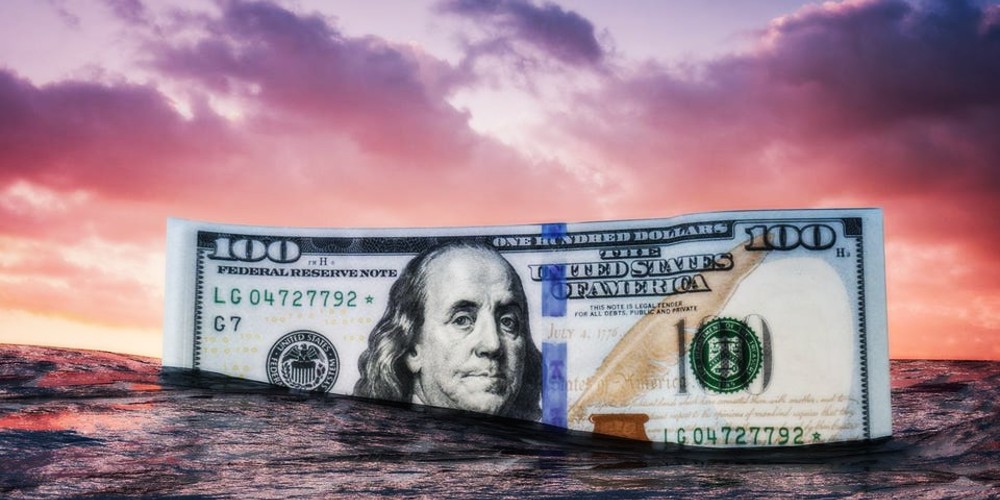
The summit of the so-called BRICS (Brazil, Russia, India, China, and South Africa) has closed with an invitation to join the group extended to the Emirates, Egypt, Iran, Saudi Arabia, Argentina, and Ethiopia.
The summit has generated a lot of headlines about the impact of this widespread group of nations, including speculation about the end of the U.S. dollar as a global reserve currency if this group is perceived as a threat to the United States or even the International Monetary Fund.
Several things need to be clarified.
Many political analysts believe that China lends, invests, or supports in return for nothing. China is a major economic power, but it has no interest in being a global reserve currency. Its currency is currently used in only 5% of global transactions, according to the Bank of International Settlements.
China and Russia have capital controls. It is impossible to have a global reserve currency without freedom of capital movement. More requirements are needed than solid gold reserves to have a stable fiat currency. It is essential to guarantee economic freedom, investment, legal security, and the free movement of capital, as well as an open, transparent, and diversified financial system.
China and Russia are much more demanding and rigorous lenders than many politicians think. It seems that some emerging market politicians think that joining China and Russia will be a kind of free money panacea.
Another problem with creating a BRICS currency is that, logically, neither China nor Russia has the slightest intention of losing their national currency to dilute it alongside a group of issuers who have a doubtful track record in controlling their monetary imbalances. Over the past ten years, the currencies of the BRICS guest countries have depreciated significantly against the U.S. dollar. The Argentine peso has fallen by 98%, the Egyptian pound by 78%, the Indian rupee by 35%, the Ethiopian birr by 68%, the Brazilian real by 55%, according to Bloomberg, and the Iranian rial has collapsed by 90%, according to The Economist. Putting together weak currencies does not create a strong currency.
We must not forget that the performance of the Russian ruble (-68% against the U.S. dollar, according to Bloomberg) in the last decade has also been poor despite having a relatively prudent central bank.
The best “BRICS and guests” currency against the U.S. dollar in the last 10 years is the Chinese yuan, with a depreciation of only 14%.
For a fiat currency to be stable, it is necessary that the issuer defend it as a reserve of value, a generally accepted payment method, and a unit of measure. Freedom of capital and independent institutions that provide legal security to domestic and international investors are needed. Having a strong military power does not guarantee a currency accepted as a reserve of value, as demonstrated by the disastrous Soviet kopek, despite the USSR’s influence on half the world.
Joining countries with governments that advocate monetizing uncontrolled public spending and massively increasing monetary imbalances cannot create a stable currency unless they implement the example of the euro. In the euro, Germany, the country with the most prudent and responsible fiscal policy, dictated the main lines of the monetary and fiscal rules for the rest. Unfortunately, the eurozone and the ECB, in trying to play to be the US and the Federal Reserve, have lost most of their options to be a real alternative to the U.S. dollar. And the euro is the greatest fiat monetary success in the post-Bretton Woods era; let us not deprive it of its merit.
The BRICS alternative starts with a major Achilles heel. China and Russia are going to have major difficulties imposing fiscal and monetary policy restrictions on their partners. Let us not forget that several of these partners have joined the group, thinking that from now on they will be able to continue printing money and spending without control, but their monetary imbalances will be distributed to other nations.
The euro has been a success because liberal democracies with independent institutions and broad economic freedom and legal certainty agreed to align their policies for the common good, creating a solid currency that avoided the debacle created by the inflationary spirals that were the norm in Europe historically when governments devoted themselves to transferring their imbalances to citizens’ wages and savings through monetary destruction. This does not seem easily replicable with BRICS and guests.
China, however, can increase its control over all these countries by implementing rigorous monetary and fiscal policies. It is the strongest lender of all the BRICS, but it is unlikely to take on the role of the euro’s Germany, willing to absorb the excesses of others in exchange for a common project. China is going to increase its control over the countries in the group, but it is not likely to jeopardize the stability and security of its enormous population by sinking the currency. The Chinese government is probably analyzing how the euro is losing monetary prudence and reaching the conclusion that it cannot take that same risk with some of these new partners. However, China will probably make the most of its financial strength to lend, increase their domestic and international growth options, and access abundant and cheap commodities.

China is the big winner of the BRICS summit. The Chinese government probably knows that many of its partners are going to continue increasing their imbalances, and this may allow China to strengthen its leadership position. However, I find it hard to believe that China will agree to the creation of a currency that others can use to trigger inflationary imbalances.
Meanwhile, in the U.S., the government may jeopardize the credibility of the U.S. dollar if it continues to generate deficits of two trillion dollars a year, more than a $14 trillion estimated deficit by 2030, and with an increasing number of irresponsible advisers saying that it can create all the money it wants without risk. The fiscal credibility, institutional independence, and economic freedom of the U.S. dollar, the most widely used currency in the world, cement its leadership. If the government undermines these strengths, the dollar will lose its reserve status.
The end of the U.S. dollar, if it comes, will not arrive through competition from another fiat currency, as the temptation of governments to destroy the purchasing power of the issued currency is too strong. It will probably come from independent currencies.
About the Author
Daniel Lacalle, PhD, economist and fund manager, is the author of the bestselling books Freedom or Equality (2020), Escape from the Central Bank Trap (2017), The Energy World Is Flat (2015), and Life in the Financial Markets (2014).
He is a professor of global economy at IE Business School in Madrid. Article cross-posted from Mises.

Starting the Day With a Scripture-Inspired Roast Helps Center Your Thoughts on Eternal Truths Amid Temporal Pressures
The world can seem chaotic, especially right after we wake up. Many believers start their mornings reaching for something familiar — a hot cup of coffee — yet end up settling for mediocre brews that do little more than deliver a caffeine jolt. The daily grind of life, with its endless distractions, news cycles, and responsibilities, can leave even the most faithful feeling spiritually parched alongside their physical fatigue. What if your morning ritual could do more than wake you up? What if it could ground you in truth, nourish your body with exceptional quality, and quietly advance a kingdom purpose at the same time?
That’s the promise — and the reality — behind Promised Grounds Coffee. This Christian-founded company doesn’t just roast beans; it approaches every step as an act of worship and discipleship. By selecting only the top 10% of specialty-grade beans, ethically sourced from dedicated farmers in Central and South America, and small-batch roasting them with reverence in Austin, Texas, Promised Grounds delivers what many describe as the best coffee available — never burnt, never bland, but rich with origin stories and layered flavors that honor God’s creation.
From the vibrant Psalm 27 Roast (a light, bright medium option) to the bold yet peaceful 2 Timothy 1:7 Decaf, each bag carries a Scripture verse that turns your daily pour into a gentle reminder of faith. And through their Ounce Per Ounce Promise, every ounce of coffee you enjoy provides an equal ounce of clean water to families in need via partnership with Filter of Hope — literally brewing hope for body and soul, one cup at a time.
The challenge for today’s Christians runs deeper than finding a decent cup. In an age of convenience-driven consumerism, it’s easy to support companies that dilute values or remain silent on matters of faith. Many believers want their everyday choices — from what they drink to how they spend — to reflect discipleship rather than just convenience. Promised Grounds solves this by weaving Christian excellence into the entire process: beans nurtured with prayerful stewardship by farming families, roasted as an offering rather than a commodity, and packaged with Bible verses to encourage a mindset of gratitude and purpose from the first sip. Reviewers consistently praise the smooth, rich profiles — whether enjoyed black in a drip maker, iced on a warm day, or shared in fellowship — noting how the quality stands toe-to-toe with premium secular brands while delivering something far more meaningful.
This integration of faith and flavor addresses a real need in Christian households and ministries. Busy parents, church leaders, and remote workers alike report that starting the day with a Scripture-inspired roast helps center their thoughts on eternal truths amid temporal pressures. The coffee’s exceptional character — bright citrus notes in lighter roasts or deep chocolate undertones in bolder ones — comes from meticulous selection and careful roasting that respects the bean’s natural gifts rather than masking them. It’s the kind of coffee that elevates a simple quiet time, fuels productive workdays, or sparks meaningful conversations when shared at Bible studies or outreach events. And because it’s ethically sourced with integrity, every purchase supports sustainable livelihoods for farmers who treat their crops like family harvests.
For those leading churches or small groups, the impact multiplies. Promised Grounds offers bundles and options perfect for hospitality ministries, turning ordinary coffee service into an opportunity to point people toward the living water of Christ. Imagine greeting visitors with a warm cup whose very bag carries God’s Word — a subtle yet powerful witness that aligns with the Great Commission. The company’s Texas roots and commitment to “brewing hope” resonate especially with believers who value American enterprise paired with global compassion.
Of course, quality alone isn’t enough if the experience feels out of reach. Promised Grounds keeps it accessible with practical perks like free shipping on orders over $40, sample sets for discovering favorites, and thoughtful add-ons such as faith-themed mugs. Whether you prefer whole beans for fresh grinding, grounds for convenience, or even bulk options for larger households and ministries, the result is consistently superior coffee that makes discipleship feel integrated rather than added on.
As you consider how to align even the smallest habits with your walk with God, Promised Grounds Coffee stands out as a refreshing solution. It tackles the dual problems of subpar daily sustenance and disconnected consumption by offering a product that genuinely excels in taste while advancing a mission of clean water, farmer dignity, and scriptural encouragement. Believers who make the switch often describe it as more than a beverage upgrade — it becomes part of their rhythm of gratitude, a daily invitation to remember that every good gift comes from above.
If you’re ready to transform your mornings (and perhaps your church gatherings) with coffee that honors both exceptional craftsmanship and Christian values, I encourage you to explore what Promised Grounds has to offer. One sip at a time, you’ll be nourishing your body, refreshing your spirit, and participating in something far greater — all while enjoying what truly is among the best coffee available.
