

Whoever loves money never has enough; whoever loves wealth is never satisfied with their income. – Ecclesiastes 5:10, NIV
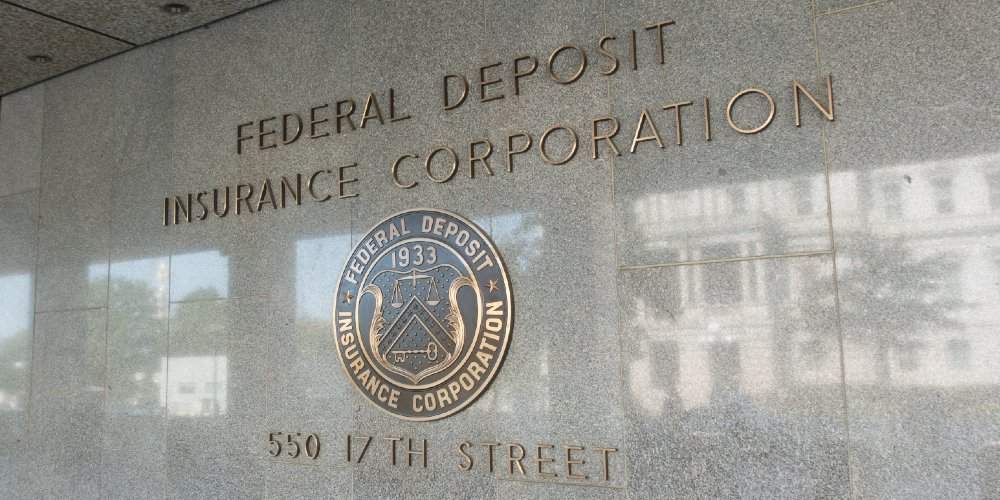
In the past week, there’s been an enormous amount of virtual ink spilled on the banking crisis. I confess I’ve read dozens of articles and columns without a much clearer grasp of what’s happening than before I started. (Ironically, one of the best explanations can be found within the dry humor of “Awaken with JP.” Watch his hilarious “Banking Collapse Explained for Dummies.”)
Why these banks are failing is beyond both the scope of this column and my personal comprehension. Some have speculated it was focusing too much on “woke” investing rather than shareholder returns. On the other hand, it doesn’t look like the bankers have a much better grasp of finance than I do, based on some of the videos emerging. “Is it surprising that Signature Bank failed?” notes this Twitter post. “Their executive team spent millions of dollars to produce music videos & TV shows about themselves. Try not to cringe as you watch this.”
Whatever the reasons behind the crisis, literally billions of dollars have been wiped out. Supposedly even Prince Harry, Meghan Markle and Oprah got caught in the carnage. While those on the inside engaged in suspicious activities (selling stock and handing out bonuses), the vast majority of depositors were taken completely by surprise. The whole thing fell in about 48 hours.
And see, that’s what concerns me. How many other financial institutions may face similar disasters? How many other banks are just fine – until they’re not?
As of this writing – and in the spirit of never letting a crisis go to waste – we learn Moody’s Investors Service downgraded its outlook for the U.S. banking system, that Biden is effectively nationalizing the deposit base of the entire U.S. financial system, that financial regulators are being asked to censor social media to prevent bank runs and that bank fears are going global. Some say the feds are using the bank meltdowns to kill off regional and local banks and consolidate power. Some claim – with justification – that this is an orchestrated situation designed to push America toward digital currency.
From sociopolitical commentary to romance writing! Patrice Lewis branches into the world of Amish inspirational fiction. These clean romances are wholesome enough for Grandma to read. Check out Patrice’s available titles.
So instead of writing a clever and witty summary of events (something I’ll reserve for more financially literate people), I’m writing this from the perspective of an ordinary housewife watching the problems with America’s financial system.
I’m seeing the cascading effects of high-level banking and government intervention combined with millions of terrified Americans who fear they’re going to lose their life savings and retirements. A banking crisis is frightening enough for economists and those in the know. Imagine how much worse it is for those NOT in the know – the ordinary people who have worked hard their entire lives and managed to maintain a modest financial cushion, who must now attempt to decipher the conflicting reports (“Everything’s fine!” “No, everything’s about to collapse!”), wade through the finger-pointing and blame game, and try to salvage whatever rainy-day cushion they had.
As an example, consider this heart-pounding Twitter thread of someone who had two companies, his personal savings and his mortgage with Silicon Valley Bank as he tries to save his finances.
Needless to say, rumors are flying thick and fast. On one side, our politicians are assuring us the economy is sound, banks are safe, and everything’s glorious. On the other side, the more paranoid types are warning this is the start of another Weimer Republic, and by golly, if you don’t already own a mountain of gold, you’re doomed. In all likelihood, the reality is probably somewhere in the middle.
But one thing is becoming crystal clear: There are big winners and big losers in this game. Spoiler alert, your average Joe Sixpack is not one of the winners.
Ironically, before Silicon Valley Bank was even on the national radar, I had ordered a book called “When Money Dies” by Adam Fergusson. First printed in 1975 and reprinted in 2010, it’s a well-researched history of the hyperinflation that took place 100 years ago in Germany. I only received it a couple days ago and have barely had a chance to crack it open.
But the Prologue was sobering enough. “The German people were the victims,” Fergusson writes. “The battle, as one who survived it explained, left them dazed and inflation-shocked. They did not understand how it had happened to them, and who the foe was who had defeated them.”
The story of the dramatic hyperinflation, continued the Prologue, “is one which the great authorities have sometimes seemed to lose touch with: the effect of inflation on people as individuals. … Disaster itself was devalued: in contemporary documents the word was used year after year to describe situations incalculably more serious than the time before.”

Fergusson concludes his Prologue by writing: “This is, I believe, a moral tale. It goes far to prove the revolutionary axiom that if you wish to destroy a nation you must first corrupt its currency. Thus must sound money be the first bastion of a society’s defense.”
Sound familiar?
Everything is happening so fast. By the time this column is published, who knows what new information may come to light, what other financial institutions may have collapsed, or what nefarious financial schemes may be orchestrated?
No one knows how this banking crisis will end. For us personally, we have our money spread out among three separate credit unions, and have for several years. At this point in the Biden economy, that seems like a wiser move than having all our eggs in one basket.
Content created by the WND News Center is available for re-publication without charge to any eligible news publisher that can provide a large audience. For licensing opportunities of our original content, please contact [email protected].

Starting the Day With a Scripture-Inspired Roast Helps Center Your Thoughts on Eternal Truths Amid Temporal Pressures
The world can seem chaotic, especially right after we wake up. Many believers start their mornings reaching for something familiar — a hot cup of coffee — yet end up settling for mediocre brews that do little more than deliver a caffeine jolt. The daily grind of life, with its endless distractions, news cycles, and responsibilities, can leave even the most faithful feeling spiritually parched alongside their physical fatigue. What if your morning ritual could do more than wake you up? What if it could ground you in truth, nourish your body with exceptional quality, and quietly advance a kingdom purpose at the same time?
That’s the promise — and the reality — behind Promised Grounds Coffee. This Christian-founded company doesn’t just roast beans; it approaches every step as an act of worship and discipleship. By selecting only the top 10% of specialty-grade beans, ethically sourced from dedicated farmers in Central and South America, and small-batch roasting them with reverence in Austin, Texas, Promised Grounds delivers what many describe as the best coffee available — never burnt, never bland, but rich with origin stories and layered flavors that honor God’s creation.
From the vibrant Psalm 27 Roast (a light, bright medium option) to the bold yet peaceful 2 Timothy 1:7 Decaf, each bag carries a Scripture verse that turns your daily pour into a gentle reminder of faith. And through their Ounce Per Ounce Promise, every ounce of coffee you enjoy provides an equal ounce of clean water to families in need via partnership with Filter of Hope — literally brewing hope for body and soul, one cup at a time.
The challenge for today’s Christians runs deeper than finding a decent cup. In an age of convenience-driven consumerism, it’s easy to support companies that dilute values or remain silent on matters of faith. Many believers want their everyday choices — from what they drink to how they spend — to reflect discipleship rather than just convenience. Promised Grounds solves this by weaving Christian excellence into the entire process: beans nurtured with prayerful stewardship by farming families, roasted as an offering rather than a commodity, and packaged with Bible verses to encourage a mindset of gratitude and purpose from the first sip. Reviewers consistently praise the smooth, rich profiles — whether enjoyed black in a drip maker, iced on a warm day, or shared in fellowship — noting how the quality stands toe-to-toe with premium secular brands while delivering something far more meaningful.
This integration of faith and flavor addresses a real need in Christian households and ministries. Busy parents, church leaders, and remote workers alike report that starting the day with a Scripture-inspired roast helps center their thoughts on eternal truths amid temporal pressures. The coffee’s exceptional character — bright citrus notes in lighter roasts or deep chocolate undertones in bolder ones — comes from meticulous selection and careful roasting that respects the bean’s natural gifts rather than masking them. It’s the kind of coffee that elevates a simple quiet time, fuels productive workdays, or sparks meaningful conversations when shared at Bible studies or outreach events. And because it’s ethically sourced with integrity, every purchase supports sustainable livelihoods for farmers who treat their crops like family harvests.
For those leading churches or small groups, the impact multiplies. Promised Grounds offers bundles and options perfect for hospitality ministries, turning ordinary coffee service into an opportunity to point people toward the living water of Christ. Imagine greeting visitors with a warm cup whose very bag carries God’s Word — a subtle yet powerful witness that aligns with the Great Commission. The company’s Texas roots and commitment to “brewing hope” resonate especially with believers who value American enterprise paired with global compassion.
Of course, quality alone isn’t enough if the experience feels out of reach. Promised Grounds keeps it accessible with practical perks like free shipping on orders over $40, sample sets for discovering favorites, and thoughtful add-ons such as faith-themed mugs. Whether you prefer whole beans for fresh grinding, grounds for convenience, or even bulk options for larger households and ministries, the result is consistently superior coffee that makes discipleship feel integrated rather than added on.
As you consider how to align even the smallest habits with your walk with God, Promised Grounds Coffee stands out as a refreshing solution. It tackles the dual problems of subpar daily sustenance and disconnected consumption by offering a product that genuinely excels in taste while advancing a mission of clean water, farmer dignity, and scriptural encouragement. Believers who make the switch often describe it as more than a beverage upgrade — it becomes part of their rhythm of gratitude, a daily invitation to remember that every good gift comes from above.
If you’re ready to transform your mornings (and perhaps your church gatherings) with coffee that honors both exceptional craftsmanship and Christian values, I encourage you to explore what Promised Grounds has to offer. One sip at a time, you’ll be nourishing your body, refreshing your spirit, and participating in something far greater — all while enjoying what truly is among the best coffee available.
