

Editor’s Commentary: My great respect for the writing of Michael Snyder cannot be overstated. I also respect that there are many America First patriots who do not abide by his perspectives, and while I don’t agree with him 100% of the time I believe he’s right far more often than he’s wrong.
I’ve been working on a story that will take some time to compile, but I wanted to tease it out to you all before you read through Michael’s story. It’s more of a conspiracy theory than a story; I have no direct evidence other than “skeptic’s intuition” and an unnaturally intuitive understanding of how the globalist elite cabal thinks. Many will think I’ve gone off the deep end, but as I said I’m just investigating at this point.
What if most of the military “aid” being sent to Ukraine is actually a way to position NATO weapons ahead of direct troop involvement? If NATO were to mobilize their militaries and start heading toward Ukraine, Russia would see it coming. But if weapons intended to be used against Russia were being sent in the form of “aid” but not actually used by Ukrainian forces, then it would be easier to surprise Russia with an attack. NATO would have to move troops in to man the weapons they had funneled, but that is far easier and less conspicuous than columns of tanks being mobilized.
Again, this is all just a theory I’m exploring and to be transparent I haven’t found a single shred of corroborating evidence. Then again, any such successful operation wouldn’t be easily discovered by a dude in front of a laptop in California, so I’m not expecting to get much. Just keep this theory in the back of your mind as you read Michael’s article…
Have you ever found yourself completely losing your temper in the middle of a heated struggle of some sort? Whether it is a hotly contested sporting event, an actual fist fight or a bitter battle against an online foe, it can be way too easy to lose your temper. And when tempers flare, you can end up losing control and doing things that you deeply regret later.
Unfortunately, the same thing is true on an international level. Russia and NATO have both become absolutely obsessed with “winning” in Ukraine, and leaders on both sides are getting angrier and angrier. And when leaders become extremely angry, they can do really stupid things.
I have been extremely alarmed by some of the events that have transpired over the past week. Hotheads in Russia and hotheads in the western world just continue to escalate the conflict in Ukraine, and we are getting dangerously close to a point of no return.
The following are 5 signs that the war between Russia and NATO is about to spiral out of control…
#1 A “Dirty Bomb”?
There had been a lot of chatter about the possibility that Russia could start using tactical nukes in Ukraine, and now the Russians are alleging that the Ukrainians are preparing to detonate a “dirty bomb” in their own territory in order to motivate the western powers to get even more involved in the conflict…
Russia’s defense chief on Sunday alleged that Ukraine was preparing a “provocation” involving a radioactive device, a stark claim that reflected soaring tensions as Moscow struggles to stem Ukrainian advances in the south and is building defensive positions in anticipation of Ukrainian offensives elsewhere.
Russia’s Defense Minister Sergei Shoigu made the allegations in phone calls with his counterparts from Britain, France and Turkey. He also spoke to U.S. Secretary of Defense Lloyd Austin in their second call in three days, but a terse Russian readout of that call didn’t say whether the dirty bomb claim was also mentioned in their conversation.
#2 The U.S. 101st Airborne Division Gets Deployed To Eastern Europe
The 101st Airborne Division is one of the most famous units in the history of the U.S. military, and I was quite stunned to learn that they have just been deployed to Europe “for the first time in almost 80 years”…
The U.S. Army’s 101st Airborne Division has been deployed to Europe for the first time in almost 80 years amid soaring tension between Russia and the American-led NATO military alliance. The light infantry unit, nicknamed the “Screaming Eagles,” is trained to deploy on any battlefield in the world within hours, ready to fight.
For now, the “Screaming Eagles” are involved in “exercises” near the Ukrainian border, but CBS News is reporting that they are “prepared to cross the border into Ukraine” if that becomes necessary…
The “Screaming Eagles” commanders told CBS News repeatedly that they are always “ready to fight tonight,” and while they’re there to defend NATO territory, if the fighting escalates or there’s any attack on NATO, they’re fully prepared to cross the border into Ukraine.
#3 A Million Rounds Of Ammunition
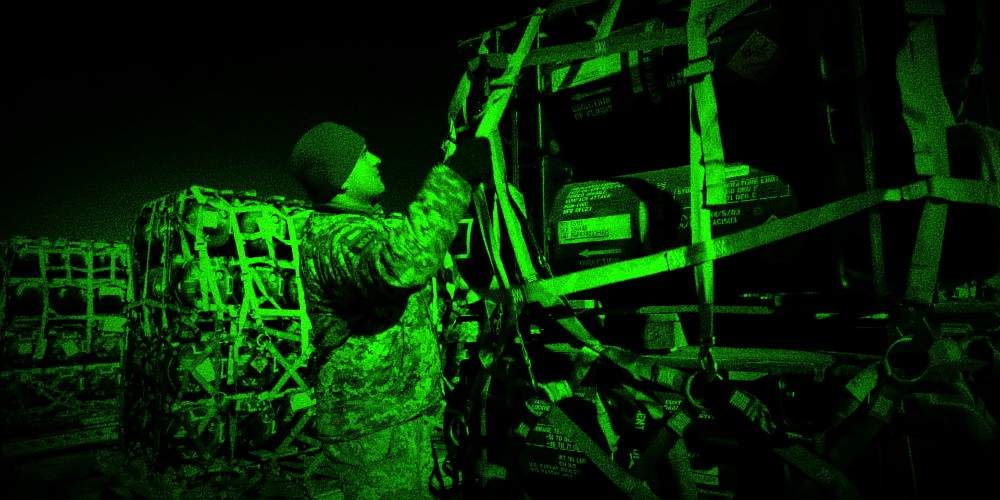
The U.S. has never armed anyone like they are arming the Ukrainians.
If you can believe it, we have already given Ukraine “over a million rounds of howitzer ammunition” since the beginning of the war…
The U.S. has now provided Ukraine with over a million rounds of howitzer ammunition since it began shipping arms to the embattled nation to aid its fight against Russia, according to the latest figures from the Defense Department.
That includes up to 903,000 standard 155mm howitzer rounds as well as 3,000 M982 Excalibur guided rounds, 7,000 Remote Anti-Armor Mine System (RAAMS) projectiles, and 180,000 105mm howitzer shells.
And it appears that much more help will soon be on the way.

Right now, a new “aid package” is being readied in Congress which would give the Ukrainians another 50 billion dollars in assistance…
The new aid package, which most likely would be part of an omnibus spending bill, could be within the range of roughly $50 billion, congressional aides and a source close to the Ukraine government said.
#4 Iranian Troops In Ukraine?
A lot of “mercenaries” from western nations have been fighting alongside the Ukrainians for a long time, and now the U.S. is alleging that Iranian troops have actually entered Ukraine and are “directly engaged on the ground” in an effort to help the Russians…
Iranian troops are “directly engaged on the ground” in Crimea supporting Russian drone attacks on Ukraine’s infrastructure and civilian population, the White House has said.
The US government has confirmed that Russian attacks have employed unmanned aerial vehicles purchased from Tehran in attacks carried out against Ukrainian targets from bases on the peninsula that Russia annexed from Ukraine in 2014, National Security Council spokesperson John Kirby said.
This conflict in Ukraine is becoming more of a “world war” with each passing day.
We know that the Russians have been using Iranian drones to strike targets all over Ukraine in recent days, and that should deeply trouble all of us.
Speaking of Iran, I just learned that their military has been “conducting large-scale military drills on its border with Azerbaijan”…
Iran’s military is conducting large-scale military drills on its border with Azerbaijan, including practicing crossings of the Aras River, which defines a large part of the border between the two states.
The exercises, called “Mighty Iran,” began on October 17. The exact location has not been specified, but Iranian media placed them in between Iran’s provinces of Ardabil and East Azerbaijan, the part of Iran across the Aras from Azerbaijan’s Fuzuli region. One expert on open-source intelligence, however, analyzed photos of the pontoon crossing and placed it across from Azerbaijan’s exclave of Nakhchivan.
The Iranians have been getting really aggressive lately.

And I have a feeling that a direct conflict between Iran and Israel will begin sooner rather than later.
#5 Relentless Bombing Of Power Infrastructure
The Russians have decided to take the gloves off.
They have started relentlessly bombing electrical infrastructure all over Ukraine, and this threatens to create a major humanitarian crisis because winter is rapidly approaching…
Missiles and drones are being used to rain down upon key civilian infrastructure targets – mainly power stations – as the weather gets colder and days get darker.
It is believed Russia hopes by doing so they may be able to make Kyiv lose hope and give up the defence on their homeland.
Kyrylo Tymoshenko, a key advisor to President Volodymyr Zelensky, confirmed there are now an estimated 1.5 million people without power across Ukraine.
Both sides just continue to escalate matters, and it is just a matter of time before someone pushes things a little bit too far. Even now, it is really difficult to see a peaceful way out of this mess.
The Biden administration seems to be completely opposed to any peace talks with the Russians, and I believe that is a tragic mistake.
If both sides just continue to get angrier, at some point someone is going to be really tempted to resort to nuclear weapons. And once that happens, our world will never be the same again.
Unfortunately, our leaders don’t seem to understand that we could literally be on the brink of a nuclear conflict.
They are so determined to “win” this current battle on the global chessboard that they can’t even see the bigger picture.
Sadly, we have reached a stage where one wrong move could unleash death and destruction on a scale that most of us don’t even want to imagine.
***It is finally here! Michael’s new book entitled “7 Year Apocalypse” is now available in paperback and for the Kindle on Amazon.***
About the Author: My name is Michael and my brand new book entitled “7 Year Apocalypse” is now available on Amazon.com. In addition to my new book I have written five other books that are available on Amazon.com including “Lost Prophecies Of The Future Of America”, “The Beginning Of The End”, “Get Prepared Now”, and “Living A Life That Really Matters”. (#CommissionsEarned) When you purchase any of these books you help to support the work that I am doing, and one way that you can really help is by sending digital copies as gifts through Amazon to family and friends. Time is short, and I need help getting these warnings into the hands of as many people as possible.
I have published thousands of articles on The Economic Collapse Blog, End Of The American Dream and The Most Important News, and the articles that I publish on those sites are republished on dozens of other prominent websites all over the globe. I always freely and happily allow others to republish my articles on their own websites, but I also ask that they include this “About the Author” section with each article. The material contained in this article is for general information purposes only, and readers should consult licensed professionals before making any legal, business, financial or health decisions.
I encourage you to follow me on social media on Facebook and Twitter, and any way that you can share these articles with others is a great help. These are such troubled times, and people need hope. John 3:16 tells us about the hope that God has given us through Jesus Christ: “For God so loved the world, that he gave his only begotten Son, that whosoever believeth in him should not perish, but have everlasting life.” If you have not already done so, I strongly urge you to ask Jesus to be your Lord and Savior today.
Article cross-posted from End of the American Dream.

Two Storms, One Harvest

Every food crisis in living memory has been a one-shock event. The 2008 price spike was a commodity bubble. The 2020 shortages were a logistics failure. The 2022 grain scare was a war on one exporter’s ports. Each time, the system bent, adjusted, and recovered, and each time the experts assured us afterward that global markets are simply too big and too diversified to fail.
What nobody in Washington seems eager to discuss is that 2026 is shaping up to be something the modern food system has never actually faced. Two independent shocks, one climatic and one geopolitical, are converging on the same harvest cycle at the same time. Not sequentially. Simultaneously.
Start with the weather. The Pacific Ocean is currently building toward what forecasters now openly call a record event. NOAA’s Climate Prediction Center puts the odds of at least a strong El Niño near 88 percent, with roughly two in three odds it reaches “very strong” status, the tier reserved for perhaps three or four events in the entire satellite era. Every major global model now projects a median peak in Super El Niño territory, and most of them project it exceeding the 2015-16 event, which until now held the modern record. Sea surface anomalies were already brushing the super threshold in mid-July, months before these events normally peak. The atmosphere has already shifted into El Niño mode, and the event is forecast to crest in late fall and early winter.
This is not about “climate change.” It’s about the standard cycles of weather, and the cycle we’re currently in is one that has likely devastated societies in the past. We’re better prepared as a society today, but not all Americans are equally prepared.
Serious households have started doing the quiet math on their own. Grocery bills tell part of the story, and the forecast maps tell the rest, which is why long-term food storage has moved from fringe hobby to mainstream line item in the family budget, with established suppliers like Heaven’s Harvest seeing demand from people who five years ago would have rolled their eyes at the idea. That instinct is not paranoia. It is pattern recognition, and the pattern is worth walking through carefully.
Editor’s Note: Heaven’s Harvest IS a sponsor, but the warnings of this article are real and would be written even if we didn’t have a survival food sponsor. With that said, those who take advantage of what they offer can use promo code “Patriot” for 15% off.
The Fertilizer Clock Is Already Running
While the Pacific warms, the second shock has been unfolding in the Strait of Hormuz. The conflict with Iran turned the world’s most important energy chokepoint into a contested waterway, and the consequences reach far beyond the gas pump. Roughly a third of global fertilizer trade moves through Hormuz, and the disruption sent urea prices up 86 percent year over year by March, with a 53 percent jump in a single month.
The World Bank projects energy prices rising about 24 percent in 2026 and fertilizer about 31 percent. By its own accounting, fertilizer prices ran 35 percent higher in the first five months of this year than the same period last year.
Here is the mechanism the nightly news will not explain. Fertilizer is not a grocery item. It is a time-delayed input. The nitrogen a farmer in Iowa or Punjab could not afford to apply this spring does not show up as a problem this spring. It shows up as a thinner harvest six to twelve months later.
The World Bank’s own food security brief concedes that the effects of reduced applications earlier this season “are likely to become visible only later in harvest outcomes.” Translate that from institutional language into plain English and it means this. The damage is already done, it is already in the ground, and we are simply waiting for it to arrive on the shelf.
Now check the calendar. Six to twelve months from the spring planting season lands us squarely in late 2026 and early 2027. Which is precisely when the strongest El Niño in the instrumental record is forecast to peak, bringing its signature droughts to Southeast Asia, Australia, southern Africa, northern Brazil, and South Asia, the very regions that grow the world’s rice, sugar, and oilseeds.
The World Bank warns openly that a strong El Niño “could disrupt multiple crop belts simultaneously” on top of the conflict-driven input costs. Their baseline projection assumes the Middle East disruptions ease by autumn. What in the last two years of Middle East history suggests that assumption is safe?
The System Has No Slack Left
The comfortable answer is that global markets always adjust. But adjustment requires slack, and the slack is gone. Global cereal production is expected to decline from last year’s records even before El Niño does its work. The UN World Food Programme, hardly a den of right-wing preppers, is calling this the most significant disruption to its supply chains since Covid and the invasion of Ukraine, and its supply chain director put the stakes bluntly.
Today’s supply chain challenges are tomorrow’s hunger crisis.
There is also a political dimension that markets cannot price. When food gets scarce, governments do not behave like economists. They behave like politicians. Export bans, hoarding mandates, and panic buying at the national level turned the modest rice shortfall of 2008 into a global crisis, and analysts are already warning that import-dependent nations are the first dominoes.
The 2015-16 Super El Niño, a far weaker event than what is now forecast, threw tens of millions into food stress across Africa and Asia. This one is projected to be stronger, and it arrives with fertilizer already rationed by price and shipping lanes already contested by missiles.
What Joseph Knew
Scripture does not treat preparation for lean years as faithlessness. It treats it as wisdom delivered in advance to those willing to act on it.
Behold, there come seven years of great plenty throughout all the land of Egypt: And there shall arise after them seven years of famine; and all the plenty shall be forgotten in the land of Egypt.
Joseph did not respond to that warning with a hashtag or a committee. He stored grain during the years of abundance, and when the famine came, Egypt stood while its neighbors begged. The lesson is not that famine is certain. It is that the time to prepare is precisely when preparation still looks optional.
Nobody who filled a pantry in a year of plenty has ever regretted it, and nobody standing in an empty aisle has ever been glad he waited for certainty.
None of this calls for panic, and panic is the enemy of sound judgment anyway. It calls for the same unglamorous prudence our grandparents considered ordinary. Keep some cash margin, know your local growers, and put real food in deep storage while it is cheap and available, because the entire arc of this story is that cheap and available is a closing window.
Families looking for a straightforward place to start can visit Heaven’s Harvest and use promo code Patriot for 15 percent off long-term storable food. The forecasts may yet soften, the strait may yet reopen, and we should pray they do. But hope is a fine thing to hold and a foolish thing to eat.
