

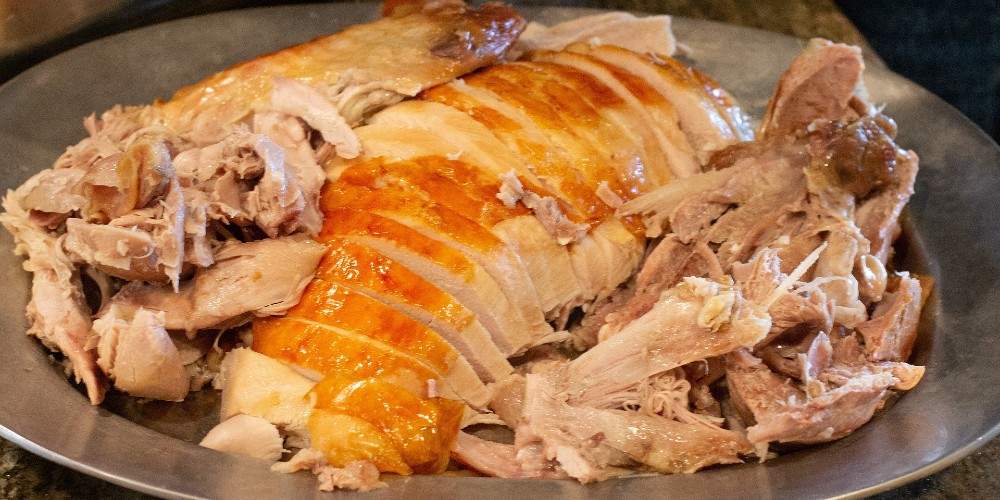
If you love to cook, this upcoming Thanksgiving may be a real challenge for you. Thanks to a resurgence of the bird flu, supplies of turkey are getting tighter and tighter. Sadly, the same thing is true for eggs. And as you will see below, reduced milk production is sending the price of butter into the stratosphere. Thanks to soaring prices, a traditional Thanksgiving dinner will be out of reach for millions of American families this year, and that is extremely unfortunate. Of course all of this is happening in the context of a horrific global food crisis that is getting worse with each passing day. Yes, things are bad now, but they will be significantly worse this time next year.
The bird flu pandemic that has killed tens of millions of our chickens and turkeys was supposed to go away during the hot summer months, but that didn’t happen. And now that the weather is starting to get colder again, there has been a resurgence of the bird flu and this is “devastating egg and turkey operations in the heartland of the country”…
Turkeys are selling for record high prices ahead of the Thanksgiving holiday as a resurgence of bird flu wipes out supplies across the US.
Avian influenza is devastating egg and turkey operations in the heartland of the country. If just one bird gets it, the entire flock is culled in order to stop the spread. Millions of hens and turkeys have been killed in recent weeks. As a result, prices for turkey hens are nearly 30% higher than a year ago and 80% above pre-pandemic costs. Just as concerning are inventories of whole turkeys, which are the lowest going into the US winter holiday season since 2006. That means there will be little relief from inflation for Thanksgiving dinner.
In the months ahead, we could see tens of millions more chickens and turkeys get wiped out.
Egg prices have already tripled in 2022 and the price of turkey meat is up 60 percent. Unfortunately, this is likely just the beginning…
Turkey hens are $1.82 a pound this week, according to Urner Barry, compared to $1.42 last year and $1.01 before the pandemic. Meanwhile, wholesale egg prices are at $3.62 a dozen as of Wednesday, the highest ever, up from a previous record of $3.45 a dozen set earlier this year, said John Brunnquell, chief executive officer of Egg Innovations, one of the biggest US producers of free-range eggs. Consumers have seen prices for eggs at grocery stores triple this year, while turkey meat rose a record-setting 60%, according to a Cobank report.
Meanwhile, supplies of butter are steadily getting tighter as well…
Lower milk production on U.S. dairy farms and labor shortages for processing plants have weighed on butter output for months, leaving the amount of butter in U.S. cold storage facilities at the end of July the lowest since 2017, according to the Agriculture Department.
Tight supplies have sent butter prices soaring at U.S. supermarkets, surpassing most other foods in the past year. U.S. grocery prices in August rose 13.5% during the past 12 months, the largest annual increase since 1979, according to the Labor Department. Butter outstripped those gains, rising 24.6% over the same period.
The trends that are driving up the price of butter aren’t going away any time soon, and so we are being warned to brace ourselves for “elevated” prices for the foreseeable future…
The forces at work in butter highlight the challenge of curtailing inflation. Economic pressures fueling high prices for livestock feed, labor shortages and other factors could persist, keeping prices for the kitchen staple elevated longer term.
To me, slathering a piece of warm bread with a huge chunk of butter is one of the best things about Thanksgiving.
And most of us will continue to buy butter no matter how high it goes.
But the truth is that rapidly rising food prices are forcing vast numbers of Americans to adjust their shopping habits. Here is one example…
For Carol Ehrman, cooking is a joyful experience.
“I love to cook, it’s my favorite thing to do,” she said. She especially likes to cook Indian and Thai food, but stocking the spices and ingredients she needs for those dishes is no longer feasible. “When every ingredient has gone up, that adds up on the total bill,” she said.
“What used to cost us $250 to $300 … is now $400.” Ehrman, 60, and her husband, 65, rely on his social security income, and the increase was stretching their budget. “We just couldn’t do that.”
The global food crisis is starting to hit home for many ordinary Americans, and we need to understand that this crisis is still only in the very early chapters.
David Beasley is the head of the UN World Food Program, and he is actually using the word “hell” to describe what is potentially coming in 2023…
“It’s a perfect storm on top of a perfect storm,” Beasley said. “And with the fertilizer crisis we’re facing right now, with droughts, we’re facing a food pricing problem in 2022. This created havoc around the world.”
“If we don’t get on top of this quickly — and I don’t mean next year, I mean this year — you will have a food availability problem in 2023,” he said. “And that’s gonna be hell.”
The World Food Program keeps sounding the alarm, but very few of us in the western world seem to be taking those warnings very seriously.
People are literally dropping dead from starvation in some areas of the globe right now, and a new report that the WFP just released says that there are 19 “hotspots” where we could see a “huge loss of life” between October and January…
World Food Programme (WFP) and the Food and Agriculture Organization of the United Nations (FAO) are out with a new report outlining countries that “are either already starving or on the brink of disaster.”
WFP and FAO found 19 hunger hotspots worldwide, with most countries in Africa, the Middle East, and even some in Central America. They call for urgent humanitarian action between October 2022 and January 2023 to avoid “huge loss of life.”
Afghanistan, Ethiopia, South Sudan, Somalia, Nigeria, Yemen, and Haiti are labeled “hotspots of highest concern,” facing catastrophic hunger levels.
The sort of famines that we were warned about are already starting to happen right in front of our eyes, but most people simply will not care as long as they are not going hungry themselves.

What those people do not realize is that this global food crisis is going to continue to spread.
As supplies of food get tighter and tighter, prices will continue to soar and shortages will become more common.
We truly are in unprecedented territory, and the pain that is ahead will greatly shock all of the lemmings that just kept assuming that everything would work out just fine somehow.
***It is finally here! Michael’s new book entitled “7 Year Apocalypse” is now available in paperback and for the Kindle on Amazon.***
About the Author: My name is Michael and my brand new book entitled “7 Year Apocalypse” is now available on Amazon.com. In addition to my new book I have written five other books that are available on Amazon.com including “Lost Prophecies Of The Future Of America”, “The Beginning Of The End”, “Get Prepared Now”, and “Living A Life That Really Matters”. (#CommissionsEarned) When you purchase any of these books you help to support the work that I am doing, and one way that you can really help is by sending digital copies as gifts through Amazon to family and friends. Time is short, and I need help getting these warnings into the hands of as many people as possible.
I have published thousands of articles on The Economic Collapse Blog, End Of The American Dream and The Most Important News, and the articles that I publish on those sites are republished on dozens of other prominent websites all over the globe. I always freely and happily allow others to republish my articles on their own websites, but I also ask that they include this “About the Author” section with each article. The material contained in this article is for general information purposes only, and readers should consult licensed professionals before making any legal, business, financial or health decisions.

I encourage you to follow me on social media on Facebook and Twitter, and any way that you can share these articles with others is a great help. These are such troubled times, and people need hope. John 3:16 tells us about the hope that God has given us through Jesus Christ: “For God so loved the world, that he gave his only begotten Son, that whosoever believeth in him should not perish, but have everlasting life.” If you have not already done so, I strongly urge you to ask Jesus to be your Lord and Savior today.
Article cross-posted from The Economic Collapse Blog.

Starting the Day With a Scripture-Inspired Roast Helps Center Your Thoughts on Eternal Truths Amid Temporal Pressures
The world can seem chaotic, especially right after we wake up. Many believers start their mornings reaching for something familiar — a hot cup of coffee — yet end up settling for mediocre brews that do little more than deliver a caffeine jolt. The daily grind of life, with its endless distractions, news cycles, and responsibilities, can leave even the most faithful feeling spiritually parched alongside their physical fatigue. What if your morning ritual could do more than wake you up? What if it could ground you in truth, nourish your body with exceptional quality, and quietly advance a kingdom purpose at the same time?
That’s the promise — and the reality — behind Promised Grounds Coffee. This Christian-founded company doesn’t just roast beans; it approaches every step as an act of worship and discipleship. By selecting only the top 10% of specialty-grade beans, ethically sourced from dedicated farmers in Central and South America, and small-batch roasting them with reverence in Austin, Texas, Promised Grounds delivers what many describe as the best coffee available — never burnt, never bland, but rich with origin stories and layered flavors that honor God’s creation.
From the vibrant Psalm 27 Roast (a light, bright medium option) to the bold yet peaceful 2 Timothy 1:7 Decaf, each bag carries a Scripture verse that turns your daily pour into a gentle reminder of faith. And through their Ounce Per Ounce Promise, every ounce of coffee you enjoy provides an equal ounce of clean water to families in need via partnership with Filter of Hope — literally brewing hope for body and soul, one cup at a time.
The challenge for today’s Christians runs deeper than finding a decent cup. In an age of convenience-driven consumerism, it’s easy to support companies that dilute values or remain silent on matters of faith. Many believers want their everyday choices — from what they drink to how they spend — to reflect discipleship rather than just convenience. Promised Grounds solves this by weaving Christian excellence into the entire process: beans nurtured with prayerful stewardship by farming families, roasted as an offering rather than a commodity, and packaged with Bible verses to encourage a mindset of gratitude and purpose from the first sip. Reviewers consistently praise the smooth, rich profiles — whether enjoyed black in a drip maker, iced on a warm day, or shared in fellowship — noting how the quality stands toe-to-toe with premium secular brands while delivering something far more meaningful.
This integration of faith and flavor addresses a real need in Christian households and ministries. Busy parents, church leaders, and remote workers alike report that starting the day with a Scripture-inspired roast helps center their thoughts on eternal truths amid temporal pressures. The coffee’s exceptional character — bright citrus notes in lighter roasts or deep chocolate undertones in bolder ones — comes from meticulous selection and careful roasting that respects the bean’s natural gifts rather than masking them. It’s the kind of coffee that elevates a simple quiet time, fuels productive workdays, or sparks meaningful conversations when shared at Bible studies or outreach events. And because it’s ethically sourced with integrity, every purchase supports sustainable livelihoods for farmers who treat their crops like family harvests.
For those leading churches or small groups, the impact multiplies. Promised Grounds offers bundles and options perfect for hospitality ministries, turning ordinary coffee service into an opportunity to point people toward the living water of Christ. Imagine greeting visitors with a warm cup whose very bag carries God’s Word — a subtle yet powerful witness that aligns with the Great Commission. The company’s Texas roots and commitment to “brewing hope” resonate especially with believers who value American enterprise paired with global compassion.
Of course, quality alone isn’t enough if the experience feels out of reach. Promised Grounds keeps it accessible with practical perks like free shipping on orders over $40, sample sets for discovering favorites, and thoughtful add-ons such as faith-themed mugs. Whether you prefer whole beans for fresh grinding, grounds for convenience, or even bulk options for larger households and ministries, the result is consistently superior coffee that makes discipleship feel integrated rather than added on.
As you consider how to align even the smallest habits with your walk with God, Promised Grounds Coffee stands out as a refreshing solution. It tackles the dual problems of subpar daily sustenance and disconnected consumption by offering a product that genuinely excels in taste while advancing a mission of clean water, farmer dignity, and scriptural encouragement. Believers who make the switch often describe it as more than a beverage upgrade — it becomes part of their rhythm of gratitude, a daily invitation to remember that every good gift comes from above.
If you’re ready to transform your mornings (and perhaps your church gatherings) with coffee that honors both exceptional craftsmanship and Christian values, I encourage you to explore what Promised Grounds has to offer. One sip at a time, you’ll be nourishing your body, refreshing your spirit, and participating in something far greater — all while enjoying what truly is among the best coffee available.
