

About three years ago, before this Covid swill was poured down our throats, my wife pointed out an article in the Toronto Star about a proposal to have cars fitted with bumper cameras, or some other nonsense intended to cut down on illegal parking, hit and run offenses, and various other “bad” things that if recorded on video would make all of our lives better.
Surely anything that would lessen the crime rate was a good thing.
“Can you believe this bullshit!” I blurted out, as my defiant shrew ire flared up. “I think it’s a good idea,” piped in my wife.
Picture the familiar cartoon of a man clenching his teeth with the black cloud over his head—maybe with some thunderbolts cracking out of it.
So why would this bother me so much? That seemed obvious, the old “what if this gets in the wrong hands” mantra went through my head—really? “It just isn’t right!” I silently exclaimed.
First of all, it was rather fishy that these things would just come with a new car and you wouldn’t have a choice. Then of course it is quite obvious it is an infringement on privacy—there are many ways that such a thing could be “used against you.”
Oddly, that wasn’t what bothered me the most. I actually thought more about the poor criminal whose privacy would be violated rather than mine. I thought about how a world without crime would be a bore, and that it just wasn’t fair to wipe all crime out of the culture making it squeaky clean—what would we do without crime novels to read?
Am I crazy?
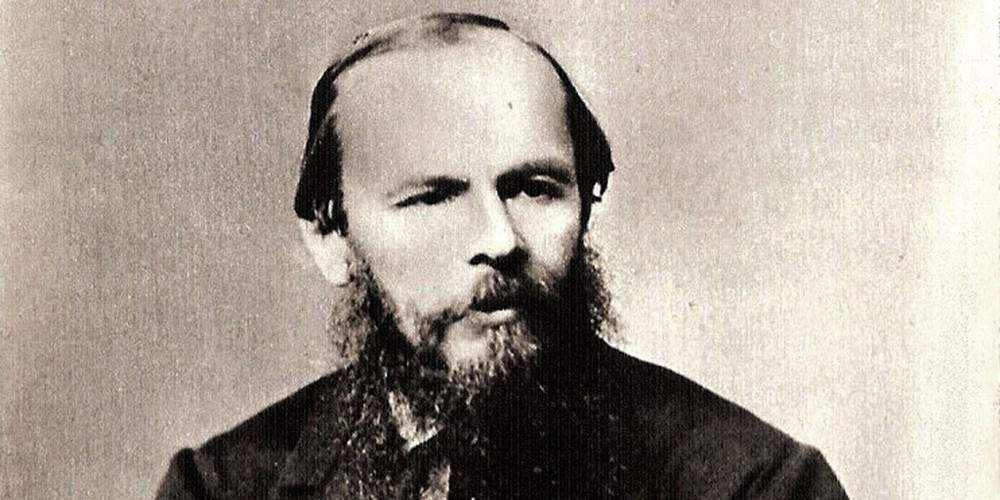
Dostoevsky had a word to say about utopian cultures back in 1864 (like a crimeless one). He thought a perfect world would be a disaster. In his novel Notes from Underground he says:
Now I ask you: what can be expected of man as a being endowed with such strange qualities? Shower him with all earthly blessings, drown him in happiness completely, over his head, so that only bubbles pop up on the surface of happiness, as on water; give him such economic satisfaction that he no longer has anything left to do at all except sleep, eat gingerbread, and worry about the non cessation of world history––and it is here, just here, that he, this man, out of sheer ingratitude, out of sheer lampoonery, will do something nasty.”
Here is a bit of commentary from a website discussing Dostoevsky’s work:
Notes From Underground (1864) is a blistering assault on utopianism, socialism, and Marxism based on Dostoevsky’s view of human nature. Even if a utopian society was attainable, says Dostoevsky, we would not be satisfied by endless food, comfort and pleasure. If you satisfied every human desire, we would throw it all away just for something interesting to happen, just to give ourselves a challenge to overcome and prove that we are human beings and not lap dogs. According to Dostoevsky, we would rather wallow in misery and self-pity than be handed everything on a silver-platter! It is our unique proclivity for destructive decisions that make us human, and we wouldn’t give that up for anything—even heaven on earth.”
This resonates with me. And I wonder now if I was channeling ol’ Fyodor that day in the kitchen talking to my wife.
It does make sense. I remember a while back I was watching an old Twilight Zone episode about a bad-guy criminal who gets killed, and he thinks he has more than likely gone to hell. But rather than devils dancing around and fire lapping at his feet, some nice dude in a white Panama suit greets him.
“What would you like, my friend,” the guy says…and the episode continues with this poor schmuck getting every single desire he could imagine met. He wins every poker hand, and drinks bottle after bottle of booze without getting sick, has beautiful women climbing all over him.
“I’m in heaven!” he exclaims—until he gets bored. He then begs the white-suit guy to tell him where he actually is, “This ain’t heaven is it! Tell me!” he screams. My 67-year-old memory doesn’t serve me all that well, and I can’t remember details about the show, but I think the Panama guy says, “What do you think?”—Imagine, if you will.
I remember this episode had quite an impact on me, and I decided right then and there never to pursue a life of crime.
Now, let me be clear, I am not a fan of crime.
Of course there is crime, and then there is crime. What I am thinking here is a bit more metaphoric. And I do actually believe we could live in a relatively crime-less society and do pretty well (as I write that sentence, I hear my wise voice in my head saying, “Who are you kidding?”—think of the movie Demolition Man. If you don’t know it, watch it).
But I have to admit, that sort of society doesn’t seem natural. Life, to be natural and fulfilling and meaningful has to have the dark side somewhere integrated in the experience. There must be shadow, crime, disease, discomfort, losing, disappointment, sorrow, stupidity, depression—need I go on?
Yin/Yang stuff, “you can’t know happiness unless you’ve experienced sadness”—you get the picture. As cliché as this sounds, it is sadly true.
Utopias are always actually dystopias in disguise. If you read a novel that claims to be a utopian novel, you quickly see that the society described is not all that benign. Many novels are described as dystopian literature but are presented as utopias, consider Brave New World and Fahrenheit 451.

You just can’t create a perfect society. Not only is it creepy to think about, but it simply would not work.
From an article on the Internet:
In order to find or create a utopia, you must also discover or create a dystopia. When there is a perfect place, an equally opposite place hides from within it. From the outside, utopia and dystopia can be clearly defined; a dystopia is a terrible place ruled by unrelenting dictators forcing slavery and their ideas upon the population while a utopia is a perfect, ideal place to live in for any man or woman.”
Interestingly enough we currently live in a “Utopia wanna be.” We have people believing that if we follow the agenda, which has put us through unwarranted draconian demands, we might be able to avoid disease and death.
These people generally feel at war with nature, and at peace with a distant (at this point in time) belief they could live forever if the proper science creates devices, artificial organs and tissue, brain implants and the like to transcend our sloppy and inferior flesh and blood bodies.
These people also believe we can erase crime from the culture with more militaristic police, more devices for surveillance, digital IDs, digital currency, and more control over all people so the ones who have “nothing to hide” can be separated from the ones who have committed crimes against the system (which, of course, could be anything the system deems criminal—case in point, Canada’s Trucker Convoy in the summer of ’22).
Again, not everyone on that side of the fence (sheep) think this way—some are not even sheep. Some are just frightened out of their wits, some are just blind, some are just totally unwilling to look anywhere beyond their noses, and yes, some are just stupid. But I do have to say I believe most people over there (sheep) believe that they can get through life easier if they do what the authorities say to avoid disease, death, suffering, (nature, dirt, germs, insects (unless they eat them)), hot summers and just plain, uncomfortable, living.
The “agenda” psychologically manipulates people to believe that their lives can indeed be perfect, that they can indeed avoid disease, even death, that “Zero Covid” is indeed possible, and that the state will indeed create a perfect world for them by never putting them in a position where they have to think for themselves and take responsibility for their own lives.
Needless to say, this simply will not work and will ultimately end in disaster. If we survive this ordeal we will look back and see that this was the utopia that never was—and God willing, never will be.
Article cross-posted from Off-Guardian.
Two Storms, One Harvest

Every food crisis in living memory has been a one-shock event. The 2008 price spike was a commodity bubble. The 2020 shortages were a logistics failure. The 2022 grain scare was a war on one exporter’s ports. Each time, the system bent, adjusted, and recovered, and each time the experts assured us afterward that global markets are simply too big and too diversified to fail.
What nobody in Washington seems eager to discuss is that 2026 is shaping up to be something the modern food system has never actually faced. Two independent shocks, one climatic and one geopolitical, are converging on the same harvest cycle at the same time. Not sequentially. Simultaneously.
Start with the weather. The Pacific Ocean is currently building toward what forecasters now openly call a record event. NOAA’s Climate Prediction Center puts the odds of at least a strong El Niño near 88 percent, with roughly two in three odds it reaches “very strong” status, the tier reserved for perhaps three or four events in the entire satellite era. Every major global model now projects a median peak in Super El Niño territory, and most of them project it exceeding the 2015-16 event, which until now held the modern record. Sea surface anomalies were already brushing the super threshold in mid-July, months before these events normally peak. The atmosphere has already shifted into El Niño mode, and the event is forecast to crest in late fall and early winter.
This is not about “climate change.” It’s about the standard cycles of weather, and the cycle we’re currently in is one that has likely devastated societies in the past. We’re better prepared as a society today, but not all Americans are equally prepared.
Serious households have started doing the quiet math on their own. Grocery bills tell part of the story, and the forecast maps tell the rest, which is why long-term food storage has moved from fringe hobby to mainstream line item in the family budget, with established suppliers like Heaven’s Harvest seeing demand from people who five years ago would have rolled their eyes at the idea. That instinct is not paranoia. It is pattern recognition, and the pattern is worth walking through carefully.
Editor’s Note: Heaven’s Harvest IS a sponsor, but the warnings of this article are real and would be written even if we didn’t have a survival food sponsor. With that said, those who take advantage of what they offer can use promo code “Patriot” for 15% off.
The Fertilizer Clock Is Already Running
While the Pacific warms, the second shock has been unfolding in the Strait of Hormuz. The conflict with Iran turned the world’s most important energy chokepoint into a contested waterway, and the consequences reach far beyond the gas pump. Roughly a third of global fertilizer trade moves through Hormuz, and the disruption sent urea prices up 86 percent year over year by March, with a 53 percent jump in a single month.
The World Bank projects energy prices rising about 24 percent in 2026 and fertilizer about 31 percent. By its own accounting, fertilizer prices ran 35 percent higher in the first five months of this year than the same period last year.
Here is the mechanism the nightly news will not explain. Fertilizer is not a grocery item. It is a time-delayed input. The nitrogen a farmer in Iowa or Punjab could not afford to apply this spring does not show up as a problem this spring. It shows up as a thinner harvest six to twelve months later.
The World Bank’s own food security brief concedes that the effects of reduced applications earlier this season “are likely to become visible only later in harvest outcomes.” Translate that from institutional language into plain English and it means this. The damage is already done, it is already in the ground, and we are simply waiting for it to arrive on the shelf.
Now check the calendar. Six to twelve months from the spring planting season lands us squarely in late 2026 and early 2027. Which is precisely when the strongest El Niño in the instrumental record is forecast to peak, bringing its signature droughts to Southeast Asia, Australia, southern Africa, northern Brazil, and South Asia, the very regions that grow the world’s rice, sugar, and oilseeds.
The World Bank warns openly that a strong El Niño “could disrupt multiple crop belts simultaneously” on top of the conflict-driven input costs. Their baseline projection assumes the Middle East disruptions ease by autumn. What in the last two years of Middle East history suggests that assumption is safe?
The System Has No Slack Left
The comfortable answer is that global markets always adjust. But adjustment requires slack, and the slack is gone. Global cereal production is expected to decline from last year’s records even before El Niño does its work. The UN World Food Programme, hardly a den of right-wing preppers, is calling this the most significant disruption to its supply chains since Covid and the invasion of Ukraine, and its supply chain director put the stakes bluntly.
Today’s supply chain challenges are tomorrow’s hunger crisis.
There is also a political dimension that markets cannot price. When food gets scarce, governments do not behave like economists. They behave like politicians. Export bans, hoarding mandates, and panic buying at the national level turned the modest rice shortfall of 2008 into a global crisis, and analysts are already warning that import-dependent nations are the first dominoes.
The 2015-16 Super El Niño, a far weaker event than what is now forecast, threw tens of millions into food stress across Africa and Asia. This one is projected to be stronger, and it arrives with fertilizer already rationed by price and shipping lanes already contested by missiles.
What Joseph Knew
Scripture does not treat preparation for lean years as faithlessness. It treats it as wisdom delivered in advance to those willing to act on it.
Behold, there come seven years of great plenty throughout all the land of Egypt: And there shall arise after them seven years of famine; and all the plenty shall be forgotten in the land of Egypt.
Joseph did not respond to that warning with a hashtag or a committee. He stored grain during the years of abundance, and when the famine came, Egypt stood while its neighbors begged. The lesson is not that famine is certain. It is that the time to prepare is precisely when preparation still looks optional.
Nobody who filled a pantry in a year of plenty has ever regretted it, and nobody standing in an empty aisle has ever been glad he waited for certainty.
None of this calls for panic, and panic is the enemy of sound judgment anyway. It calls for the same unglamorous prudence our grandparents considered ordinary. Keep some cash margin, know your local growers, and put real food in deep storage while it is cheap and available, because the entire arc of this story is that cheap and available is a closing window.
Families looking for a straightforward place to start can visit Heaven’s Harvest and use promo code Patriot for 15 percent off long-term storable food. The forecasts may yet soften, the strait may yet reopen, and we should pray they do. But hope is a fine thing to hold and a foolish thing to eat.

The particular Dostoevsky quote given would be a blistering assault on utopianism and the unattainable end ideal of communism, but not socialism – not the fascism, socialism, or marxism that pursues that utopia (the agenda, as the author puts it). In such systems, people are required to work. Alluding to the previous article on the fact that God put everything into motion such that excess is naturally produced, the socialist pursuit demands the opposite – that all waste be eliminated (even though scientifically speaking there’s no such thing as waste – it all feeds back into the ecosystem, and it all gets used as God designed, like a perfectly oiled machine). Capitalism, on the other hand, tends to produce excess, errs on the side of excess, and if implemented according to God’s standards, will reward those who are constructive and who don’t do nasty stuff with more excess. While those who don’t work, are lazy, who do nasty stuff, etc. have less.
In some respects, that quote would advocate for socialism, fascism, and other authoritarian ideologies that are essentially the pursuit of utopia, rather than utopia itself. Make people work. Allow no excess. And so on. Because of the belief that idle hands are always the devil’s workshop. The reason the man living in utopia would be inclined to do nasty stuff, in the context of Marxism, is because nasty stuff is what gave it to him in the first place – it’s the product of nasty stuff – greed, envy, theft, enslavement, etc. – all the nasty stuff the pursuit and production of that utopia would require.
As far as the yin-yang Confucianism mess is concerned, it’s extremely antithetical to scripture. The basic message, from a logical standpoint, is that evil is justified. Yet the truth is that it absolutely is not justified under any circumstances, for any reason. The idea that evil is justified in order to bring about good is the same reprobate thinking that exists in the wicked mind of every criminal in existence, particularly including the most genocidal maniacs in history. Many Christian apologists have destroyed the arguments of Confucianism far better than I ever could. But the idea that joy can’t exist without suffering, good can’t exist without bad, etc. is nonsensical. Just look at a young child. Innocent, hasn’t known suffering yet is happy, hasn’t known evil but is good, filled with awe and wonder at God’s creation, in peace, comfort, and security just knowing they are safe in the arms of their parents. It’s the same way with our Father in Heaven. It’s the reason He gave us His Word. It’s the reason He died for us. We don’t have to know evil in order to know good. We don’t have to know suffering in order to know joy and peace. Because of Him, evil has no place. The closest thing to utopia that has ever existed on this Earth is the Garden of Eden. And that’s where the Dostoevsky quote does not support Confucianism in the least – because the utopia came first – the good came first – the happiness came first. There is no interdependence between the two. One is not required for the other. Evil came as the result of disobedience.
There are unfortunately a lot of people in law enforcement and intel these days who believe in, or appeal to, Confucianism. They share that view with the worst of criminals. If you want to discover where and why they often go wrong, that might be an excellent place to start.
The idea that evil brings about good is also the basic message of darwinism – that good has resulted from millions of years of continuous evil, and that continued evil will produce more good. The worst applied example of it, of course, being the nazis. Who wrongly believed, as many do today, that science can replace religion. It cannot. It never will. And it’s not even close. It falls infinitely short.
There is only one pursuit of utopia, in the history of mankind, that ever worked, and led to good things. And that is the pursuit of the utopia of Heaven, as outlined in God’s Word, by the work of Jesus Christ. And why has it worked? Because it’s true, that’s why.
In other words, to shorten my long-winded post. It’s not the utopia that’s evil, it’s the pursuit of it that’s evil. It’s the ultimate sin of pride, mankind believing it can essentially become God, as one definition of utopia would be that everyone is perfect in all ways. If just one single person isn’t infinitely perfect in all ways, then there is no utopia.