

It is starting to look a lot like 2008. Extremely long lines are forming at food banks all over the country, job losses and layoffs are starting to spike, countless small businesses are right on the brink of going under, a housing crash that could be even worse than what we witnessed in 2008 has begun, and large numbers of Americans are actually moving into sheds in a desperate attempt to save money. This new economic downturn is still only in the very early stages, and yet the economic suffering that we are already seeing all over the country is truly frightening. If people are struggling this much now, what will conditions be like six months down the road?
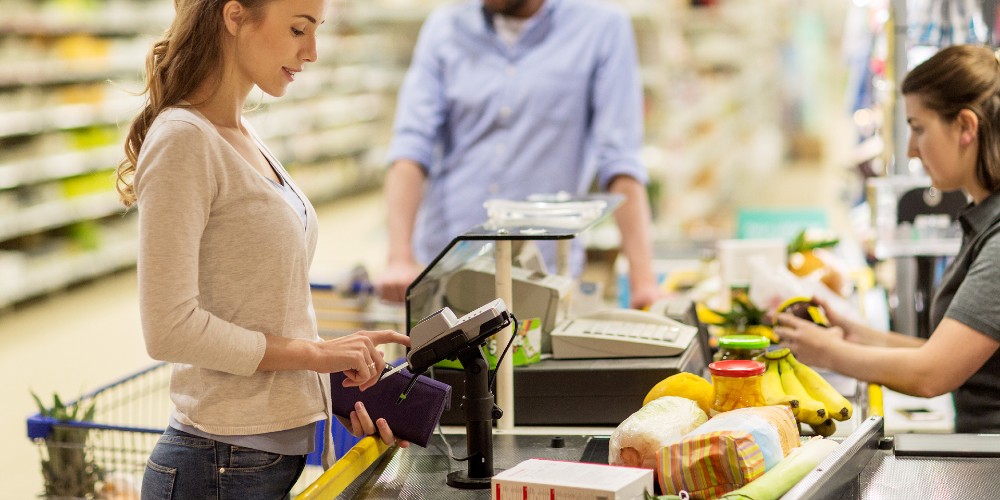
If you find yourself cutting back spending on groceries and gasoline these days, you are definitely not alone.

According to a Suffolk University/USA TODAY survey that was just released, about half the nation is in the same boat…
According to the survey, 45.3 percent of Americans have had to cut back their spending on groceries, and 59.4 percent said they are now going out to eat less often as the result of inflation.
Another 48 percent said they are driving less, and 45.4 percent said they are postponing or canceling vacations/travel plans due to rising costs.
Inflation is absolutely eviscerating our standard of living, and millions upon millions of Americans are deeply hurting right now.
And when people are deeply hurting, they often become quite desperate.
There has been a very alarming rise in shoplifting all over the United States, and food and other essentials have become prime targets.
In New York City, things have gotten so bad that one store has actually decided to start “locking up cases of Spam”…
With robberies up nearly 40 percent in New York City, it’s perhaps no surprise that a local pharmacy has taken the extreme steps of locking up cases of Spam.
Twitter user Willy Staley noticed the tins of $3.99 processed meat sealed in a theft-proof plastic container at the Duane Reade inside the Port Authority bus depot in Midtown Manhattan – known as one of New York’s grimiest areas.
Staley also found a $3.49 tin of Celebrity ham, which retails for a similar price, protected with the same measure.
You can see a photo of spam in a “theft-proof plastic container” right here.
I have a couple of reactions to this. First of all, who in the world would pay $3.99 for a can of Spam? It is absolutely disgusting and I wouldn’t eat it under any circumstances even if someone gave it to me for free.
Secondly, why would anyone ever steal a can of Spam when they are so many other options that are actually edible? I just don’t understand.
Of course it isn’t just Spam that is being locked up these days. According to CNN, at this point a lot of retailers have been transformed into “fortresses” due to rapidly rising theft…
These days, it feels like many stores are fortresses.
Most of the products on the drug store shelf are behind lock and key, even everyday items such as deodorant, toothpaste, candy, dish detergent, soap and aluminum foil. Manufacturers that supply lock cases and devices to chain stores have seen their businesses boom.
The reason why this is happening on such a widespread basis is because “organized retail crime” has become a really big thing here in the United States…
Walgreens and Rite Aid have said that the problem of organized retail crime — rings of criminals that steal products from stores and then often resell them on online marketplaces — is causing them to lock more products up and close some stores.
If this is taking place while the U.S. economy is still at least somewhat relatively stable, what will it be like once we officially plunge into a full-blown economic depression?
Another very troubling sign is the massive lines that we are starting to see at food banks all over the country.

According to Zero Hedge, food banks from coast to coast are reporting “record high demand and record low supply”…
In the past month there has been a steady stream of reports from pantries across the US stating that they are now hitting record high demand and record low supply. From New York to Wisconsin to Ohio to Missouri to Florida to Arkansas to California and beyond, pantries are running out. On top of that, it’s the middle of summer – The busiest time for food banks and the Salvation Army is during the winter holidays.
The majority of pantries indicate that they are most in need of cash donations and that these have started to fade out. When it comes to necessities, most people will not or cannot reduce the frequency of their purchases. Food, gas, housing, utilities, etc. are fixed income costs, and when these costs rise workers must cut costs elsewhere. Charities are usually the first to see the chopping block.
The level of demand at our food banks is only going to increase during the months ahead. At some point there simply will not be enough food for everyone.
I really hope that you are getting prepared for the very difficult times that are coming, because there will be a limit to what charitable organizations are able to do for you.
Some Americans are attempting to radically reduce their expenses by literally moving into a shed.
One woman in Texas that was interviewed by Newsweek really regretted spending all of her money on a shed because the living conditions turned out to not be pleasant at all…
A woman’s account of her life in a $2,000 shed during the Texas heatwave has sparked an anguished debate about affordable housing.
Elizabeth Rishforth, posting on TikTok under the username @a_nobody_goodbye, shared a video of herself red-faced and sweating on June 23. She was living in a shed without electricity or running water in Houston, Texas, she said.
“Me and my boyfriend [used] all the savings we had to get the shed,” Rishforth told Newsweek.
But others have found “shed life” to be quite nice.

A mother of four named Jessica Taylor is actually loving “shed life” even though her family uses a “composting bathroom”…
“One of the things people find really weird about us living in a shed is that we use a composting bathroom rather than a traditional toilet,” Taylor, 30, who now resides in a lofted shed in western Tennessee, told The Post.
“It’s a bucket system,” the former bartender-turned-home-schooler (or shed-schooler) explained of her hut’s outhouse. “And [when] you [urinate or defecate], you cover it with wood chips each time. After two days, whether the bucket is full or not, we dump [the waste] into a composting bin in the woods, and then after a couple of years, [the waste] turns into soil for ornamental plants.“
In recent months, housing has become the most unaffordable that it has ever been in the United States, and so “shed life” has absolutely exploded in popularity.
In fact, the “#ShedLife” hashtag has now been shared on TikTok more than 22 million times…
On TikTok, shed dwellers have stamped videos of their hovels-turned-homes with the hashtag #ShedLife over 22.2 million times.
“More and more people are breaking free from the mindset that you have to have the big expensive, fancy house to feel like they’re making it,” said Taylor of the allure of shed life. “There’s value in living modestly. We’re able to spend more time together gardening and enjoying nature rather than working to afford lavish accommodations.”
What about you?
Would you like to live in a shed?
As the economy continues to deteriorate, more and more Americans will be forced to choose “alternative lifestyles” in the months ahead.
But of course the elite are going to continue to insist that everything is just fine. If you can believe it, the definition of “recession” on Wikipedia was just changed to reflect the narrative of the Biden administration, and it has been locked to prevent any additional editing.
Do they actually believe that such heavy-handed measures will be effective?
The truth is that most Americans know that we are in a recession, and many have pointed out that even Bill Clinton has publicly acknowledged that a recession happens when GDP is negative for two quarters in a row.
But as I noted earlier, what we have been through so far is just the tip of the iceberg.
This economic downturn is going to get a lot worse, and that means that millions upon millions of Americans will soon become even more desperate.
***It is finally here! Michael’s new book entitled “7 Year Apocalypse” is now available in paperback and for the Kindle on Amazon.***
About the Author: My name is Michael and my brand new book entitled “7 Year Apocalypse” is now available on Amazon.com. In addition to my new book I have written five other books that are available on Amazon.com including “Lost Prophecies Of The Future Of America”, “The Beginning Of The End”, “Get Prepared Now”, and “Living A Life That Really Matters”. (#CommissionsEarned) When you purchase any of these books you help to support the work that I am doing, and one way that you can really help is by sending digital copies as gifts through Amazon to family and friends. Time is short, and I need help getting these warnings into the hands of as many people as possible.
I have published thousands of articles on The Economic Collapse Blog, End Of The American Dream and The Most Important News, and the articles that I publish on those sites are republished on dozens of other prominent websites all over the globe. I always freely and happily allow others to republish my articles on their own websites, but I also ask that they include this “About the Author” section with each article. The material contained in this article is for general information purposes only, and readers should consult licensed professionals before making any legal, business, financial or health decisions.
I encourage you to follow me on social media on Facebook and Twitter, and any way that you can share these articles with others is a great help. These are such troubled times, and people need hope. John 3:16 tells us about the hope that God has given us through Jesus Christ: “For God so loved the world, that he gave his only begotten Son, that whosoever believeth in him should not perish, but have everlasting life.” If you have not already done so, I strongly urge you to ask Jesus to be your Lord and Savior today.
Article cross-posted from The Economic Collapse Blog.
Starting the Day With a Scripture-Inspired Roast Helps Center Your Thoughts on Eternal Truths Amid Temporal Pressures
The world can seem chaotic, especially right after we wake up. Many believers start their mornings reaching for something familiar — a hot cup of coffee — yet end up settling for mediocre brews that do little more than deliver a caffeine jolt. The daily grind of life, with its endless distractions, news cycles, and responsibilities, can leave even the most faithful feeling spiritually parched alongside their physical fatigue. What if your morning ritual could do more than wake you up? What if it could ground you in truth, nourish your body with exceptional quality, and quietly advance a kingdom purpose at the same time?
That’s the promise — and the reality — behind Promised Grounds Coffee. This Christian-founded company doesn’t just roast beans; it approaches every step as an act of worship and discipleship. By selecting only the top 10% of specialty-grade beans, ethically sourced from dedicated farmers in Central and South America, and small-batch roasting them with reverence in Austin, Texas, Promised Grounds delivers what many describe as the best coffee available — never burnt, never bland, but rich with origin stories and layered flavors that honor God’s creation.
From the vibrant Psalm 27 Roast (a light, bright medium option) to the bold yet peaceful 2 Timothy 1:7 Decaf, each bag carries a Scripture verse that turns your daily pour into a gentle reminder of faith. And through their Ounce Per Ounce Promise, every ounce of coffee you enjoy provides an equal ounce of clean water to families in need via partnership with Filter of Hope — literally brewing hope for body and soul, one cup at a time.
The challenge for today’s Christians runs deeper than finding a decent cup. In an age of convenience-driven consumerism, it’s easy to support companies that dilute values or remain silent on matters of faith. Many believers want their everyday choices — from what they drink to how they spend — to reflect discipleship rather than just convenience. Promised Grounds solves this by weaving Christian excellence into the entire process: beans nurtured with prayerful stewardship by farming families, roasted as an offering rather than a commodity, and packaged with Bible verses to encourage a mindset of gratitude and purpose from the first sip. Reviewers consistently praise the smooth, rich profiles — whether enjoyed black in a drip maker, iced on a warm day, or shared in fellowship — noting how the quality stands toe-to-toe with premium secular brands while delivering something far more meaningful.
This integration of faith and flavor addresses a real need in Christian households and ministries. Busy parents, church leaders, and remote workers alike report that starting the day with a Scripture-inspired roast helps center their thoughts on eternal truths amid temporal pressures. The coffee’s exceptional character — bright citrus notes in lighter roasts or deep chocolate undertones in bolder ones — comes from meticulous selection and careful roasting that respects the bean’s natural gifts rather than masking them. It’s the kind of coffee that elevates a simple quiet time, fuels productive workdays, or sparks meaningful conversations when shared at Bible studies or outreach events. And because it’s ethically sourced with integrity, every purchase supports sustainable livelihoods for farmers who treat their crops like family harvests.
For those leading churches or small groups, the impact multiplies. Promised Grounds offers bundles and options perfect for hospitality ministries, turning ordinary coffee service into an opportunity to point people toward the living water of Christ. Imagine greeting visitors with a warm cup whose very bag carries God’s Word — a subtle yet powerful witness that aligns with the Great Commission. The company’s Texas roots and commitment to “brewing hope” resonate especially with believers who value American enterprise paired with global compassion.
Of course, quality alone isn’t enough if the experience feels out of reach. Promised Grounds keeps it accessible with practical perks like free shipping on orders over $40, sample sets for discovering favorites, and thoughtful add-ons such as faith-themed mugs. Whether you prefer whole beans for fresh grinding, grounds for convenience, or even bulk options for larger households and ministries, the result is consistently superior coffee that makes discipleship feel integrated rather than added on.
As you consider how to align even the smallest habits with your walk with God, Promised Grounds Coffee stands out as a refreshing solution. It tackles the dual problems of subpar daily sustenance and disconnected consumption by offering a product that genuinely excels in taste while advancing a mission of clean water, farmer dignity, and scriptural encouragement. Believers who make the switch often describe it as more than a beverage upgrade — it becomes part of their rhythm of gratitude, a daily invitation to remember that every good gift comes from above.
If you’re ready to transform your mornings (and perhaps your church gatherings) with coffee that honors both exceptional craftsmanship and Christian values, I encourage you to explore what Promised Grounds has to offer. One sip at a time, you’ll be nourishing your body, refreshing your spirit, and participating in something far greater — all while enjoying what truly is among the best coffee available.

$120 for $70 worth of food. Two weeks ago it was $110
Thank a democrat.