

Perhaps one of the more astute observers of Russian foreign policy in recent decades has been John Mearsheimer at the University of Chicago. He has spent years warning against US-led NATO enlargement as a tactic that would provoke conflict with the Russian regime. Moreover, Mearsheimer has sought to explain why this conflict exists at all. Why, for example, doesn’t the Russian regime just accept US-led expansionism in the region? Or perhaps, more precisely, why have so many Russians continued to support Vladimir Putin in his efforts to counter US influence in the region? After all, many countries—Poland and Estonia, for instance—have benefited materially from embracing “the West.”
For Mearsheimer the answer to this question is related to the question of why the Iraqis didn’t just accept the US’s occupation of their country. Why did so many Iraqis refuse to embrace the promised “freedom” and “democracy” the US regime said would flow from American conquest?
The answer for Mearsheimer—as he outlines in his book on “liberal hegemony”—can be explained larger by nationalism. As Mearsheimer puts it,
I believe that nationalism is the most powerful political ideology in the world. I believe it is no accident that the world is populated with nation-states. I think the United States is a thoroughly nationalist country. …when you hear Americans talk about American exceptionalism, American exceptionalism is American nationalism at play.”
When Mearsheimer says that nationalism is a driving force behind the US’s conflicts with places like Russia or Iraq, he’s not just talking about Russian nationalism or Iraqi nationalism. He’s talking about American nationalism as well. American multilateralism and internationalism is really just American nationalism.
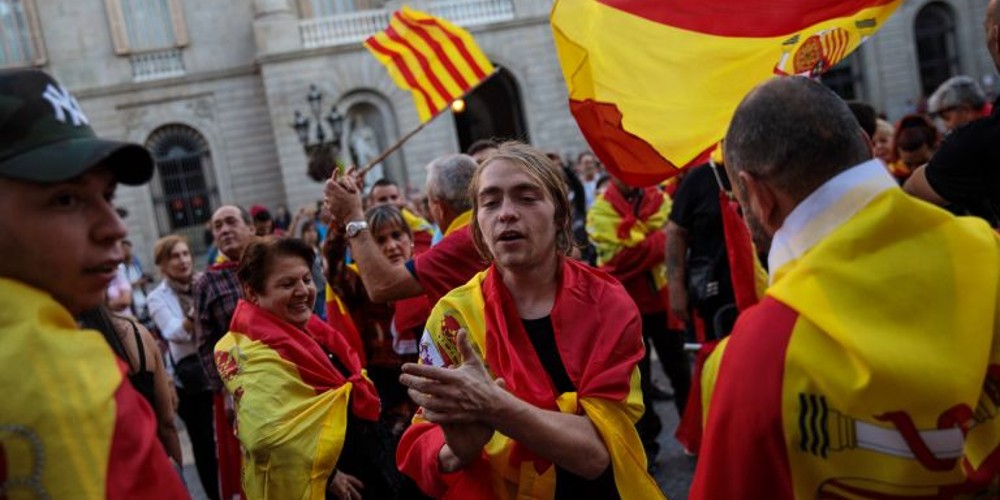
He’s right, and this reality extends far beyond US, Russia, and Iraq. The overwhelming majority of human beings on earth today are nationalists to one degree or another. One’s nationalism can be held with varying degrees of enthusiasm, of course, but the fact is the notion remains exceptionally popular. Its popularity explains in part why national states continue to be the dominant means of organizing polities on earth today.
It doesn’t have to be this way. There are other ways of organizing society and other ways of thinking of ourselves and how we fit into the world. The idea of nations and nation-states as we now conceive of them is a relatively modern idea that would once have seemed bizarre and alien to most human beings 400 years ago. For now, though, nationalism continues to be one of the defining ideologies of our time, and it may be helpful to examine its history and how nationalism became so important.
Where Does Nationalism Come From?
Nationalism has proven to be a concept that is difficult to define although it clearly is something that exists and affects the world around us. Nonetheless, we can make observations about nationalism that provide us with a better understanding.
The first is that nationalism is an ideology. That is, it is a set of ideas that forms our own notions about membership in a community shared with other human beings. According to the ideology known as nationalism, we share common interests and ways of living with other people in our national group. Very often, this national group coincides very closely with a particular state. This we often call a “nation-state.”
This sense of national belonging is not to be confused with a mere sense of community. People in face-to-face societies naturally enjoy a sense of community with the other people in their cities or villages. People in city-states and tribal societies, for example, encounter this on a daily basis. Tribal communities may number only in the hundreds or low thousands and very often city-states—the Republic of Florence, for example—had inhabitants numbering only in the tens of thousands. Bonds through kinship, proximity, daily encounters, and economic interest are common in societies of this sort. Feelings of nationalism, however, suggest something on a larger scale and with fewer organic bonds.
The influential historian of nationalism Benedict Anderson has therefore described national groups as “imagined communities” because they rely on “invented” bonds that are far less self-evident than the bonds of in-person shared activities and extended family connections. Or, as Anderson is careful to note, nationalism is not naturally occurring, and ”[n]ationalism is not the awakening of nations to self-consciousness: it invents nations.”1 [emphasis in the original] Anderson continues:
Consequently, the members of even the smallest nation will never know most of their fellow-members, meet them, or even hear of them, yet in the minds of each lives the image of their communion.2
Another important aspect of nationalism is that it is limited and never universalist. By definition, nationalism limits who is included in the imagined community, and expressly defines most human beings as “outside.” That is, as Anderson puts it, “[n]o nation imagines itself coterminous with mankind.”3
This can be contrasted with other concepts that define a polity or community. For example, the ideology underpinning empires—such as the Roman Empire—posits that human communities outside the empire are simply people who have not been conquered yet and incorporated into the Empire. Their inclusion within the empire does not depend on a conquered people speaking any particular language or practicing any particular cultural practices. They need not join a Roman “nation.” They need not “assimilate.” They need only pay tribute and submit themselves to Roman rule. Conversely, these people outside the empire are not thought of as being part of another nation. They’re simply potential subjects who do not yet enjoy the benefits of being subjugated by the Emperor.
Nationalism is also quite different from the two major organizing principles that existed before nationalism: the dynastic realm and the religious community.
In modern times membership in a national group is thought to generally trump religious bonds, but it was not always so. In 2022, a Catholic Frenchman and a Catholic Italian may experience some solidarity with each other, but rarely to the degree that the two feel solidary with other French and Italians, respectively. On the other hand, societies can be—and certainly have been—organized along the lines of religious practices so that membership in a religion is what primarily determines feelings of community with others.4 Consequently, in the fourteenth century the idea that an Italian priest and a Catholic in England were separated by “national” differences would have been meaningless to most people.5 Certainly, an English merchant or prince in that time might have found many reasons to oppose a particular Italian bishop—the Pope, perhaps—but national identity was not among them. Moreover, Christian institutions were, in the words of Hendrik Spruyt, “translocal” in that their authority transcended feelings of local identity.6
A second dominant method of organizing society before nationalism was along the lines of the dynastic realm.7 For modern people so inculcated into the idea of national groups, this is a difficult concept to even imagine. One key here is understanding that dynastic rule was not closely connected to any particular territory or population. In fact, as Bishai notes, within an ideological framework of dynastic rule, polities “had no meaning independent of the various princes who used them to extend their power.”8 Van Creveld emphasizes this as well in his discussion of pre-state polities such as empires and tribes headed by powerful chiefs. These regimes were identified with the specific rulers and their close family members. There was no “people” or “nation” with which these princes were to be identified.9 For example, William the Conqueror, a king of England, was not an English king. Nor did this fact imperil his claim to the throne. It was common for chiefs, monarchs, and emperors to not even know the language of their subjects. Forming a language bond of this sort was simply not viewed as necessary or important. The legitimacy of the regime was based on the effective exercise of power and claims of divine right to rule—although cynics have always been far more impressed by brute power than supposed mandates from heaven.
Under dynastic rule, frontiers between dynastic lands were routinely moved, and the people near them might often find themselves as subjects of various kings and princes within their lifetimes. This lack of any stable territory naturally placed obstacles in the way of the development of any particular national group tied to a particular place or culture. Moreover, as Bishai concludes, the “acquisition of territory prior to this time was not an act which created or destroyed national identities. Legitimacy was inherited or patronized. The people were largely irrelevant.”10 The relationship between ruler in subject in imperial Rome was certainly not one of national solidarity. Nor was such a thing hoped for. In the case of feudalism in Europe, the relationship between lord and vassal was one of personal reciprocal oaths and quasi-contractual agreements. There was no citizenship, no volonté nationale.
The elites, of course were relevant, but they were more closely tied to a network that was “international” in scope—for lack of a better term. They were concerned with fellow elites rather than with local populations. This was encouraged for centuries by the fact communications among elites took place in non-vernacular languages. This was Greek in the east, or whatever sacred and imperial languages provided the dominant means of communication among elites in other parts of the world. In western Europe, of course, this language was Latin, and those who communicated in Latin formed “a single community of literacy throughout European centers of learning. Although vernaculars continued to flourish, amongst the intelligentsia there was a cross-cultural, cross-temporal dialogue.” Before widespread literacy, there “was no medium for the development of regional identities,” and this further suppressed the development of nationalism.11
When Did the Rise of Nationalism Occur?
Eventually, the ideologies behind religious communities and dynastic rule as organizing principles faded. Perhaps the earliest signs of nationalism as a replacement ideology appeared in England, where a sense of “national identity”—a precursor to full-blown nationalism—was unusually well developed. As historian John Merriman notes
British national identity … is formed precociously early in European history, arguably in the seventeenth century and for elites perhaps even before.12
Part of this is due to the fact that in the seventeenth century, the idea of “England” became divorced from the dynasties that ruled over it. First came the English Civil War in which “the people” executed their king, and replaced him with a commoner. Then, even after the monarchy was restored, Parliament—supposedly a body representing a significant portion of “the people”—saw fit to replace one king with another in the so-called Glorious Revolution of 1688. The idea of “England” was becoming something that was not synonymous with the monarch himself.
But most of Europe was well behind England in developing ideologies of nationhood.

According to Merriman it is not until the time of the Seven Years’ War in 1756 that the elites in France clearly begin to think in terms of a French people. Moreover, they begin to think of a French people that can be betrayed by a monarch.13 It is not a coincidence that many historians date the real birth of nationalism to the time of the French Revolution. This is when the idea of “the nation” exploded onto the European scene.
But it would several decades more for the idea to spread into much of Europe. By the 1840s, the Hungarians would begin to press hard for national self-rule in the Austro-Hungarian empire. Even in the 1840s, the Hungarians were relatively early to party, as far as central Europe was concerned. Elsewhere in the empire, Merriman notes a mass embrace of the idea of national identity did not reach a critical point until after 1880:
there was no sense of national identity, of being Slovene, of being Czech, of being Croat, of being Bulgarian, of being Ukrainian or Ruthenian — the two are essentially the same — until quite late in the nineteenth century.14
By the mid twentieth century, however, nationalism had become the dominant ideology in terms of defining how people organized themselves socially and politically. Gone were the days of personal loyalty to a monarch, or the days of overriding religious solidarity. “I am French” had long since replaced “I am Catholic”. The use a state-endorsed local vernacular had long since replaced international sacral languages. The nation-states had replaced the ethnically indeterminate empires. Nor could Marxism provide an alternative. The Sino-Soviet split and the Sino-Vietnam war of 1979 illustrated Marxism’s inability to replace “bourgeois” nationalism with international communism.
At this point Anderson would remind us that these new ideas of national identity and solidarity were not “revealed” or “discovered.” They were not ideas somehow “written on our hearts” like divine law in Christian theology. No, the idea of national bonds with countless strangers is an invented idea that has created many imagined communities. But this does not mean that nationalism is not a powerful ideology that strongly influences the actions of billions of human beings. It is, as Mearsheimer contends, an exceptionally powerful ideology that can even impel some people to kill and die for reasons of “national honor” or the “national interest.”
Once this idea is secured, it is only a small step to the acceptance of the idea of a nation-state and territorial national “fatherlands” and “motherlands” tied to a specific national group.
Yes, the idea is relatively modern, and history has made it clear that national identity is not the only way of organizing human society. Yet, at this point in history, it is clear that nationalism remains popular. In spite of countless attempts by global elites in recent decades at supplanting nationalist sentiment, few human beings have shown much willingness to abandon their ideas of national identity. The fact that the idea seems so natural to most of us—in spite of being so novel, recent, and modern—illustrates just how much the idea has influenced our thinking.
Moreover, as the slow rise of nationalism has shown, sea changes in ideology and self-identity can take centuries to occur. Even if we can find evidence that nationalism is in decline—and there is some evidence to suggest this—nationalism still appears to have a lot of life left in it. For now.
- Benedict Anderson, Imagined Communities: Reflections on the Origin and Spread of Nationalism (London: Verso, 1983), p. 6.
- Ibid.
- Ibid., p. 7.
- Anderson, p. 12.
- Martin Van Creveld, The Rise and Decline of the Sate (Cambridge: Cambridge University Press, 1999) p. 64.
- Hendrik Spruyt, The Sovereiegn State and Its Competitors (Princeton, NJ: Princeton University Press, 1994) p. 44.
- Ibid., p. 19.
- Linda S. Bishai, Forgetting Ourselves: Secession and the (Im)possibility of Territorial Identity (Lanham, MD: Rowman and Littlefield, 2004), p. 65.
- Van Creveld, p. 14.
- Bishai, pp. 63-64.
- Ibid., p. 65.
- John Merriman, “Lecture 13, Nationalism”, HIST 202: European Civilization, 1648-1945, from Yale Open Courses, accessed online: https://oyc.yale.edu/history/hist-202/lecture-13
- Ibid.
- Ibid.
About the Author
Ryan McMaken (@ryanmcmaken) is a senior editor at the Mises Institute. Send him your article submissions for the Mises Wire and Power and Market, but read article guidelines first. Ryan has a bachelor’s degree in economics and a master’s degree in public policy and international relations from the University of Colorado. He was a housing economist for the State of Colorado. He is the author of Commie Cowboys: The Bourgeoisie and the Nation-State in the Western Genre.
Article cross-posted from Mises.
Two Storms, One Harvest

Every food crisis in living memory has been a one-shock event. The 2008 price spike was a commodity bubble. The 2020 shortages were a logistics failure. The 2022 grain scare was a war on one exporter’s ports. Each time, the system bent, adjusted, and recovered, and each time the experts assured us afterward that global markets are simply too big and too diversified to fail.
What nobody in Washington seems eager to discuss is that 2026 is shaping up to be something the modern food system has never actually faced. Two independent shocks, one climatic and one geopolitical, are converging on the same harvest cycle at the same time. Not sequentially. Simultaneously.
Start with the weather. The Pacific Ocean is currently building toward what forecasters now openly call a record event. NOAA’s Climate Prediction Center puts the odds of at least a strong El Niño near 88 percent, with roughly two in three odds it reaches “very strong” status, the tier reserved for perhaps three or four events in the entire satellite era. Every major global model now projects a median peak in Super El Niño territory, and most of them project it exceeding the 2015-16 event, which until now held the modern record. Sea surface anomalies were already brushing the super threshold in mid-July, months before these events normally peak. The atmosphere has already shifted into El Niño mode, and the event is forecast to crest in late fall and early winter.
This is not about “climate change.” It’s about the standard cycles of weather, and the cycle we’re currently in is one that has likely devastated societies in the past. We’re better prepared as a society today, but not all Americans are equally prepared.
Serious households have started doing the quiet math on their own. Grocery bills tell part of the story, and the forecast maps tell the rest, which is why long-term food storage has moved from fringe hobby to mainstream line item in the family budget, with established suppliers like Heaven’s Harvest seeing demand from people who five years ago would have rolled their eyes at the idea. That instinct is not paranoia. It is pattern recognition, and the pattern is worth walking through carefully.
Editor’s Note: Heaven’s Harvest IS a sponsor, but the warnings of this article are real and would be written even if we didn’t have a survival food sponsor. With that said, those who take advantage of what they offer can use promo code “Patriot” for 15% off.
The Fertilizer Clock Is Already Running
While the Pacific warms, the second shock has been unfolding in the Strait of Hormuz. The conflict with Iran turned the world’s most important energy chokepoint into a contested waterway, and the consequences reach far beyond the gas pump. Roughly a third of global fertilizer trade moves through Hormuz, and the disruption sent urea prices up 86 percent year over year by March, with a 53 percent jump in a single month.
The World Bank projects energy prices rising about 24 percent in 2026 and fertilizer about 31 percent. By its own accounting, fertilizer prices ran 35 percent higher in the first five months of this year than the same period last year.
Here is the mechanism the nightly news will not explain. Fertilizer is not a grocery item. It is a time-delayed input. The nitrogen a farmer in Iowa or Punjab could not afford to apply this spring does not show up as a problem this spring. It shows up as a thinner harvest six to twelve months later.
The World Bank’s own food security brief concedes that the effects of reduced applications earlier this season “are likely to become visible only later in harvest outcomes.” Translate that from institutional language into plain English and it means this. The damage is already done, it is already in the ground, and we are simply waiting for it to arrive on the shelf.
Now check the calendar. Six to twelve months from the spring planting season lands us squarely in late 2026 and early 2027. Which is precisely when the strongest El Niño in the instrumental record is forecast to peak, bringing its signature droughts to Southeast Asia, Australia, southern Africa, northern Brazil, and South Asia, the very regions that grow the world’s rice, sugar, and oilseeds.
The World Bank warns openly that a strong El Niño “could disrupt multiple crop belts simultaneously” on top of the conflict-driven input costs. Their baseline projection assumes the Middle East disruptions ease by autumn. What in the last two years of Middle East history suggests that assumption is safe?
The System Has No Slack Left
The comfortable answer is that global markets always adjust. But adjustment requires slack, and the slack is gone. Global cereal production is expected to decline from last year’s records even before El Niño does its work. The UN World Food Programme, hardly a den of right-wing preppers, is calling this the most significant disruption to its supply chains since Covid and the invasion of Ukraine, and its supply chain director put the stakes bluntly.
Today’s supply chain challenges are tomorrow’s hunger crisis.
There is also a political dimension that markets cannot price. When food gets scarce, governments do not behave like economists. They behave like politicians. Export bans, hoarding mandates, and panic buying at the national level turned the modest rice shortfall of 2008 into a global crisis, and analysts are already warning that import-dependent nations are the first dominoes.
The 2015-16 Super El Niño, a far weaker event than what is now forecast, threw tens of millions into food stress across Africa and Asia. This one is projected to be stronger, and it arrives with fertilizer already rationed by price and shipping lanes already contested by missiles.
What Joseph Knew
Scripture does not treat preparation for lean years as faithlessness. It treats it as wisdom delivered in advance to those willing to act on it.
Behold, there come seven years of great plenty throughout all the land of Egypt: And there shall arise after them seven years of famine; and all the plenty shall be forgotten in the land of Egypt.
Joseph did not respond to that warning with a hashtag or a committee. He stored grain during the years of abundance, and when the famine came, Egypt stood while its neighbors begged. The lesson is not that famine is certain. It is that the time to prepare is precisely when preparation still looks optional.
Nobody who filled a pantry in a year of plenty has ever regretted it, and nobody standing in an empty aisle has ever been glad he waited for certainty.
None of this calls for panic, and panic is the enemy of sound judgment anyway. It calls for the same unglamorous prudence our grandparents considered ordinary. Keep some cash margin, know your local growers, and put real food in deep storage while it is cheap and available, because the entire arc of this story is that cheap and available is a closing window.
Families looking for a straightforward place to start can visit Heaven’s Harvest and use promo code Patriot for 15 percent off long-term storable food. The forecasts may yet soften, the strait may yet reopen, and we should pray they do. But hope is a fine thing to hold and a foolish thing to eat.
