

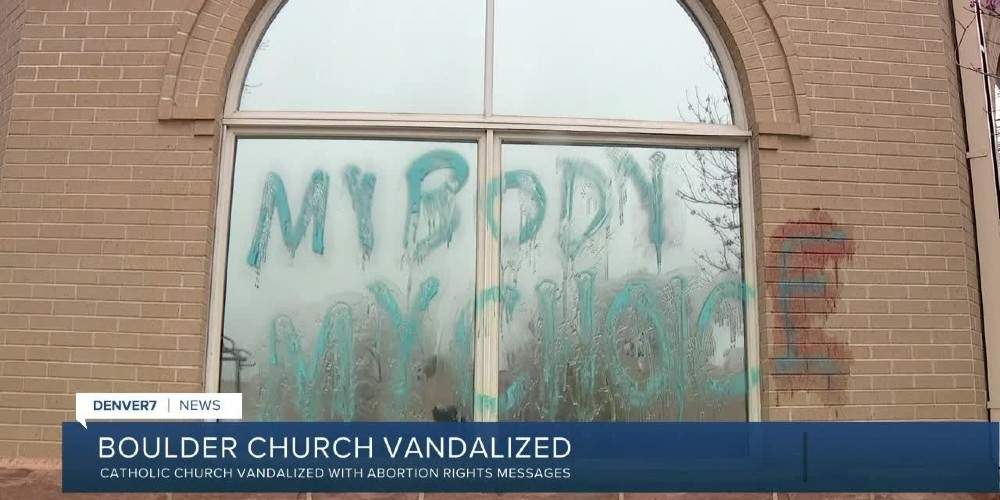
When did killing babies become normalized within American society? Many would say that it was the Supreme Court’s decision on Roe v. Wade that initiated not just a tidal wave of abortions in the US but also a cultural trend of death as a means of convenience. In fact, the case was never meant to make abortion a common practice; the argument was specifically over a woman’s right to privacy under the 14th Amendment. There was also a question as to what constituted the rights of the states under the 10th Amendment to restrict such procedures.
The Supreme Court’s decision in 1973 was wildly illogical because it ignored debate on the most important and most fundamental question – Does a baby in the womb have human rights and constitutional rights? This question was skirted by the Supreme Court labeling babies within the first trimester as merely the “potentiality of life.” The court danced around the issue by asserting that the constitution does not specifically define what “life” is and when life begins.
The Founding Fathers never saw the need to “define” life and when life begins because at the time it was common sense that an unborn child was still a living human being. They never could have predicted that killing babies in the womb would come up as something our society would demand as common practice. Even though some of the founders were not orthodox Christians, they still held a certain common moral compass that would have made the thought of mass murder of children for reasons of convenience incomprehensible.
This was the stuff of Babylonian barbarism; a monstrous practice in early human history that Christianity sought to erase. Bringing child murder and fetal sacrifice back as a cultural phenomenon was such an outlandish idea that you would have been shunned from society just for arguing in favor of it.
I use the word “convenience” because that is exactly what abortion is – a matter of convenience. With the wide distribution of contraception, including birth control pills and condoms, there is simply no excuse under normal conditions for a woman to get pregnant if she doesn’t want to. Birth control pills are 99% effective, coupled with other means of contraception it is very difficult to become pregnant by accident.
No, most women get pregnant because they CHOOSE not to use these measures, for whatever reason. To understand why abortion is utterly reprehensible as well as unnecessary, we first need to examine some of the usual arguments in favor of the practice and why they fail on a rational level as well as on a moral level.
A Fetus Is Not Human Life?
A human baby develops a brain and a heartbeat at around 6-7 weeks, which is usually around the time that the mother realizes she is pregnant. However, the active signs of life are of no concern to abortionists. They question the very parameters of life, almost from an existential position. The reality they refuse to accept is that there are so many factors to human existence, as well as personality and knowledge that are inherent; meaning inborn.
This is a scientific fact. How much of a person’s “self” is determined upon conception? It’s hard to say, but we know many factors are already present. The question of defining life in support of the Roe v. Wade decision is bizarre. I say this because abortion activists are essentially making the assertion that THEY should decide what life is and when life begins. The Supreme Court backed them in 1973 because they didn’t want to take on the responsibility of defining life; they instead deferred to people who desperately want to end lives as the deciders and definers.
Abortion advocates and certain other groups (most of them on the political left) will say that a human being is a “blank slate” upon birth; a Tabula Rasa that only becomes human through environmental experiences. This is simply false according to science and psychology. Humans are born with inherent ideas of language, mathematics, physics, inherent personality traits and the majority have a sense of empathy and moral compass. Experience helps to hone these traits, but they still exist in the child without the aid of environment.
Because our understanding of life and the beginnings of human consciousness is so limited, and because there is ample evidence of inborn humanity, would it not be best to err on the side of caution and NOT kill children in the womb?
Abortion Is About The “Right To Privacy” Under The 14th Amendment?
First and foremost, if you are committing murder of your child you do not have a right to privacy. It does not matter if that child is still in the womb, the child has rights that are separate from yours. They are not a mere appendage of your body, they have a separate body and life of their own, and therefore should be protected under the law.
Is a baby just a “clump of cells?” One could make the argument that pro-abortion activists are just clumps of cells. Which “life experiences” make them more valuable than an unborn baby?
The original Roe v. Wade decision split the difference between the state of Texas and Jane Roe (a fake name designed to protect the identity of Norma Nelson McCorvey). The Supreme Court claimed that women had a right to medical privacy in terms of abortion, but only until the baby became “viable.” Certain limitations could be applied by the states during the second and third trimester. McCorvey wanted completely unrestricted abortion all the way up to the moment of birth. The court decided that was a bit too much bloodlust.
In other words, the court did decide that abortion falls under 14th Amendment protections, but ONLY when the child is in the first trimester. Thus, the court also technically decided when life begins (in the second trimester), even though they asserted that the constitution does not allow them to do so.

I also find it interesting that the people that demand medical privacy for abortions (leftists) also are the same people that fought viciously against medical privacy when it came to forced vaccinations during the covid pandemic. Apparently, “my body my choice” only applies to killing helpless unborn kids.
With ample evidence that the vaccines are ineffective when compared to natural immunity, there is no proof that unvaxxed people are any threat to the vaccinated. But when it comes to abortion, there is 100% certainty that another human being is going to die because of someone’s “medical privacy rights.”
Roe vs. Wade Being Overturned Means Women Will Now Be Forced To Go To “Back Alley” Clinics?
This is nonsense. Unfortunately, the latest Supreme Court decision does not ban abortion nationwide, it only allows individual states to ban abortion, or those states can put the decision to a public vote through legislation. My home state of Montana has certain preexisting laws which were passed decades ago which still allow abortions to continue for now. Hopefully these laws will be overturned. That said, there are numerous blue states nearby that people will surely travel to if they want an abortion. It is unlikely that these states will ever ban the practice because they are thoroughly controlled by leftists.
Ultimately, Roe v. Wade being overturned will simply lead to more babies being born. Not a flood of injuries from back alley clinics. There is also far less stigma attached to women getting pregnant out of wedlock than 50 years ago. There are no excuses for abortion. None.
Ending Abortion Is A Punishment Against The Poor?
A common refrain of pro-abortion advocates is that an unwanted pregnancy can lead to financial difficulties for those people in poverty. In tandem, they will also argue that you are “punishing the children” by forcing low wage families to bring them into a world of poverty.
This is more nonsense and also a false moral dilemma created from thin air by people who, once again, are only interested in matters of convenience (or those who are population control zealots). Beyond the numerous birth control options, there is also the issue of adoption. There are many resources out there for women who are seeking to give their child up for adoption and plenty of couples that cannot have children of their own. It’s a win-win, and also the child usually wins too.

Beyond that, people with children are much more likely to seek to improve their living standards rather than living comfortably in a financial rut. Specifically, men who become fathers tend to work harder and try to increase their earning potential. Just because a family is in poverty now does not mean they have to be in the future. Killing a child because they MIGHT have to deal with poverty is the kind of insane logic we have come to expect from the political left. Maybe that kid will learn something from that kind of struggle, and maybe he/she would prefer struggle to death?
As a side note, I have heard the argument multiple times from leftists that the best way to deal with inflation in the US is to allow illegal immigrants to invade across the border at will. The theory: More people means more production and more consumption and thus less inflation. This is not how inflation works, of course, but if they really believe more people is the solution to the inflation crisis then they should be cheering for an end to abortion.
Giving Birth In The Hospital Is Costly?
The average cost of giving birth in a hospital is around $13,000. Yes, this is expensive for many families, but it is a cost that is paid over YEARS, and that’s if the family does not have Medicare. This is a non-argument. Monetary cost is irrelevant when a human life is in question.
What About Abortion In Extreme Cases?
This is how leftists try to get their foot in the door on abortion logic; by first illustrating a rare and absolute worst case scenario such as women who are pregnant from rape or incest. They try to create precedence for an uncommon circumstance, and then parley that precedence into abortion for all women all the time.
This kind of situation will have to be left up to the states to decide, but I don’t think the circumstance of the pregnancy should matter. It certainly doesn’t matter to the child. As noted above, leftists commonly claim that anti-abortion regulations punish the child by forcing them into a “world of poverty,” but they are perfectly willing to punish that same child with death because of the crimes of another person.
Abortion Is A Human Right?
No, murder is not a constitutional right or a human right. The moment you are actively seeking the destruction of an innocent human being, for any reason, your personal rights are no longer protected. A child in the womb is about as innocent as it gets. I think that in the future, the monstrous nature of industrialized and franchised child killing in the US under organizations like Planned Parenthood (started by eugenics proponent and racist Margaret Sanger) will be looked back on as a dark age in our history akin to slavery.
Luckily, the Supreme Court finally sees the wisdom in at least removing federal protections for abortion and handing the decision to the states. Perhaps one day all Americans will wake up to the reality that we had it right before Roe v. Wade. We aren’t “taking a step backwards,” we are waking up from a period of evil and madness that never should have been allowed in the first place.
Article cross-posted from Alt-Market.

Two Storms, One Harvest

Every food crisis in living memory has been a one-shock event. The 2008 price spike was a commodity bubble. The 2020 shortages were a logistics failure. The 2022 grain scare was a war on one exporter’s ports. Each time, the system bent, adjusted, and recovered, and each time the experts assured us afterward that global markets are simply too big and too diversified to fail.
What nobody in Washington seems eager to discuss is that 2026 is shaping up to be something the modern food system has never actually faced. Two independent shocks, one climatic and one geopolitical, are converging on the same harvest cycle at the same time. Not sequentially. Simultaneously.
Start with the weather. The Pacific Ocean is currently building toward what forecasters now openly call a record event. NOAA’s Climate Prediction Center puts the odds of at least a strong El Niño near 88 percent, with roughly two in three odds it reaches “very strong” status, the tier reserved for perhaps three or four events in the entire satellite era. Every major global model now projects a median peak in Super El Niño territory, and most of them project it exceeding the 2015-16 event, which until now held the modern record. Sea surface anomalies were already brushing the super threshold in mid-July, months before these events normally peak. The atmosphere has already shifted into El Niño mode, and the event is forecast to crest in late fall and early winter.
This is not about “climate change.” It’s about the standard cycles of weather, and the cycle we’re currently in is one that has likely devastated societies in the past. We’re better prepared as a society today, but not all Americans are equally prepared.
Serious households have started doing the quiet math on their own. Grocery bills tell part of the story, and the forecast maps tell the rest, which is why long-term food storage has moved from fringe hobby to mainstream line item in the family budget, with established suppliers like Heaven’s Harvest seeing demand from people who five years ago would have rolled their eyes at the idea. That instinct is not paranoia. It is pattern recognition, and the pattern is worth walking through carefully.
Editor’s Note: Heaven’s Harvest IS a sponsor, but the warnings of this article are real and would be written even if we didn’t have a survival food sponsor. With that said, those who take advantage of what they offer can use promo code “Patriot” for 15% off.
The Fertilizer Clock Is Already Running
While the Pacific warms, the second shock has been unfolding in the Strait of Hormuz. The conflict with Iran turned the world’s most important energy chokepoint into a contested waterway, and the consequences reach far beyond the gas pump. Roughly a third of global fertilizer trade moves through Hormuz, and the disruption sent urea prices up 86 percent year over year by March, with a 53 percent jump in a single month.
The World Bank projects energy prices rising about 24 percent in 2026 and fertilizer about 31 percent. By its own accounting, fertilizer prices ran 35 percent higher in the first five months of this year than the same period last year.
Here is the mechanism the nightly news will not explain. Fertilizer is not a grocery item. It is a time-delayed input. The nitrogen a farmer in Iowa or Punjab could not afford to apply this spring does not show up as a problem this spring. It shows up as a thinner harvest six to twelve months later.
The World Bank’s own food security brief concedes that the effects of reduced applications earlier this season “are likely to become visible only later in harvest outcomes.” Translate that from institutional language into plain English and it means this. The damage is already done, it is already in the ground, and we are simply waiting for it to arrive on the shelf.
Now check the calendar. Six to twelve months from the spring planting season lands us squarely in late 2026 and early 2027. Which is precisely when the strongest El Niño in the instrumental record is forecast to peak, bringing its signature droughts to Southeast Asia, Australia, southern Africa, northern Brazil, and South Asia, the very regions that grow the world’s rice, sugar, and oilseeds.
The World Bank warns openly that a strong El Niño “could disrupt multiple crop belts simultaneously” on top of the conflict-driven input costs. Their baseline projection assumes the Middle East disruptions ease by autumn. What in the last two years of Middle East history suggests that assumption is safe?
The System Has No Slack Left
The comfortable answer is that global markets always adjust. But adjustment requires slack, and the slack is gone. Global cereal production is expected to decline from last year’s records even before El Niño does its work. The UN World Food Programme, hardly a den of right-wing preppers, is calling this the most significant disruption to its supply chains since Covid and the invasion of Ukraine, and its supply chain director put the stakes bluntly.
Today’s supply chain challenges are tomorrow’s hunger crisis.
There is also a political dimension that markets cannot price. When food gets scarce, governments do not behave like economists. They behave like politicians. Export bans, hoarding mandates, and panic buying at the national level turned the modest rice shortfall of 2008 into a global crisis, and analysts are already warning that import-dependent nations are the first dominoes.
The 2015-16 Super El Niño, a far weaker event than what is now forecast, threw tens of millions into food stress across Africa and Asia. This one is projected to be stronger, and it arrives with fertilizer already rationed by price and shipping lanes already contested by missiles.
What Joseph Knew
Scripture does not treat preparation for lean years as faithlessness. It treats it as wisdom delivered in advance to those willing to act on it.
Behold, there come seven years of great plenty throughout all the land of Egypt: And there shall arise after them seven years of famine; and all the plenty shall be forgotten in the land of Egypt.
Joseph did not respond to that warning with a hashtag or a committee. He stored grain during the years of abundance, and when the famine came, Egypt stood while its neighbors begged. The lesson is not that famine is certain. It is that the time to prepare is precisely when preparation still looks optional.
Nobody who filled a pantry in a year of plenty has ever regretted it, and nobody standing in an empty aisle has ever been glad he waited for certainty.
None of this calls for panic, and panic is the enemy of sound judgment anyway. It calls for the same unglamorous prudence our grandparents considered ordinary. Keep some cash margin, know your local growers, and put real food in deep storage while it is cheap and available, because the entire arc of this story is that cheap and available is a closing window.
Families looking for a straightforward place to start can visit Heaven’s Harvest and use promo code Patriot for 15 percent off long-term storable food. The forecasts may yet soften, the strait may yet reopen, and we should pray they do. But hope is a fine thing to hold and a foolish thing to eat.
