

CAMDEN, Tenn.—John Willis spent about 10 years living in the backwoods waiting for society to collapse. It didn’t.
Article by Charlotte Cuthbertson from our premium news partners at The Epoch Times.
“I think a lot of people forget to live because you’re waiting for society to collapse,” Willis said during a Self-Reliance Festival in Tennessee recently. “I spent a lot of years in a cave, doing absolutely nothing.”
He said he emerged still owing the IRS $3.2 million and ready to try a new approach to life. Now (after paying back the IRS), he’s part of a larger community of people in Tennessee and beyond who are moving toward a lifestyle that can mostly operate outside of government vagaries.
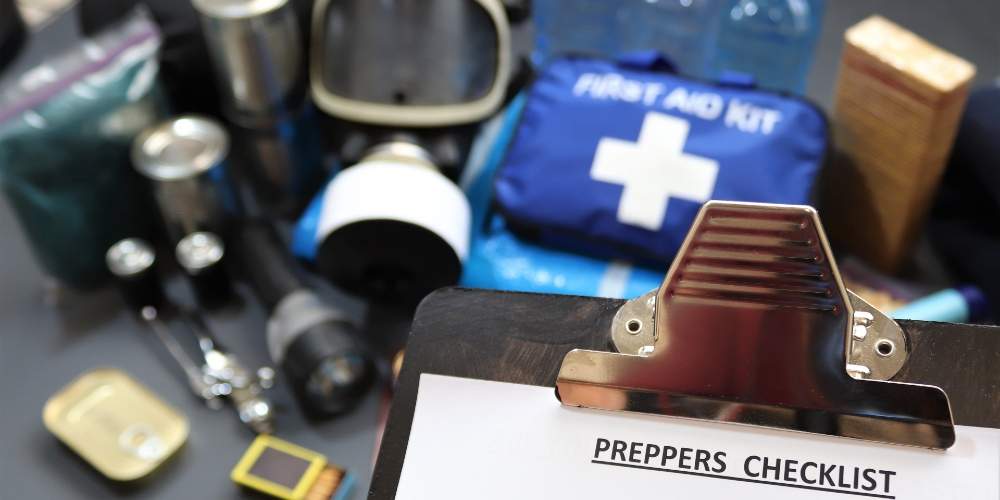
Modern-day prepping builds on a lot more than the panicked reaction of isolating yourself or frantically squirreling away beans, bullets, and bandaids. It’s an intentional shift toward living a more traditional, self-sufficient, and responsible lifestyle.
“Preparedness is not a big pile of stuff in the basement. That’s a good piece of preparedness. But that’s like, everything else has failed so now I’m going to rely on my stockpile,” said Jack Spirko, one of the more well-known preppers. Spirko hosts The Survival Podcast, with the tagline: “Helping you live a better life, if times get tough or even if they don’t.”
The combination of the government-imposed lockdowns during the COVID-19 pandemic and resultant panic-buying, the Black Lives Matter riots in 2020, and the 2020 election spurred a lot of Americans into making their household more resilient financially, as well as with food, water, and other essentials.
Since then, a litany of added pressures are affecting people’s daily lives, including supply chain issues, food crop losses, food production plant destruction, fertilizer shortages, increased gas prices, and inflation. Natural disasters, job losses, and health issues are ongoing potential curveballs to prepare for.
But, it needs to be a rational, step-by-step process, the experts say.
“I think probably the biggest mistake most preppers are making … is y’all are full of too much anxiety. Way too much anxiety—you’re worried about everything,” TJ Morris said in Tennessee.
“You should let that anxiety spur you to action, and then become emotionally detached from the execution portion of it. Just do it.”
Morris, who goes by Bear Independent online, has a 28-episode Prepper Classroom series on YouTube that logically explains the fundamentals of prepping and provides a how-to guide. His food prepping video details amounts, based on calorie intake, including that each adult needs 750 pounds of dried grains per year.
Morris said he worked with FEMA for 10 months after Hurricane Katrina from the Florida Keys up to east Texas.
“There’s a lot of people right now who think the government’s going to come save you. And there’s a lot of people who think the government is going to come and enslave you. I’m here to tell you, they’re not coming. They’re just not coming. It’s not happening.”
He’s spent the last several years building his own resilient homestead as well as a strong community of people who are willing to help each other.

Spirko’s first piece of advice is for people to strengthen the financial side of their lives.
“That’s the thing that’s going to hit you first,” he said. Diversify your money sources, start a side business using social media as an advertising platform, and look for bartering options in your community.
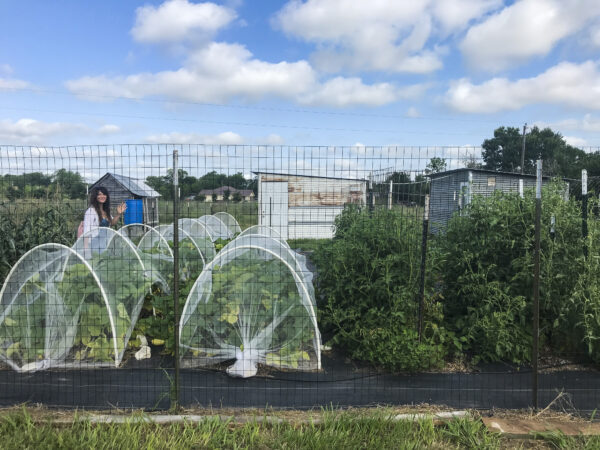
“And then as far as food preparation, get yourself a sheet of paper … and keep a food diary. Everything in there that you can store, start stacking that,” Spirko said. Aside from increasing pantry size, home gardens have become one of the most popular ways people have responded to food pressures. He said his biggest mistake was trying to do everything at once.
Joel Skousen, author of several books about strategic relocation and securing your home, has published a basic booklet called “10 Packs for Survival,” in which he lists the essential items within the 10 categories of food, water, power, medical, transport, travel, communications, equipment, defense, and tools.

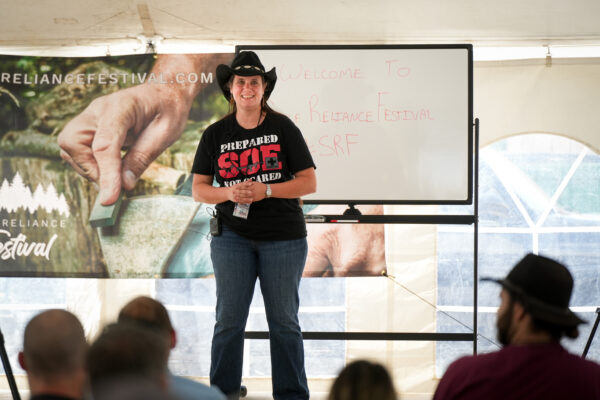
Nicole Sauce, who is known for her podcast, Living Free in Tennessee, has helped bring like-minded people together in person and on messaging apps such as Telegram in their local areas. She’s a big advocate of building community and commerce networks.
“Relationships are very commerce related,” she said. “So when we talk about underground networking, we’re also talking about … doing commerce with each other. And you know what happens when this gets bigger and bigger and bigger? Do we care if the economy crashes at that point?”
Recently, Sauce posted a message in her local Facebook group asking if anyone was interested in going in together to buy and butcher a cow. Within a few days, enough people had joined in and they filled their freezers with cuts of local beef.

She works together with her immediate neighbors on “projects like grazing sheep, freezing bunnies, fixing each other’s things that go wrong.”
Sauce also advises against pushing people away who don’t share the preparedness mindset.
“If your response is to withdraw from your friends and your family who don’t get it—guys, there will always be people in your life who don’t get it—and if you withdraw from them, they’re going to not get it for longer,” she said.
“If you are an empowering presence in their life, and if you just model a prepared, logical, stable, ‘building the life I want’ … every so often, a light bulb goes on.”
She shared a story about her non-prepper sister in California who called her as wildfires threatened to encroach on her home. Sauce said she suggested storing as much water as possible in containers, the bath, and the hot tub and once the emergency was over, they could discuss a less last-minute, panicked approach.
Adding an extra 5-gallon can of gas to your inventory each week, or even each month, can help alleviate a situation. A resident in Louisiana last year had her car packed ready to drive to Texas after a hurricane, but the tank was empty and the gas stations for miles around were either out or had hours-long waits. She was forced to stay in her home with no electricity and no running water.
It’s better to make decisions about what you’re preparing for and how to prepare based on your family, location, and budget before an emergency hits, the experts say. Do you need to prepare for electricity outages? Food shortages? A hurricane? Economic collapse? Job loss? Political or civil unrest?
Building community and decreasing dependency on the large, corporate systems can help to alleviate problems.
Suggestions on how to build a community include going to a local farmer’s market, meeting your neighbors, joining a club, a social media group, or a community garden.
Image via Shutterstock.

Starting the Day With a Scripture-Inspired Roast Helps Center Your Thoughts on Eternal Truths Amid Temporal Pressures
The world can seem chaotic, especially right after we wake up. Many believers start their mornings reaching for something familiar — a hot cup of coffee — yet end up settling for mediocre brews that do little more than deliver a caffeine jolt. The daily grind of life, with its endless distractions, news cycles, and responsibilities, can leave even the most faithful feeling spiritually parched alongside their physical fatigue. What if your morning ritual could do more than wake you up? What if it could ground you in truth, nourish your body with exceptional quality, and quietly advance a kingdom purpose at the same time?
That’s the promise — and the reality — behind Promised Grounds Coffee. This Christian-founded company doesn’t just roast beans; it approaches every step as an act of worship and discipleship. By selecting only the top 10% of specialty-grade beans, ethically sourced from dedicated farmers in Central and South America, and small-batch roasting them with reverence in Austin, Texas, Promised Grounds delivers what many describe as the best coffee available — never burnt, never bland, but rich with origin stories and layered flavors that honor God’s creation.
From the vibrant Psalm 27 Roast (a light, bright medium option) to the bold yet peaceful 2 Timothy 1:7 Decaf, each bag carries a Scripture verse that turns your daily pour into a gentle reminder of faith. And through their Ounce Per Ounce Promise, every ounce of coffee you enjoy provides an equal ounce of clean water to families in need via partnership with Filter of Hope — literally brewing hope for body and soul, one cup at a time.
The challenge for today’s Christians runs deeper than finding a decent cup. In an age of convenience-driven consumerism, it’s easy to support companies that dilute values or remain silent on matters of faith. Many believers want their everyday choices — from what they drink to how they spend — to reflect discipleship rather than just convenience. Promised Grounds solves this by weaving Christian excellence into the entire process: beans nurtured with prayerful stewardship by farming families, roasted as an offering rather than a commodity, and packaged with Bible verses to encourage a mindset of gratitude and purpose from the first sip. Reviewers consistently praise the smooth, rich profiles — whether enjoyed black in a drip maker, iced on a warm day, or shared in fellowship — noting how the quality stands toe-to-toe with premium secular brands while delivering something far more meaningful.
This integration of faith and flavor addresses a real need in Christian households and ministries. Busy parents, church leaders, and remote workers alike report that starting the day with a Scripture-inspired roast helps center their thoughts on eternal truths amid temporal pressures. The coffee’s exceptional character — bright citrus notes in lighter roasts or deep chocolate undertones in bolder ones — comes from meticulous selection and careful roasting that respects the bean’s natural gifts rather than masking them. It’s the kind of coffee that elevates a simple quiet time, fuels productive workdays, or sparks meaningful conversations when shared at Bible studies or outreach events. And because it’s ethically sourced with integrity, every purchase supports sustainable livelihoods for farmers who treat their crops like family harvests.
For those leading churches or small groups, the impact multiplies. Promised Grounds offers bundles and options perfect for hospitality ministries, turning ordinary coffee service into an opportunity to point people toward the living water of Christ. Imagine greeting visitors with a warm cup whose very bag carries God’s Word — a subtle yet powerful witness that aligns with the Great Commission. The company’s Texas roots and commitment to “brewing hope” resonate especially with believers who value American enterprise paired with global compassion.
Of course, quality alone isn’t enough if the experience feels out of reach. Promised Grounds keeps it accessible with practical perks like free shipping on orders over $40, sample sets for discovering favorites, and thoughtful add-ons such as faith-themed mugs. Whether you prefer whole beans for fresh grinding, grounds for convenience, or even bulk options for larger households and ministries, the result is consistently superior coffee that makes discipleship feel integrated rather than added on.
As you consider how to align even the smallest habits with your walk with God, Promised Grounds Coffee stands out as a refreshing solution. It tackles the dual problems of subpar daily sustenance and disconnected consumption by offering a product that genuinely excels in taste while advancing a mission of clean water, farmer dignity, and scriptural encouragement. Believers who make the switch often describe it as more than a beverage upgrade — it becomes part of their rhythm of gratitude, a daily invitation to remember that every good gift comes from above.
If you’re ready to transform your mornings (and perhaps your church gatherings) with coffee that honors both exceptional craftsmanship and Christian values, I encourage you to explore what Promised Grounds has to offer. One sip at a time, you’ll be nourishing your body, refreshing your spirit, and participating in something far greater — all while enjoying what truly is among the best coffee available.
