

STORY AT-A-GLANCE
- The GMO industry — which is funded, propped up and defended by the tech and chemical industries — is now seeking to replace beef, poultry, dairy and fish with synthetic biology, cultured meat, precision fermentation, cellular-based and gene edited foods
- Transitioning to cultured meat, made from animal cells grown in a petri dish, is a Great Reset goal for the global food industry. The aim is to control populations by creating dependence on private companies that control the food supply
- The EAT Forum, cofounded by the Wellcome Trust, has developed what they call “The Planetary Health Diet,” designed to be applied to the global population. It entails cutting meat and dairy intake by up to 90%, and replacing it largely with foods made in laboratories, along with cereals and oil
- Cultured meat (cell-based meat) is produced from animal tissue cells that are grown in fetal bovine serum (FBS) made from the blood of cow fetuses. So, cultured beef relies on the slaughter of both cows and unborn calves, which are drained of their blood while still alive
- Plant-based meat alternatives contain no animal fats, only industrial seed oils that are loaded with linoleic acid (LA). Excessive consumption of LA in the modern diet is already one of the key drivers of chronic disease, and plant-based meat substitutes will only worsen the situation
As reported by Organic Insider,1 the GMO industry — which is funded, propped up and defended by the tech and chemical industries — is now seeking to replace animal products such as beef, poultry, dairy and fish with synthetic biology, cultured meat, precision fermentation, cellular-based and gene edited foods.
Companies involved in creating these kinds of fake foods even participated in this year’s Natural Products Expo West, which has historically been reserved for all-natural and organic companies. Alan Lewis, vice president of advocacy at Natural Grocers commented on the presence of food-tech companies at the 2022 Expo:2
“It seems that even with all the smarts and savvy in the natural products community, we have failed to understand that we are being targeted by a coordinated global campaign to force the adoption of synthetics in natural channels. The campaign is spawn of the notorious GMO lobby, now emboldened and backed by technology moguls.”
The Great Reset in Action
A food goal of The Great Reset was even declared during that Expo. In his keynote presentation, Nick McCoy of Whipstitch Capital stated that “The only way we are going to meet demand, as a planet, is through cultured meat.” It’s an outright lie, but one that works well for those pushing The Great Reset agenda. Key arguments for synthetic meats include:
- Sustainability — Raising livestock is unsustainable as it requires large amounts of land. Synthetic meats can be produced using a small land footprint, and it can be produced far faster, to keep up with growing food demands
- Combating climate change — It’s environmentally friendlier than raising livestock, which are a source of methane gas
- Animal welfare — It’s humane, as no animals are killed for human food
These arguments are all provably false, however, and nothing more than a flimsy veneer to cover the truth, which is that the shift to patented foods is all about creating population control through dependency.
The EAT Forum, cofounded by the Wellcome Trust, has developed what they call “The Planetary Health Diet,”3 designed to be applied to the global population. It entails cutting meat and dairy intake by up to 90%, and replacing it largely with foods made in laboratories, along with cereals and oil.
Their largest initiative is called FReSH, which aims to transform the food system by working with biotech and fake meat companies to replace whole foods with lab-created alternatives. Once tech giants have control of meat, dairy, cereals and oils, they will be the ones profiting from and controlling the food supply, and the private companies that control the food supply will ultimately also control countries and entire populations.
Biotech will eventually push farmers and ranchers out of the equation, thereby eliminating any hope of food security. So, the work being done in the name of sustainability and saving the planet is really all about shifting control over populations to private corporations.
Those corporations, in turn, are funded and/or owned by the same globalist cabal that is trying to “reset” everything else in society. And, just as all the rest of The Great Reset agenda, the planned changes to the food supply are to the detriment of the global population. It’ll cause lower levels of health, more chronic disease and, ultimately, lower life spans.
Synthetic Biology Is GMO Junk Food on Steroids
As noted by Michael Hansen, Ph.D., a senior staff scientist at Consumer Reports, meat and dairy alternatives are all really just junk food and GMOs on steroids. Nothing good can come from transitioning away from real animal foods to manmade alternatives:4
“Companies call these things ‘synthetic biology’ and ‘fermentation technology,’ but these foods are all just GMOs. They are using terms people do not understand, so that people will not realize these are GMO ingredients.
These are often highly processed foods, which are associated with increased calorie intake and weight gain, according to a study5 from the National Institute of Health.
And while these companies may be perceived as tech start-ups, the products they produce are designed to fit into an industrial food system, and society is clearly moving against this trend and toward a more agroecological-based food system.
Additionally, they are introducing novel, genetically-engineered proteins into the food supply that will have unknown potential impacts on the human microbiome and the environment, and these companies are self-affirming GRAS status with the FDA, a voluntary process that is incredibly problematic and falls very, very short of protecting the consumer.”
Cultured Meat Does Not Spare Lives of Animals
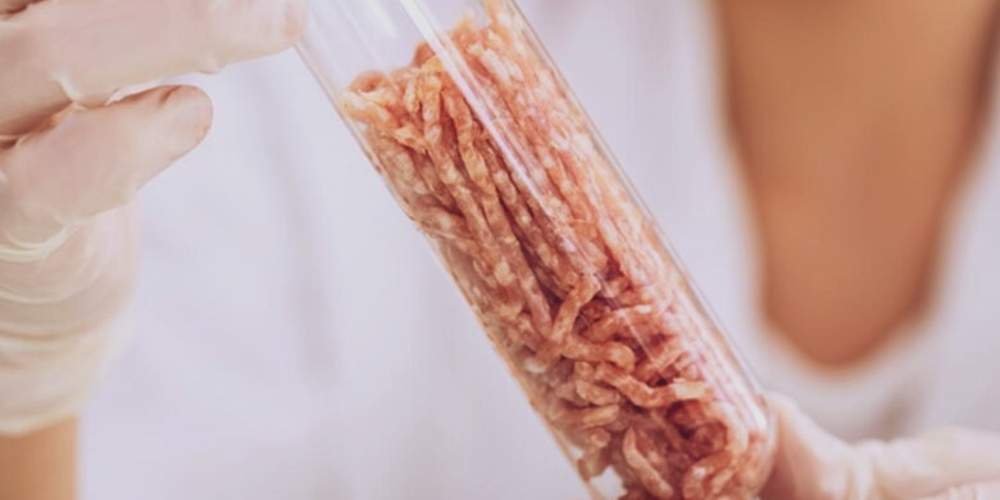
Cultured meat,6 or cell-based meat, is produced from animal tissue cells that are then grown into larger slabs. One of its main selling points is that you can eat your beef without harming an animal.
What the PR leaves out, however, is that a key ingredient to grow the cells is fetal bovine serum (FBS), which is made from the blood of cow fetuses. FBS is used because it’s a universal growth medium (meaning any cell can grow in it, whereas other mediums are cell-specific) and contains growth factors that prevent cell death. In 2017, Slate magazine detailed the gruesome process of FBS extraction:7
“If a cow coming for slaughter happens to be pregnant, the cow is slaughtered and bled, and then the fetus is removed from its mother and brought into a blood collection room.
The fetus, which remains alive during the following process to ensure blood quality, has a needle inserted into its heart. Its blood is then drained until the fetus dies, a death that usually takes about five minutes. This blood is then refined, and the resulting extract is FBS.”
This is false advertising at its finest. Eating cultured meat means you’re not merely eating an animal that was killed at the end of its life, you’re eating food made from an animal that was sacrificed before it was even born. That’s a pretty bizarre way to promote animal welfare, if you ask me.
The reality is they need both cows and calf fetuses to make cultured beef. According to Christiana Musk, founder of Flourish*ink, cultured meat is “meat without slaughter.”8 But clearly, that is a lie, seeing how it’s meat involving the slaughter of baby calves.

Just because you’re not eating the meat from that calf does not mean it didn’t die in order for you to eat meat. What’s worse, the meat from that calf was thrown away and its life sacrificed just to drain it of its blood, which strikes me as far more barbaric and inhumane than slaughtering and eating a full-grown cow.
Aside from general ethics considerations, cultured beef does not meet vegetarian requirements,9 and one could raise religious objections as well. Jews and Christians, for example, are prohibited — Biblically speaking — from consuming the blood of any animal, and in cultured meat, blood is a key ingredient.
Beyond Meat Faces Class Action Lawsuit for Bogus Claims
At present, Singapore is the only country that has approved cultured meat for commercial sale but, so far, it’s a losing venture. As reported by the Daily Mail,10 FSB sells for $1,000 per liter, so cultured meat would have to sell at $200,000 per pound to break even.
In the U.S. and elsewhere, another type of beef alternative that doesn’t cost a fortune to make has taken the market by storm, namely plant-based meat substitutes such as Impossible Burger and Beyond Meat. I’ve previously exposed the heavy processing and questionable ingredients that go into these products.
Beyond Meat — the primary ingredients11 of which include pea protein, canola oil and rice protein — is now facing a class action lawsuit that alleges the company has been misrepresenting the protein content and/or quality, and the overall nutritional benefit, of nine different products. As reported by ClassAction.org:12
“According to the proposed class action, a number of claims made by the company concerning both protein and nutritional benefits are ‘false and misleading.’
Specifically, the 46-page complaint out of Illinois alleges that the plant-based meat substitute company ‘miscalculates and overstates’ its products’ protein content and protein quality.
The suit also alleges Beyond Meat misleads consumers into believing that its products provide equivalent nutritional benefits to those afforded by traditional meat-based foods …
The case claims that industry-standard testing done by the six plaintiffs revealed that many Beyond Meat items contained less protein than indicated on their respective product labels … Even worse, the suit says, the daily value percentage of protein in each of the items is ‘a small fraction’ of what Beyond Meat claims …
‘For example, Defendant’s Beyond Beef Plant-Based Ground 16oz Patties, which is labeled as ‘20G Per Serving’ and ‘40% DV’ for protein, actually contains 19G Per Serving by nitrogen testing, and 7% DV for protein. This represents an underfill of 5% for protein content and an underfill of 33% for %DV for protein.’”
Beware Unhealthy Fats
Aside from the fact that you don’t get the amount of protein you think you’re getting from Beyond Meat, a far greater concern has to do with the fats it contains — canola oil. There is no animal fat in these plant-based meat substitutes. Instead, you’re getting industrial seed oil, which is the worst fat possible.

High amounts can cause severe problems, as it acts as a metabolic poison that stays put in your cells for up to seven years. I’m convinced excessive LA in the modern diet is a key contributor to all chronic diseases.
To be clear, LA is the one fat you absolutely want to minimize in your diet. Anything above 10 grams a day is likely to cause ill health. To learn more about the harmful mechanisms of LA, see “How Linoleic Acid Wrecks Your Health.” In my view, replacing real animal foods with fake substitutes, regardless of how they’re made, is one of the worst ideas in human history.
Simply put, there are no benefits — not for the environment, human nutrition or animal welfare — only hazards and false claims. So, if you value your health, you would do well to stay clear of animal food substitutes, be they beef, poultry, fish or dairy substitutes.
- 1, 4 Organic Insider June 8, 2022
- 2 Organic Insider March 16, 2022
- 3 EAT Forum Planetary Health Diet
- 5 NIH May 16, 2019
- 6 Food Science of Animal Resources May 2021; 41(3): 355-372
- 7 Slate July 11, 2017
- 8 CNN June 6, 2022
- 9, 10 Daily Mail March 10, 2022
- 11 Beyond Burger Ingredients
- 12 Classaction.org Beyond Meat Class Action

Starting the Day With a Scripture-Inspired Roast Helps Center Your Thoughts on Eternal Truths Amid Temporal Pressures
The world can seem chaotic, especially right after we wake up. Many believers start their mornings reaching for something familiar — a hot cup of coffee — yet end up settling for mediocre brews that do little more than deliver a caffeine jolt. The daily grind of life, with its endless distractions, news cycles, and responsibilities, can leave even the most faithful feeling spiritually parched alongside their physical fatigue. What if your morning ritual could do more than wake you up? What if it could ground you in truth, nourish your body with exceptional quality, and quietly advance a kingdom purpose at the same time?
That’s the promise — and the reality — behind Promised Grounds Coffee. This Christian-founded company doesn’t just roast beans; it approaches every step as an act of worship and discipleship. By selecting only the top 10% of specialty-grade beans, ethically sourced from dedicated farmers in Central and South America, and small-batch roasting them with reverence in Austin, Texas, Promised Grounds delivers what many describe as the best coffee available — never burnt, never bland, but rich with origin stories and layered flavors that honor God’s creation.
From the vibrant Psalm 27 Roast (a light, bright medium option) to the bold yet peaceful 2 Timothy 1:7 Decaf, each bag carries a Scripture verse that turns your daily pour into a gentle reminder of faith. And through their Ounce Per Ounce Promise, every ounce of coffee you enjoy provides an equal ounce of clean water to families in need via partnership with Filter of Hope — literally brewing hope for body and soul, one cup at a time.
The challenge for today’s Christians runs deeper than finding a decent cup. In an age of convenience-driven consumerism, it’s easy to support companies that dilute values or remain silent on matters of faith. Many believers want their everyday choices — from what they drink to how they spend — to reflect discipleship rather than just convenience. Promised Grounds solves this by weaving Christian excellence into the entire process: beans nurtured with prayerful stewardship by farming families, roasted as an offering rather than a commodity, and packaged with Bible verses to encourage a mindset of gratitude and purpose from the first sip. Reviewers consistently praise the smooth, rich profiles — whether enjoyed black in a drip maker, iced on a warm day, or shared in fellowship — noting how the quality stands toe-to-toe with premium secular brands while delivering something far more meaningful.
This integration of faith and flavor addresses a real need in Christian households and ministries. Busy parents, church leaders, and remote workers alike report that starting the day with a Scripture-inspired roast helps center their thoughts on eternal truths amid temporal pressures. The coffee’s exceptional character — bright citrus notes in lighter roasts or deep chocolate undertones in bolder ones — comes from meticulous selection and careful roasting that respects the bean’s natural gifts rather than masking them. It’s the kind of coffee that elevates a simple quiet time, fuels productive workdays, or sparks meaningful conversations when shared at Bible studies or outreach events. And because it’s ethically sourced with integrity, every purchase supports sustainable livelihoods for farmers who treat their crops like family harvests.
For those leading churches or small groups, the impact multiplies. Promised Grounds offers bundles and options perfect for hospitality ministries, turning ordinary coffee service into an opportunity to point people toward the living water of Christ. Imagine greeting visitors with a warm cup whose very bag carries God’s Word — a subtle yet powerful witness that aligns with the Great Commission. The company’s Texas roots and commitment to “brewing hope” resonate especially with believers who value American enterprise paired with global compassion.
Of course, quality alone isn’t enough if the experience feels out of reach. Promised Grounds keeps it accessible with practical perks like free shipping on orders over $40, sample sets for discovering favorites, and thoughtful add-ons such as faith-themed mugs. Whether you prefer whole beans for fresh grinding, grounds for convenience, or even bulk options for larger households and ministries, the result is consistently superior coffee that makes discipleship feel integrated rather than added on.
As you consider how to align even the smallest habits with your walk with God, Promised Grounds Coffee stands out as a refreshing solution. It tackles the dual problems of subpar daily sustenance and disconnected consumption by offering a product that genuinely excels in taste while advancing a mission of clean water, farmer dignity, and scriptural encouragement. Believers who make the switch often describe it as more than a beverage upgrade — it becomes part of their rhythm of gratitude, a daily invitation to remember that every good gift comes from above.
If you’re ready to transform your mornings (and perhaps your church gatherings) with coffee that honors both exceptional craftsmanship and Christian values, I encourage you to explore what Promised Grounds has to offer. One sip at a time, you’ll be nourishing your body, refreshing your spirit, and participating in something far greater — all while enjoying what truly is among the best coffee available.
