

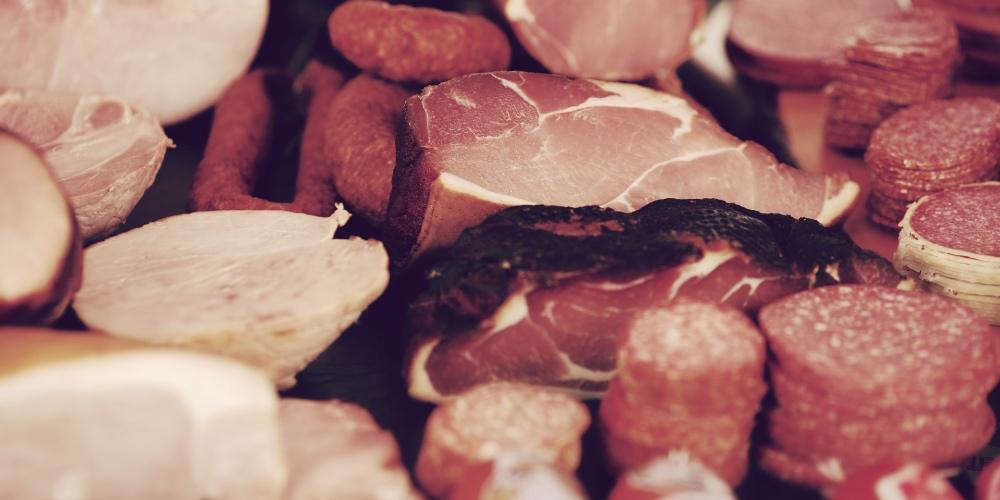

- Sodium nitrite is a chemical that creates artificial pink coloring in processed meats. Meat industries argue that it protects against botulism
- Research shows nitrites increase exposure to harmful nitrosamines by two- to threefold. This results in DNA breaks within 30 minutes, as well as a rapid rise in colorectal cancer cases
- Denmark’s Hanegal has produced nitrite-free cured meats for 25+ years with zero botulism cases, proving these additives aren’t necessary
- The American Meat Institute successfully blocked a 1970s nitrite ban using tobacco industry tactics, political connections, and fearmongering about economic impacts
- To protect your health, eliminate processed meats, cook fresh meat at home, read labels for E250 (sodium nitrite), choose nitrite-free brands, and avoid harmful vegetable oils
Processed meats like ham, bacon, and hotdogs are a daily staple for millions of Americans today. However, many are unaware that these products contain a chemical linked to cancer — sodium nitrite. As shown in the featured documentary, “Corrupt Food Industry,” there are many forces at work behind the scenes to maintain the status quo.1
The Pink Meat Illusion
When you buy processed meats, have you noticed that they all have a perfect pink color? You’ve probably thought it was fresh, just like the commercials suggest, but the truth is far more sinister.
- Meat is injected with chemicals — Behind that bright pink hue in processed meat is a hidden chemical known as E250, which is the commercial name for sodium nitrite.
- The role of E250 — This chemical is responsible for keeping meats pink, but is also the primary reason for their carcinogenic properties. Without this additive, the ham in your sandwich or holiday dinner would appear dull and gray. Laurent Rouleau, who works for a big meat processor in France, explains:
“Sodium nitrite is used to preserve the ham and to kill any pathogenic germs. But also, to give the characteristic color and taste of processed meats. It’s what gives processed meats their appetizing pink color.”
- Pink meat is just for marketing purposes — As confirmed by a different spokesperson — who wished to remain anonymous — for another company, nitrite is used to differentiate their products from unprocessed meat. That’s because if they don’t inject their ham with nitrites, it will simply look like roasted pork:
“Nitrite is really that. It’s really for the color. Because ham has to be pink and not brown. Otherwise, people will say it’s not fresh and so on. If I cook pork, the meat is gray. So that’s what ham should be like.”
Nitrites Damage Your DNA and Cause Cancer
What does sodium nitrite do to your body? The answer is simple — just like any other processed additives, it does not benefit your health:
- Additives are warping your health — As noted by the documentary, sodium nitrite works by preventing meat from turning brown due to oxidation. While it kills harmful bacteria and extends shelf life, the health problems created are more serious. According to Theo de Kok, Ph.D., a professor from Maastricht University in the Netherlands:
“Nitrosamines are known to induce damage in the large intestine. So, it can induce DNA breaks, mutate cells into sort of precancer cells. And that’s, of course, something that you want to prevent.”
- Testing the impact of additives — Curious about the impact of nitrites on humans in an academic setting, de Kok conducted his own experiment on a student named Arnaud. For two weeks, Arnaud ate 300 grams of processed meat a day, which is equivalent to eight and a half sausages or seven slices of ham. Here’s what de Kok discovered afterward:
“After 15 days, we saw that the exposure to nitrosamines was considerably increased. So, it was up to between two- and threefold increase as compared to the levels that we measured at the start.”
- DNA damage is confirmed — After examining different fecal samples from processed meat eaters, including Arnaud, de Kok confidently believes that nitrites damage DNA. In fact, damage was observed in test human cells right away:
“[T]his damage can be induced relatively quickly. So, in this assay, when we isolate the cells, and we only expose them for half an hour, and then you already see the breakage of these DNA strands. So, that’s how fast it can happen. And it can also happen, not just in the lab here, but also in an intact human body.”
- Processed meat increases the risk of cancer — According to de Kok, nitrites are a significant contributor to the rising cases of colorectal cancer every year in Europe. In fact, he believes that removing nitrites from processed meats will significantly lower the numbers:
“That would make a difference of potentially several thousands of colorectal cancers that’s in Europe every year. That’s huge. Because colorectal cancer is a very frequent disease, already small changes in a cancer risk can have a big impact in the large population.”
Meats Don’t Need To Be Exposed to Nitrite
Despite mounting evidence against nitrites, the food industry continues using it with a clear-cut argument that causes health authorities to look the other way — botulism prevention. However, there’s a problem with this logic.
- Meats can be processed without nitrites — According to the documentary, there are now several companies who produce meat products without unnecessary additives, and their customers are doing okay when it comes to their health.
- Nitrite-free products are widely available in other countries — Hanegal, a meat producer based in Denmark, has been offering nitrite-free cured meats to its consumers for over 25 years. Despite claims that processed meat producers that nitrite prevents botulism, Denmark has had zero cases of botulism linked to nitrite-free products. As noted by Hanegal CEO Ulrich Kern:
“That was a problem in the meat industry 100 years ago, where things weren’t as clean as they are, slaughterhouses were not as clean as they are today. So, no worry about bacteria. Now, we have to worry about additives that might be cancer-producing. And if they are not necessary for some very good reasons, we should not use them.”
- How to find clean, cured meat — In Denmark, nitrite-free processed meat is labeled “uden nitrit.” The documentary noted that products belonging under this category have a more brownish appearance instead of the pink that consumers know.
Why the Sodium Nitrite Ban Failed
In 1999, a European Union health report already recommended reducing sodium nitrite in processed meats and even called for banning its use. However, this is still an unattainable dream because of bureaucracy and underhanded tactics by meat producers.
- Why nitrite levels don’t get lower — Dr. Vytenis Andriukaitis, a parliament member of the European Union (EU), explains that big, sweeping decisions such as removing nitrites from meats entail plenty of work:
“From my point of view, we must be more energetic asking industry to change their technology, reformulate forward, to follow figures, to keep on board public health priorities, not profit. Absolutely. But of course, it takes time.”
- The meat industry is untouchable — Did you know that the United States almost banned sodium nitrite in the 1970s? It started with a government-funded study involving 2,000 rats. Researchers observed a clear link between nitrite consumption and cancer in these animals, raising alarms regarding public health. This prompted immediate action to ban nitrite from human foods. However, the American Meat Institute (AMI) made sure that it didn’t happen.
- Fearmongering is causing decisions to be delayed — Facing billions in eventual revenue lost, the AMI fought back fiercely. They argued for the economic importance of processed meat — a $12.5 billion retail market at the time. They even went as far as saying banning nitrites would cause an apocalypse.
More significantly, political connections came into play when AMI president Richard Lyng joined President Reagan’s cabinet. Lyng’s appointment effectively ended the proposed ban, allowing sodium nitrite to remain legal and widely used.
- Research regarding nitrites was censored — Upon Lyng’s appointment, further research about the health effects of nitrites fell into silence.
All these tactics set the stage for decades of battles between consumer safety advocates and the meat industry. As a result, processed meat remains as hazardous today as it was nearly half a century ago, thanks to aggressive lobbying and political maneuvering.
Meat Producers Took Cues from the Tobacco Industry
The documentary reveals troubling details about how the processed meat industry manipulates scientific opinion.
- The meat industry is attacking scientists with integrity — One notable case involved retired scientist Susan Preston-Martin. Her 1995 study that linked hotdogs to cancer led to an 8% decrease in sales. While that may look like a small number, remember that the hotdog industry is huge in America, and that publication made them lose millions of dollars in potential revenue.
The industry swiftly launched an aggressive campaign to discredit Preston-Martin’s work. She faced attacks questioning her integrity, credibility, and scientific methods, effectively silencing further research efforts.
- How the link was discovered — The documentary team personally went to Preston-Martin’s home in California. There, she summarized the process of her landmark discovery:
“We started out with a group of children who had leukemia and compared them to a group of children who didn’t have leukemia. And we asked the mothers about what they fed the children. And sure enough, the kids with leukemia ate more hotdogs … I was a little bit surprised. And just reserved judgment, which is what epidemiologists do when they find something they don’t expect.”
- Big Tobacco joined the battle against health — Borrowing tactics from the tobacco industry, meat companies intentionally created confusion about the health risks associated with their products. One such example is Oscar Mayer hotdogs, which also happened to be owned by Phillip Morris.
According to anti-tobacco activist Stanton Glantz, Ph.D., tobacco lobbyists sowed doubt to compete with the “body of fact” existing in the public’s minds. This is the playbook that the meat industry followed.
- Science was suddenly captured — To counteract Preston-Martin’s bombshell revelation, AMI brought its own academics into the fold, namely David Klurfeld, Ph.D., to publicly downplay the risks of nitrite.
When personally interviewed by the documentary team, Klurfeld followed the same strategies regarding nitrite by giving this answer — “I don’t think anybody really knows definitively what the answer is.” Furthermore, he said that he doesn’t remember being paid by the AMI despite documented evidence.
How to Protect Yourself from Dangerous Additives
America’s processed meat industry giants bring in billions of dollars for the economy. As such, they exert powerful influence over food policy and public health regulations. It’s high time that the public accept that they’re not interested in keeping you healthy — the only thing that matters is you buy their products.
If you’re concerned about the harmful additives hidden in processed meats, you’re already one step ahead in safeguarding your health. Making simple yet powerful changes in your eating habits not only protects you from dangerous chemicals but also gives you peace of mind about what you’re eating. Here are my recommendations:
- Cut out processed meats completely — The best way to eliminate your risk from sodium nitrite exposure is to simply remove processed meats like bacon, ham, sausages, and hotdogs from your diet. If you regularly eat these foods, switching to fresh cuts of meat is one of the best decisions you’ll ever make for your health.
- Cook your meats at home — Preparing meals yourself allows you to control exactly what goes into your food. Cooking fresh meat at home helps you avoid harmful additives that processed meat companies put in their products. When you know every ingredient, you feel better about the choices you’re making.
- Choose healthier fats — Reducing your intake of linoleic acid (LA) is important because this harmful fat often accompanies processed meats and other junk foods. Replace vegetable oils with healthier alternatives like grass fed butter, tallow, or ghee. Since LA is ubiquitous in the food supply, it’s impractical to avoid it. To protect your health, keep your intake below 5 grams a day, but if you can get it below 2 grams, that’s even better. To monitor your intake, I recommend you download the upcoming Mercola Health Coach app that will be released this year. It contains a feature called the Seed Oil Sleuth, which will help monitor your LA intake to a tenth of a gram.
- Read labels carefully — If you occasionally buy packaged products, always check labels closely for additives like sodium nitrite or E250, as well as LA. Being vigilant protects you and your family from these hidden risks. If you can, buy packaged products made from certified organic sources.
- Support nitrite-free brands — Look for brands that specifically advertise “nitrite-free” meats. As seen in the documentary, Denmark citizens have safely eaten nitrite-free cured meats for over two decades without negative health effects. By choosing products labeled clearly as free from harmful additives, you encourage the food industry to produce safer foods.
Frequently Asked Questions (FAQs) About Processed Meats and Sodium Nitrite
Q: Why is processed meat pink, and is this natural?

A: Processed meats like ham, bacon, and hotdogs are artificially colored pink by injecting sodium nitrite (E250). Without this chemical additive, these meats would appear dull and gray. The appealing pink color is solely for marketing purposes.
Q: What are the health risks of consuming sodium nitrite in processed meats?
A: Sodium nitrite is linked to significant DNA damage, which increases your risk of colorectal cancer. The chemical forms carcinogenic compounds called nitrosamines, increasing cancer risks even from short-term consumption.
Q: Are sodium nitrites necessary to prevent botulism in processed meats?
A: No. The argument that nitrites prevent botulism is outdated. Nitrite-free curing methods are safe, as proven by Denmark’s 25-year track record of producing nitrite-free meats with zero cases of botulism.
Q: Why hasn’t sodium nitrite been banned despite its proven dangers?
A: Sodium nitrite remains widely used due to aggressive lobbying by the meat industry and political influences. Attempts to ban it have failed due to economic pressure, censorship of research, and tactics borrowed from industries like tobacco.
Q: How can consumers protect themselves from harmful additives in processed meat?
A: The best protection is to avoid processed meats altogether, cook fresh meats at home, choose nitrite-free brands, carefully read ingredient labels, and select products labeled organic or additive-free.
Three Reasons a Coffee Gift Set From This Christian Company Is Perfect for Christmas

When you’re searching for a Christmas gift that’s meaningful, useful, and rooted in faith, you don’t want to settle for anything generic. This season is filled with noise — mass-produced products, last-minute picks, and trends that fade as quickly as they appear. But one gift stands apart because it blends genuine quality with a message that matters: a coffee gift set from Promised Grounds Coffee.
This small Christian-owned company has become a favorite among believers who want to support faith-driven businesses while giving friends and family something they’ll actually enjoy. Here are three reasons a Promised Grounds Coffee gift set may be the most thoughtful and impactful present you give this year.
1. It’s Truly Delicious Coffee
Too many “gift-worthy” coffees look beautiful in the package but disappoint when the cup is poured. Promised Grounds takes the opposite approach — exceptional taste first, thoughtful presentation second.
Their beans are sourced with care, roasted in small batches, and crafted to bring out a rich, smooth flavor profile that appeals to both casual drinkers and true coffee lovers. Whether someone enjoys bold, dark roasts or lighter, more delicate blends, every sip reflects quality that stands shoulder-to-shoulder with the biggest specialty brands.
Simply put: this coffee is good. Really good. Some say it’s absolutely fantastic. If you want a gift that won’t be re-gifted, ignored, or shoved in a cabinet, this is it.
2. It Spreads the Word While Serving a Real Purpose
There are many Christian gifts that are meaningful… but not exactly practical. There are also useful gifts that have nothing to do with faith. Promised Grounds Coffee bridges both worlds beautifully.
Each gift set delivers an encouraging, faith-centered message through its packaging and presentation — a simple but powerful reminder of God’s goodness during the Christmas season. The cups are especially popular and serve as a daily reminder of the blessings from our Lord. At the same time, the product itself is something people will actually use and appreciate every single day.
It’s a gift that uplifts the spirit and fills the mug. A gift that points loved ones toward Scripture while still being part of the normal rhythm of life. And in a culture that increasingly pushes faith to the margins, giving a gift that quietly but confidently honors Christ can make a deeper impact than you might expect.
3. It’s Affordable, Valuable, and Elegantly Presented
Many people want to give something meaningful without breaking their Christmas budget. Promised Grounds Coffee strikes that perfect balance — the sets look and feel premium, but the price remains accessible.
The packaging is classy, clean, and gift-ready, making it ideal for:
- Family members of all ages
- Co-workers or employees
- Church friends or small-group leaders
- Hosts, neighbors, and last-minute gift needs
It’s the kind of gift that feels more expensive than it is — and more thoughtful than most of what you’ll find on store shelves.
The Perfect Blend of Faith, Flavor, and Christmas Cheer
A coffee gift set from Promised Grounds Coffee checks every box: a gift that tastes amazing, conveys your faith, supports a Christian business, and brings daily enjoyment to the person who receives it. In a season when so many gifts are forgotten, this one stands out for all the right reasons.
If you want a Christmas present that reflects your values and delivers genuine joy, Promised Grounds Coffee is the perfect place to start.

Get more nitrates from veg
The raid on Bolton’s home was just a warning. When you can’t keep your big yap shut and you continue to denigrate the president, you can expect a visit from the FBI. Bolton is a war mongering P0S, and if I heard correctly that is the reason that Trump fired him the first time. I am thrilled that the DOJ and FBI took away the clearances for dozens of Deep Staters and Bolton was one of them and he also lost his clearance.
I msorry, but can you imagine studying fecal water all day? I lost interest in the entire article after that.🤮